

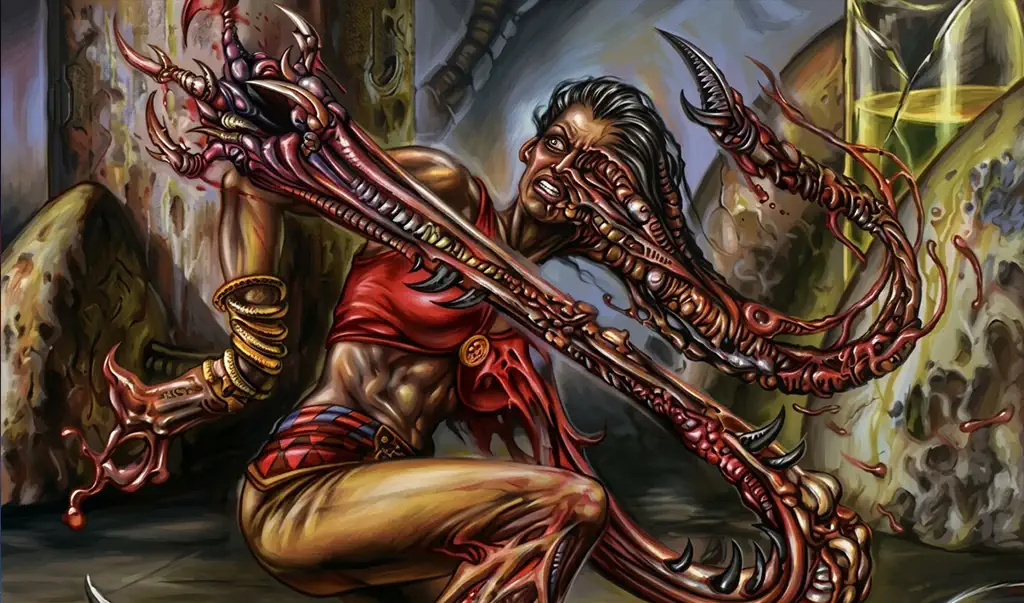
hFEB, or Hermit Full English Breakfast, is one of the most technical and deep combo decks in Premodern. At first glance, it might seem like an archetype "only" built around Volrath’s Shapeshifter and a series of creatures to put into the graveyard in the correct order, but in reality, its true strength lies in its ability to adapt to very different game states. It's not a deck that simply executes a fixed sequence: it's a system of engines, alternative lines, and micro-interactions that requires precision, experience, and a very solid understanding of the rules.
Volrath's Shapeshifter
Creature — Phyrexian Shapeshifter
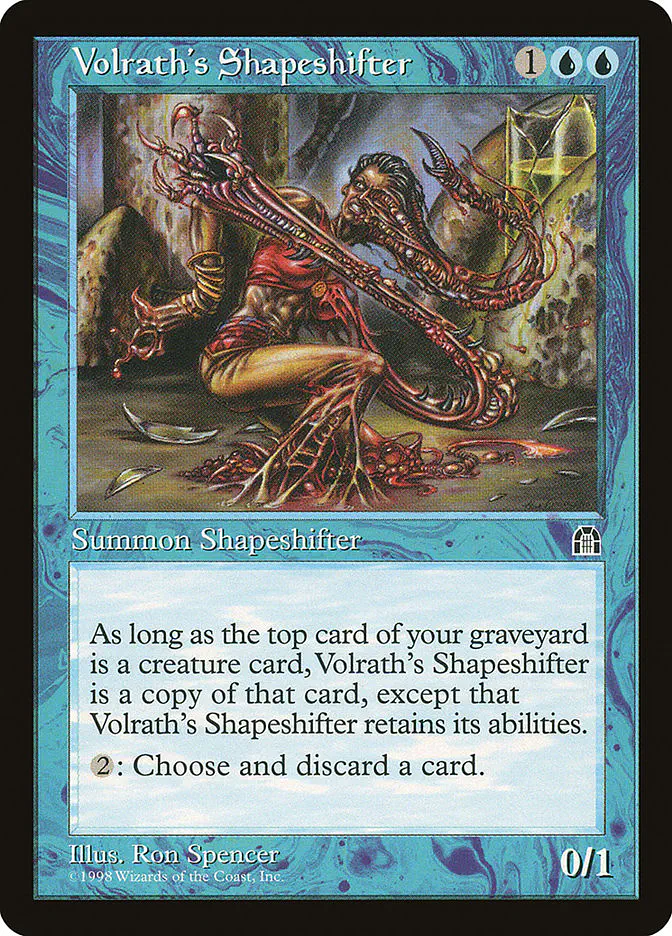
Volrath's Shapeshifter
Creature — Phyrexian Shapeshifter


As long as the top card of your graveyard is a creature card, this creature has the full text of that card and has the text " : Discard a card." (This creature has that card's name, mana cost, color, types, abilities, power, and toughness.)
: Discard a card.
Understanding hFEB first means understanding the role of Volrath’s Shapeshifter. Everything revolves around its ability to take on the text of the creature on top of the graveyard. This transforms the graveyard into a dynamic resource: it's not just an area to fill, but a space to order, manipulate, and actively exploit turn after turn. The deck thrives precisely on this flexibility.
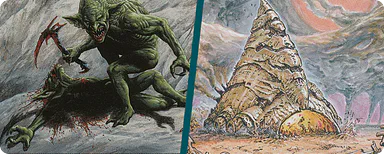
Full English Breakfast




The deck's two engines
The two fundamental combos of the deck are the classic FEB combo and the Hermit combo. In both cases, the structure is similar: there's an engine that sets up the situation, a creature that converts resources into pump, and a second creature that transforms that pump into lethal damage.
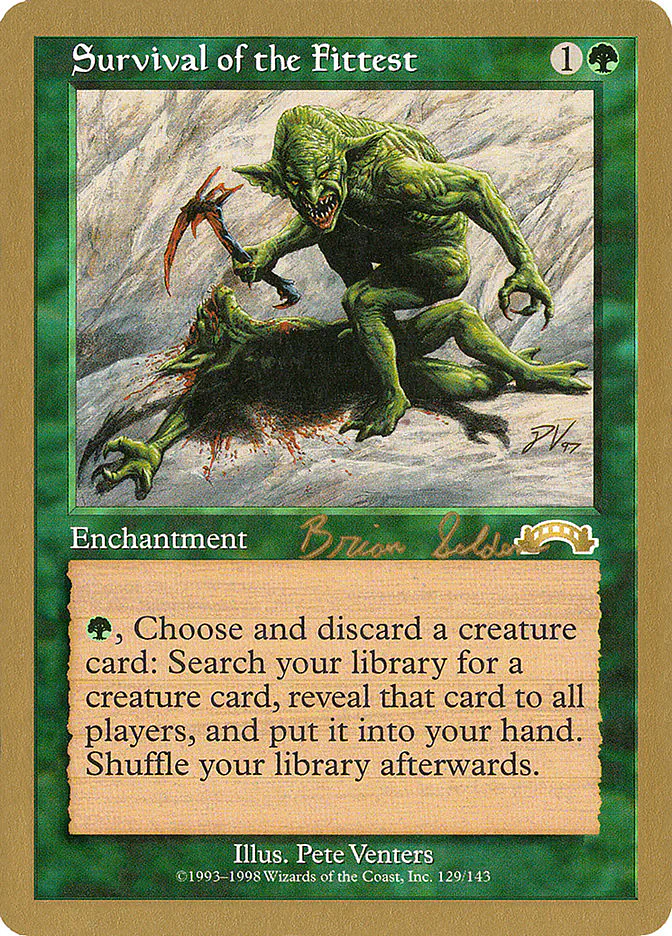
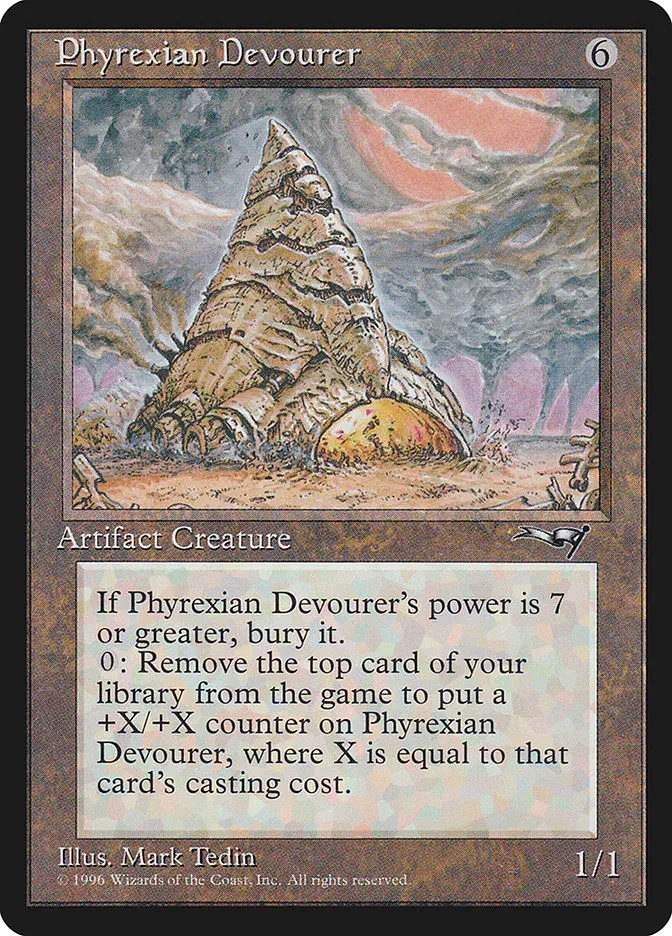
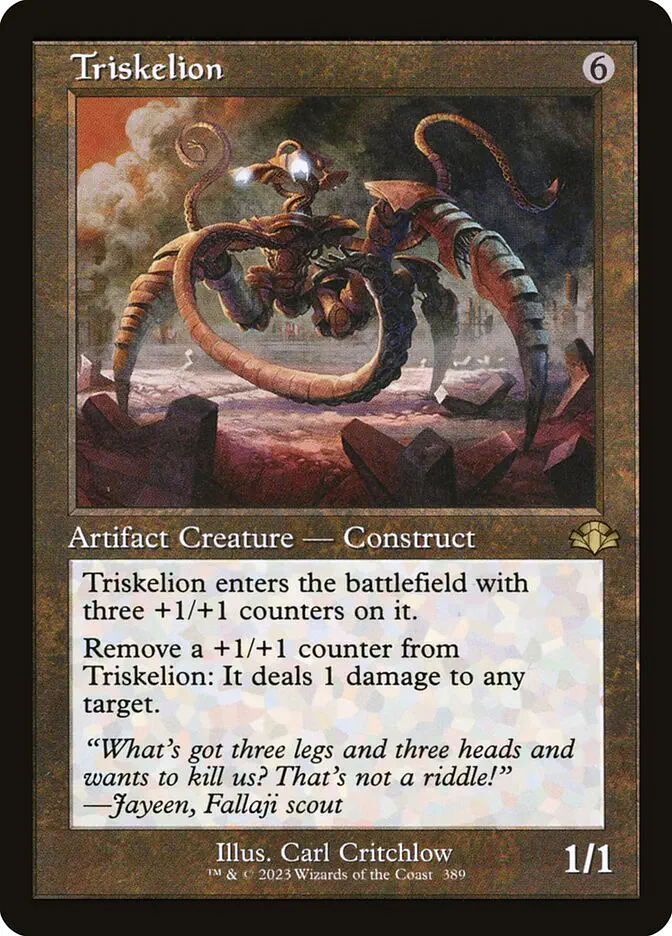
In the case of the FEB combo, the engine is Survival of the Fittest. Thanks to Survival, the deck can discard creatures from hand, search for necessary ones from the library, and, crucially, arrange the top of the graveyard correctly to make the Shapeshifter work. The first key creature is Phyrexian Devourer. When it's on top of the graveyard, Volrath’s Shapeshifter can exile cards from the top of the library to accumulate +1/+1 counters equal to the converted mana cost of the exiled cards. The second key creature is Triskelion, which allows converting those counters into direct damage to close out the game.
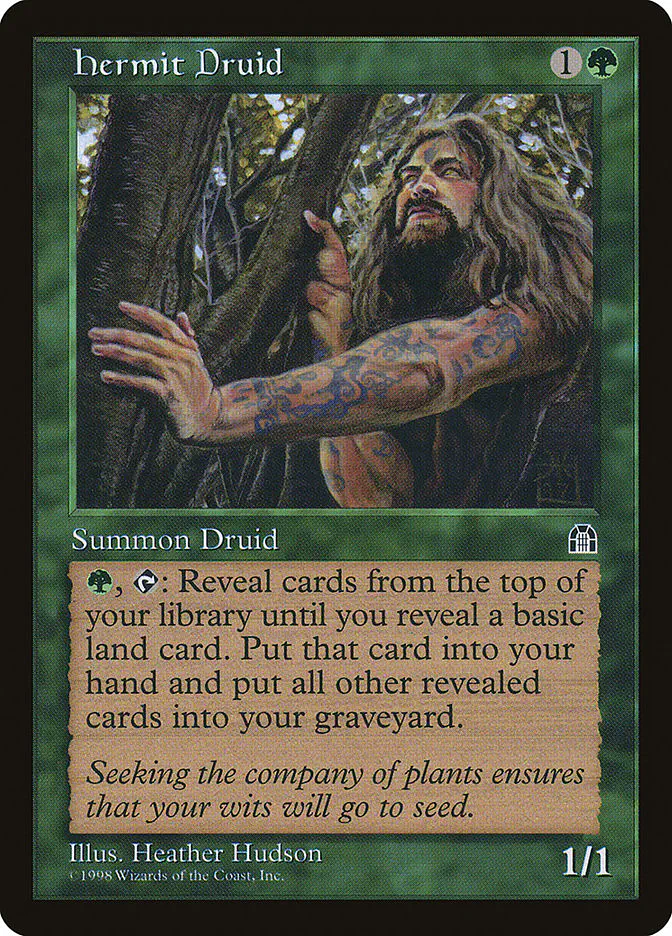
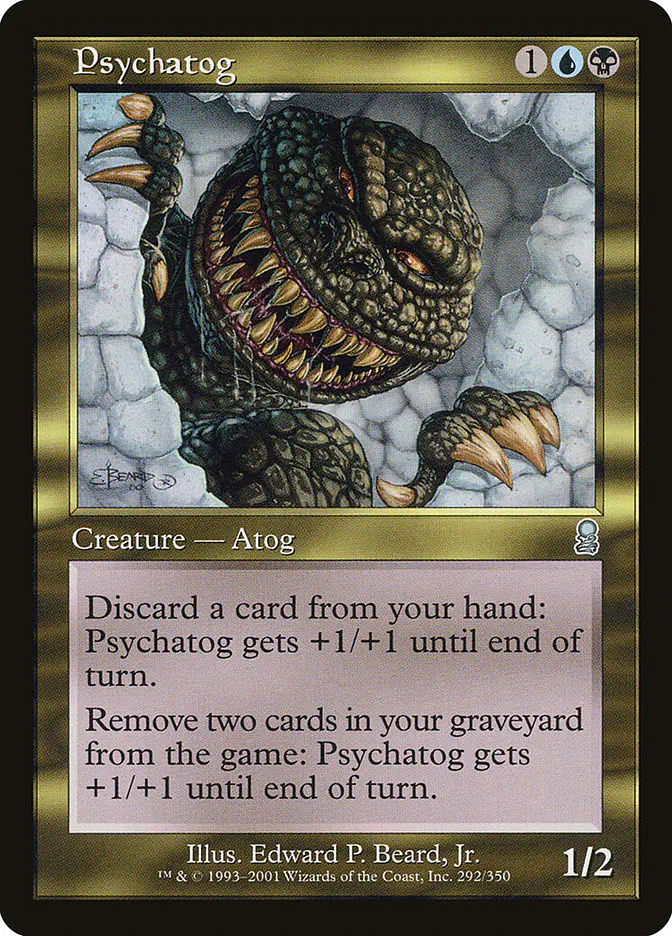
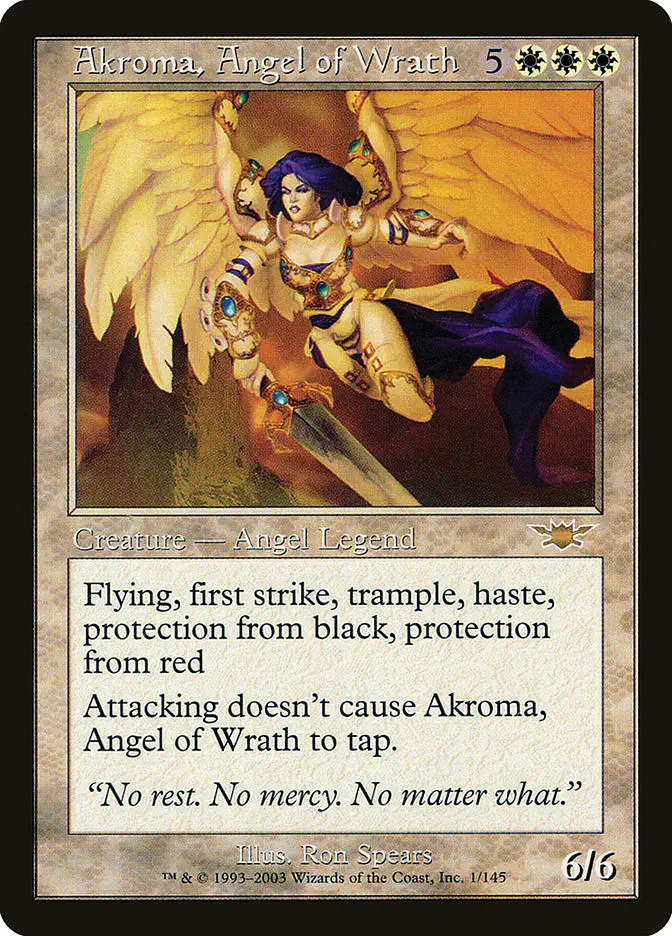
The Hermit combo, on the other hand, uses Hermit Druid as its engine. Since the deck's manabase consists only of non-basic lands, activating the Druid means milling the entire library. Once the entire deck is in the graveyard, the role of "pump engine" passes to Psychatog, which can exile cards from the graveyard to increase power and toughness. In this line, Triskelion doesn't work as a finisher, because the pump doesn't come in the form of permanent counters. For this reason, the kill condition becomes Akroma, Angel of Wrath, which gives the Shapeshifter haste, evasion, and trample, allowing the pump to be transformed into an immediate lethal attack.
Support cards
Alongside the central pieces, hFEB uses a reanimation package with Unearth, Animate Dead, and Karmic Guide. These cards are not just for bringing combo pieces back into play, but also for building faster or more resilient lines, especially when key permanents are not yet in play.
The interaction and discard package, with Cabal Therapy and sometimes Duress, serves a dual role. On one hand, it protects the combo and interacts with the opponent's plan; on the other hand, it allows putting creatures onto the top of the graveyard at the right time. In this deck, even an apparently simple card like Cabal Therapy becomes a setup tool.
Then there are accelerators like Birds of Paradise, Wall of Roots, and Elvish Spirit Guide, which help compress lines and open up combo windows earlier. Palinchron is crucial in turns when you need to "cheat" mana, Squee, Goblin Nabob allows maximizing Survival of the Fittest, and Krosan Reclamation is one of the most important cards in the entire shell, because it allows putting necessary pieces back on top of the library after a Hermit Druid activation or manipulating the graveyard in a much subtler way than it seems.
The card that gave the deck an additional dimension, however, is Battlefield Scrounger. It's the piece that truly connects the two souls of hFEB. It allows transforming Hermit lines into FEB kills, re-converting resources from the graveyard to the library, opening new lines against hate, and generating lethal even in situations that would have previously been too messy to navigate.
The most common lines
The most immediate line remains the classic FEB kill. If you have Survival of the Fittest and Volrath’s Shapeshifter in play, you can discard Phyrexian Devourer to Survival, activate the Shapeshifter as Devourer until it has enough counters, and then discard Triskelion to transform those counters into direct damage. It's the deck's historical line, clean and very difficult to interrupt when all pieces are already online.
The Hermit kill with Akroma is the second fundamental line. After activating Hermit Druid and filling the graveyard, you reanimate Volrath’s Shapeshifter so it enters as Karmic Guide, retrieve the necessary pieces from the graveyard, sacrifice Psychatog correctly to put it on top of the graveyard, pump the Shapeshifter, and finally leave Akroma, Angel of Wrath on top to attack for lethal.
Then there are leaner lines. The Shifter combat kill with Hermit Druid relies on the fact that having Volrath’s Shapeshifter and Hermit Druid on the field is enough to create sudden threats in combat. You attack, activate the Druid, put Psychatog on top of the graveyard, pump, and then leave Akroma, Angel of Wrath or another evasive creature on top of the graveyard to make the attack lethal.
The Shifter combat kill with Devourer follows a different logic: you activate Phyrexian Devourer while maintaining priority, then change the top of the graveyard before the sacrifice trigger goes on the stack, so the Shapeshifter remains huge and can kill on the attack. It's a simple line to describe, but very important to execute correctly.
Lines with limited resources
One of hFEB's strengths is that it doesn't always need to start from a perfect situation. There are FEB lines that work even when you only have one creature to discard to Survival of the Fittest. In that case, you can chain Survival activations to put Triskelion, Phyrexian Devourer, and Karmic Guide into the graveyard, then search for Volrath’s Shapeshifter, cast it as Guide, and climb the chain to lethal.
Palinchron
Creature — Illusion
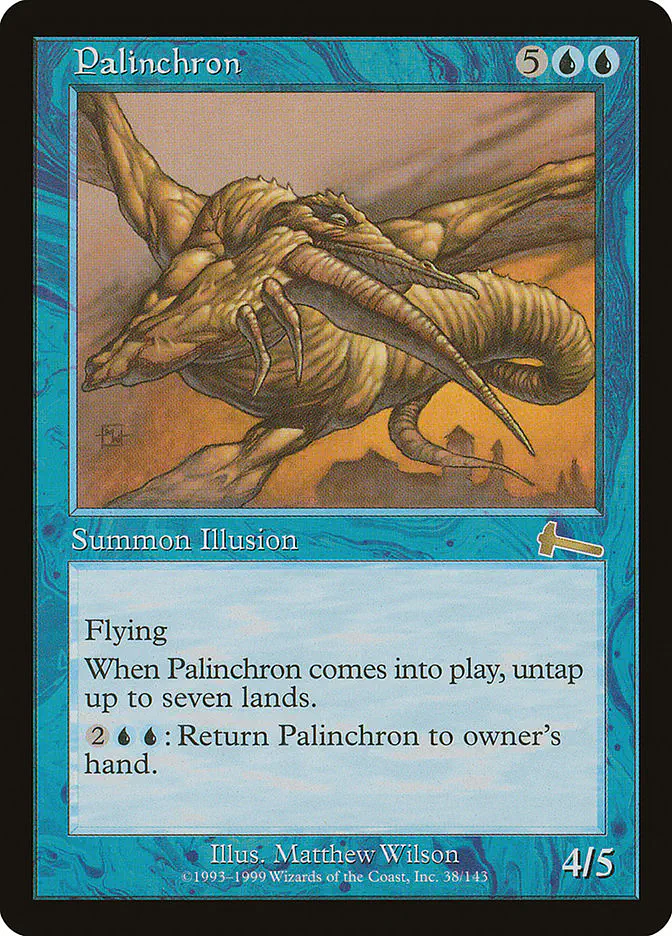
Palinchron
Creature — Illusion

Flying
When this creature enters, untap up to seven lands.
: Return this creature to its owner's hand.
Another very important line is with Palinchron. Here the goal is to compress the required mana, using Unearth on a Shapeshifter that enters as Palinchron, untaps lands, and allows immediately continuing the sequence with Survival of the Fittest. This line is very useful when you need to be quicker than usual or when the deck doesn't naturally have all the necessary resources available.
Battlefield Scrounger and "hybrid" lines
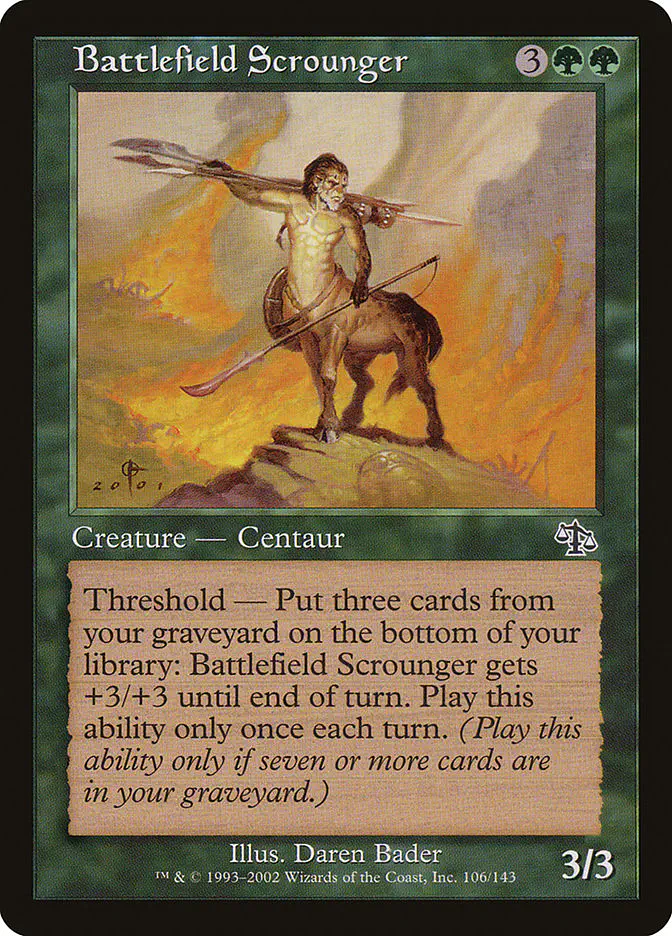
The introduction of Battlefield Scrounger has opened up an enormous number of new lines. One of the most important is the Hermit kill with Devourer, which is a line where the deck activates Hermit Druid, fills the graveyard, but instead of finishing in combat with Akroma, Angel of Wrath, it uses Battlefield Scrounger to put a package of cards with the correct total CMC back into the library, reveal Phyrexian Devourer, and then finish with Triskelion.
Battlefield Scrounger
Creature — Centaur
Battlefield Scrounger
Creature — Centaur

Threshold — Put three cards from your graveyard on the bottom of your library: This creature gets +3/+3 until end of turn. Activate only once each turn and only if there are seven or more cards in your graveyard.
There are versions of this line both with and without Psychatog, and in some cases, it even reaches 36 damage thanks to the combined use of multiple reanimation spells and Battlefield Scrounger. These are complex lines, but they show very well why the deck isn't simply a pile of linear combo. Every new available resource changes how the library can be rebuilt, how the top of the graveyard can be changed, and how to achieve lethal.
Scrounger also opens up lines of infinite pump with Wall of Roots and Survival of the Fittest. In these scenarios, the plan is not so much to exile the library or convert counters into damage, but to build a repeatable pump loop that allows the Shapeshifter to reach lethal dimensions. These lines become particularly valuable against decks that can gain infinite life or that make a classic FEB kill unreliable.
Details make the difference
A deck like hFEB can only be played well if the details are mastered.
Karmic Guide, for example, has protection from black, and this directly affects interaction with Animate Dead. When Animate Dead reanimates Karmic Guide, the aura immediately falls off and generates two triggers. Ordering those triggers correctly is crucial for Volrath’s Shapeshifter to enter correctly and in turn trigger a useful ETB.
With Phyrexian Devourer, it's essential to know when to maintain priority. The exiled cards are seen and counters arrive only when the ability resolves. This means you can build lines where you activate Devourer multiple times, then change the top of the graveyard before everything resolves, preventing the sacrifice trigger from ever going on the stack.
Another key interaction is between Battlefield Scrounger and Survival of the Fittest. If you need a specific creature in the graveyard but it's covered by other cards, you can discard Scrounger to Survival, hold priority, and activate the Shapeshifter as Scrounger to put the card you need back into the library. Then the same Survival activation can transform the just-discarded Scrounger into the exact creature you were looking for.
Discarding "at the right time" also matters greatly. Discarding Palinchron in response to Smother, or Akroma, Angel of Wrath in response to Snuff Out, or Wall of Roots in response to Pyroblast, radically changes the Shapeshifter's form and can cause a seemingly decisive removal spell to fail.
Krosan Reclamation is also one of the most versatile cards in the entire deck. It serves to put Volrath’s Shapeshifter, Unearth, or Animate Dead back on top of the library after activating Hermit Druid, but can also be used to manipulate the graveyard, counter spells like Reanimate or Quiet Speculation, and even protect against opponent's mill- or combo-based kills.
What to do when pieces are missing
In a tournament, you can't always assume you have access to every single combo piece. Some creatures might be exiled, others might have been sideboarded out, and still others might be locked down by hate.
The absence of Psychatog is probably the worst-case scenario, as the deck loses one of its most flexible tools for pumping, manipulating the graveyard, and working at instant speed. In those cases, it becomes even more important to accumulate reanimation spells or steer the game towards traditional FEB lines with Survival of the Fittest.
If Akroma, Angel of Wrath is missing, the most serious loss is haste. Furthermore, Akroma is also fundamental in many lines with Battlefield Scrounger, as it contributes significantly to the total CMC needed to finish with Phyrexian Devourer. Without Akroma, you need to carefully recalculate the damage.
If Phyrexian Devourer is missing, you can no longer execute a traditional FEB kill. In that case, the deck must rely on Psychatog, Battlefield Scrounger, and the Hermit Druid lines. If, however, Triskelion is missing, the problem is less severe: Trike is truly essential only when combat is not feasible.
The absence of Karmic Guide is less dramatic than it seems. Many FEB lines don't require it at all, and even Hermit lines can be rebuilt via Krosan Reclamation or multiple reanimation spells.
The absolute worst-case scenario is no longer having access to Volrath’s Shapeshifter. In that case, the deck can no longer function as a true combo deck and must rely on a classic hard cast and reanimation plan, with Akroma, Angel of Wrath, Palinchron, Psychatog, and Triskelion as battlefield threats.
How to play against hate
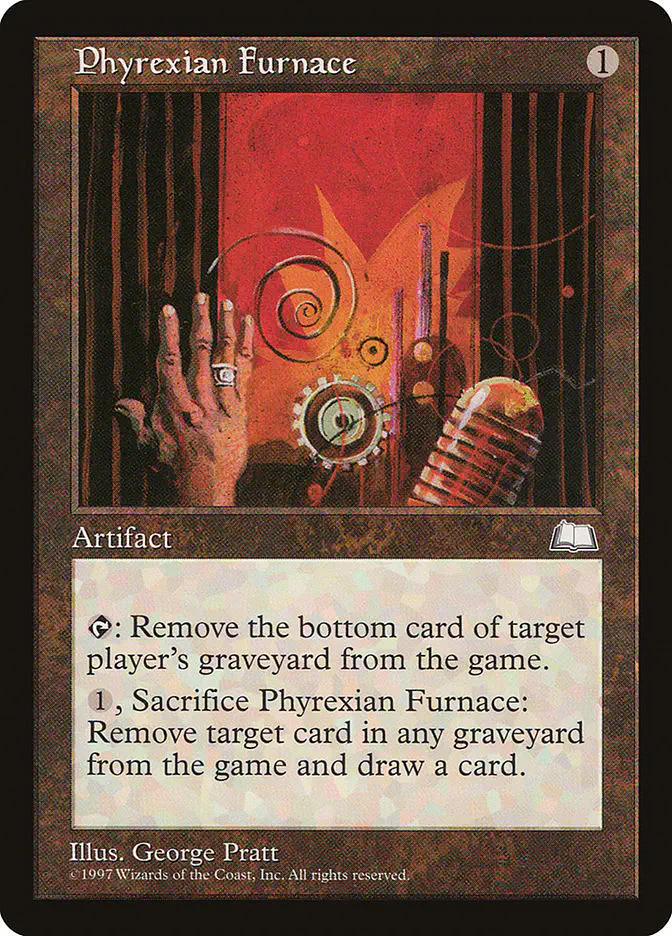
Against graveyard hate, hFEB cannot afford to be rigid. Some lines with Survival of the Fittest and Volrath’s Shapeshifter are built to include decisive steps within activation costs, thus removing useful windows for the opponent to intervene. This is particularly important against cards like Tormod’s Crypt or Phyrexian Furnace.
There are specific lines where Battlefield Scrounger allows you to win even against multiple pieces of graveyard hate, provided the Shapeshifter is not summoning sick and the setup is correct. In these cases, the underlying principle is always the same: anticipate everything that matters within activation costs and remove the opponent's actual points of interaction.
Against Engineered Plague, the plan changes depending on the creature type named. If the opponent names Druid, lines with Hermit Druid become unfeasible as long as Plague remains in play. If they name Phyrexian or Construct, you can still play around the effect by paying attention to which creature is on top of the graveyard and pumping before exposing yourself to Plague's static ability.
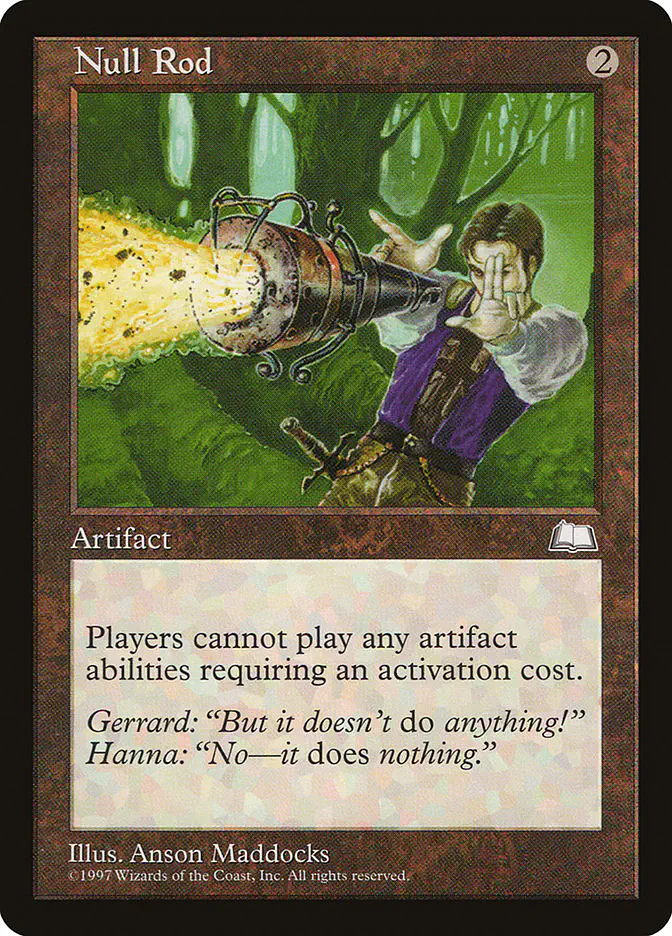
Null Rod is often less problematic than it seems, because it shuts down the FEB branch but doesn't block the Hermit Druid plus Akroma, Angel of Wrath plan. Ensnaring Bridge, on the other hand, makes winning in combat more complicated, but it doesn't shut down Triskelion and often can still be circumvented using Psychatog or pump with Battlefield Scrounger. Cursed Totem, conversely, is one of the most problematic pieces, because it shuts down both Hermit lines and part of the deck's support. In those games, Survival of the Fittest becomes even more important, as it allows searching for Uktabi Orangutan and removing the Totem.
Knowledge and composure
Full English Breakfast is one of those decks that you don't truly learn by playing ten games in a row without thinking. It's an archetype that requires study, memorization of lines, understanding of the rules, and above all, the ability to read the board state. It's not enough to know a kill exists; you need to understand which kill is correct at that moment, which resources to preserve, which ones can be spent, and how to change axis when the ideal plan is interrupted.
It is a combo deck, yes, but not in the most linear sense of the term. It's a deck that rewards the pilot who can improvise within a very technical structure. And that's precisely what makes it one of the most fascinating archetypes in Premodern.
This is much more than a combo deck built around Volrath’s Shapeshifter. It is a complex system of interactions between graveyard, library, battlefield, and stack, where each card can have multiple functions and each game can require a different line. The two souls of the deck, the classic FEB and the Hermit, don't just coexist: they continuously intertwine, and Battlefield Scrounger has made this intertwining even deeper and more flexible.
Those who pilot it well don't just "do the combo." They learn to read the graveyard like a map, to transform support spells into engine pieces, and to win even when the most obvious line no longer exists. This is what makes hFEB one of the most technical and rewarding decks in the format.
Until next time!