


<< Previous Chapter: Activity and Reactivity in MTG
9. General Principles of Deckbuilding
Immediately after the theoretical part on definitions, Rob Hahn moves on to reflect on deck construction and sideboard structuring. For these subsequent sections, I will not be able to follow the previous method due to their less analytical and more discursive nature. Therefore, I will not transcribe the original text and then comment on it. Instead, I will try to interpret the author's text and provide a synopsis. I will update the examples and refresh the language. I will not shy away from critical notes, just as I will not stint on praise. I will also endeavor to complete the logic and fill in the gaps, but I will always strive to remain faithful to the spirit of the writer.
The deckbuilding chapter of "Schools of Magic," "Principles of Deckbuilding," begins with a very strong observation. We all intuit it, but we never direct our competitive eye toward it: "deck construction is one of the things that makes us most attached to the game." Every player knows that building decks is fun. Both casual players and competitive players understand this in the same way. What is not at all obvious is how much this affects the emotional side of victory.
When we win in Magic, we are not just happy because we played better than an opponent, but also because it is a direct confirmation of the validity of the countless hours invested in deckbuilding reflection, construction, deconstruction, and playtesting. The more one delves into deckbuilding, the more victory is not just a demonstration of skill, but also proof of the success of one's reasoning. A just reward for one's efforts.
From this perspective, victory is not just a joyous event, but responds to the psychological need for a return. We have invested labor and we want the capital of victory. This is why losing is so frustrating, and many players abandon the game if they cannot achieve appreciable results, or they move to formats where victory is no longer the main goal. This does not mean that playing just for fun is wrong. Magic is a strategy game, the best of all. If we weren't enjoying playing it, something would be amiss. It just means that we need to realize how much passion can be poured into this game and that, consequently, "playing to win" is not a kind of selfish deviation, but an absolutely legitimate and worthy goal. This is what can be truly said about the "Competitive Spirit." Helping players pursue victory is one of the fundamental tasks of Game Theory.
Game Theory and the Competitive Spirit
After this realization, the author proceeds to present his approach to building effective decks. His method, as with the definitions of game concepts, is empirical. He will list the principles he learned both during his own experience and through discussions with the best players of the era. This will not be the only way to approach deckbuilding, but it contains many axioms on which almost everyone once agreed. Rob Hahn states clearly: "Keep in mind that the basic assumption of this entire series is that you build decks to win, not to have fun." The goal, therefore, is to provide formulas for building something that wins. If other goals are pursued, this article is not the right place to find them.
That said, according to Rob Hahn, there are three fundamental principles for building an MTG deck.
A) Principle of Maximum Card Utility
This first axiom dictates that every card in the deck must be maximally useful. This means that the cards included in our deck cannot be useful only in certain situations, or against specific decks: they must be the most useful cards against the greatest number of possible decks. Obviously, "the greatest number of possible decks" is a measure parameterized to a certain meta of a particular format.
A simple way to apply this principle is to take two cards that have the same mana cost and comparable effects, then compare them to see if one of the two does more things, or does the same things in a more appreciable way. Simply put, if we want to include an artifact removal and are undecided between two sorcery cards, where the first destroys any artifact and the second an artifact or enchantment, the second will clearly be the most useful. In the same example, if both cards only destroy artifacts, but the second is an instant while the first is a sorcery, then the second will be better.
Up to this point, the game is simple. It becomes complicated when we have to compare different elements. Returning to our example, this time the first card is a one-mana instant that only destroys artifacts, and the second is a two-mana sorcery that exiles artifacts or enchantments. Here the choice is already more complex, because the first spell offers a faster and more targeted effect, albeit very limited. The second offers a much stronger and broader effect, but is also clunkier to play. Finding the answer to which card is most useful requires a deep knowledge of the environment it will be inserted into, meaning both the deck as a whole and the reference format, as well as the circumstantial metagame the deck will face.
B) Principle of Open-Ended Combinations
One should not rely on combinations. Combinations can win some individual games, but they also represent a weakness for the deck, as neutralizing one component of the combination often leads to destroying the entire strategy aimed at winning. Consider the enchantment Exquisite Blood, which for five mana allows you to gain life whenever an opponent loses life. Now imagine it in combination with Sanguine Bond, another black five-mana enchantment that causes an opponent to lose life whenever you gain life. Very powerful, right? Just one point of life loss for the opponent, or one point of life gained by us, and we are the kings of the game. But no.
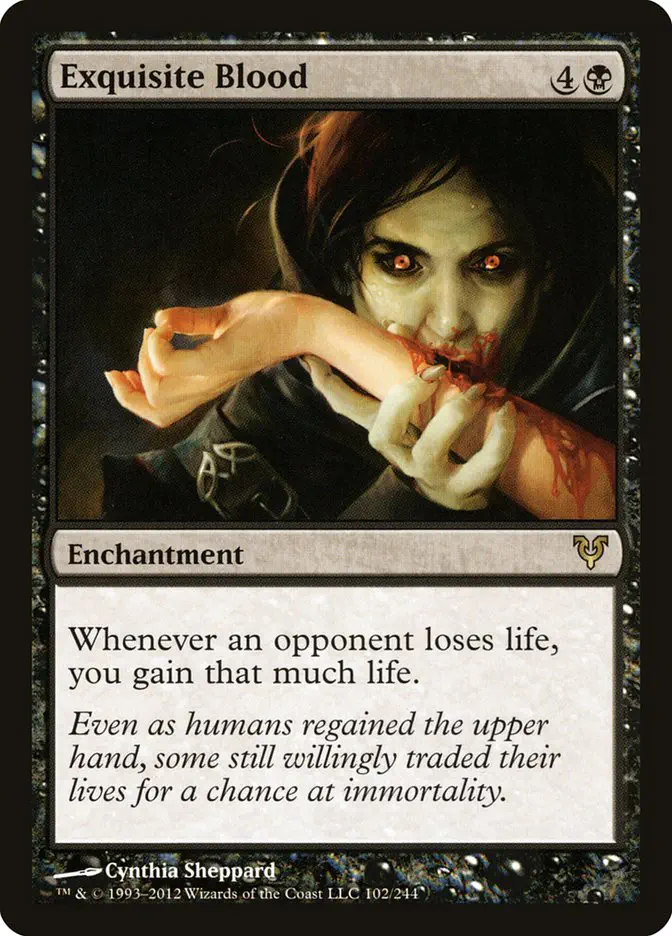
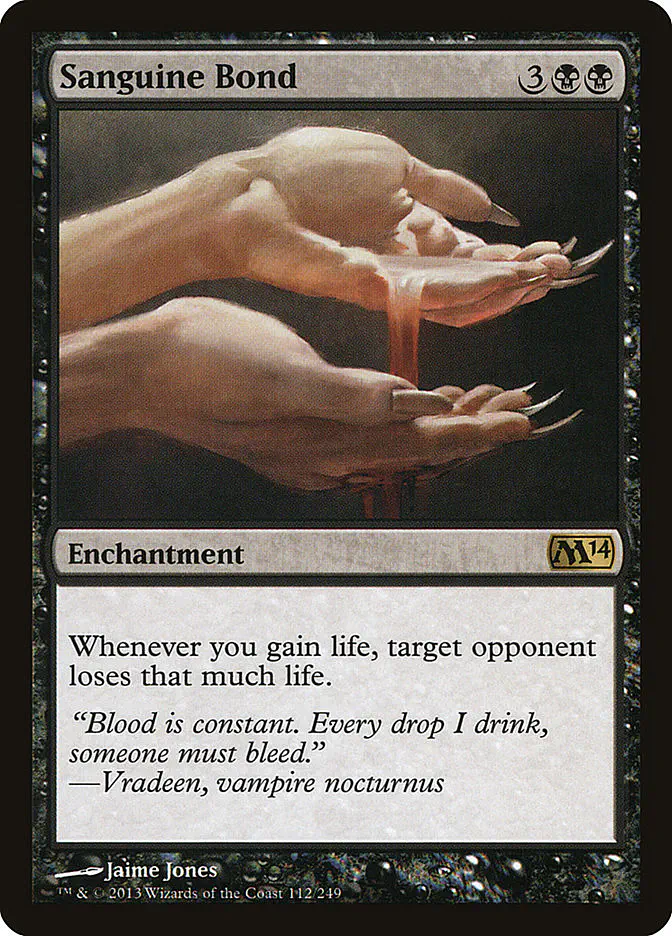
This extremely powerful combination will never see serious play, precisely because it is a closed combination. Even before considering the mana intensity of these two cards, the main problem is that they only win the game if both are on the battlefield simultaneously. If we rely on this assumption, we would have to build the entire deck to make this happen as many times as possible, while the opponent can always respond to just one of the two cards to invalidate the entire strategy. This means starting with a self-imposed technical disadvantage. While the opponent can win using different game environments, we are bound to win only by using the environment suitable for the closed combination.
Hahn's ideal situation is to seek open-ended combinations. This means we should build a deck to include the possibility of making card combinations, without relying too heavily on them or using cards that are only useful in combination with others.
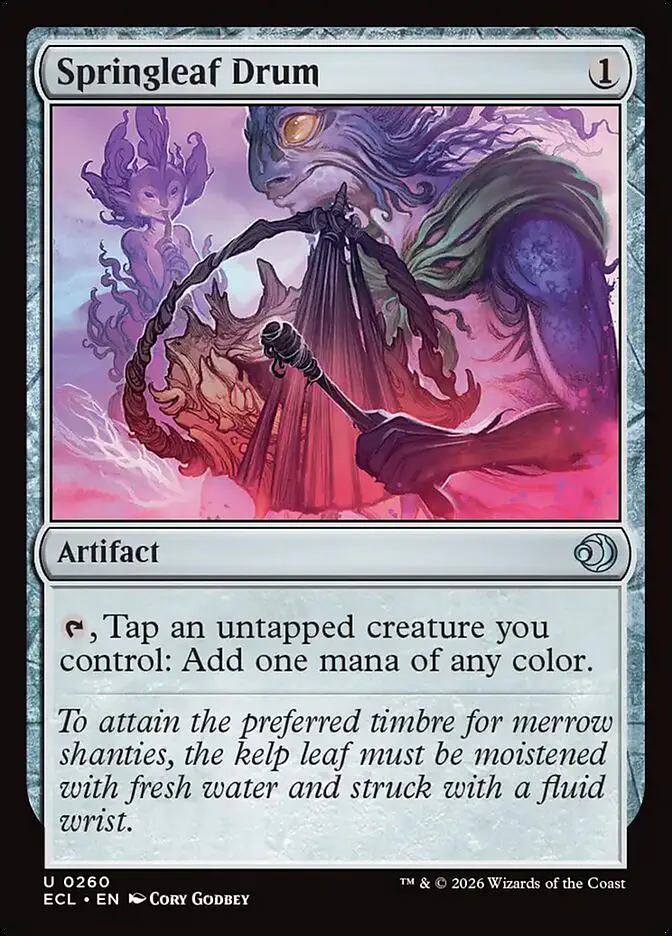
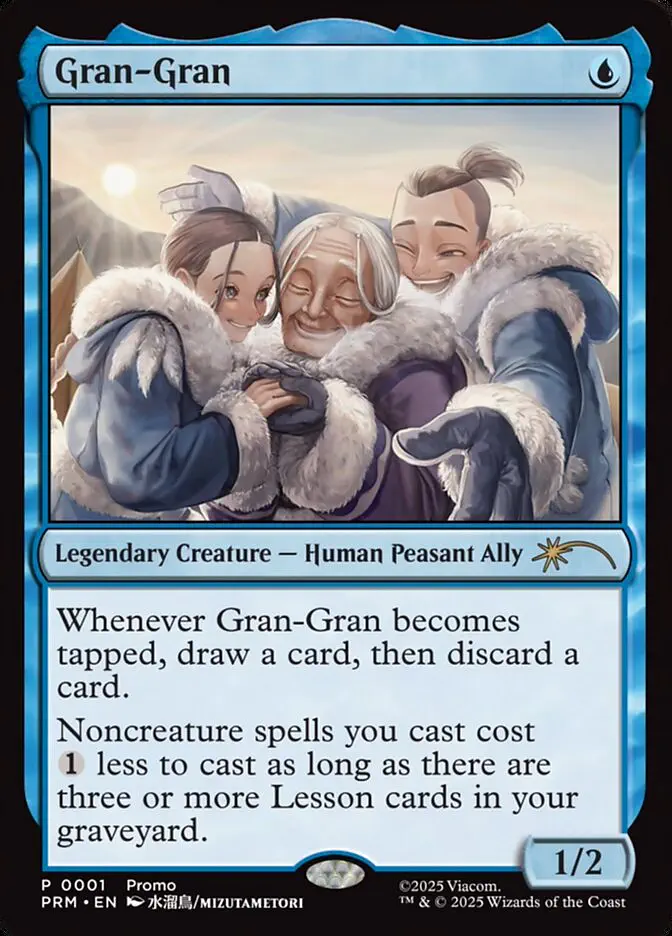
Let's take a simple example by analyzing the U/W Momo deck, which is a strong Aggro deck in the current Standard. In that deck, a single copy of a card called Gran-Gran is often played. This creature is useful in itself because it provides a looting effect when tapped. Its second effect is not relevant here. The deck also plays Springleaf Drum, which it uses in the early turns to play many pieces quickly. Both cards have autonomous utility, but when put together, they form an appreciable combination: Springleaf Drum can tap Gran-Gran to add a mana to your mana pool, and at the same time, Gran-Gran will have let you see an extra card, expanding your graveyard. The entire deck does not depend on this combination in any way; it only gains appreciable added value from it.
It's worth noting that combo decks deliberately bypass this principle. A purely Combo deck is a deck that bases its win condition on an extraordinarily strong interaction of two or more cards. In its purest identity, a combo deck would only consider combinations of two cards. The rest of the deck is structured to create the conditions under which the combo is playable within a game.
However, this is not an exception that proves the rule. On the contrary, it is precisely because combo decks do not follow the principle of open-ended combinations that they are inherently fragile. If we think of any combo deck in any format, we can see that the most enduring ones were those for which, at the same time, there were no credible answers to the combo. Or, where there were answers, these could also be integrated by the combo decks themselves as a defensive counter-response. In essence, the existence of combo decks does not falsify the principle of open-ended combinations, because they manage to exist and are a convenient choice only in an environment where responding to one of the combo pieces is difficult to achieve. Here, the closed combination is not fortunate in itself, but opportune because it is inexorable.
C) Minimization of Mana Requirements
This principle states that spells should have the lowest possible casting cost, even if the effect they generate is not impressive. Let's try to integrate this principle into current competitive play. Looking at Standard, for many 
 decks, it will be better to consider more copies of Flitterwing Nuisance in the creature suite rather than Enduring Curiosity. The effect of the latter is clearly more disruptive, but it also costs four mana, while the former can be played for only one mana. Or, to give an example where creature abilities don't involve activation costs, like Flitterwing Nuisance, for which we can talk more about mana deferral than discount, the 1-cost Burnout Bashtronaut included in MonoR will win more games than the much more powerful 2-cost Hexing Squelcher.
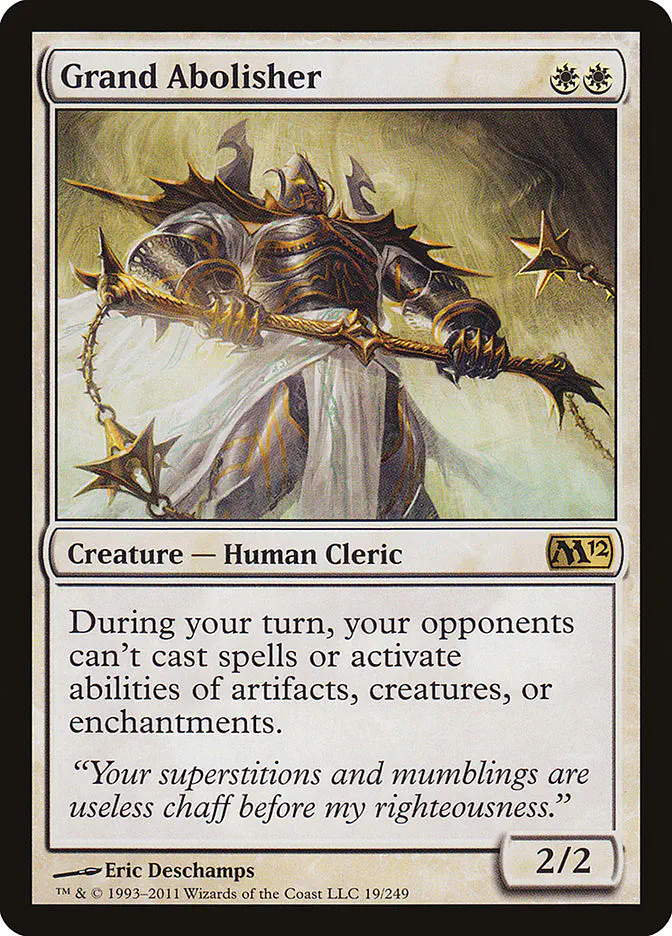
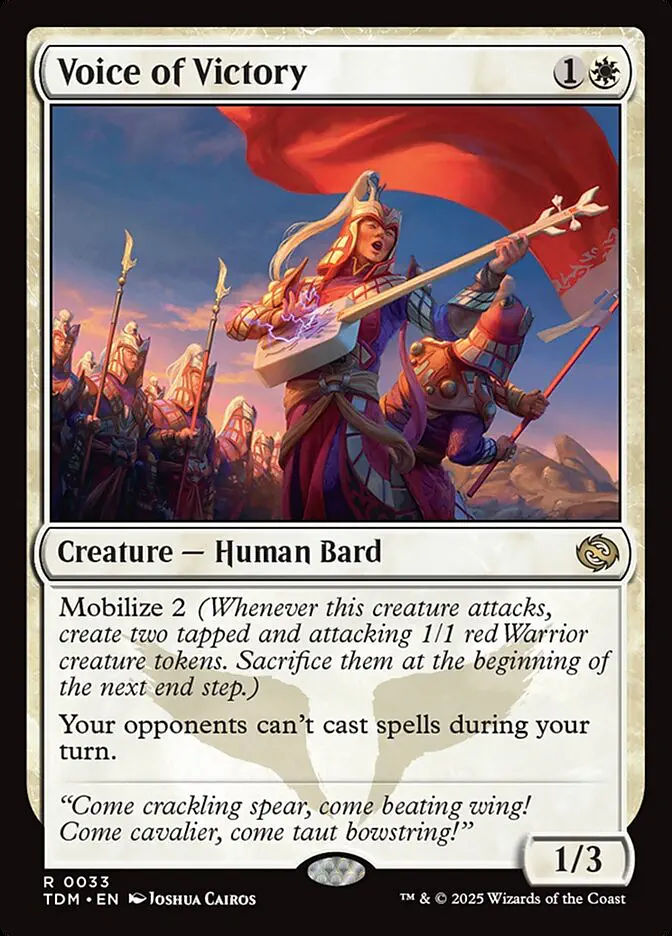
Furthermore, for the author, minimizing the mana cost of spells also means trying to minimize color requirements, i.e., trying to limit spells with double specific mana costs as much as possible, where feasible. For instance, between Grand Abolisher and Voice of Victory, only the latter is seen on tabletops in Standard.
Conclusions from the Three Principles
Having concluded this first part of the text, the writer derives certain conclusions from his three principles. First, a deck should not have more than one primary color. Hahn defines "primary" as a color for which there are spells in the deck that require more than one specific mana of that color to be cast. The other colors present in the deck would be "support" colors, meaning spells of these colors would only have one specific colored mana within their mana cost.
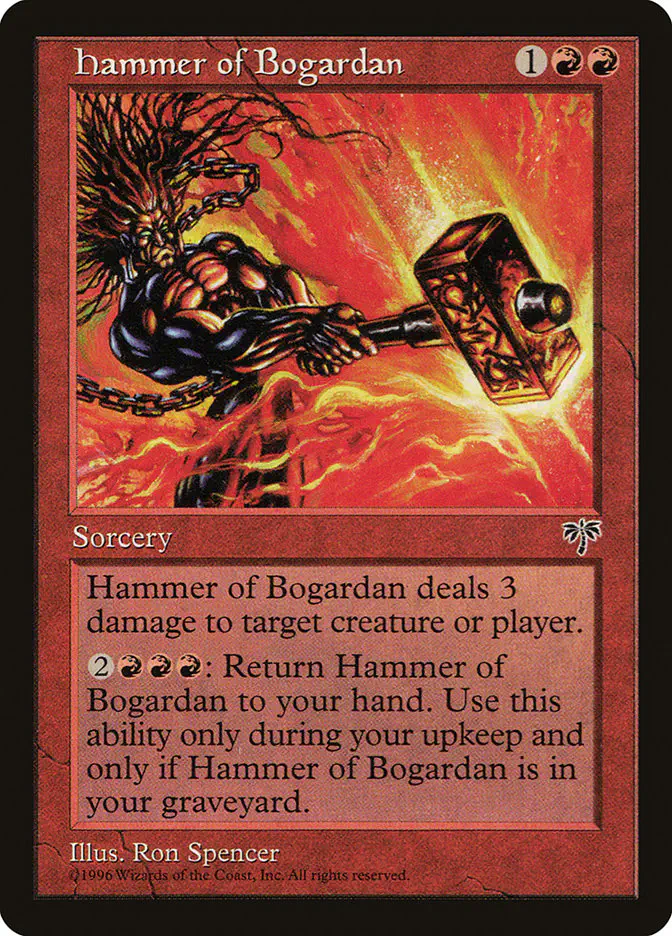
I must say that this conclusion now seems outdated. Or rather, this definition of primary and support colors within a deck seems outdated. Even in Hahn's time, this conclusion was debatable, as he himself notes. Indeed, in Type II, the CounterHammer deck was successfully played, using spells requiring double blue mana like Counterspell, alongside spells requiring double red mana like Hammer of Bogardan. Furthermore, the printing of Thawing Glaciers and the removal of Strip Mine from the format had made it possible to access more colors of mana with greater ease.
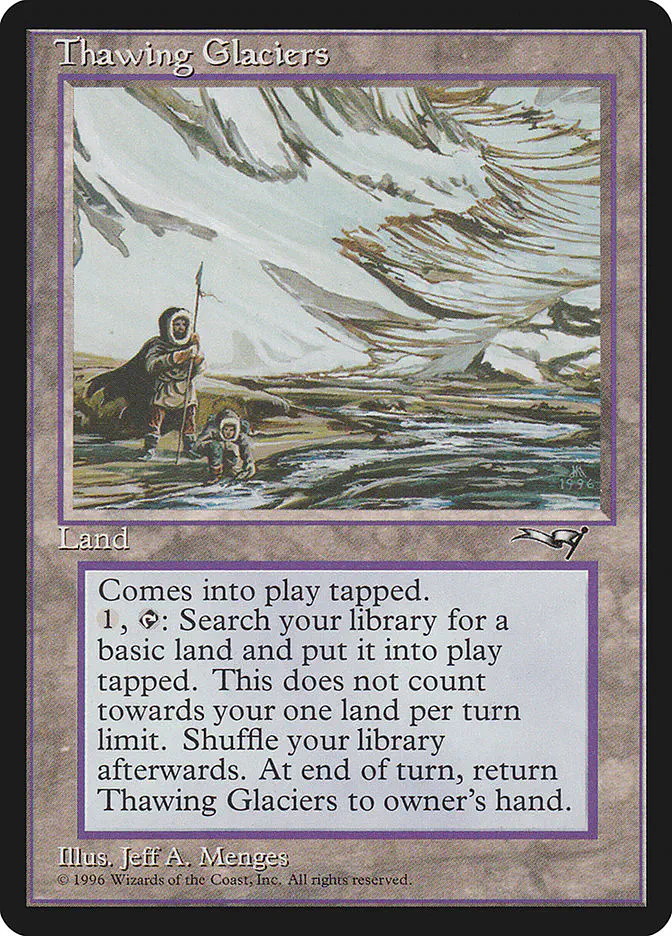
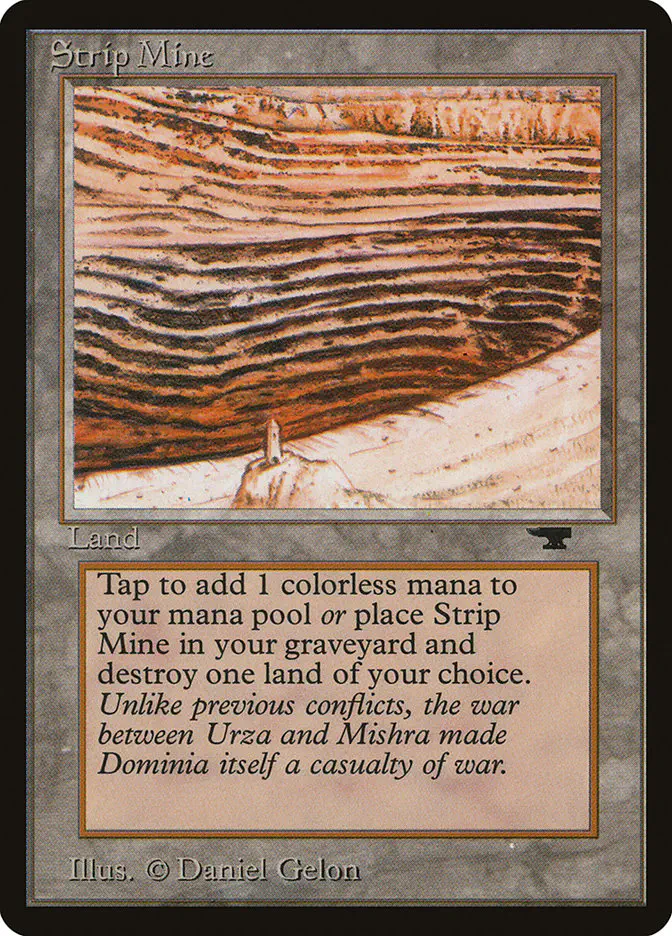
Even without going that far, if we consider any type of Azorius Control, we would imagine a deck with some counters with double blue specific cost and some wraths with double white specific cost. Decks like this have been deckbuilt multiple times and have often become Tier 1 in various competitive formats. Moreover, with all the new land types capable of providing multiple colors of mana quickly, like Shock lands, the conclusion of using only one primary color seems even less necessary. We can still consider this derivation as a prudential guideline. Let's interpret it this way: the most cautious and solid approach is to try to limit double or triple specific colors as much as possible.
However, if within a certain format the usable lands are able to easily provide multiple specific mana costs, then one can allow for more spells that require significant specific costs. In this way, we also remember that deckbuilding is not an operation isolated from the game context the deck will face, meaning that deckbuilding is both a practical and theoretical operation.
As previously stated, Hahn's definition of primary and support colors also no longer seems widely acceptable. We could conceptualize the relevance of colors in a deck in this more modern way:
- Main Color: the color we expect to see in every game. We hope to see it in our opening hand, but it's not necessarily a mulligan if it's not there. A deck can have more than one main color. For example, in the current Sultai Control in Standard, there are at least two main colors ( and ) and one secondary color (
 ). It is possible not to mulligan with opening hands that contain even just one of the two main colors.
 - Secondary Color: this is a color we plan to see during the course of the game, but which is not necessary to have immediately. It is possible to win the game without ever using that color. For example, in the current configuration of Selesnya Landfall in Standard, it is concretely possible to win a game using only the color.
- Tertiary or Splash Color: this is a color that is part of our game plan, but only for marginal aspects, yet relevant enough not to be excluded from the deck. Usually, this type of color is seen more often in Limited and less in Constructed. Nevertheless, there are several Constructed icons that can guide us. The Jund Elementals deck in Standard can integrate a
 splash to play Beza, the Bounding Spring, an excellent solution to aggressive and fast metas. To respond to the same meta, especially if characterized by very low mana cost threats, as usually happens when many Prowess decks are present, the Sultai Control deck can splash to include Pest Control in the sideboard.
This more modern division is also adopted by Reid Duke in "Level One: The Full Course", 2014-2015.
A second conclusion the author draws from the three cardinal principles of deckbuilding is that every deck should have an open-ended combination capable of enhancing its basic strategy. This is the precursor to the current concept of "modular synergy," nothing to do with the Modular ability that appeared with the Mirrodin expansion. In MTG, synergy is an interaction between two or more cards that work together to produce an overall effect greater than the sum of their individual parts: when put together, they amplify their effects. For a clear practical example, just think of any tribal deck.
A modular synergy is one where each card maintains autonomous strategic relevance; the combination increases its impact without being a necessary condition for each of them to be played. A dependent synergy, on the other hand, is generated by cards with irrelevant value when taken individually: the only reason to play them is the synergy they create. Open-ended combinations cause modular synergies.
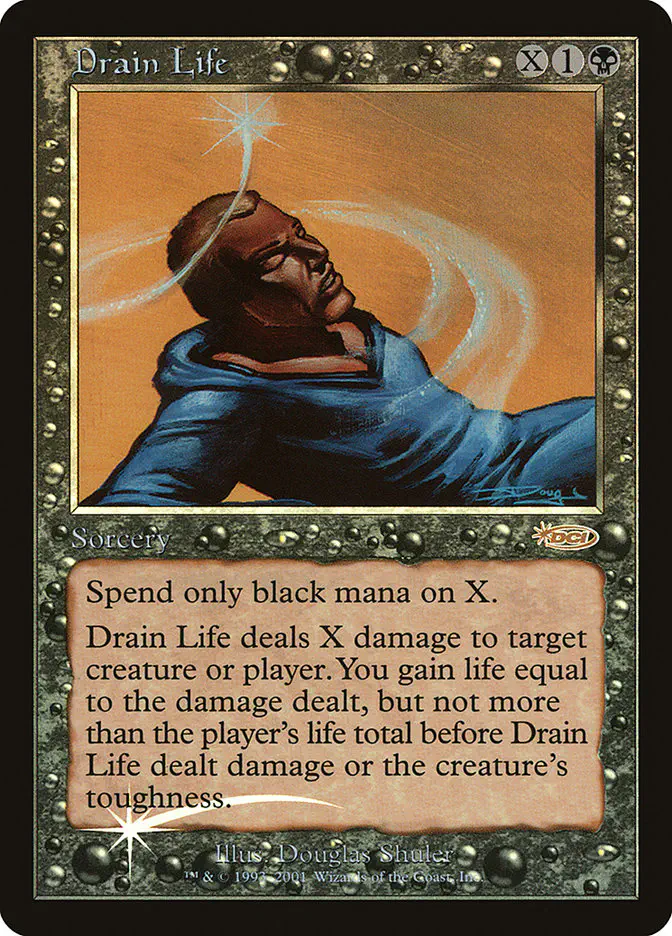
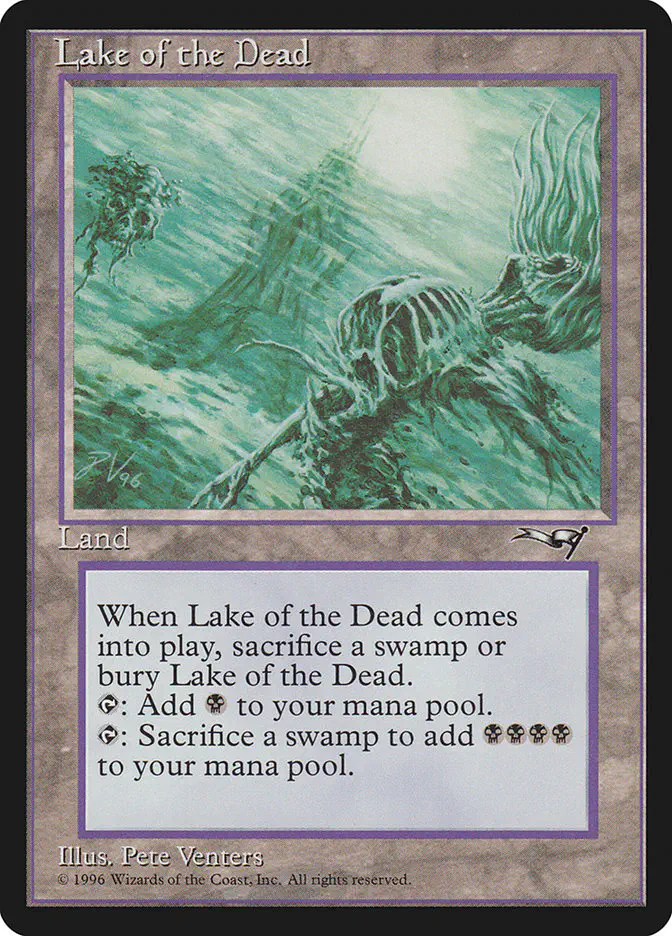
An example of an open-ended combination given by the author is that of Drain Life and Lake of the Dead. Drain Life is useful on its own as removal or direct damage. Lake of the Dead is always an explosive mana source. Together, they create a powerful effect that even back then could generate 12 or 13 damage Drain Lifes, capable of winning games.
We can take a more recent example by looking at the 5C Domain Zoo deck in Modern. The deck plays a card that is useful in itself in a five-color deck: Leyline of the Guildpact. Many of you will be extremely critical of this card and may even consider it the deck's weakness. Perhaps you are right. Even I, at times, find myself thinking so. However, if it were, it would be because it's a Leyline with the classic Leyline pregame effect, certainly not because it's not useful. It's not bad at all, in a five-color deck, to be able to rely on a static ability that produces a continuous effect allowing our lands to be any basic land type.
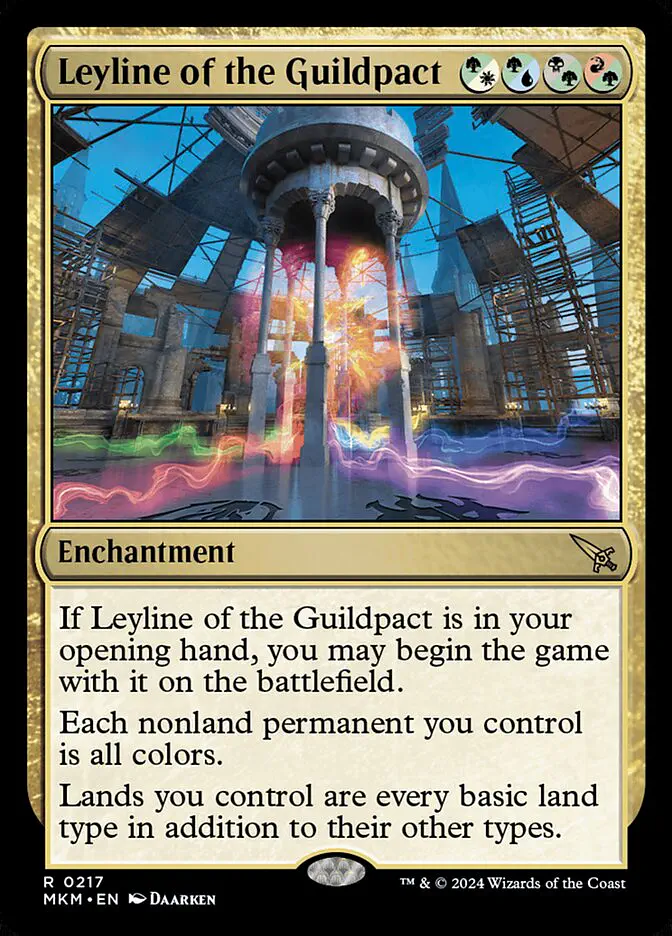
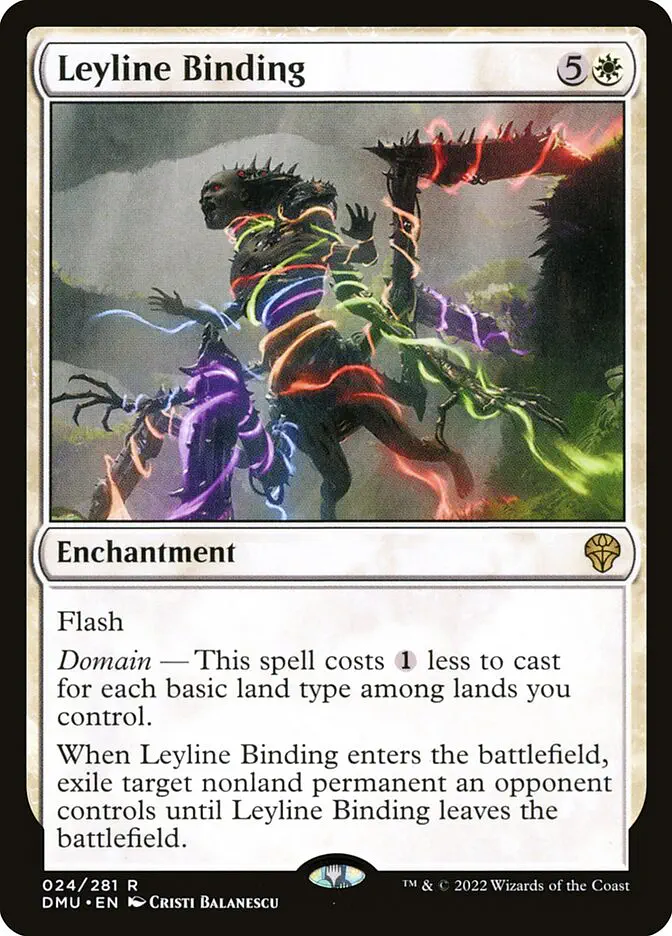
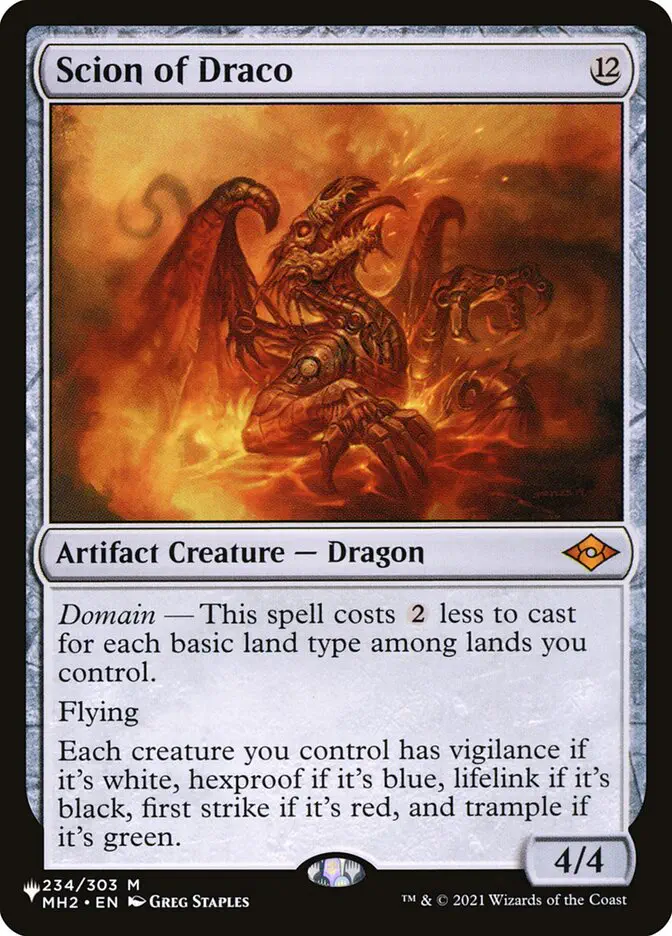
Even Territorial Kavu is a good card in itself: a cheap threat that, when it attacks, produces a rummaging effect or graveyard manipulation. However, when put together, their effects are greater than the sum of their parts, because Territorial Kavu enters the battlefield as a 5/5 for two mana, which makes it extraordinarily aggressive. The same reasoning applies to other cards in the deck like Scion of Draco and Leyline Binding. These cards do not strictly depend on the synergy with Leyline of the Guildpact, as it is still possible to utilize their effects in a timely manner by using fetches and triomes. Nevertheless, the combination of these cards gives the deck a huge boost, so much so that its true strength lies precisely in these synergies. But all the cited cards retain some utility even when not put into synergy.
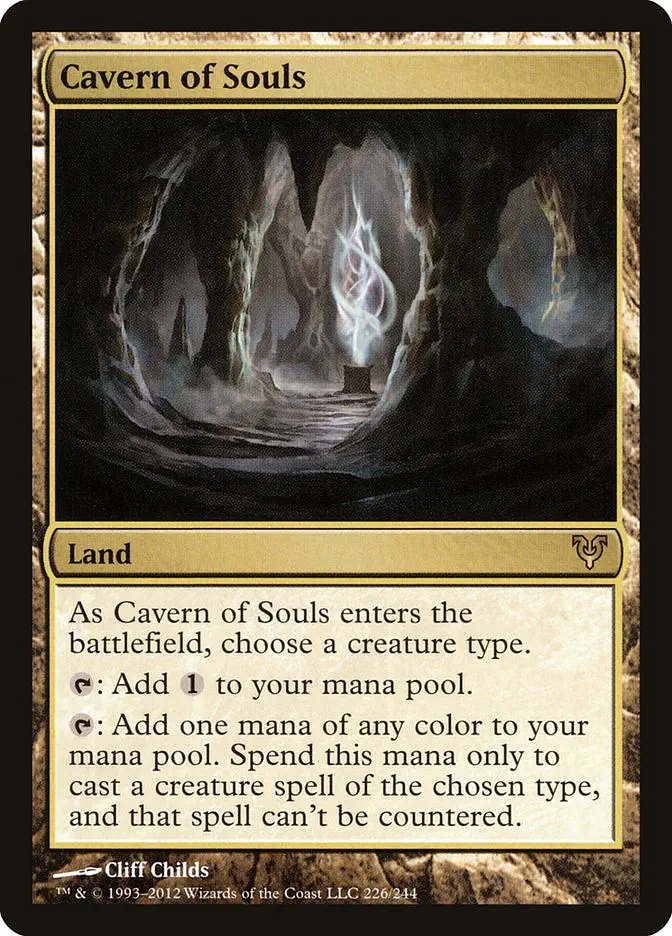
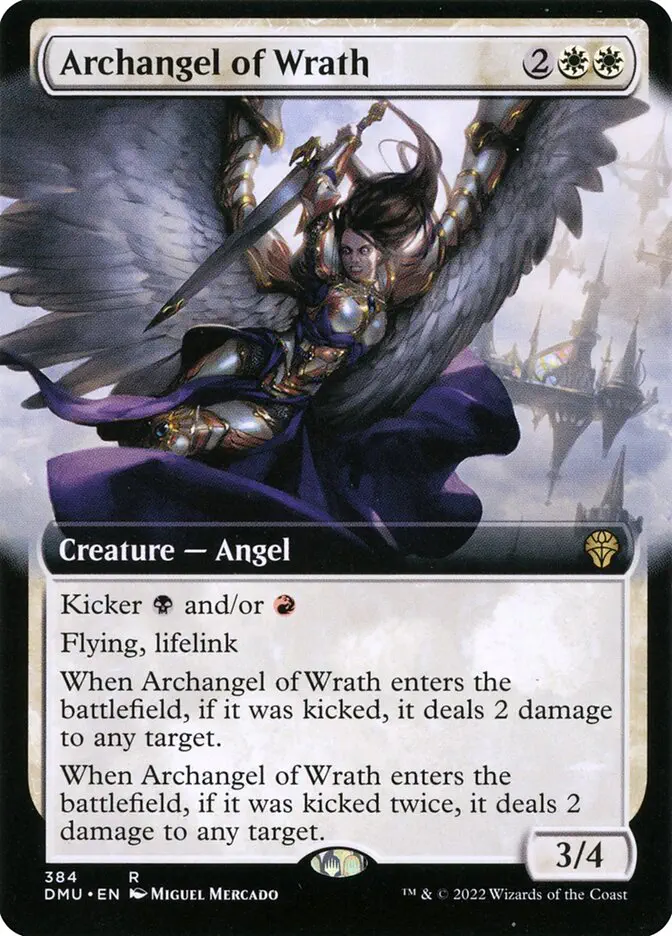
Another example of modular synergy was developed in Standard between Cavern of Souls and Archangel of Wrath. This was smaller and more discreet, often unnoticed by many, but it could change the course of a game. If "Angel" was chosen as the creature type, then Cavern of Souls could generate mana of any color, provided it was spent to cast an Angel creature spell. This would be uncounterable. Archangel of Wrath, which is an Angel, has a Kicker ability that allows you to pay and/or  to trigger two ETB effects that deal 2 damage to any target. Cavern of Souls could help fix the Kicker cost, dealing two more damage and also making the Archangel uncounterable. In the 5C Domain deck, both cards were useful separately, but the interaction between the two created a value greater than the sum of their parts.
A final, different example of an open-ended combination is represented by any "Lord" card. A Lord in MTG is a creature that increases the base stats of every other creature of the same type. This slang comes from Lord of Atlantis, which buffs every other Merfolk on the battlefield and also makes them evasive. In a deck that includes Lords, the basic strategy is usually to win the game by overwhelming the opponent with attacks from its creatures. Each creature is autonomously useful, and each Lord is autonomously useful as a threat. However, each Lord combined with other creatures creates an open-ended combination whose effect in terms of aggressiveness is greater than the mere sum of the strengths of the threats considered.
Once the principle of open-ended combinations, or modular synergies, is understood, it becomes simple to grasp that a basic concept of MTG is not to hamstring oneself. It is almost always tactically inconvenient to commit to doing something that, if it fails, dooms you to lose. The real difficulty lies in identifying which combinations are truly open-ended and which are closed. Because in closed combinations, at least one of the two cards is always less than maximally useful within the deck.
Rob Hahn derives another corollary from the second principle of open-ended combinations, i.e., minimizing reliance on combos: that of presenting multiple threats. Here the author means "threat" not in the sense I have used throughout the text. I primarily call creatures threats, which is a less technical but certainly more modern and widely accepted way of speaking about the game. Currently, when speaking of a threat, it refers to a permanent capable of damaging an opponent's life total; usually creatures, for the most part. Hahn, however, means by "threat" anything that prevents the opponent from playing their game. So there are both offensive and defensive threats. A Blaster deck is full of offensive threats, and a Lock deck is full of defensive threats.
The author states that, when combined, multiple threats can have devastating effects, but they must always represent a credible danger even on their own. Note, this does not mean that every card in the deck must necessarily be a threat. If we reasoned that way, many very useful cards like cantrips would have no reason to exist. It means that the cards we play to overwhelm the opponent and win the game must have an autonomous impact on the game. They should not be relevant only because they synergize with each other.
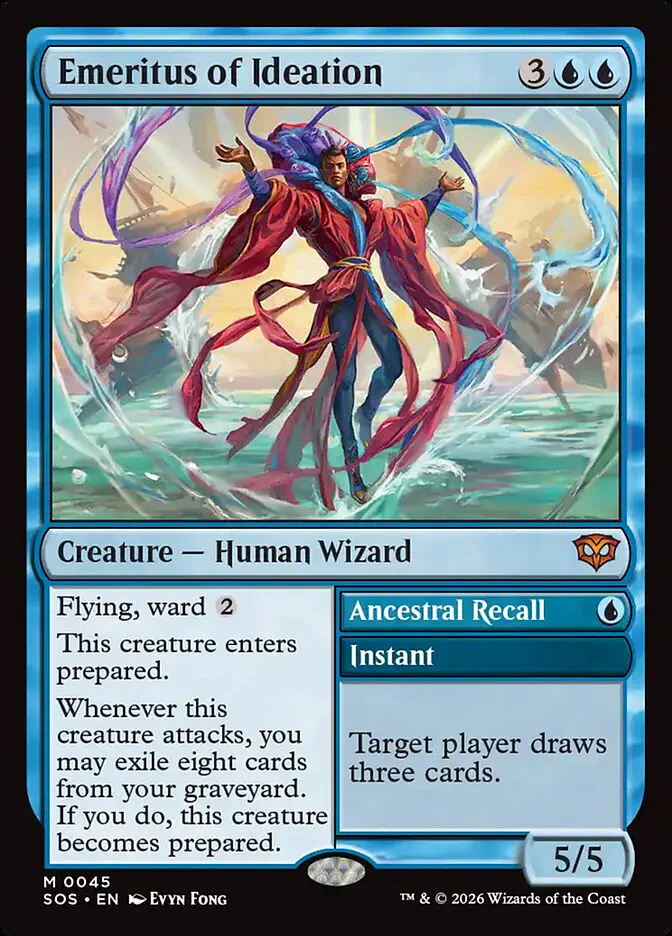
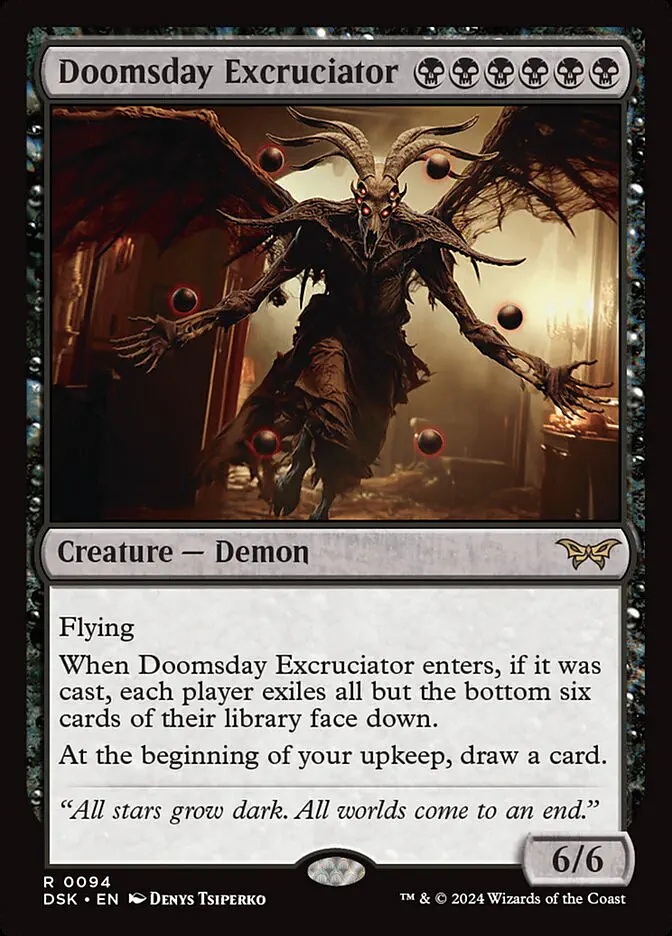
For example, taking the U/B Excruciator deck in Standard, it is undoubtedly true that Emeritus of Ideation and Doomsday Excruciator have a very strong synergy and can cause the opponent to lose the game simply by running out of cards in their library. But it is equally clear that both constitute significant standalone threats: Emeritus of Ideation, without Doomsday Excruciator, is still a large, evasive, self-protected creature that allows for devastating card advantage and poses a serious problem for the opponent.
The Mana Base
Finally, for Hahn, the third principle of "Minimization of Mana Requirements" has as its main corollary the necessity of overloading the mana base. For the writer, the other side of the coin of minimizing color requirements consists in ensuring that one's availability of the appropriate mana is more than adequate to support the draws. Hahn argues that the general rules of that time, which recommended that a third of the deck consist of mana sources, were erroneous. His third principle states that the correct ratio between mana sources and spells is between 40% and 45%. Furthermore, this total percentage should be divided as follows:
- 35-40% of sources that provide a specific type of colored mana;
- 5-10% of what he calls "alternative mana."
Colored mana support is the lifeblood of every strategy. This ensures that every card drawn can be played without worrying about color screw, or color lock, as it was once called.
Alternative mana, according to Rob Hahn, is a very broad category composed of:
- all cards that are not sources of colored mana but can become so (e.g., Birds of Paradise or Dark Ritual);
- cards that allow you to obtain colored mana sources in some way (e.g., Land Tax or a fetch land);
- colorless mana sources that have some other useful effect (e.g., Mishra's Factory, Wasteland, or Strip Mine).
This is the gist of the discussion on the number and type of lands the writer believes is optimal for a competitive deck. It should be noted that Rob Hahn presents this rule as a general and generic guideline, suitable for most strategies. He knows very well that there are peculiarities, such as particularly fast archetypes that strip mana sources to the bone, even down to just 18 lands. They existed then and they exist now. I find nothing relevant to correct or add to this thirty-year-old thought. I find it pure and unaltered in its genuineness.
The only thing that has changed is that we now have more lands capable of providing multiple colors with fewer drawbacks. Moreover, the continuous increase in card power level has led them to become increasingly less expensive.
But the concept of mana balancing and the art that seeks to capture it in Magic has never changed. We can say it is the true ancestral part of the game, the one that has always evaded evolution. Its primordial side, like the remnant of our tail or our constant craving for sugar.
All of original Magic: The Gathering is always present in any format and in the same way, and that is the mana mechanism. Lands that fix it better and less expensive spells make it possible to lower the number of mana sources in a deck, but this is the only change that has occurred.
Game Changers and Win Cards
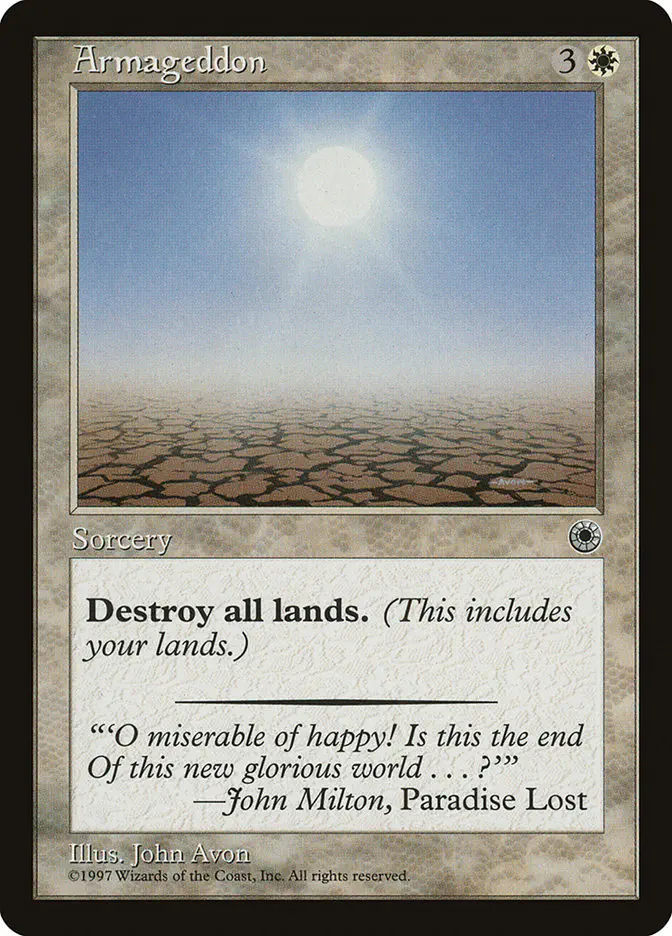
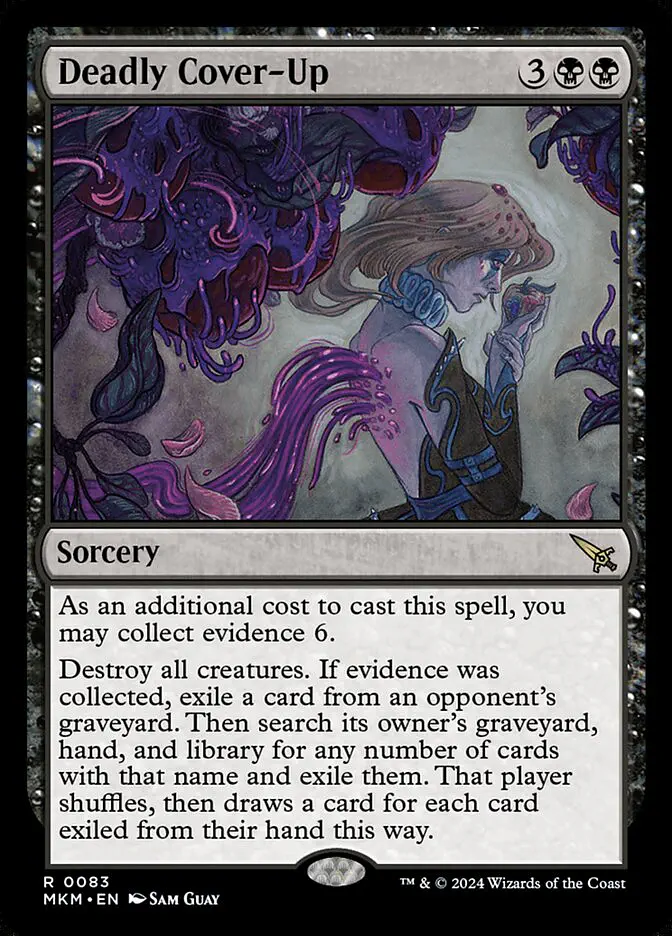
On the margins of this final point, the author quickly touches upon two interesting concepts, highly relevant, especially today. I am referring to the considerations on swing cards and win cards. Swing cards are what we now call game changer cards, i.e., those cards capable of reversing the direction of the game. Hahn gives the example of Armageddon, which was widely played in Type II at the time. A good example in modern Standard could be Deadly Cover-Up cast by U/B Excruciator to reset the board while losing to the opponent's race.
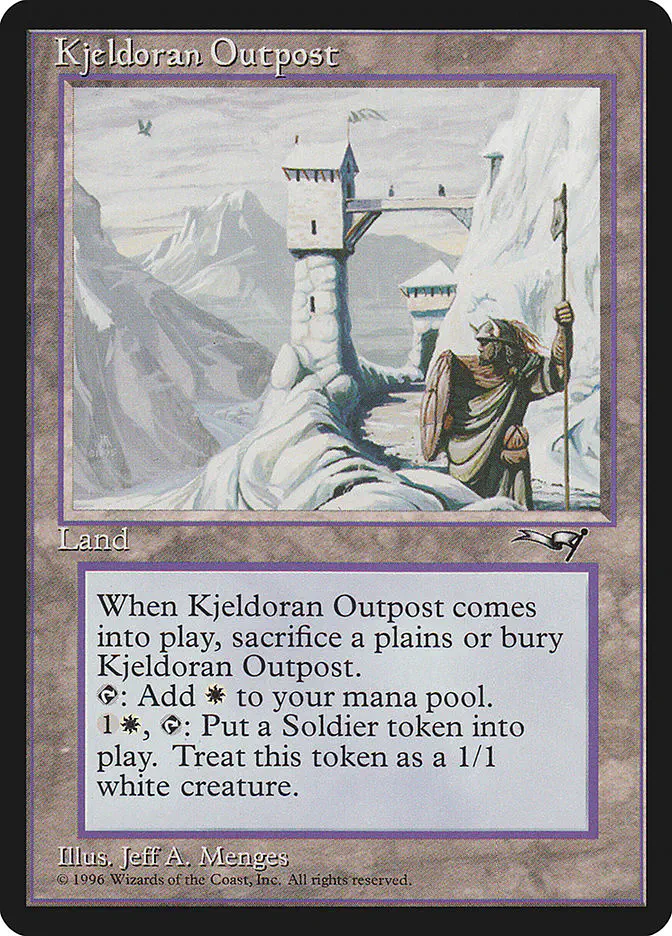
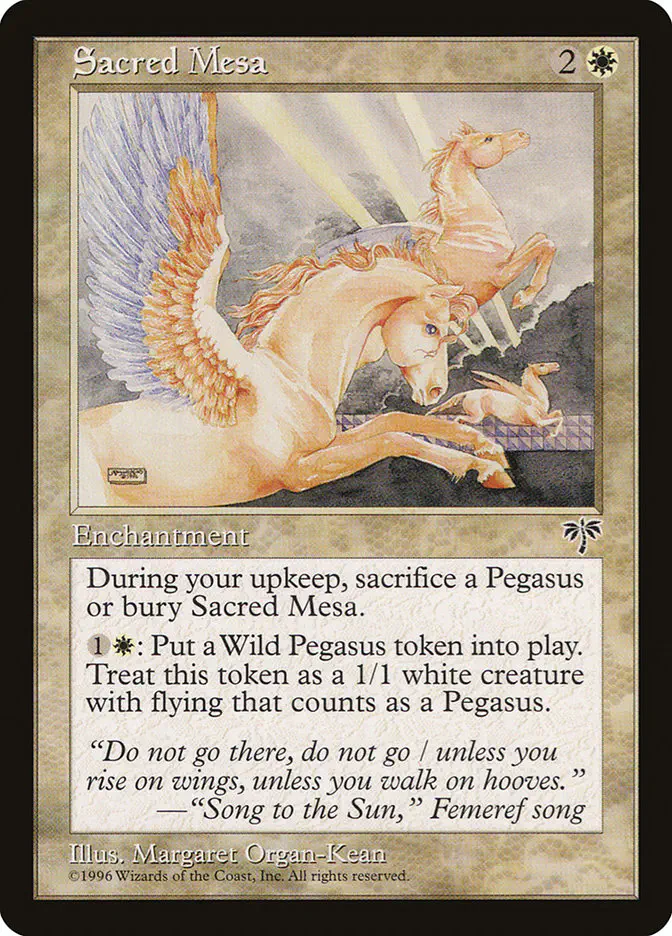
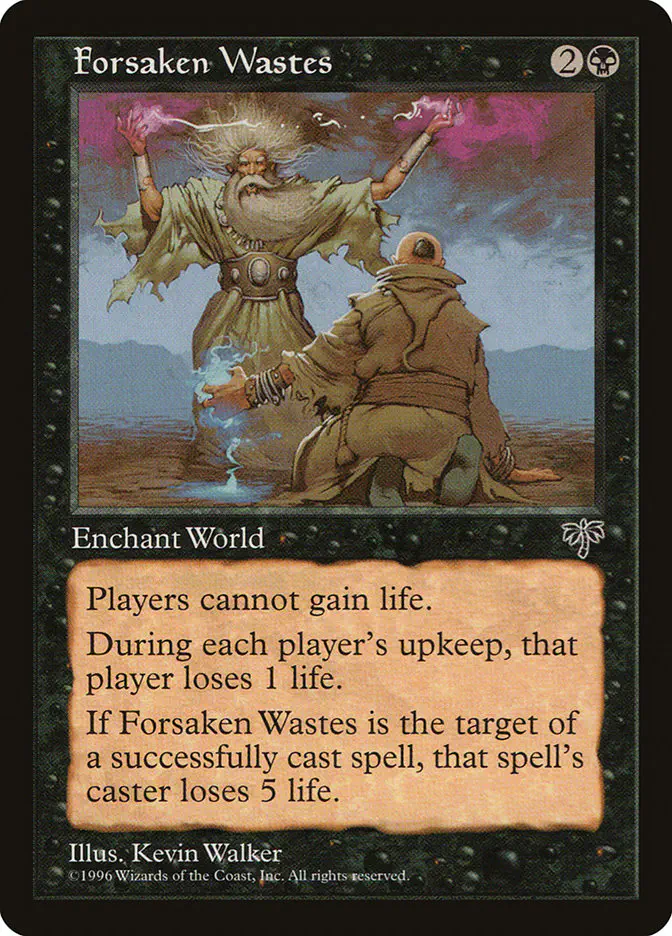
Win cards are the victory conditions, i.e., those cards aligned with one's game plan that lead a player to win. At the time, these were cards like Hammer of Bogardan, Kjeldoran Outpost, Sacred Mesa, or Forsaken Wastes. Today, we might say Jeskai Revelation in 4C Control, Monument to Endurance in U/R Lessons, or Professor Dellian Fel in B/G Rock.
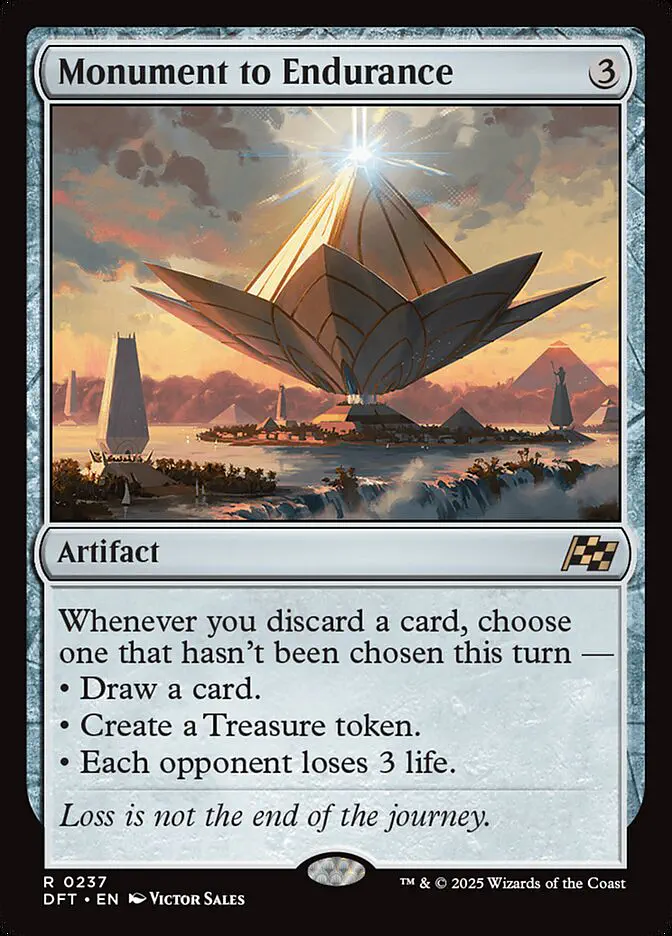
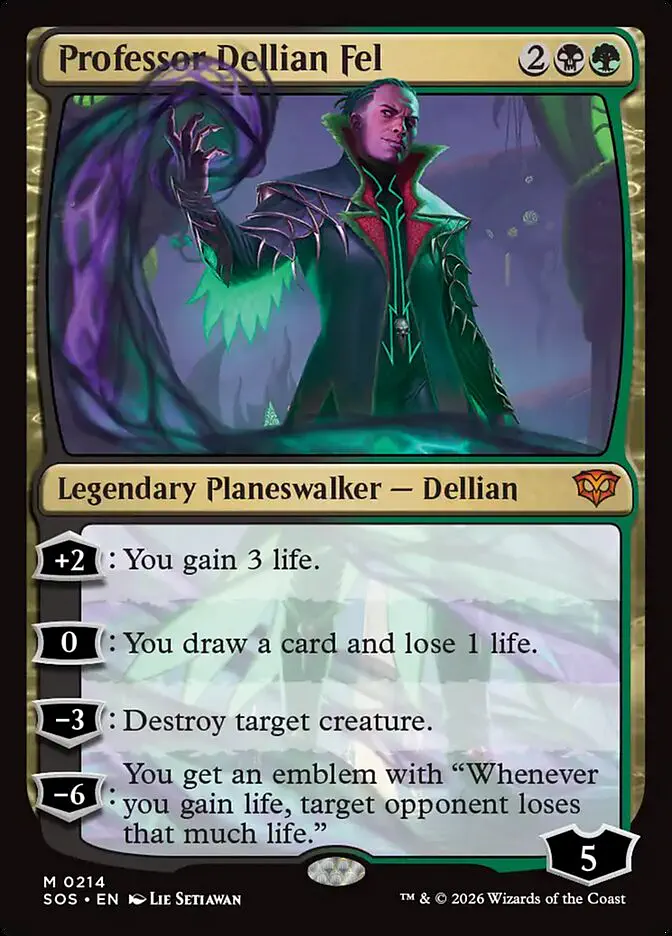
The author says that the former should already be considered during deck construction, but can also be managed in-game by playing around them, which makes considering them in deckbuilding a good recommendation rather than an obligation. The latter must absolutely be taken into consideration during deck construction, and if we don't have ways to deal with those win cards in the maindeck, we must include countermeasures in the sideboard.
All of this is true in every situation, except if the deck's strategy is to win faster than a win card or a game changer card can take effect in the game. In that case, countermeasures may not be included, but it is accepted that, whenever those specific cards enter the game and perform their effects, one is tacitly conceding.
This approach is a bit like rolling the dice, and this is where the disapproving gaze of old-school players towards fast-only decks like RDW comes from. This aspect has changed a lot over time, as the game has often given card advantage effects to fast colors, allowing them to recover even if a swing card resets the game state. Think of all the red cards that, under certain conditions, allow you to exile cards from the top of your library and play them until the end of the turn. In Standard, we saw Emberheart Challenger on the battlefield for a long time, which is an icon of the game's new evolution.
These final considerations by the author are very important not for what they say, but for the underlying sentiment they convey. In my experience of teaching the game, one of the typical attitudes I find in the players I instruct is to conceptualize deckbuilding in an abstract way: they all aim to build a strong deck by looking at the cards they want to include, considering too little the meta in which their brew will be inserted. Deckbuilding, however, is not just an abstract operation. It is extremely practical and is a phase of the living game. Of course, it also has a very pronounced theoretical dimension, but no theory that doesn't care about practice is good theory.
Next Chapter: The Art of Sideboarding (in progress) >>
<< Previous Chapter: Activity and Reactivity in MTG
__
- Link to Italian translation "Scuola di Magic: Filosofie Generali"
- Link to English article "Schools of Magic: General Philosophies"