


The Pro Tour Secrets of Strixhaven kicks off today, May 1-3, during MagicCon Las Vegas. 325 of the world's best Magic: The Gathering players will compete with Standard decks for a $500,000 prize pool, World Championship invitations, and the prestigious Pro Tour trophy. The field is extremely competitive, featuring Top Finishers from Regional Championships, qualifiers from digital events, and Pro Tour circuit veterans.
The competition will begin with Secrets of Strixhaven Booster Draft on Friday and Saturday, followed by five rounds of Standard each afternoon. On Sunday, the Top 8 will battle in a single-elimination Standard bracket to determine the champion.
Standard Metagame Breakdown
Standard, a 60-card rotating format, currently includes all expansions from Wilds of Eldraine onwards. With Secrets of Strixhaven, hundreds of new cards have been introduced, opening new development paths and potentially new archetypes.
The field distribution is as follows:
| Deck Archetype | Number of Players | Percentage of Field |
|---|---|---|
  <b>Prowess</b> <b>Prowess</b> | 99 | 30.5% |
| MonoG <b>Landfall</b> | 62 | 19.1% |
| <b>Spellementals</b> | 26 | 8.0% |
| <b>Lessons</b> | 24 | 7.4% |
 <b>Momo</b> <b>Momo</b> | 14 | 4.3% |
| <b>Control</b> | 12 | 3.7% |
 <b>Landfall</b> <b>Landfall</b> | 11 | 3.4% |
| <b>Maestro</b> | 9 | 2.8% |
| <b>Tempo</b> | 8 | 2.5% |
 <b>Midrange</b> <b>Midrange</b> | 8 | 2.5% |
| <b>Excruciator</b> | 6 | 1.8% |
| <b>Control</b> | 5 | 1.5% |
| <b>Omniscience</b> | 5 | 1.5% |
| 4C <b>Control</b> | 4 | 1.2% |
| 4C <b>Elementals</b> | 4 | 1.2% |
| MonoR <b>Aggro</b> | 3 | 0.9% |
| <b>Discard</b> | 3 | 0.9% |
| <b>Rhythm</b> | 3 | 0.9% |
| <b>Rhythm</b> | 2 | 0.6% |
| <b>Ouroboroid</b> | 2 | 0.6% |
| <b>Discard</b> | 2 | 0.6% |
| <b>Dragons</b> | 2 | 0.6% |
| Bant <b>Rhythm</b> | 2 | 0.6% |
| <b>Midrange</b> | 1 | 0.3% |
| Temur <b>Lessons</b> | 1 | 0.3% |
| Bant <b>Omniscience</b> | 1 | 0.3% |
| <b>Discard</b> | 1 | 0.3% |
| Temur <b>Omniscience</b> | 1 | 0.3% |
| <b>Kona</b> | 1 | 0.3% |
| Temur <b>Lute</b> | 1 | 0.3% |
| Bant <b>Airbending</b> | 1 | 0.3% |
| <b>Control</b> | 1 | 0.3% |
The metagame appears significantly different from Pro Tour Lorwyn Eclipsed, where Standard was still the main format. Back then, Rhythm was the most played deck, but ultimately Excruciator took home the trophy. Today, both archetypes are in steep decline and represent only a small portion of this weekend's field.
Conversely, as the metagame has steadily progressed throughout the season, the spotlight is now on Prowess, which makes up 30.5% of the field. The deck emerged in the second half of the last cycle of Standard Regional Championships and quickly established itself as the most popular choice, supported by a very high win rate. Even before the release of Secrets of Strixhaven, the archetype represented about a quarter of the winning metagame in online events. Since then, it has only increased its prevalence, thanks in part to powerful new Prismari cards like Flow State.
In recent weeks, the deck's creature base has also continued to evolve. Many players have adopted Eddymurk Crab to gain an advantage in mirrors, while reducing copies of Elusive Otter to make room. The new Colorstorm Stallion also offers an additional attack line. Despite these adjustments, the core of the deck remains unchanged: expect to see many copies of Stormchaser's Talent, Boomerang Basics, Burst Lightning, Opt, and Sleight of Hand during the Standard rounds.
Naturally, with Prowess identified as the "class leader," players have prepared with targeted answers. The deck can struggle against cards like Sage of the Skies or High Noon, suggesting that Momo and Tempo may be well-positioned in this metagame. Meanwhile, several new archetypes made possible by Secrets of Strixhaven, including Maestro, Midrange, and Control, are ready to make their mark in an evolving format.
However, everyone will also have to contend with the other pillar of the format: MonoG Landfall, which represents a solid 19.1% of the field and pressures opponents from a completely different angle. As the weekend unfolds, it will be interesting to see which strategies manage to achieve the best results and rise to the top of the standings.
Standard Archetype Summary
All Standard decklists for the tournament will be published on the Pro Tour Secrets of Strixhaven event page at the start of Round 4 on Friday, May 1, around 11:00 PM Italian time. A dedicated in-depth analysis of the most interesting decks from the event, including Maestro, Midrange, Control, and others, will also follow. In the meantime, here's a closer look at the most played decks in the tournament.
Prowess (99 players):
Prowess relies on Opt, Sleight of Hand, Boomerang Basics, Flow State, and a dense suite of spells to grow the Otter tokens generated by Stormchaser's Talent to enormous sizes. The rest of the creature base varies between different builds: 87 lists include Eddymurk Crab, 72 play Slickshot Show-Off, 60 use Colorstorm Stallion, and 18 employ Elusive Otter. Despite the differences, the common theme is clear: every creature has a prowess-style ability and scales with rapid sequences of instants and sorceries in a single explosive turn.
MonoG Landfall (62 players): MonoG Landfall leverages Escape Tunnel and Fabled Passage to generate multiple landfall triggers in the same turn, while Icetill Explorer effectively doubles the number of land drops. When everything lines up, Sazh's Chocobo grows to enormous sizes, Earthbender Ascension accumulates +1/+1 counters, and Mightform Harmonizer allows for sudden finishes.
Spellementals (26 players):
Spellementals is built on a very dense base of low-cost instants and sorceries that draw cards, interact in the early turns, and fill the graveyard for Eddymurk Crab and Hearth Elemental. Since both are Elemental creatures, they reduce the cost of Sunderflock to two or three mana, allowing you to reset the opponent's board and turn the game around. The main deck access to Sunderflock specifically distinguishes this archetype from Prowess.
Lessons (24 players):
Lessons takes a more controlling approach, based on a substantial package of Lesson cards, many of which are efficient removals. This structure allows for easily putting three Lessons into the graveyard, activating the deck's true engine. With Gran-Gran on the battlefield, Accumulate Wisdom effectively becomes an Ancestral Recall, while Combustion Technique resembles a Swords to Plowshares.
Momo (14 players):
Momo features one of the format's strongest starts. Opening with Momo, Friendly Flier on turn one, followed by Springleaf Drum and Sage of the Skies on turn two, the deck can quickly deploy two 2/3 flying lifelink creatures, seizing control of the race. Momo, Friendly Flier also reduces the warp cost of Quantum Riddler and Starfield Shepherd, which in turn can fetch Nurturing Pixie to bounce itself. Abandoned Air Temple then transforms the flying board into a true air force.
Control (12 players):
Control represents the classic archetype for experienced players: tempo control through counters, removal, mass removal, and card advantage. Lists vary in specific choices, but the plan remains the same: bring the game to the late stages and close with Jeskai Revelation, turning a long, methodical game into a decisive victory.
Most Played SOS Cards
Secrets of Strixhaven has had a concrete impact on Standard, strengthening existing archetypes and introducing powerful new build-arounds. The following table summarizes all cards that have entered the Standard format and are present in the 325 registered decklists.
| Nome Carta | Numero Totale Copie | Main Deck | Sideboard |
|---|---|---|---|
| <span class="cdx-ct-card-marker">Flow State</span> | 428 | 419 | 9 |
| <span class="cdx-ct-card-marker">Colorstorm Stallion</span> | 286 | 194 | 92 |
| <span class="cdx-ct-card-marker">Prismari Charm</span> | 176 | 174 | 2 |
| <span class="cdx-ct-card-marker">Traumatic Critique</span> | 159 | 158 | 1 |
| <span class="cdx-ct-card-marker">Impractical Joke</span> | 157 | 75 | 82 |
| <span class="cdx-ct-card-marker">Emeritus of Ideation</span> | 131 | 39 | 92 |
| <span class="cdx-ct-card-marker">Great Hall of the Biblioplex</span> | 112 | 112 | 0 |
| <span class="cdx-ct-card-marker">Erode</span> | 103 | 74 | 29 |
| <span class="cdx-ct-card-marker">Stormcarved Coast</span> | 92 | 91 | 1 |
| <span class="cdx-ct-card-marker">Tablet of Discovery</span> | 68 | 68 | 0 |
| <span class="cdx-ct-card-marker">Daydream</span> | 56 | 56 | 0 |
| <span class="cdx-ct-card-marker">Flashback</span> | 41 | 41 | 0 |
| <span class="cdx-ct-card-marker">Professor Dellian Fel</span> | 33 | 33 | 0 |
| <span class="cdx-ct-card-marker">Molten-Core Maestro</span> | 31 | 27 | 4 |
| <span class="cdx-ct-card-marker">Vibrant Outburst</span> | 28 | 28 | 0 |
| <span class="cdx-ct-card-marker">Resonating Lute</span> | 27 | 27 | 0 |
| <span class="cdx-ct-card-marker">Skycoach Conductor</span> | 23 | 23 | 0 |
| <span class="cdx-ct-card-marker">Petrified Hamlet</span> | 21 | 11 | 10 |
| <span class="cdx-ct-card-marker">Mathemagics</span> | 21 | 2 | 19 |
| <span class="cdx-ct-card-marker">Withering Curse</span> | 19 | 19 | 0 |
| <span class="cdx-ct-card-marker">Practiced Offense</span> | 19 | 19 | 0 |
| <span class="cdx-ct-card-marker">Sundown Pass</span> | 19 | 19 | 0 |
| <span class="cdx-ct-card-marker">Emeritus of Abundance</span> | 17 | 17 | 0 |
| <span class="cdx-ct-card-marker">Hardened Academic</span> | 16 | 16 | 0 |
| <span class="cdx-ct-card-marker">Decorum Dissertation</span> | 13 | 0 | 13 |
| <span class="cdx-ct-card-marker">Quandrix Charm</span> | 12 | 10 | 2 |
| <span class="cdx-ct-card-marker">Deathcap Glade</span> | 12 | 12 | 0 |
| <span class="cdx-ct-card-marker">Shattered Sanctum</span> | 12 | 12 | 0 |
| <span class="cdx-ct-card-marker">Witherbloom Charm</span> | 10 | 10 | 0 |
| <span class="cdx-ct-card-marker">Emeritus of Truce</span> | 10 | 0 | 10 |
| <span class="cdx-ct-card-marker">Dreamroot Cascade</span> | 8 | 8 | 0 |
| <span class="cdx-ct-card-marker">Planar Engineering</span> | 8 | 8 | 0 |
| <span class="cdx-ct-card-marker">Improvisation Capstone</span> | 7 | 7 | 0 |
| <span class="cdx-ct-card-marker">Glorious Decay</span> | 5 | 0 | 5 |
| <span class="cdx-ct-card-marker">Lorehold, the Historian</span> | 4 | 4 | 0 |
| <span class="cdx-ct-card-marker">Together as One</span> | 4 | 4 | 0 |
| <span class="cdx-ct-card-marker">Arcane Omens</span> | 3 | 0 | 3 |
| <span class="cdx-ct-card-marker">Dina's Guidance</span> | 3 | 3 | 0 |
| <span class="cdx-ct-card-marker">Splatter Technique</span> | 3 | 0 | 3 |
| <span class="cdx-ct-card-marker">Vastlands Scavenger</span> | 2 | 2 | 0 |
| <span class="cdx-ct-card-marker">Environmental Scientist</span> | 2 | 2 | 0 |
| <span class="cdx-ct-card-marker">Maelstrom Artisan</span> | 1 | 0 | 1 |
| <span class="cdx-ct-card-marker">Mind into Matter</span> | 1 | 0 | 1 |
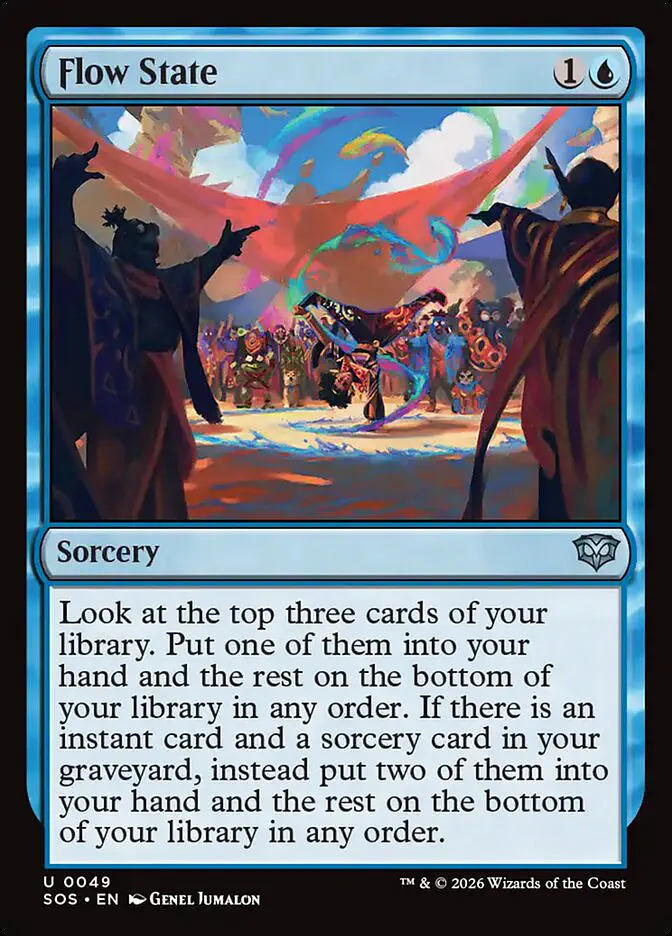
The most played new cards overwhelmingly fuel Prowess. By total copies, Flow State has left the most significant mark on the metagame. It is present in every single Prowess list, as the archetype naturally plays enough instants and sorceries to easily put at least one of each type into the graveyard, making Flow State very similar to Expressive Iteration. A small portion of Lessons and Spellementals lists have adopted the card. In total, 113 players (34.8% of the field) registered at least one copy, making it the most played new card from Secrets of Strixhaven.
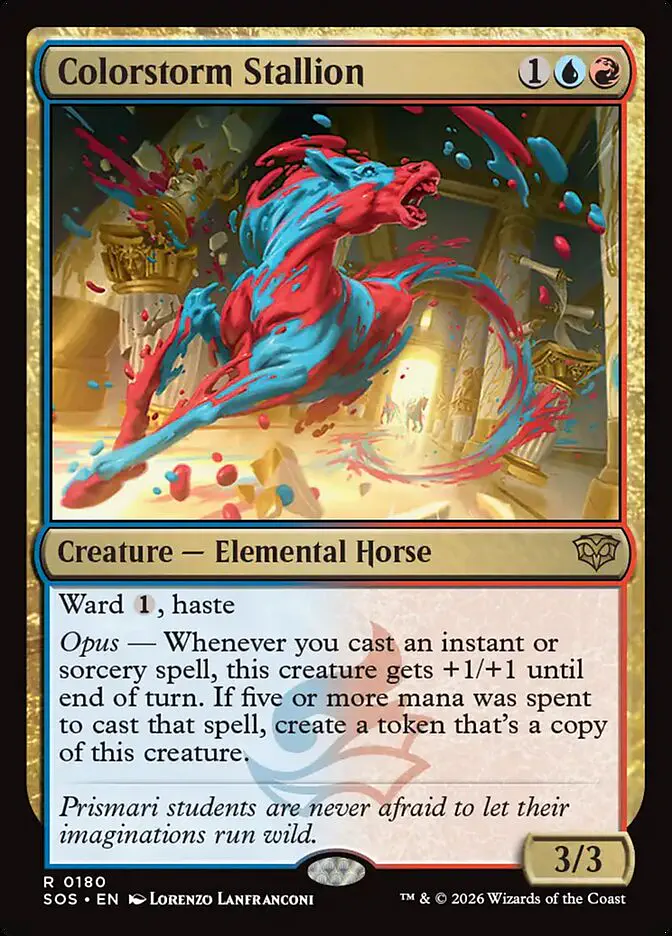
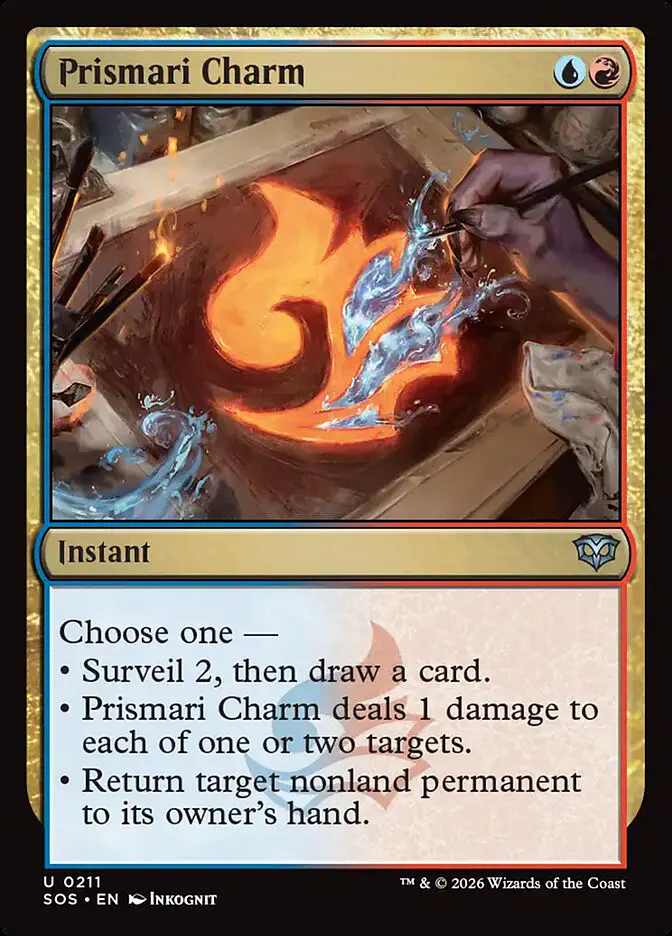
Colorstorm Stallion and Prismari Charm are not universal inclusions, but they have still performed excellently within the Izzet ecosystem. Most Prowess and Spellementals lists play at least one copy. Colorstorm Stallion, both maindeck and sideboard, is an aggressive, spell-fueled threat: it grows with each instant or sorcery, creates a copy when kicking Burst Lightning, and has ward 1, making opponent's removal more awkward. It's also an Elemental, so it isn't bounced by Sunderflock. Prismari Charm, on the other hand, offers an extremely versatile mix of card draw and removal.
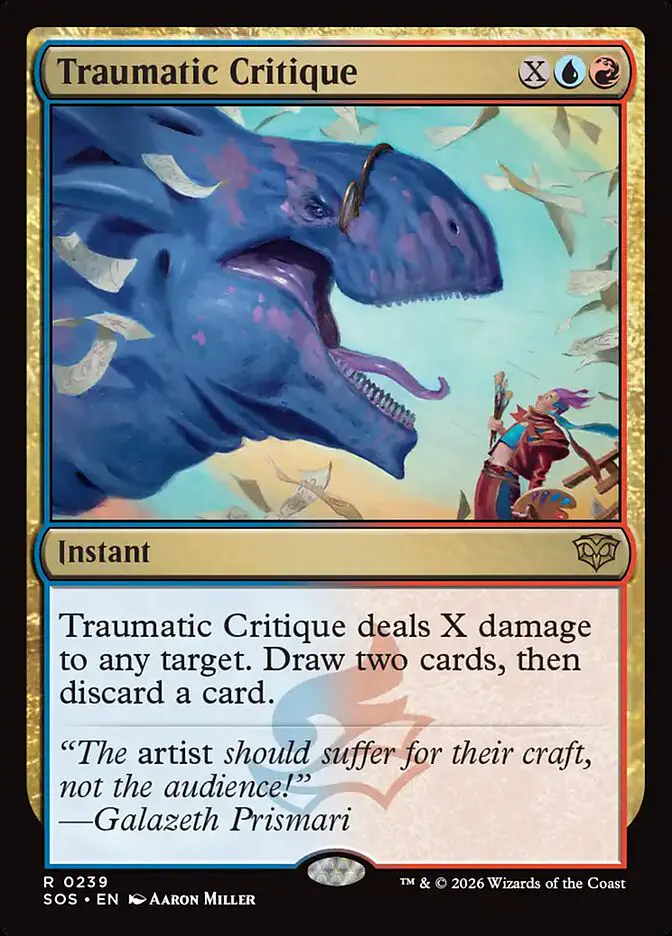
The next group of notable cards confirms the dominance of blue-red. Traumatic Critique appears in almost all Spellementals lists, where it represents a clear upgrade over Abandon Attachments. The ability to draw before discarding, combined with scalable damage, makes it a decidedly more powerful tool. Most Control lists, along with a small percentage of Prowess, have also found room for this card.
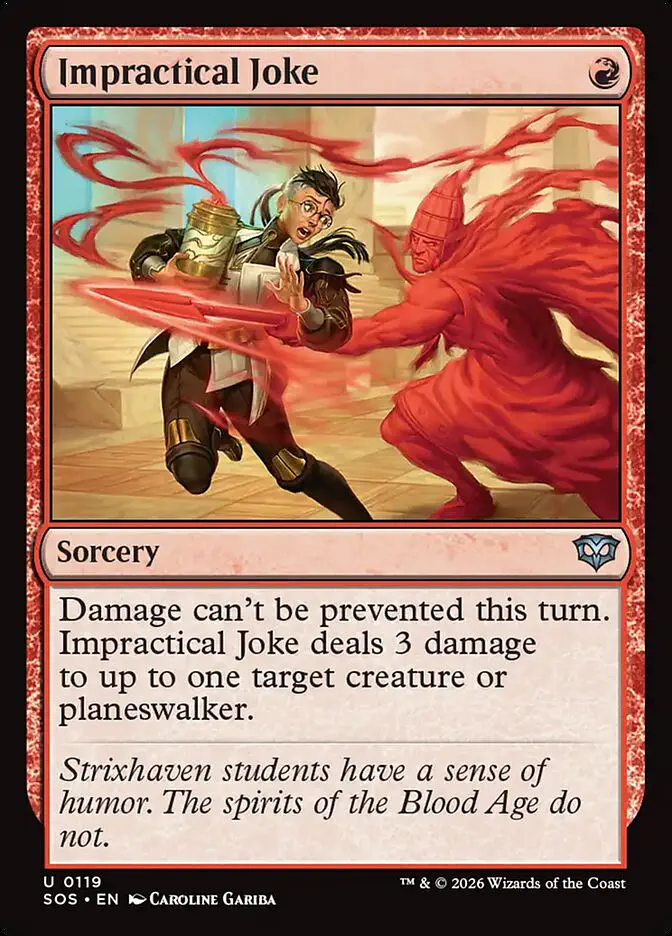
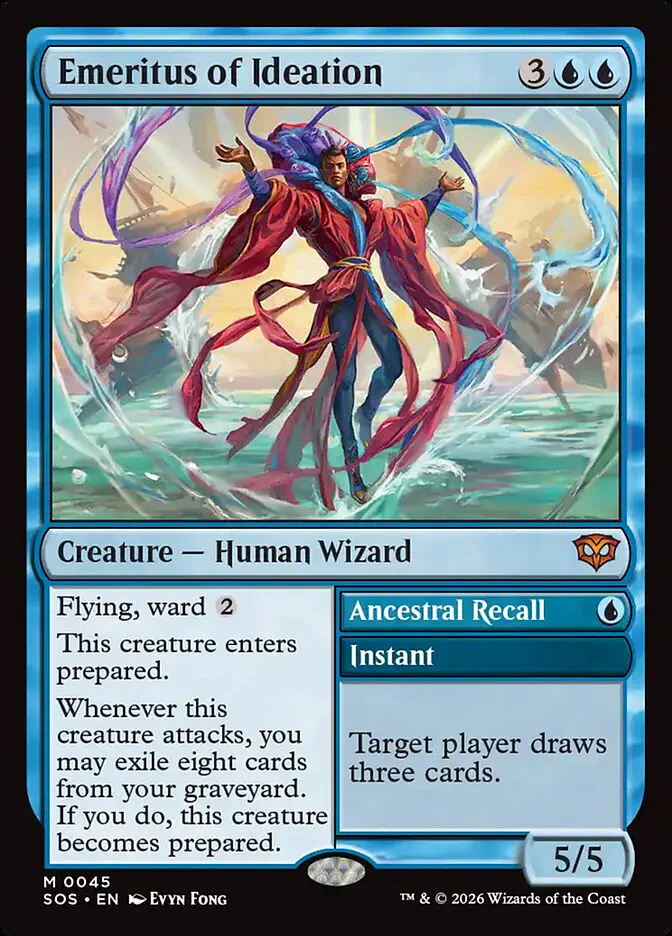
Meanwhile, Impractical Joke and Emeritus of Ideation have been adopted across a wide range of archetypes, both maindeck and sideboard. Impractical Joke functions as efficient removal and has been widely played in Prowess and by about half of the Spellementals, Lessons, and Control players. Emeritus of Ideation, on the other hand, is a solid and resilient threat that allows access to one of Magic's most iconic effects: Ancestral Recall. It appears in most Lessons, Control, and Excruciator lists, among others. After resolving Doomsday Excruciator, targeting the opponent with Ancestral Recall can even become a win condition.
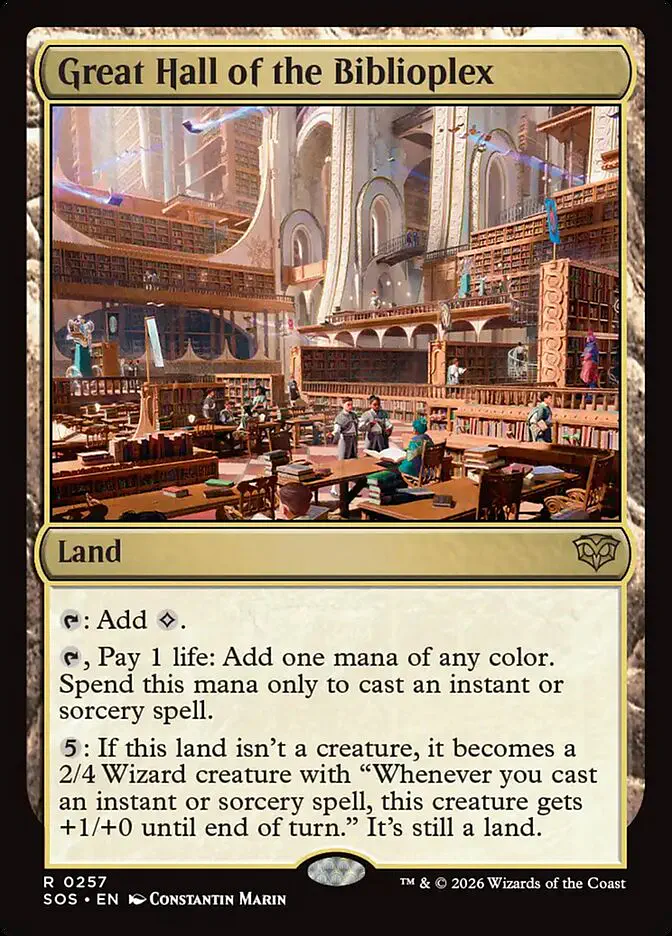
Several new lands have also had a significant impact on the metagame. In a format dominated by instants and sorceries, Great Hall of the Biblioplex provides mana fixing and a latent threat for a wide range of decks, with multicolor strategies like Control and 4C Control being among the most benefiting. It can even become an infinite power win condition in Maestro when the deck enables an infinite chain of spells.
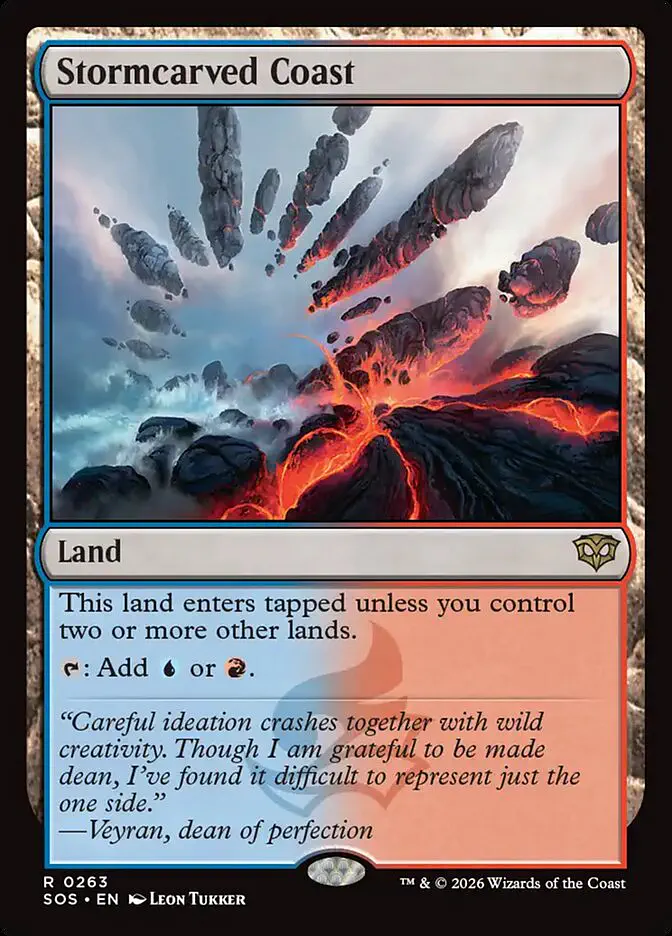
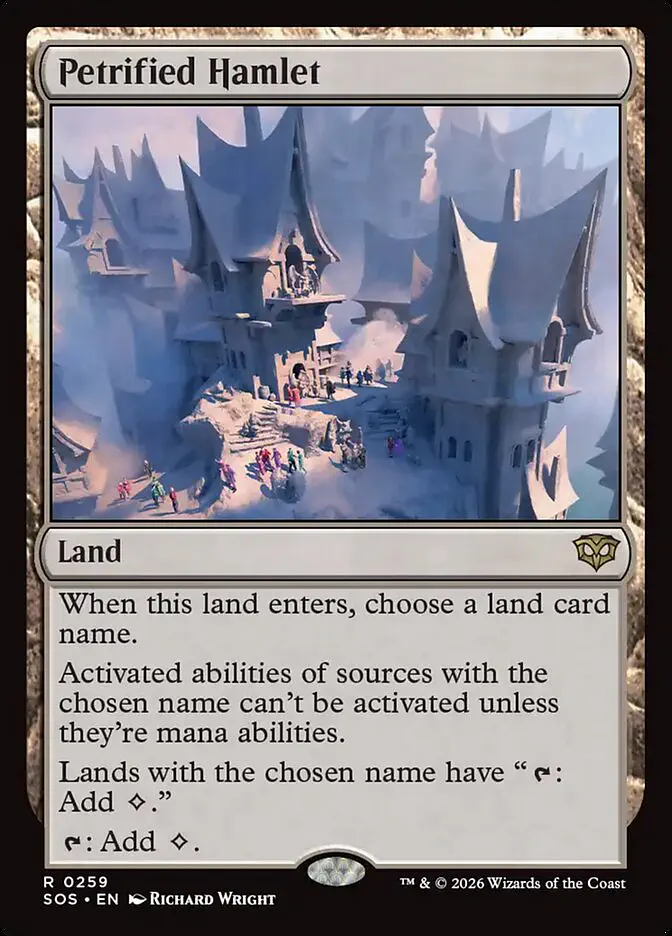
Secrets of Strixhaven also reintroduced a cycle of five slow lands, including the blue-red land Stormcarved Coast, present in moderate quantities in the field. Finally, Petrified Hamlet offers a clean answer to utility lands like Ba Sing Se, making it particularly interesting for Control.
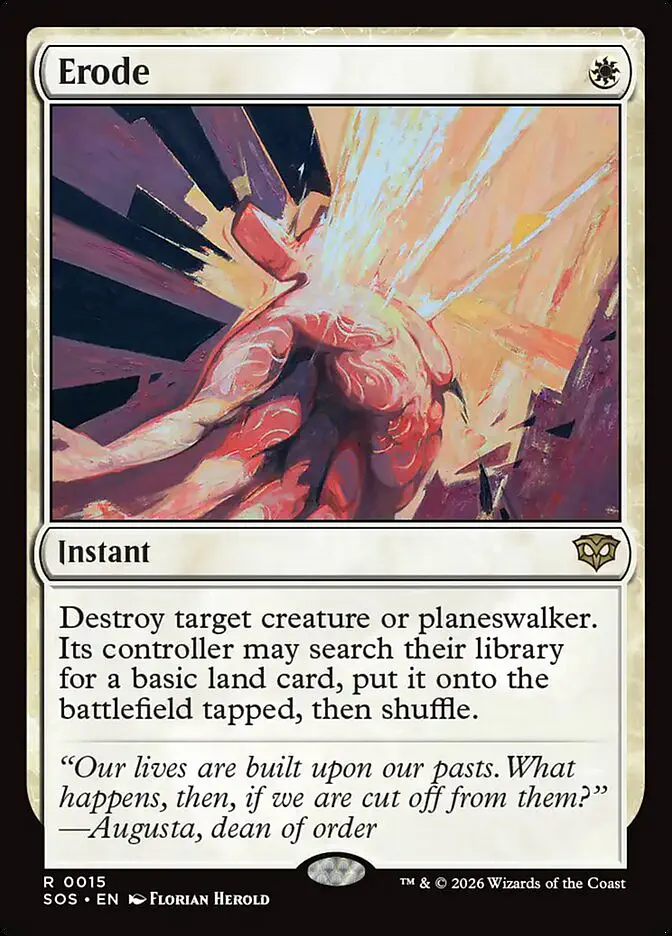
Outside of blue-red, Erode is the most played spell in other colors. It resembles Path to Exile in function and has been partially adopted by Control and Tempo, but it shines most in Landfall, where it alone justifies the white splash. Not only does it remove threats like Slickshot Show-Off or Eddymurk Crab at instant speed, but it can also target one of your own creatures to generate an additional landfall trigger, offering significant tactical flexibility.
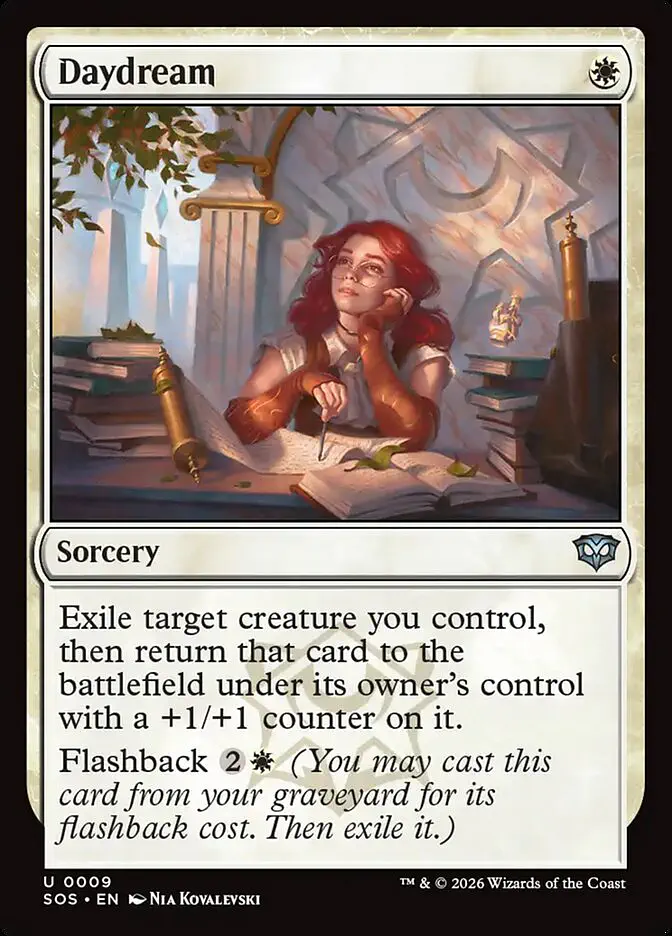
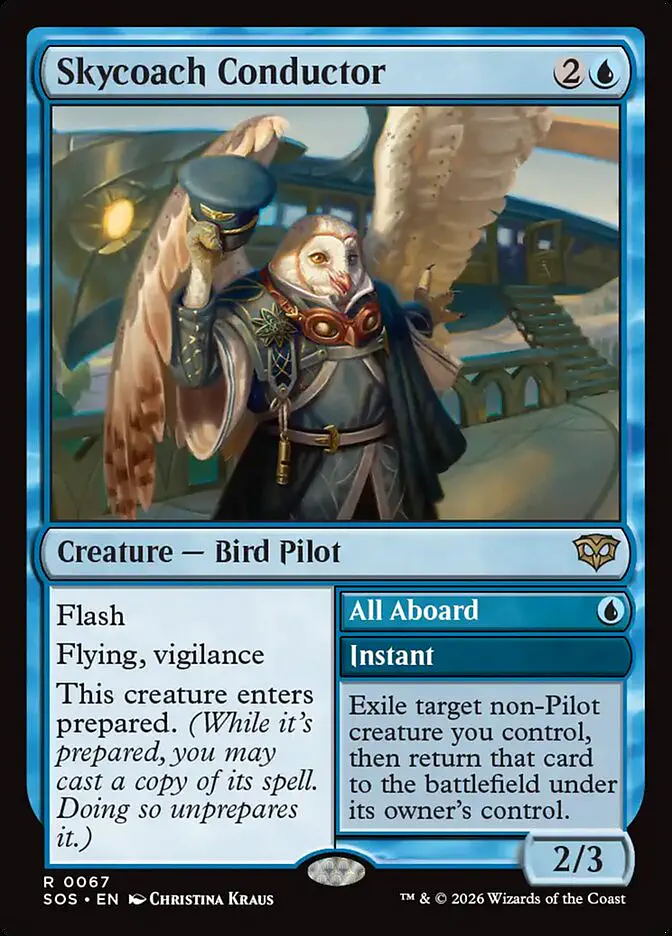
Daydream, on the other hand, finds a natural home in Momo, where it allows blinking Quantum Riddler. Similarly, Skycoach Conductor strengthens Tempo, where creatures with flash integrate perfectly into the game plan and blinking Aven Interrupter allows its disruptive ability to be reused.
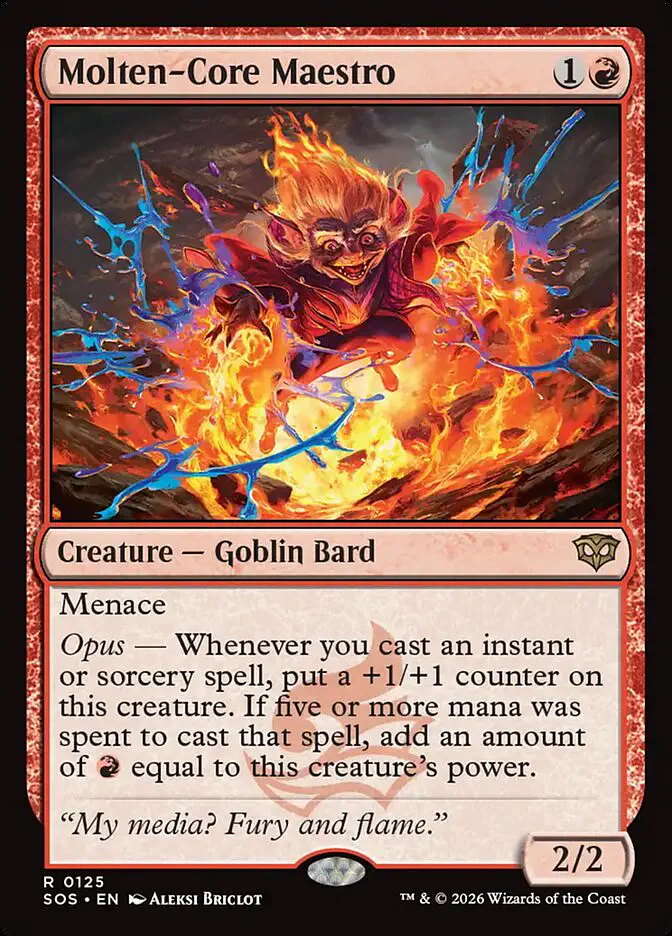
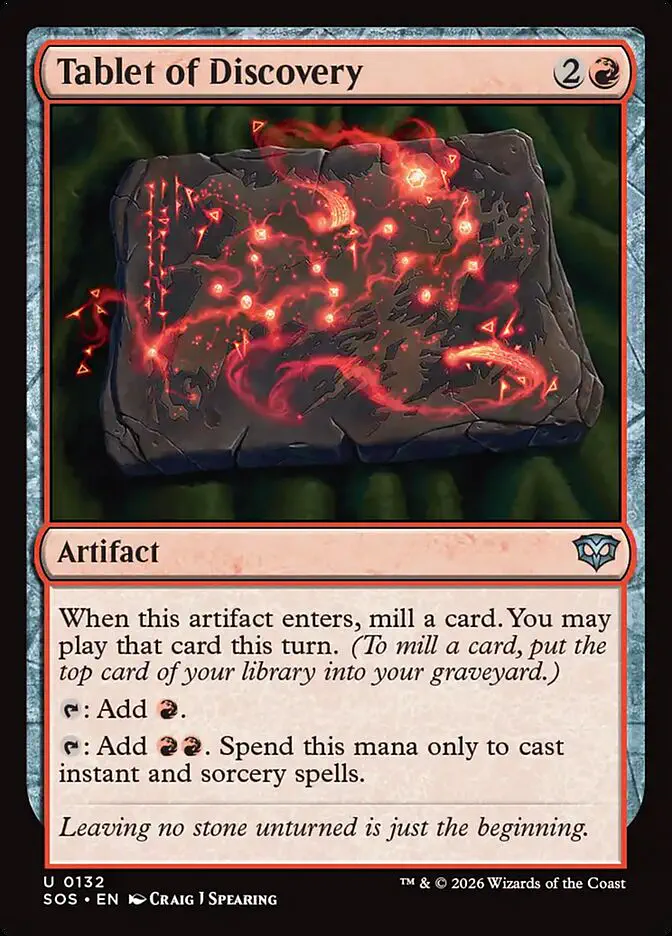
Secrets of Strixhaven also introduces several extremely powerful mana engines. Molten-Core Maestro enables an infinite combo with two copies of Sorceress's Schemes: its Opus ability continues to generate red mana while retrieving copies of the spell, creating a storm-like sequence that leads to an inevitable win. Nine players registered this Maestro build.
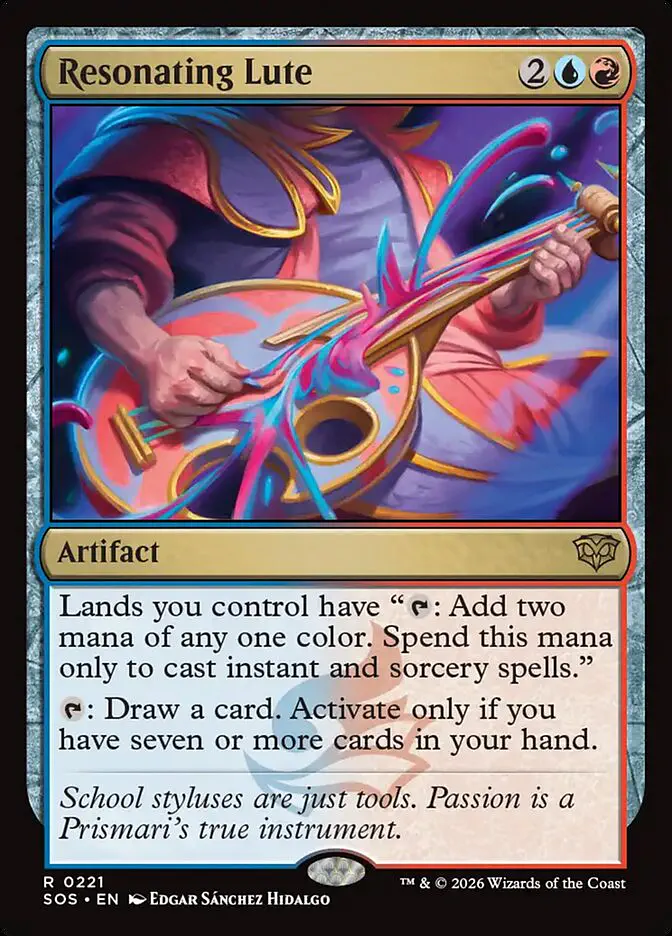
Tablet of Discovery supports this archetype by acting as a mana accelerator and graveyard enabler, also allowing immediate casting of a red removal spell. It also appears in about half of the Control lists. Resonating Lute, on the other hand, is used by most other versions of Control, as well as in 4C Control decks and a dedicated Temur Lute build: its ability to double mana for instants and sorceries makes it a card with enormous potential.
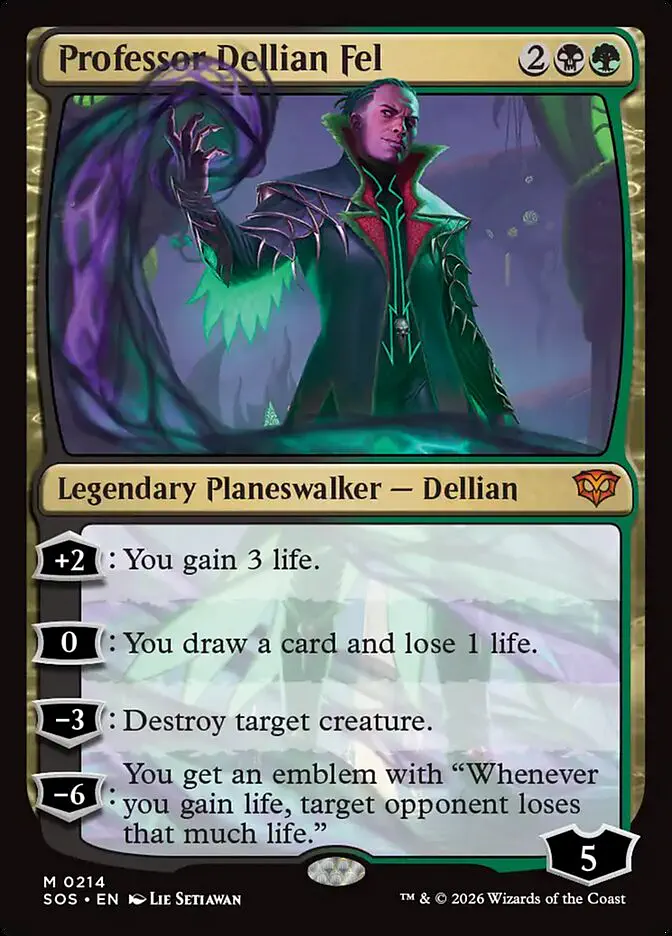
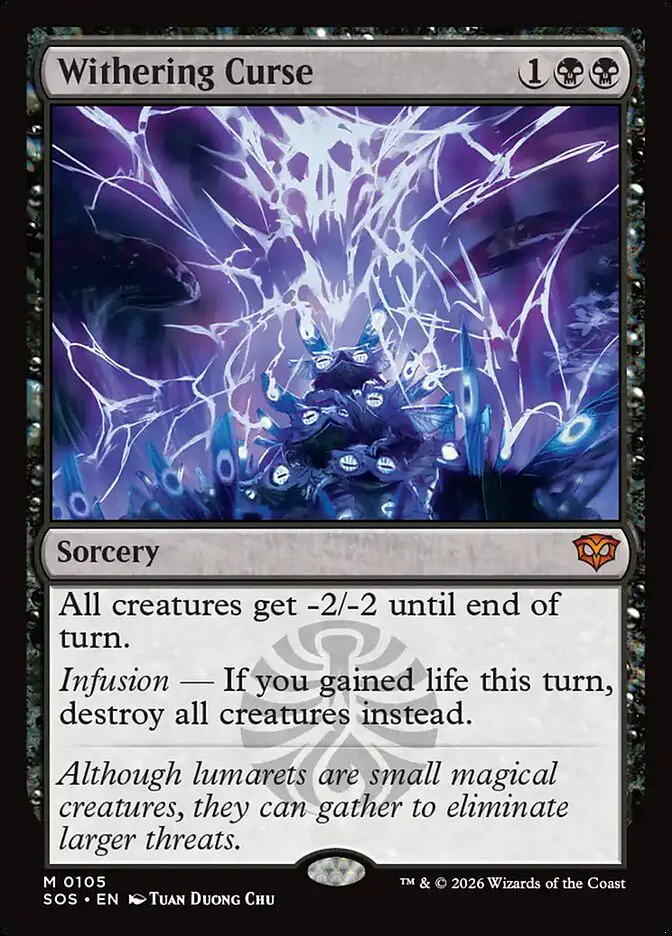
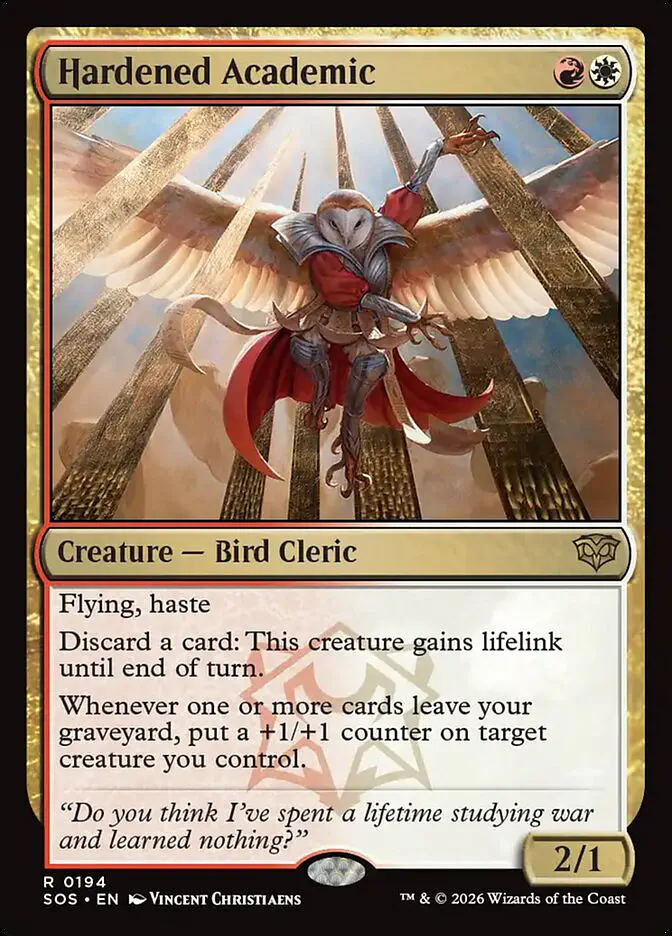
Finally, several cards have given rise to new archetypes or revived nearly disappeared strategies. In particular, Professor Dellian Fel, thanks to his high loyalty and versatile abilities, has contributed to the return of Midrange.
Withering Curse, in combination with Ancient Cornucopia, allows for board wipes with only three mana, favoring the emergence of Control. Hardened Academic perfectly combines with Marauding Mako and Cool but Rude, giving rise to new versions of Discard and Discard. These innovations demonstrate how some players are already far ahead in understanding the format.
Conclusions
The Pro Tour Standard is dominated by Prowess and MonoG Landfall, but SOS has introduced tools that are already changing the format.
Standard games will revolve around cards like Stormchaser's Talent, Boomerang Basics, Burst Lightning, Opt, Sleight of Hand, and Eddymurk Crab, but innovation is already underway.
It remains to be seen which strategies will emerge when competitive pressure is at its peak.
We can follow it from today until Sunday here twitch.tv/magic and here Play MTG YouTube channel