


<< Previous Chapter: Efficiency in MTG
7. Flexibility in MTG
Flexibility: Just as with the concept of “Efficiency” in the game, Rob Hahn also describes three main manifestations to explain flexibility: card flexibility, deck flexibility, and strategy flexibility.
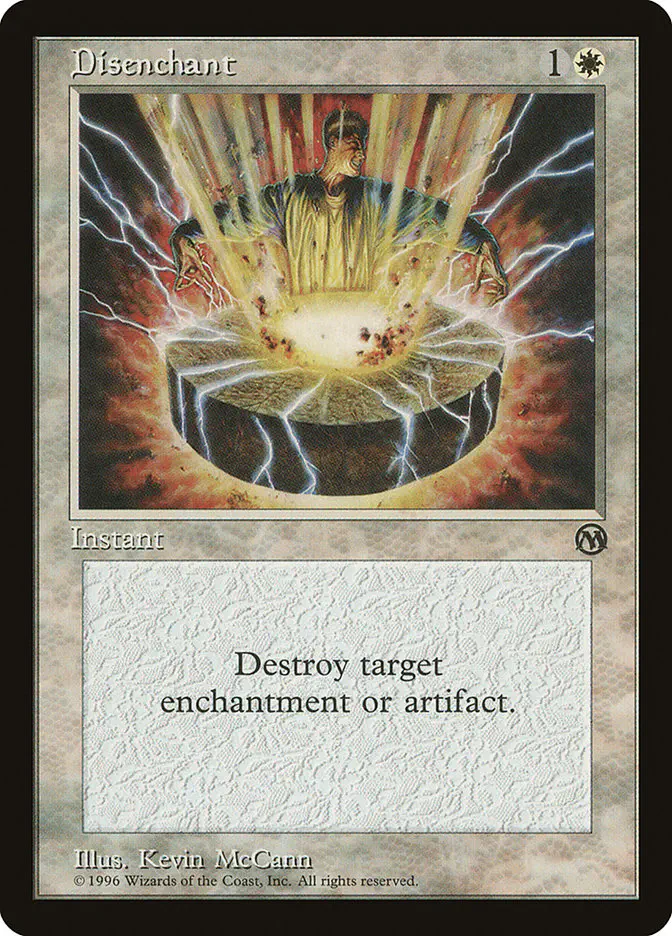
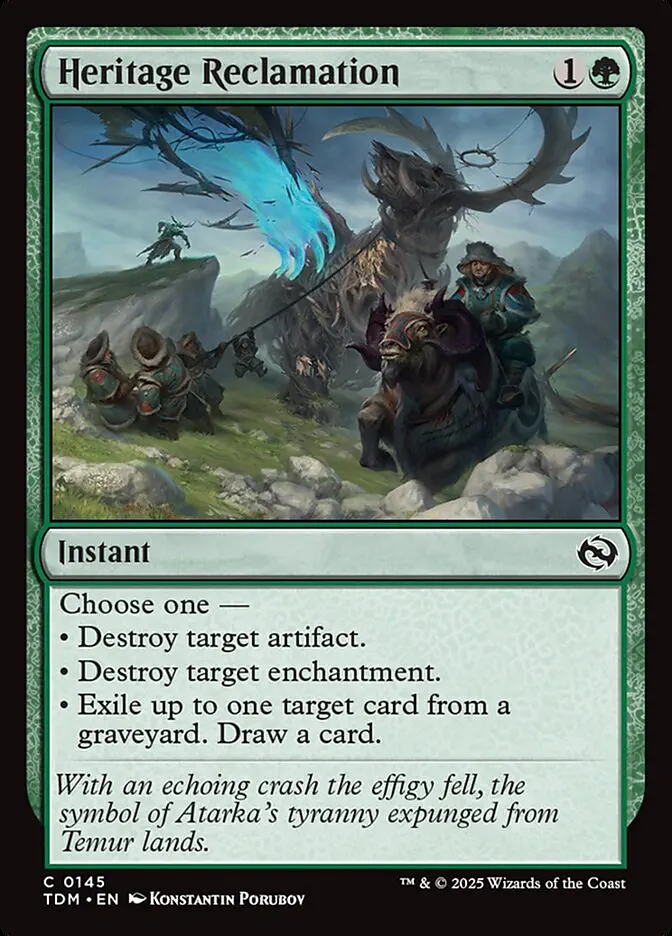
Card flexibility is the ability of a card to be useful in multiple situations. For example, the classic Disenchant is less flexible than Heritage Reclamation, because the latter, in addition to destroying artifacts and enchantments, can also exile a card from a graveyard and make the spell's controller draw a card.
Deck flexibility is the ability of a given deck to successfully counter various opposing strategies. For the author, this is primarily a defensive concept, influenced by the Fortress school of thought. It involves verifying whether a deck can disrupt various diversified offensive strategies (e.g., Burn, Hate Bears, Mill, etc.) while still being able to implement its own game plan despite opponent's defenses.
Finally, strategy flexibility consists of having multiple ways to ‘deploy’ deck flexibility. We’ve said that a deck’s flexibility lies in its ability to successfully defend against many different opponents. Strategic flexibility, for Hahn, concerns how this action is carried out. The more diversified it is, the more strategic flexibility the deck gains.
Note that increasing strategic flexibility can imply a decrease in deck flexibility. I'll explain this with the author's own example. Consider a purely mono-U permission deck that tries to neutralize every opposing spell with a counter. Also consider a U/W deck that can decide whether to counter a spell or remove it later with cards like Swords to Plowshares.
The first deck will have greater deck flexibility, as it contains only counters capable of targeting every type of spell, whereas in the second, some slots are dedicated to Swords to Plowshares, which only targets creatures. However. The second deck has more strategic flexibility because it can do something the first cannot, at a different time and place in the game (after a permanent has entered the battlefield, exiting the stack). Here, Hahn gives a definition of strategic flexibility that is very much linked to the concept of defense, but in the final paragraph, he says that this idea of strategic flexibility also extends to other aspects of the game and one can speak of flexibility in having a diversified offensive plan, in having multiple win conditions, and in not depending on a single combo or key card.
However, none of the described elements, taken individually, is sufficient to define strategic flexibility. They are all merely tangible expressions of it.
Side note: As with efficiency, I believe that most of Hahn's reflections on flexibility are still valid and relevant. Here, a somewhat older flavor is tasted, due to how the game has evolved from 1997 to today. Many aspects of flexibility presented by Hahn are related to defensive actions and disrupting the opponent's game plan. In early Magic and for a long time, spells were favored over permanent threats.
If we take the first edition of Magic: The Gathering, Alpha, there's no doubt that Counterspell is, in general, a more powerful card than Drudge Skeletons. So much so that everyone knows the former and it is still used in competitive formats where it is legal today. The latter has returned to the depths of blind eternity for almost 30 years. For a long time, control-based defensive strategies were much more versatile and effective than oppressive strategies.
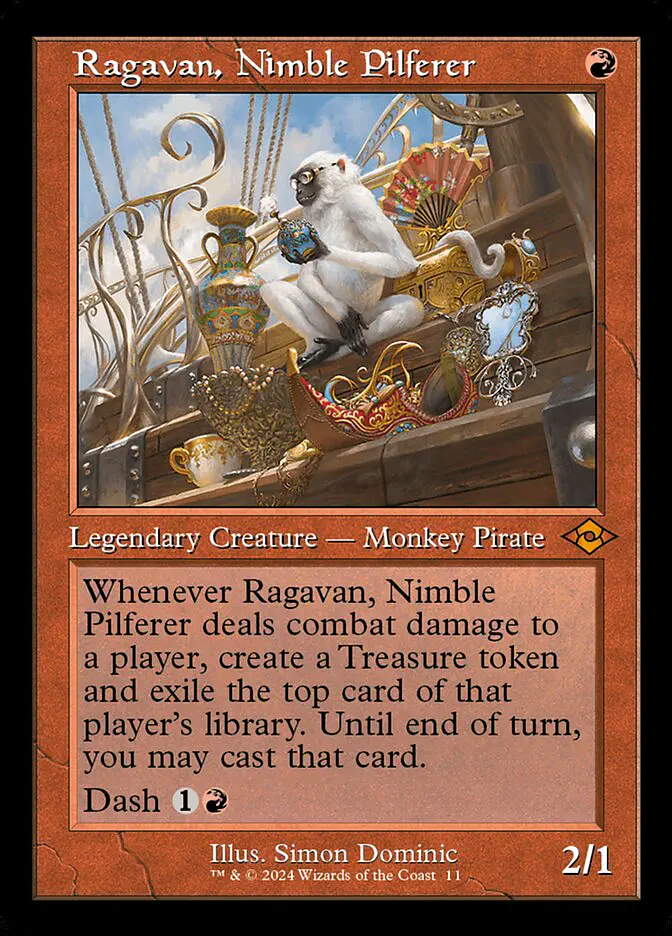
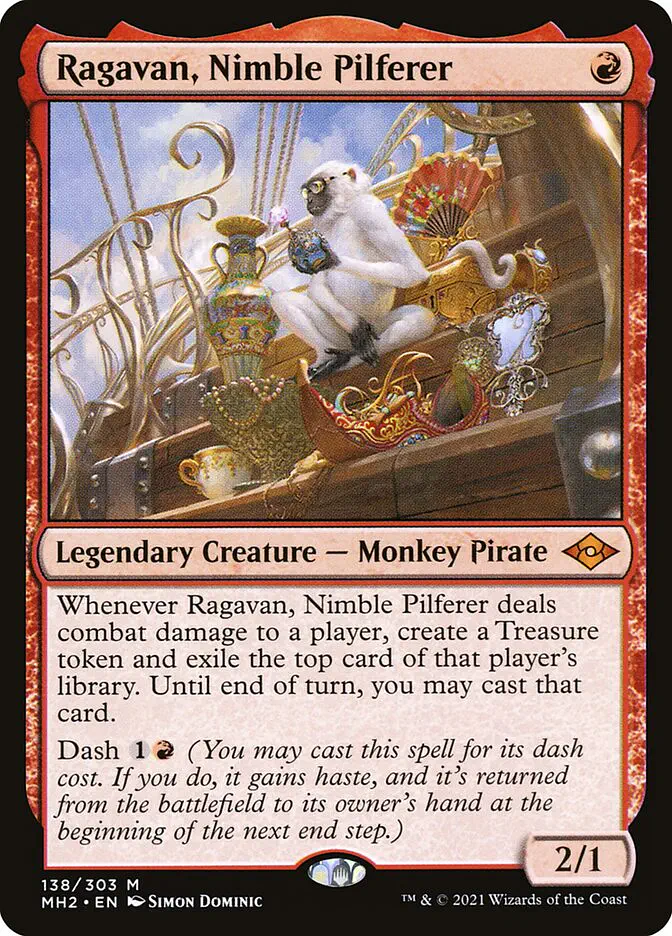
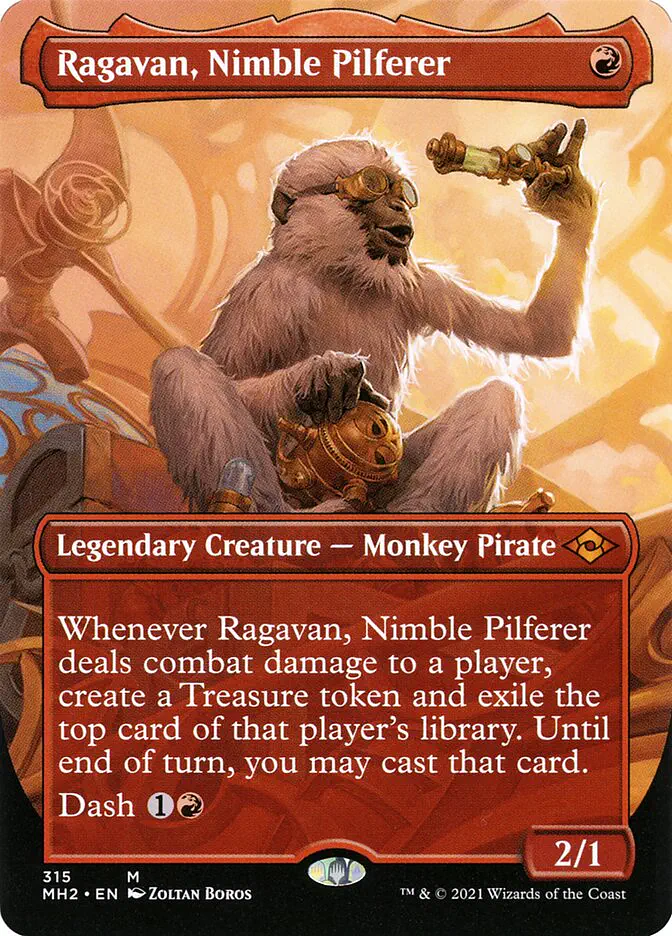
Then, the game progressively rebalanced until it favored threats. Now, when we look at Counterspell and we look at Ragavan, Nimble Pilferer, we no longer think Counterspell is as strong a card as it once was. As I write this article, Ragavan has been out for five years, and in this period, the game has evolved further. The trajectory, however, has remained the same.
Control strategies are, of course, still possible and cyclically appear in various competitive formats. However, on the one hand, they are becoming less frequent and fall into crisis more easily; on the other hand, the way control is played has changed a lot. In the past, the favored and purest form of control was Draw-Go. Now it is the rarest control archetype in competitive formats (in fact, it is quite characteristic and very pleasant that in today's Standard there is a good percentage of Draw-Go).
Much more often we see Big Spells Control/Tap-Out, Lock Control/Prison, and Combo-Control. Given this evolution, it is necessary to reinterpret the various manifestations of flexibility in the game, giving more value to what is not purely defensive. For example, a deck that relies on a specific combo and can reach it in different ways is, in a sense, flexible, despite depending on a set of key cards. Or, isn't a deck that has a combo from which multiple different effects can derive, each appropriate against different opponents, also flexible?
Or, again, a very oppressive aggro deck that has different lines for developing the first turns (for example, in current Standard with RDW you can choose whether to play Hired Claw or Burnout Bashtronaut on turn one. On turn two, an Emberheart Challenger, or plot a Slickshot Show-Off. On turn three, a Tersa Lightshatter or warp a Nova Hellkite)? This is probably what Hahn meant by offensive flexibility, but it should be given more relevance.
Today, in various formats where the power level of threats tends to be higher than that of answers, very aggressive and fast decks, usually red or green-based, often appear. These decks tend to develop a lightning war on the opponent's life total, developing a devastating race or integrating creatures that increase their base stats upon the casting of other particular spells (e.g., Prowess decks). Regarding these strategies, which are absolutely functional and often predominant, strategic flexibility is mostly offensive flexibility, as explained above. And, in this case, an insight that Rob Hahn also had, but on which he cut too short, is realized.
When offense is fast enough, it becomes a defense. However, saying this, unless one wants to commit a logical error, does not mean that offense can transmute its nature in the game. In fact, it is not consistent with the thesis that Hahn seems to have wanted to express in his writings, namely that attacking with extreme speed is a defensive posture, just because it disrupts the opponent's game plan. Offense remains offense.
Simply put, a very fast offense is often better than any defense, but it is not a defense. The guiding principle for decks of this type is to win before any opponent can develop their plan. You are not actively preventing the opponent from doing so; you are simply not giving them time to do it. It is true that against these types of decks, the opponent is forced to defend in the early turns, rather than develop.
But, on closer inspection, every strategy must decide whether to defend or develop during the game, and one cannot argue that forcing a player into defense is itself a defensive stance, because that would be a contradiction. In this, Hahn's theory is deficient and probably suffers from the non-canonization, at the time, of the "Fundamental Turn" principle. However, this topic cannot be addressed here. It would require another article solely on the subject.
In addition to what has already been noted, I would like to provide a single unifying principle that can serve as a unified key to understanding the concept of flexibility in the game, as I did for efficiency. Card flexibility, deck flexibility, and strategy flexibility are all expressions of "quality" just as efficiency is an expression of "quantity." This is where much of what distinguishes a good player from a champion lies. Understanding which cards offer the most useful game avenues is not a mathematical calculation.
It combines intuition, empirical practice, imagination, the ability to abstract, and a lot of other qualities, many of which are talents bestowed by nature. This is because the very idea of "quality" is not as easily definable as that of "quantity." If readers are passionate about philosophy and have read something on the topic, like Robert M. Pirsig's "Zen and the Art of Motorcycle Maintenance," they know that one cannot even give a definition of "quality" without reducing its meaning to particular aspects of its real manifestations.
Quality is arbitrary. Seeing it is partly logic, partly intuition. Is Ghost Vacuum an excellent graveyard hate card in Standard? Is it the best? Is it stronger than Soul-Guide Lantern?
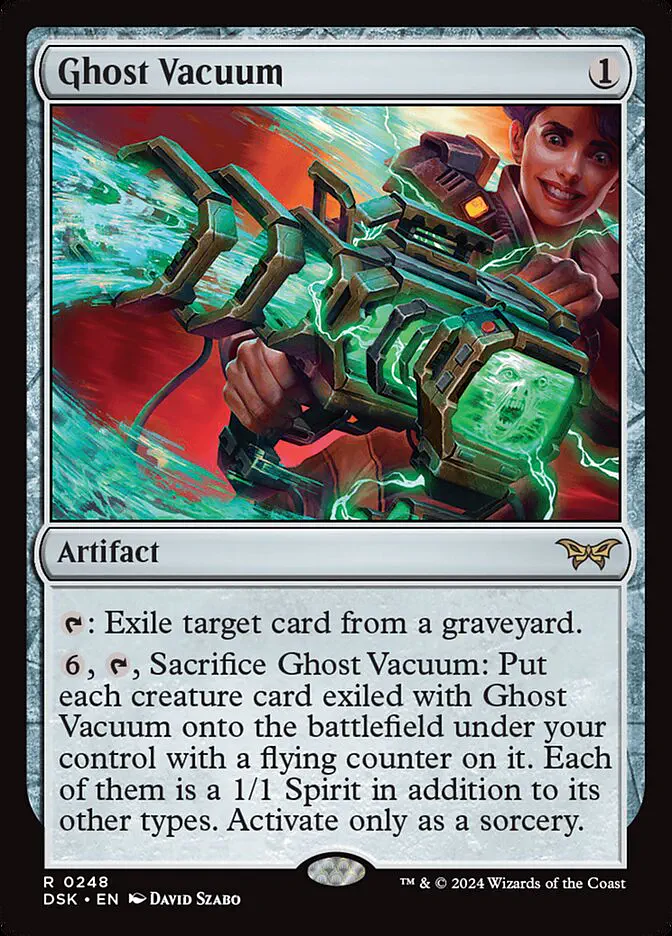
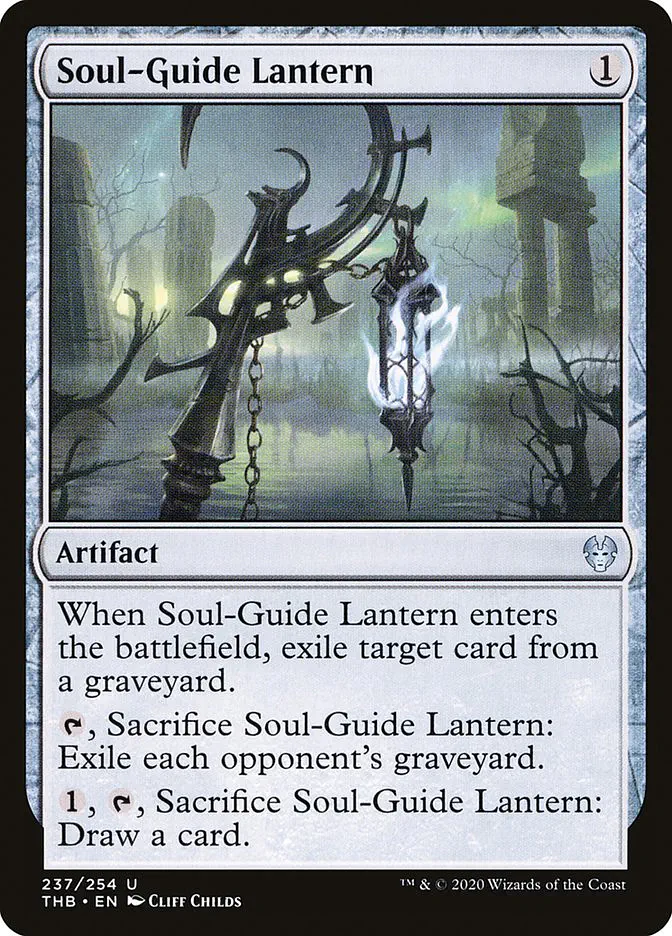
And if we were to use both to maintain high deck flexibility, in what numbers should we divide them? One and one? One and two? All these questions require a deep analytical ability of cards, the metagame, an advanced knowledge of the rules, and a developed predictive ability of future metashare, as well as acumen in seeing the various synergies of cards.
The best players are such because they are naturally predisposed to perceive quality earlier and better than others. The concept of flexibility is a measure of quality because choosing the most flexible cards means choosing those that are qualitatively superior among all available. Implementing the flexibility of a deck and its strategy means building a deck around the most qualitatively sustainable game plan among the possible ones and integrating the most qualitatively appropriate set of answers/threats to react to a certain state of the format in which one finds oneself. This is the most difficult concept to understand in the entire game.
Next Chapter: Activity and Reactivity in MTG >>
<< Previous Chapter: Efficiency in MTG