


<< Previous Chapter: Flexibility in MTG
8. Proactivity and Reactivity in MTG
Proactivity and Reactivity: These characteristics relate to how a certain deck is played. Proactive decks seek to take control of the game from the start. Reactive decks attempt to respond to the opponent's threats and await the appropriate opening to turn the game around.
Side note: Reactivity and Proactivity are concepts that have been evident since the dawn of the game. Over time, they have been studied by some of the best players and theorists. Their names have changed several times, from “Aggression and Reactivity” to “Proactivity and Reactivity.” However, the most significant evolution they underwent was a change in their nature.
Proactivity and Reactivity are no longer considered an intrinsic characteristic of decks, but rather a function of the game. We are often accustomed to thinking as we once did: "this deck is proactive because it has an aggressive strategy," like 5c Domain and Affinity in Modern, or MonoG Landfall and U/R Prowess in Standard. But also: "This deck is reactive because it relies on control," like Jeskai Lessons and 4c Control in Standard. This mindset comes from a long time ago, as we have seen.
It also has many strengths; for example, some classic MTG archetype subdivisions follow the Aggressive/Reactive-Fair/Unfair polar stars. While this is an orthodox way of thinking, if we analyze it deeply, we understand how fallacious it is. The Proactive/Reactive division is a dichotomy. A clear division between two elements, where a third term is not given.
Either a car runs on gasoline, or it runs on diesel. There are no cars that run on a mixture of the two fuels. Just as there shouldn't be decks that are a bit proactive and a bit reactive. At most, there will be proactive decks with reactive elements and reactive decks with proactive elements.
Precisely because, being a dichotomy, a third element is unimaginable. Too bad that there are midrange decks where it's unclear which nature is predominant. Combo decks where it's unclear which nature is predominant. Control decks and even Aggro decks where it's unclear which nature is predominant.
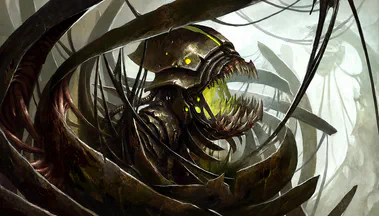
For example, the classic Aggro Fish archetype, mostly represented by tribal Merfolk decks, is more proactive or more reactive? Is casting Harbinger of the Seas a more reactive or proactive play? We would all say reactive. What about Lord of Atlantis?

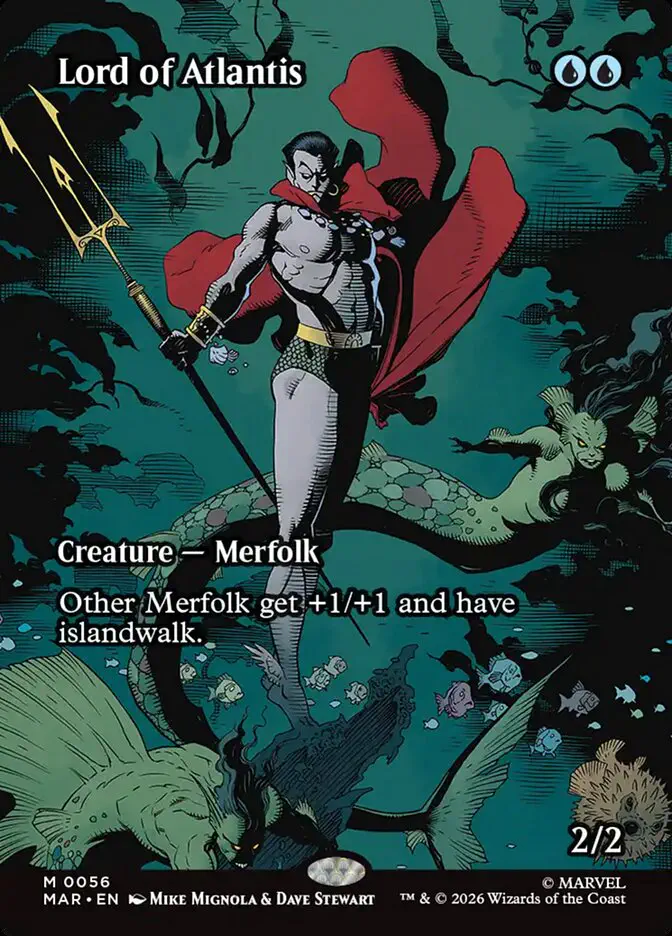
We would all say proactive. So, is the combination of these cards a reactive or proactive game plan? If in a specific meta all Merfolk cards played are clearly more aggressive than anything else, we would say proactive. But we would be wrong, because we would be basing our judgment on an occasional circumstance.
This would be falsified at the first change of assumptions. What must be understood is that, in truth, there are no proactive or reactive decks. There are decks that are designed to best assume the proactive or reactive function in the game. Thus, the classic Control deck will be built to assume the reactive role in the vast majority of its games, and conversely, Mono-Red Aggro will assume the proactive role.
This principle is much better understood by looking at actual gameplay, rather than archetypes. In a match between U/W Control and RDW, it will be clear that the former will take on the reactive role and the latter the proactive role. But in a match where the decks facing each other are truly similar, or even a mirror match, who is the proactive player and who is the reactive player? The answer is that the proactive deck is the one whose player decides to interpret that role, based on the cards they know and the development of the game.
It remains true, however, that deck construction is one of the main indicators that guides us toward the correct role to play within a game. Between two very similar aggro decks clashing, the aggressor will likely be the one with slightly more threats than the other, and the reactive player will be the one with slightly more removals. In a post-sideboard control mirror, the player who brings in more threats will probably assume the proactive role. Therefore, saying that a certain deck is proactive/reactive is not nonsensical; in fact, it has some undisputed practical uses, including allowing us to understand the classic division of archetypes.
However, it is a thought that deviates slightly from reality. It would be more correct to say that a certain deck is built to be proactive/reactive. This makes it clear that we are talking about a role assumed during the game rather than a quality of the deck. Proactivity or reactivity is a precise choice made by the player.
This might seem like a mere subtlety, but it's not, because it helps you play better. A MonoR player in Standard facing a MonoG Landfall player can only win by knowing the right role to play during the game. If they start On The Draw, for example, and the opponent has made the classic land + Llanowar Elves opening, they must decide whether it's better to follow their deck's preferred plan and play land + 1-mana threat, or if it's better to play the reactive role and play land + Burst Lightning.
Next Chapter: General Principles of Deckbuilding >>
<< Previous Chapter: Flexibility in MTG