

<< Previous Chapter: Introduction
The author of "The Schools of Magic" begins his analysis by defining the general concepts he uses as basic vocabulary. Each definition expresses a complex idea that must be clear. Hahn's original writing bases its understanding on the definitions given at his time. However, my writing aims to update and give new life to the past. To reconcile these two needs, I have decided to present the original definition for each concept and then, in a margin note, my updated reflection.
3. Resources in MTG
Resource: That something that allows you to play.
In MTG, resources are: life points, cards in hand, cards in the library, cards in the graveyard, permanents on the battlefield. In tournaments, time is also a resource. At the highest levels of play, the author claims to have discovered that only three resources truly matter: life points, cards, and mana.
Margin Note: In current Magic, cards in exile should also be considered a resource. The "Exile" zone itself did not exist at the time of the article. It was the zone where cards "Removed from the Game" were placed. If cards ended up there, they could not be retrieved. In 2010, with the release of the Magic 2010 core set and the Scars of Mirrodin expansion, it became an active zone within the game. It was renamed, in fact, "Exile."
Now, in 2026, there are multiple ways to play a card from exile, or interact with it. A striking example is cards with "Adventure" (see rule 715.3d).
The concept of "in play" also changed in 2010, when the "in-play zone" was renamed "Battlefield." However, this terminological update adds nothing to what the author had written, so it's unnecessary to discuss it.
Instead, it is worth noting how resources consisting of cards in a certain zone (hand, library, etc.) are generally covered by the concept of Escrow, which is itself a resource. We will address this issue in the next definition, that of "Velocity."
Furthermore, it should be noted that the concept of "time" that the author uses is not what we mean in contemporary play. Robert Hahn refers to the management of the physical time of tournament matches. That is, above all, knowing when to concede or play. To arrive at something that is the prototype of the modern concept of "tempo," we will have to wait until at least 2006 and the writings of Scott Johns.
When we speak of "Tempo" now, we refer to a precise game tactic. We use the word borrowing it from musical language, not physical. We are using the word "Tempo" with the meaning of "Pacing, or overall execution speed." In fact, a tempo deck aims to dictate the game's speed most convenient for it, throwing the opponent's off-balance.
In this sense, it gains "Tempo," meaning it creates a dissonance between the development of its own plan and that of its opponent. This discrepancy can allow it to win the game. For example, on the play, in our first turn, we play our creature that gets +1/+1 for each spell we cast. The opponent, on their first turn, plays a blocker.
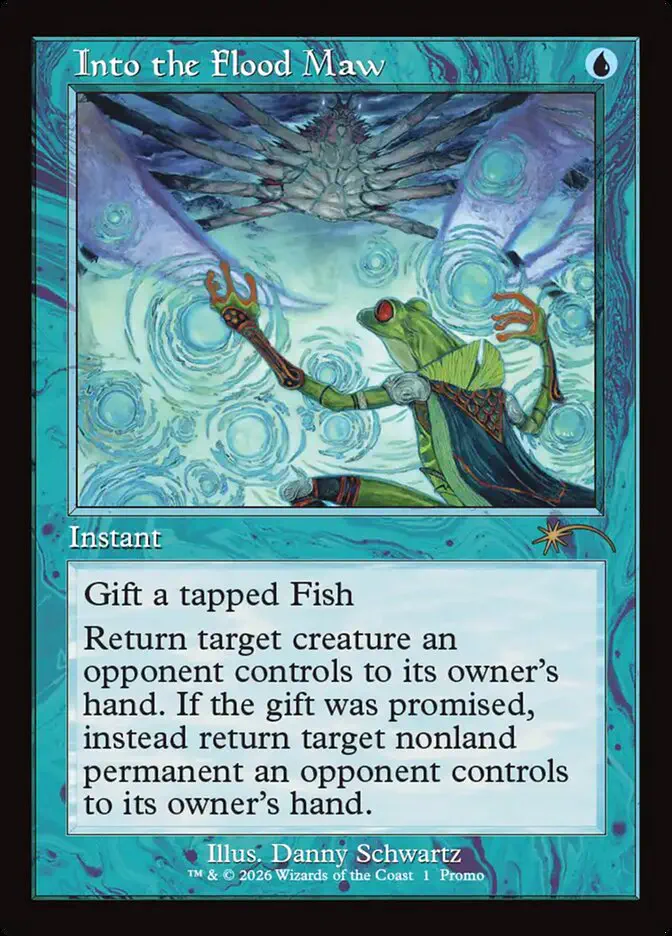
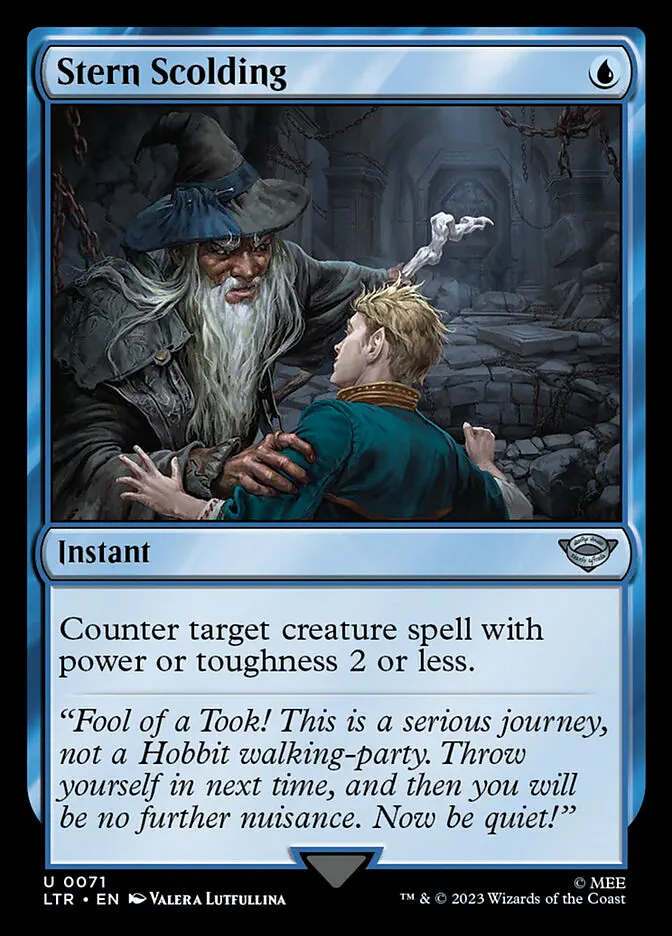
On our second turn, we bounce it with Into the Flood Maw, our creature gets pumped, and now has a clear path for attack. We remain open with one blue mana to cast Stern Scolding on the opponent's turn, in case they want to try to place another threat. What we are doing is dictating the tempo of the game. Turning it in our favor, developing our game plan and preventing our opponent from developing theirs at the speed they would like.
So Tempo, in this sense, is not the fastest possible game development, but the most effective. The latter is achieved by developing one's plan within the intended timeframe (i.e., on curve) and preventing the opponent from doing the same (i.e., nullifying their on-curve plays and forcing them to play off-curve in a negative way). This is one of the most intuitive ways to explain the concept of "Tempo" in modern Magic. However, while having the merit of being immediately understandable, it suffers from some technical inaccuracies.
The most accurate way to describe the concept of "Tempo" is to understand the game it refers to. Magic is a turn-based game, and each turn is punctuated by phases, subphases, and game actions that occur within them (both automatic and non-automatic). Furthermore, in Magic, you start with a predetermined total of Life Points, usually twenty in traditional formats. All of this has a limited and often predetermined temporal space within the game itself.
You draw one card per turn in the draw step, you have two main phases, one before combat and one after, Life Points are eroded, more or less quickly, throughout the game to achieve victory. The "Tempo" Theory views all these things as additional game resources that can be manipulated to create an advantage. One of the most common ways to do this is to use your mana more efficiently than your opponent. This is the concept often described as "mana efficiency" or "gaining a mana advantage."
This action does not exhaust the concept of "Tempo" in MTG and is, in turn, divided into multiple sub-actions. First, the player who uses more mana than others in the same period of time is effectively gaining a tempo advantage. That is, they do more in a single moment of the game. To give a trivial example, if on our third turn we play a one-mana creature and a two-mana creature, and on the opponent's third turn they only play a two-mana creature, we have gained a tempo advantage.
Another way to use mana more efficiently than your opponent is to spend less to maintain parity. For example, if, on their fourth turn, an opponent uses all their mana to cast a four-mana creature and we only use two mana to neutralize it with Counterspell, we are trading cards 1 for 1, but with the advantage of two less mana. We could use the two remaining mana to do something else, like casting a flash creature on the opponent's turn. In this way, we have gained more tempo.
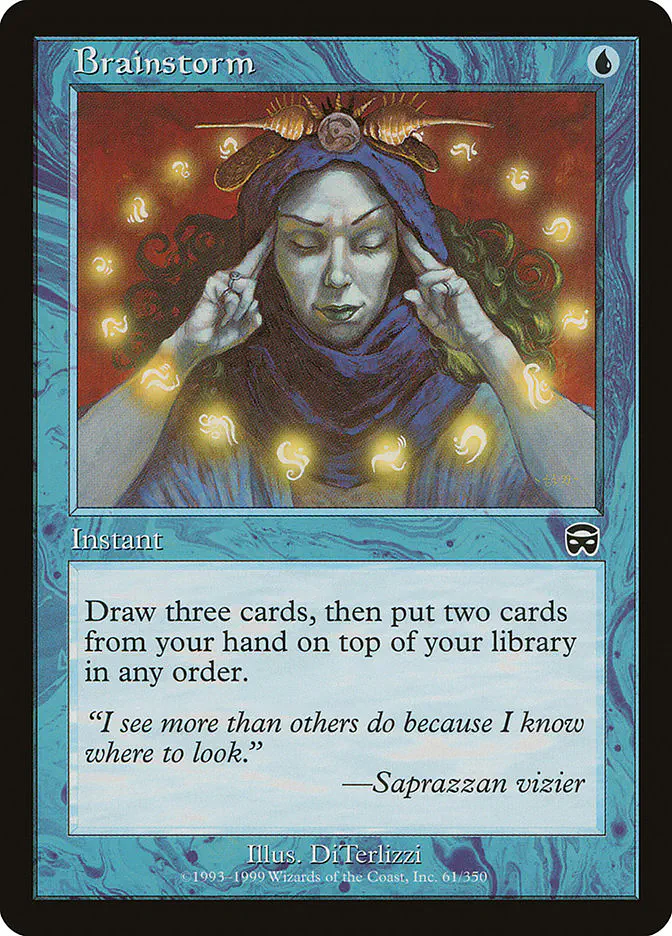
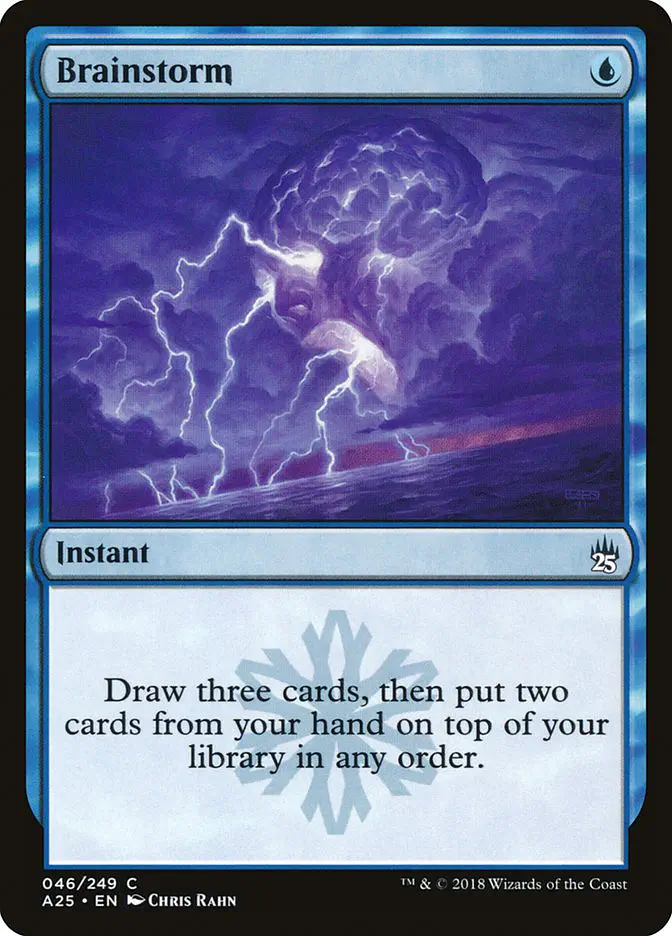
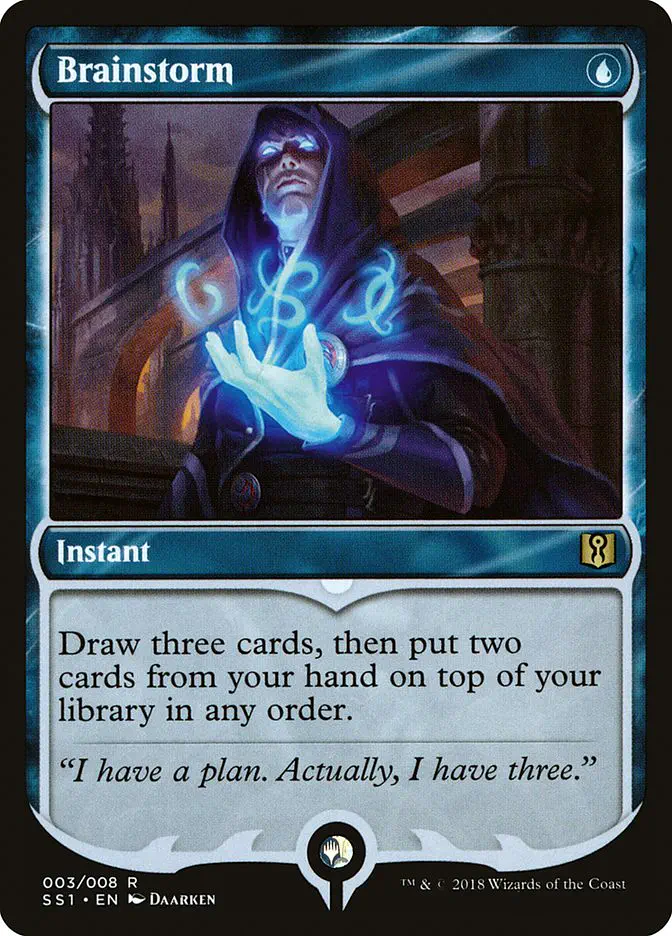
A further, very popular way to use mana more efficiently than your opponent is to rely on the synergy of certain cards that allow you to do more with less mana. For example, if we have a creature on the field that deals one damage to the opponent and allows us to discard and draw a card every time we play an instant, then, if we play Brainstorm, for the cost of a single mana we would have gained card advantage multiple times, improved card quality, and even attacked the opponent's Life Points resource. The sum of these multiple interactions has made our mana use more efficient and allowed us to gain Tempo. However, as stated, the concept of "Tempo" is not exhausted by the concept of "Efficient mana use."
"Making Tempo" also means manipulating the phases and subphases that punctuate the game. If, for example, we have a 2/4 creature on the field that prevents the opponent from attacking us with their two 3/2s because they don't want one of them to be killed after blocks, then we are making them lose the combat phase. We are gaining tempo. In this example, moreover, one of our resources is holding two of theirs in check.
We are therefore making a temporary 2 for 1. Another canonical example is when we play a card that is able to put an opponent's creature on top of their library. Imagine playing, at the end of the opponent's third turn, a three-mana instant that allows us to put their creature without ETB or LTB, costing 3 mana, on top of their library. We have gained tempo, not only because they wasted one of their main phases to play a threat that is no longer on the battlefield, but also because we have stolen their next draw step, as they will draw the same card we temporarily removed.
It's easy to see how, in truth, playing to gain "Tempo" in modern MTG is like chasing an additional resource, not just a specific tactic. There are certainly tempo decks that rely on the exacerbated incrementation of this type of advantage, but, in general, every current competitive deck is built in a way that makes its mana use efficient.
Next Chapter: Velocity in MTG >>
<< Previous Chapter: Introduction