



<< Previous Chapter: Resources in MTG
4. Speed in MTG
Speed: is a complex concept made up of several subcomponents. Resource speed, offensive speed, defensive speed, and strategic speed. Rob Hahn refers to another article of his called “Theories of Deck Speed” to better understand it. I will summarize the essence of that article here to allow the reader to directly grasp this concept.
Hahn begins with the premise that most Magic players have some awareness that speed in the game is very important. The difference between Magic formats can be described purely in terms of speed (Limited sealed is slower than Standard, both are slower than Modern, etc.). For the author, one of the first achievements that helps players grow from beginners to intermediates is precisely understanding the impact of deck speed in various game situations. When one realizes that a 2/2 for one mana wins more games than a 13/13 for 10 mana, then players stop putting "bigger is better" cards into their decks and start building strategies based on mana acceleration or low-cost spells.
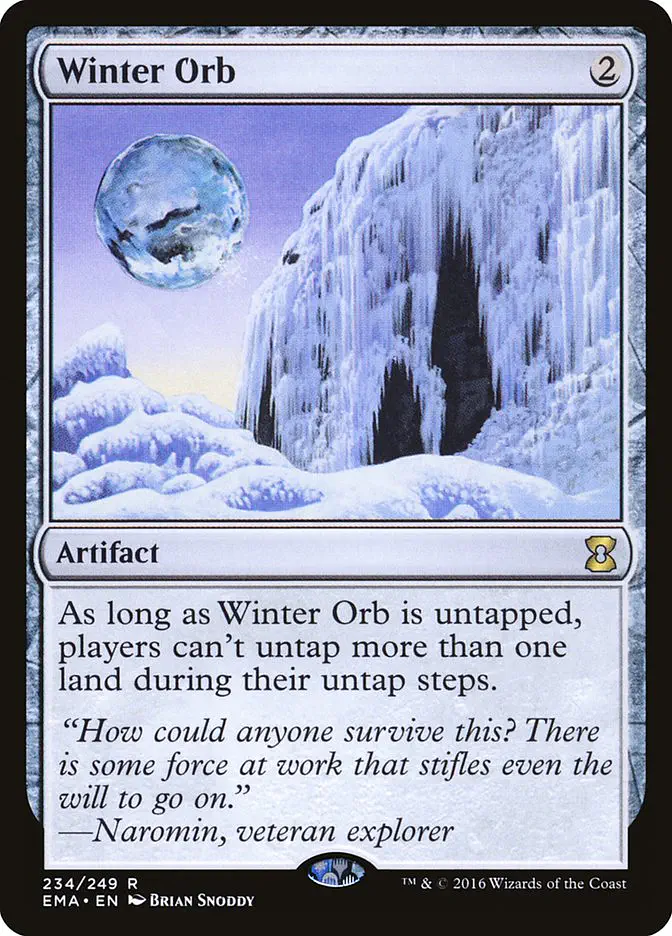
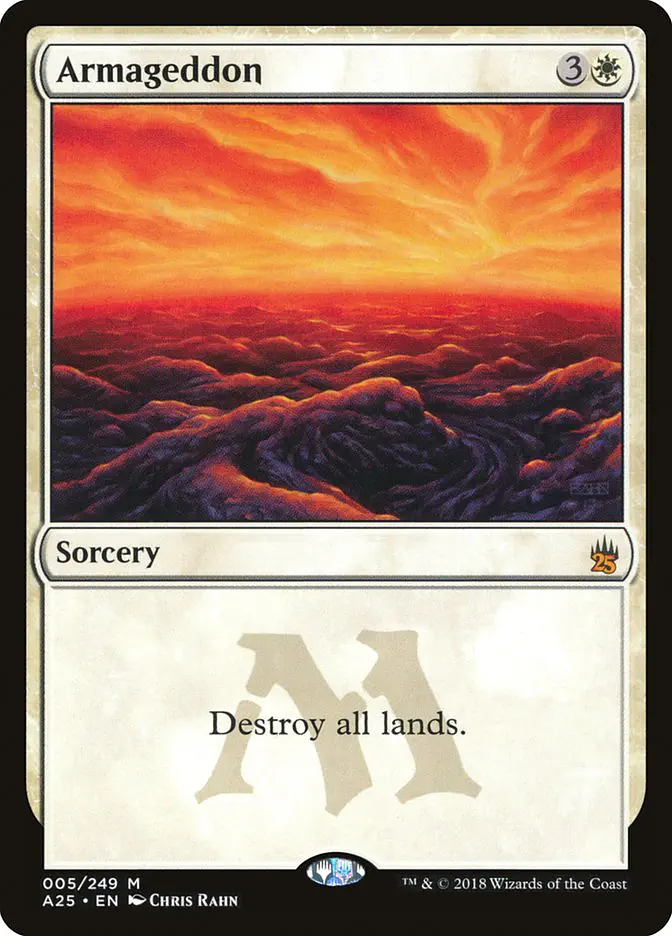
Both approaches are dimensions of speed. However, Hahn adds an observation: at the highest level of tournaments, slow decks regularly win. He uses as examples the pre-1997 Type II control deck based on Winter Orb and Armageddon (a very famous prison deck) and the Weissman Deck U/W Scepter-Lock. Today, we could use the 4c Control, Jeskai Control, Jeskai Lessons, and Sultai Control decks of current Standard (May-June 2026).
This observation leads the author to question the meaning of the word “Speed” in the game. It is impossible to play at the highest levels of Magic without a clear understanding of the true meaning of this word. Hahn believes that the best players understand it more intuitively but rarely reflect on it. “Speed” in Magic means simultaneously Offensive Speed, Defensive Speed, Resource Speed, and Strategic Speed.
These four dimensions are closely related, to the point of blending into each other. But, once the basic concept of each individual component is understood, the general meaning of "Speed" in the game can be grasped.
“Offensive Speed” refers to the speed with which a deck is capable of consistently winning. To avoid random outcomes, where one wins very quickly due to luck, the “goldfish test” method is proposed. This provides a reliable measure of a deck's speed. The method starts from the opening hand and counts the turns it takes to defeat a completely undefended opponent. For example, if you are building an RDW (Red Deck Wins), from your opening hand you cast creatures and attack an ideal opponent with twenty life who does nothing but play lands.
“Defensive Speed”, on the other hand, consists of the speed with which a deck can consistently defend itself. This implies defining what “defending” means in MTG. According to the author, defense in MTG is not just about avoiding being killed, but also about hindering the opponent's game in every other way. Defensive plays are numerous and multifaceted.
Countering an opponent's removal spell played to eliminate one of our blockers and deal damage to us, but also casting Armageddon on an open board when the opponent has no lands left in hand and we do. Any action aimed at obstructing the opponent's strategy is a defense, and the speed with which this action can be applied forms "Defensive Speed." Hahn gives the example of the classic U/W control deck with Swords to Plowshares, counterspell, Force of Will, disenchant, etc., but he makes sure to explain that one must not fall into the error of thinking that only these precise removal and counter actions are defensive attitudes.
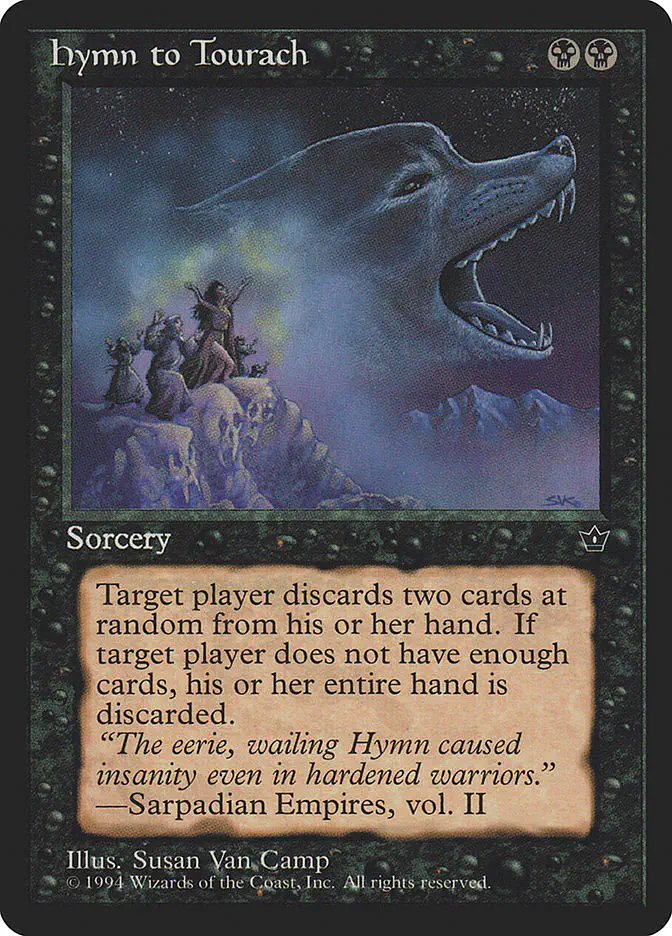
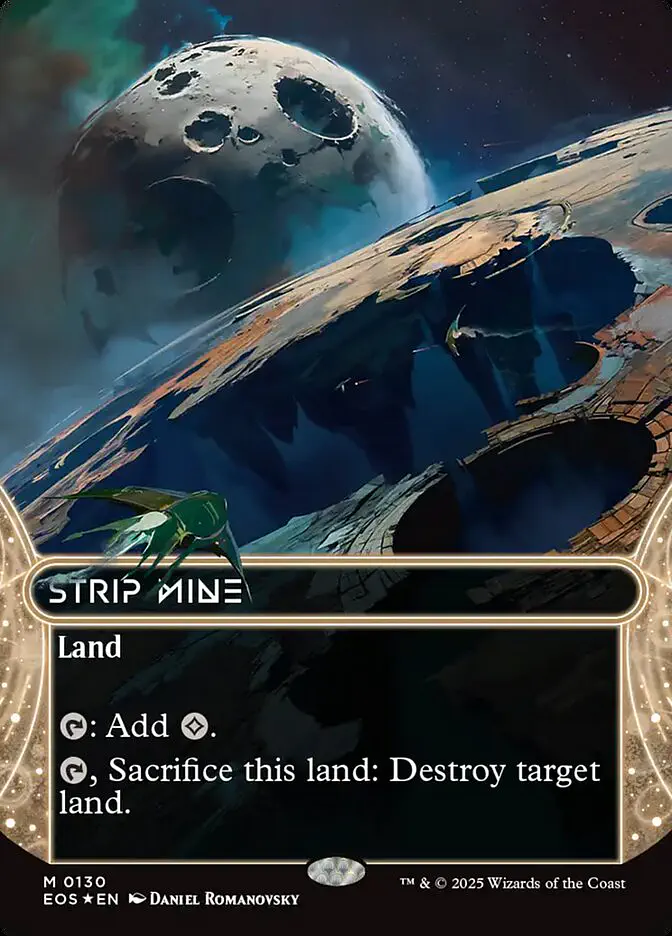
In 1996, the Necrodeck was one of the decks with the highest defensive speed thanks to completely different plays based on Hymn to Tourach and Strip Mine.
Proceeding, “Resource Speed” is the attempt to canonize the time with which a certain deck is able to rapidly deploy its resources. Before proceeding, the author revisits the concept of “resource” in the game. He states that in Magic tournaments, resources are life points, tempo, and cards. Remember that in the definition of resource in “The Schools of Magic” the author gave a broader definition of resources.
This is not contradictory; we will analyze it later to avoid confusion. Let's return to our Life Points, Tempo, and Cards. If you run out of Life Points, you lose. If you run out of time, understood as game time and not the modern concept of tempo that I explained earlier, you lose or draw.
If you run out of cards, you are most likely heading towards losing the game. Delving into the “Cards” resource, Rob Hahn divides it into Permanents, Mana, and Escrow. Permanents and mana are resources we all know and are well explained in the game's Comprehensive Rules (Rule 106 for mana, 110 for permanents, and all various sub-rules). Escrow, however, is a more difficult concept to grasp.
In its simplest sense, it refers to cards in hand. Cards in hand have the potential to do something, and this means their mere presence can influence the game. The same can be said for cards in the library and graveyard. The playability of these escrow resources will depend on multiple factors, including mana, but their value lies in the fact that they are available to us.
Explicated in this way, Hahn's explanation in this article series does not contradict the definition of "Resource" he himself provided in "The Schools of Magic." Simply, in "The Schools of Magic" he expands on it, and here, in "Theories of Deck Speed," he slightly shifts the focus to the most important resources, adding game management time and unifying "Cards" and "Mana," with the latter falling under the former. After this digression on the concept of resource, Rob Hahn posits a thesis: "Resource Speed" primarily depends on the management of cards in the different zones they are in. Indeed, there are various ways to manage life points and the duration of a game, but all of these depend on cards (except cheating and slow play, both repugnant things).
Cheap permanents, like low-mana cost creatures or artifacts, contribute to the speed of permanent resources. Spells like Dark Ritual, or creatures with mana abilities like Llanowar Elves, or artifacts with the same function like Mox Pearl, all contribute to Mana speed. Various cards with cantrip effects, like Ponder, provide speed to the Escrow through drawing or library manipulation. To give a more practical idea of resource speed, we can give a few examples.
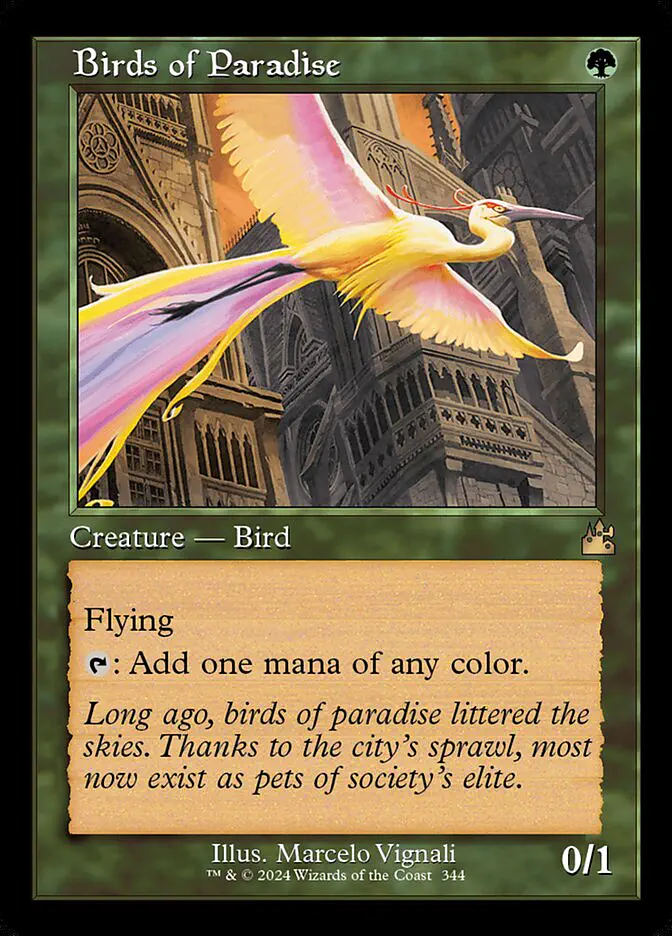
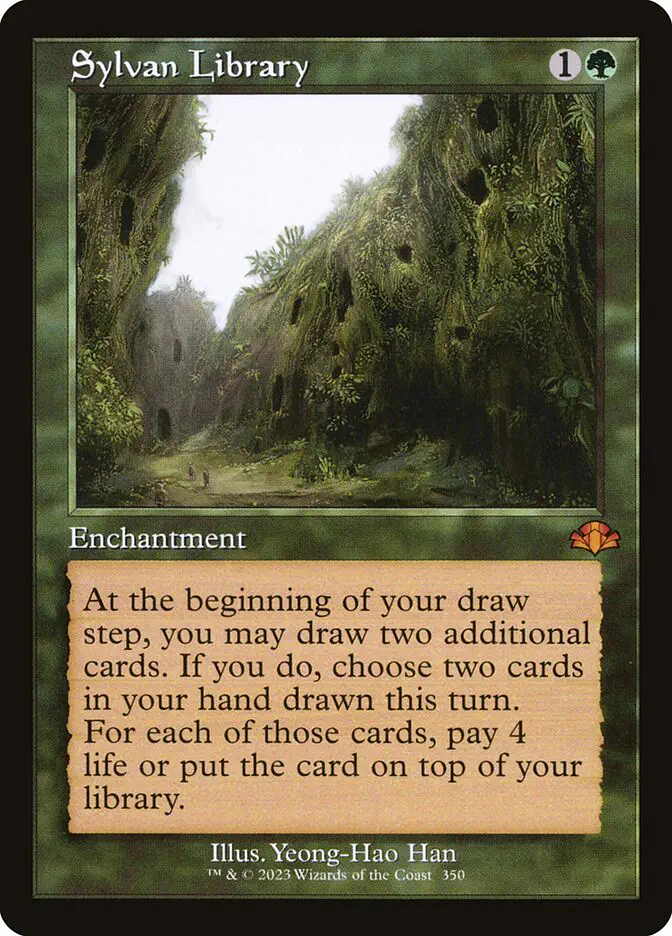
Hahn thinks of Birds of Paradise. Playing Birds of Paradise on turn one has neither an offensive nor a defensive purpose. Its sole purpose concerns speed; it accelerates the mana resource. In the same way, Sylvan Library does nothing offensive or defensive, but it accelerates the escrow resource, moving cards from a lower escrow state (being unknown in the deck) to a higher state (being known in hand).
It's possible to evaluate the relative speed of resources by comparing them when they have similar effects, within a certain timeframe and/or format. For example, we could compare Ancestral Recall and Braingeyser in Type I of that era. We would understand that the difference between the two is a difference of speed rather than effect. A deck has good "Resource Speed" if it is able to play its card resources quickly, while simultaneously manipulating its resources in Escrow.
"Strategic Speed," finally, is a principle that unifies all three types of speed previously explained.
"Strategic Speed" is the answer to the question "How quickly can you play your game?", which can be translated to: "How long does it take your deck to finalize its strategy?". For a deck to achieve its strategic objective as quickly as possible, the author states that Resource Speed and Defensive Speed are always necessary, but Offensive Speed is not always. The answer to the question "how long does it take your deck to finalize its strategy?" depends on various factors, as the strategies applicable to decks are diverse and often the best decks have more than one. However, it is still possible to get an idea of "Strategic Speed" by comparing Tier 1 decks of a certain format with lower tiers, or by comparing different strategies.
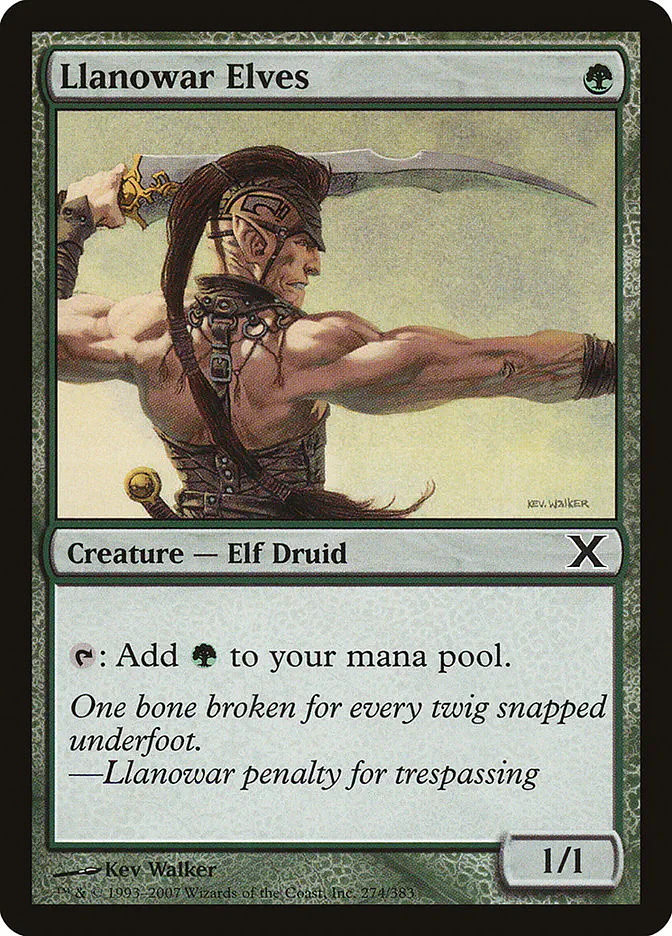
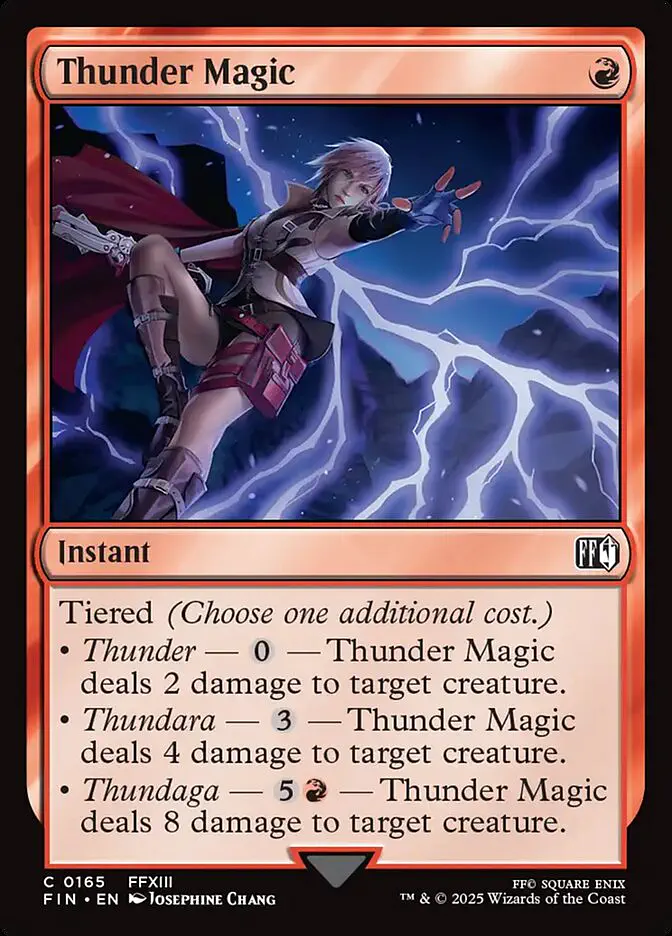
Let's take two decks from today's Standard, Mono G Landfall and 4c Control. On turn one, Mono G can play Llanowar Elves and 4c Control can play Thunder Magic. On turn two, the first deck can play Badgermole Cub, but the second deck can also play many things depending on the lists, such as No More Lies, Abrade, Lightning Helix, Get Lost. It's a very simple example, but it illustrates how both strategies possess a certain "Strategic Speed."
All four concepts of speed integrate through "strategic speed." A deck is fast if it can finalize its strategy quickly, and the concept of "quickly" depends on the format in which you are playing.
"Strategic Speed" depends on "Resource Speed", which is why, for example, green bases are particularly strong in the current Standard.
"Strategic Speed" is also always related to "defensive speed" and, only secondarily, to "Offensive Speed". This is because the author believes that a deck should always be able to defend itself, while offensive speed only has strong strategic meaning when the speed of the attack is such that it disrupts the opponent's game plan, and only a few decks manage to achieve this goal.
Rob Hahn closes “A Theory of Deck Speed” with four empirical observations:
- Simple strategies are also the fastest. This is the classic case of RDW decks. In "Offensive Speed," for example, attacking the opponent quickly with a "go-for-it" approach is always faster than developing any more complex strategy based on unblockable creatures.
- Similarly, looking at “Defensive Speed,” any card that handles a threat, such as Lightning Bolt or Day of Judgment, is always faster than a set of cards which, in synergy, achieve a similar result even if prolonged over game time (e.g., Solemnity+Phyrexian Unlife, other similar combos seen only in casual formats precisely because of their inherent inefficiency). Card combinations are always slower;
- "Resource Speed" in itself does not increase the overall speed of the deck, but it makes it possible. We can give a modern example by thinking of all the decks, usually control decks, in current Standard that integrate Tablet of Discovery. These would have a slow strategy that would struggle to keep up with the format. In fact, before the printing of Tablet of Discovery, those strategies had been in serious trouble. However, Tablet, while not making the overall strategy of the deck faster in itself, makes it possible by accelerating the casting of every other resource. The exact same thing happens when we want to build a deck that bases its win conditions on particularly expensive pieces (PWs/creatures costing five or more mana) and to accelerate its play we include a ramp plan in the deck with cards like Llanowar Elves, Ancient Cornucopia, or Shared Roots;
- A strategy that prioritizes defensive speed increases the deck's speed, while a strategy that prioritizes offensive speed reduces it. This may seem counterintuitive until one understands that defense equates to disrupting the opponent's strategy and that deck speed is measured in terms of Strategic Speed. No rapid attack can withstand an equally rapid response. On the contrary, the attacker's strategy will be interrupted and slowed down. Conversely, those who emphasize "defensive speed" calmly deploy their disruptive strategy and create an environment of game dominance at their programmed speed.
Given all this, the author states that it is his reasoned opinion that a deck with high resource speed and that allows for an extremely fast defensive strategy achieves maximum deck speed.
Side Note: Starting from the beginning, it is no longer entirely true that the main difference between formats can be described in terms of speed difference. With the increase in the game's Power Level and the diversification of the spectrum of abilities and game effects, formats (at least competitive ones) can often vary their endogenous speed. While it is true that Legacy is always faster than Standard, it is not equally true that Standard is always faster than Limited Draft. For example, the Phyrexia All Will Be One Draft format was undeniably faster than its contemporary Standard.
Moreover, after Hahn's articles, formats were also created that ideally had to respect a predetermined speed setting at their inception. For example, Modern was structured around the unofficial concept that no deck should consistently win before turn four. This was never an explicit rule. Rather, it was a balancing guideline, better known as the "Turn Four Rule," which first appeared as a statement of intent in Tom LaPille's article "Welcome to the Modern World" on August 12, 2011.
I will not dwell on whether this rule is still respected, but it was for a long time and several ban lists. This also means that some formats are deliberately kept slower or faster, while others are not, and a format that was slower than another until recently could become faster than the latter because it is not subject to the same policies. More than the type of format, speed is now indicative of the format's competitiveness. It is undoubtedly true that competitive formats tend to degenerate towards extreme speed because they are based on efficiency.
However, it is also true that, once a certain threshold of acceleration is surpassed, competitiveness is paradoxically consistently lost. Formats that are too fast always imply a greater dependence on the dice roll, an exponential narrowing of "Card" resources with which a game is played (and therefore of Escrow), and a systematic shortening of interaction lines because fewer and fewer answers will be drawn to manage game situations. This and many other things prevent the structuring of a true game strategy, which is reduced to who, in the first, second, or third hand, is able to make more consecutive unchallenged power plays. In addition to this aspect, within the concept of "Card Speed," we refer back to what was said in the previous side note to update the concept of Escrow.
This is certainly what has most amplified over time. Escrow can no longer only concern one's own libraries, graveyards, and hands, but also exile and the sideboard. Furthermore, all these zones apart from the sideboard no longer need to be parameterized on a single player, the owner, but on both players. After Hahn's article, countless game mechanics have been introduced that make it possible to use cards in these zones.
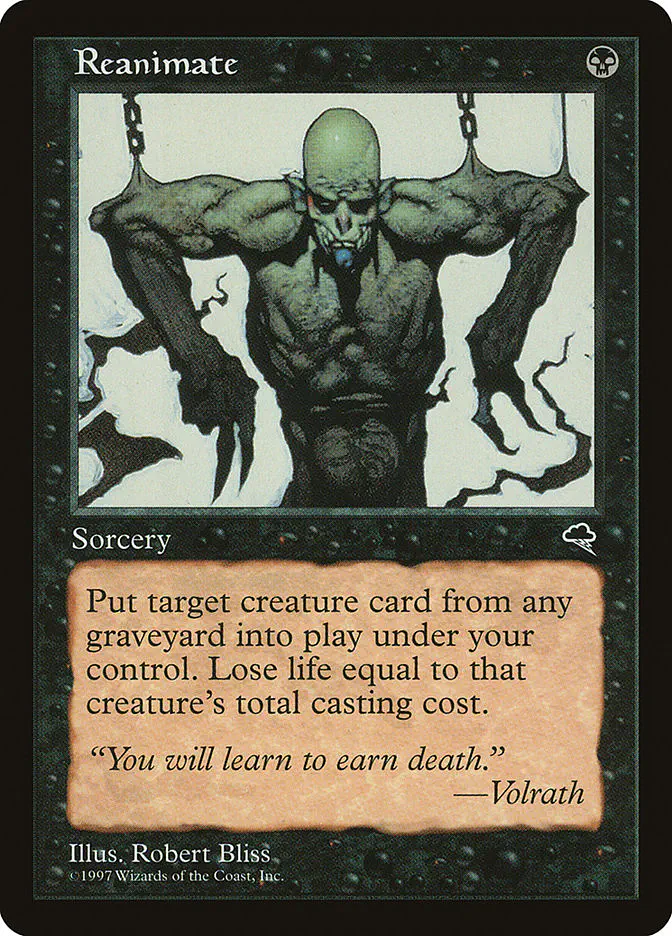
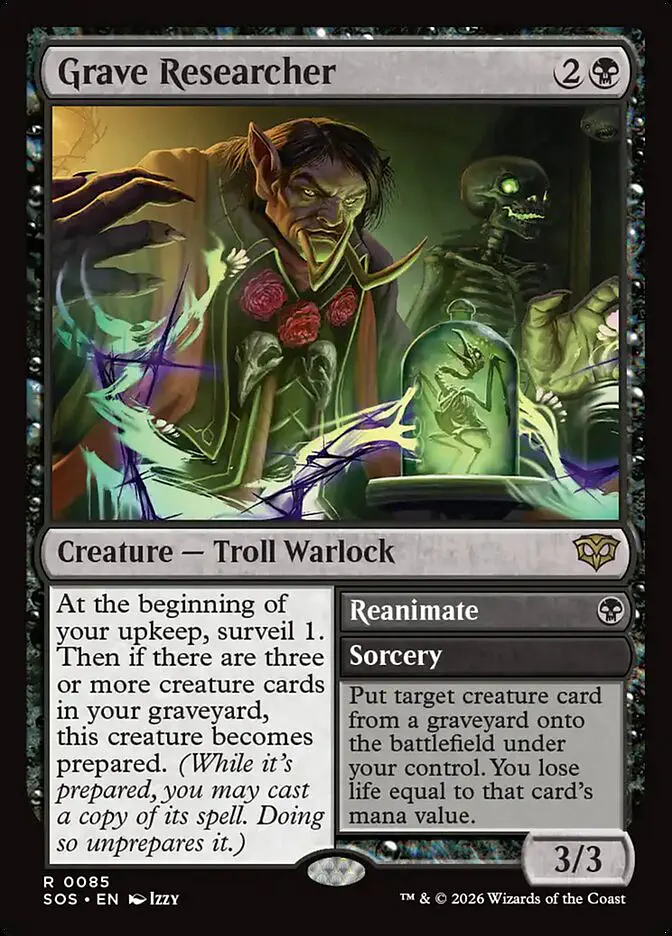
From the distant Reanimate from Tempest (October 1997) which can target both graveyards, to Grave Researcher. From Burning Wish for our sideboard to North Wind Avatar. The expansion of Escrow has certainly made the game more difficult and tactical, as it requires players to account for multiple resources in different zones simultaneously. Moreover, with the evolution of MTG, another characteristic has emerged that gives relevance to Escrow.
Now Escrow is a resource not only because it contains cards that can do something if played, but also because it can influence something else in the game even without being played. Think of the recent card Flow State, heavily played in Standard and dabbled with in Vintage. The effect of Flow State becomes much stronger if there are two specific card types in the graveyard. That is, if the Escrow resource has a certain composition.
Those two cards in Escrow are not relevant because they could be played, but because they reside there. One last updating aspect that needs to be reflected upon are the levels of Escrow. Hahn does not discuss it very extensively. However, he tries to convey the idea that Escrow is not all the same.
Cards in the library are at a lower Escrow level than those in hand, because they are neither known nor can they be played immediately under ordinary conditions. With the proliferation of Escrow zones, however, its subdivision into levels must also become more articulated. What makes Escrow a resource is the potential for game influence possessed by the cards within it. This potential depends on multiple factors, the most important of which are knowledge and availability.
Knowledge depends on whether the card is known and to whom. Availability depends on whether the card can be played without particular restrictions, or if it is in a zone where its playability is limited by the game rules. Of these two characteristics, the primary one is knowledge. There is nothing in the game that can be played before it is even known.
Following this conception, at the highest level of Escrow are the cards in one's hand. These are known only to the player who possesses them and are immediately available. Immediately after come the cards possessed in the graveyards and exile of both players, because they are known to everyone and available thanks to particular abilities of those cards (Flashback or Adventure) or the effects of other cards (Reanimate or the Valiant of Emberheart Challenger). At the third level of Escrow, we find cards in one's own or the opponent's library that are unknown, but can be known and available thanks to the effects of certain cards or game permanents (e.g., Profane Tutor, Stoneforge Mystic, or Mystic Forge).
At the lowest level of Escrow, we find our own sideboard. Cards in it generally should never enter the game, and therefore, in theory, it's as if they were unknown. We shouldn't even look at it while we play; it shouldn't concern us. However, if we're playing Temur Omniscience in Standard, we'll probably play North Wind Avatar.
This card is one of those rare cards existing in the game that gives us access to a sideboard card and brings it from the lowest level of Escrow to the highest. There are very few cards of this kind in over thirty years of gameplay. This is why the Sideboard's Escrow is at the lowest possible level. Finally, I must say that I no longer find it true
A) that emphasis on offensive speed reduces the deck's strategic speed, and consequently
B) defensive speed is always positively correlated with strategic speed. Rob Hahn wrote at a time when control strategies were truly optimal. He assumes that if the opponent's plan is to win as quickly as possible with offensive spells, such as creatures, then it is enough to counter them with defensive spells of at least equal mana to gain an advantage. Because we are trading 1-1, but the opponent has lost both time and an essential resource to finalize their strategy.
Instead, we are gaining time to safely establish our win condition. Hahn assumes that when the opponent casts a Ball Lightning at us and we counter it with a counterspell or remove it with Swords to Plowshares, we are at a huge advantage. All of this was and certainly is true. The core reasoning hasn't changed, but all the terms of the equation have.
Now there are threats so strong and at such a low price, like Ocelot Pride, that sometimes you are forced to use a counterspell to neutralize it. We are using a two-cost resource to manage a one-cost resource. In this case, prioritizing offensive speed has given strategic speed to the deck, while focusing on defensive speed has slowed down the deck's strategic speed. The same argument applies to any offensive spell that costs less than the defensive spell used to manage it.
E.g. Unearth targeting Abhorrent Oculus in Modern Grixis Reanimator. This happens because defensive spells have fallen behind offensive ones. They have lost efficiency because the game has evolved towards a dimension more tied to permanents on the board than to instants on the stack. Furthermore, today there are offensive spells that have relevant effects upon casting or as ETB as soon as they enter the battlefield.
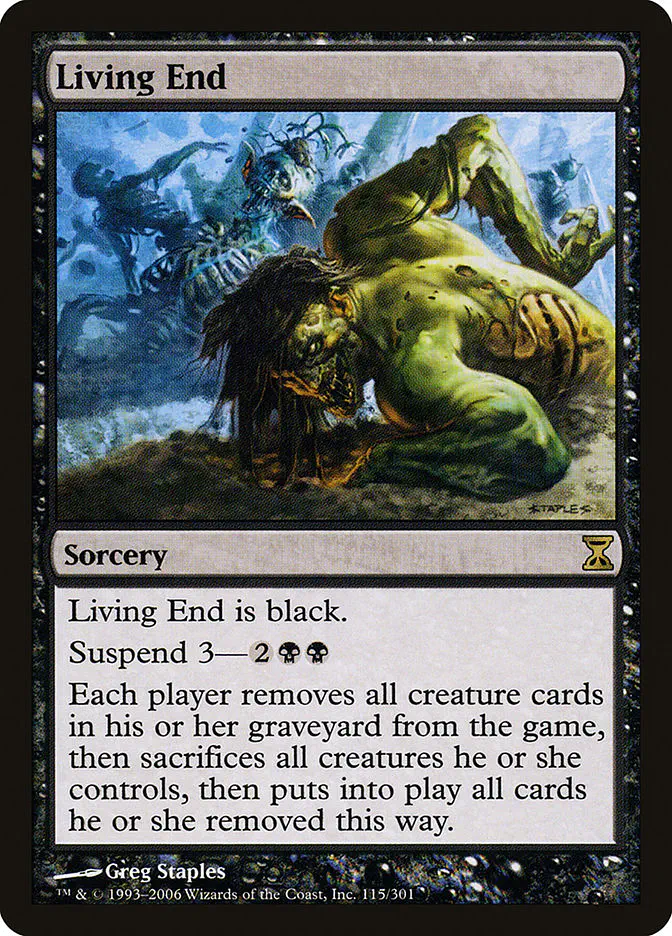
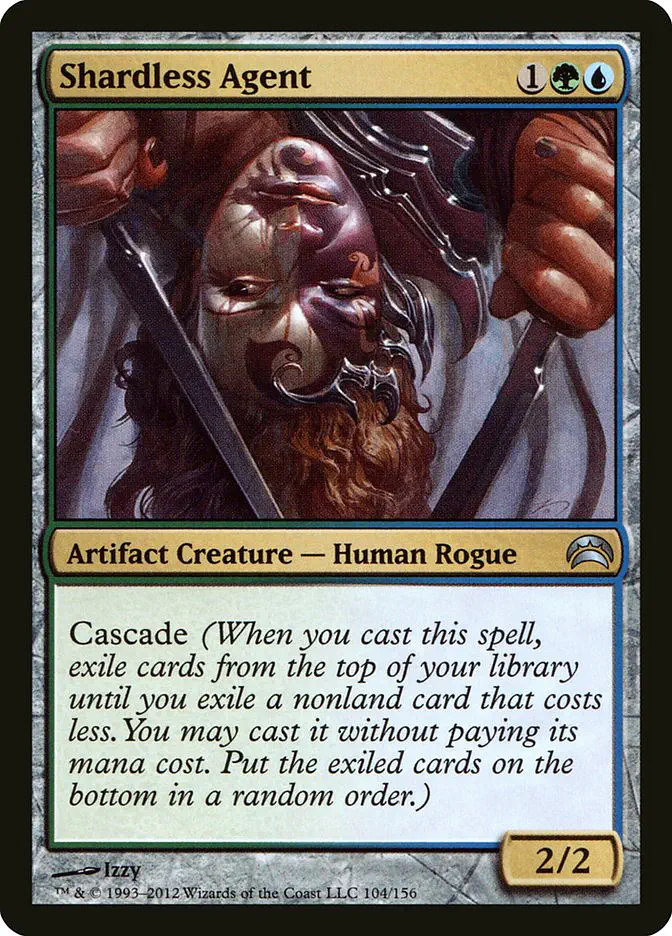
The first case partially invalidates the value of a counter, the second that of removal. If we are playing Living End in Modern, we might even get a counter on Shardless Agent, but the Cascade triggered ability will still be put on the stack and resolve. In fact, this move makes no sense, because the value of neutralization is practically nil. If, on the other hand, we are playing Selesnya Landfall in Standard and we play Badgermole Cub, the opponent may remove it as soon as it enters, but it will have already animated a land with which various things can be done.
The value of this removal still exists, but it has been drastically reduced. In these recent examples, defensive spells often cost less mana than the threat they try to manage, yet they are still less efficient because new relevant aggressive cards often leave something behind even if they are removed or countered. Even in these cases, offensive speed converts into strategic speed better than defensive speed. Lastly, I note that we should better reflect on a possible "Counterattack Theory".
Many of the newer and more powerful spells integrate defensive and offensive elements, making it possible to offensively develop one's plan of action and, at the same time, slow down the opponent's strategy. All encapsulated in a single card. This is one of the ways that seems most effective to me for increasing a deck's strategic speed. A classic example is Countersquall, once widely played.
I will revisit this concept in later notes with more well-known cards that follow the same mentality, such as Solitude.
Next Chapter: Offense and Defense in MTG >>
<< Previous Chapter: Resources in MTG