


<< Previous Chapter: Speed in MTG
5. Offense and Defense in MTG
Offense and Defense: These are two concepts that the author separates, but I combine them here, as the critical marginal note is the same for both. Offense is the set of all elements that allow a deck to win the game. This set has grown with the game due to the emergence of different ways to win. You can win by reducing an opponent's life total to zero, but also by giving them ten poison counters, or by milling their entire library, or by the effect of a condition not met by the opponent, perhaps thanks to one of our reactive plays (Summoner’s Pact in Modern for the Amulet Titan deck).
It must be considered that, as the author states, in competitive formats only some of these methods are actually used because they are practically effective. Defense, on the other hand, consists of all those elements that create interference or disruption in the development of the opponent's game plan. Hahn calls this "Disruption".
Marginal Note: Having understood the concept of "Speed" in Magic: The Gathering, described in the previous point, the concepts of Offense and Defense may seem repetitive. In part, this is true. Therefore, most of the gloss notes from the previous definition are also suitable to be referenced here. That said, I would like to focus on a particular aspect to update Hahn's theory.
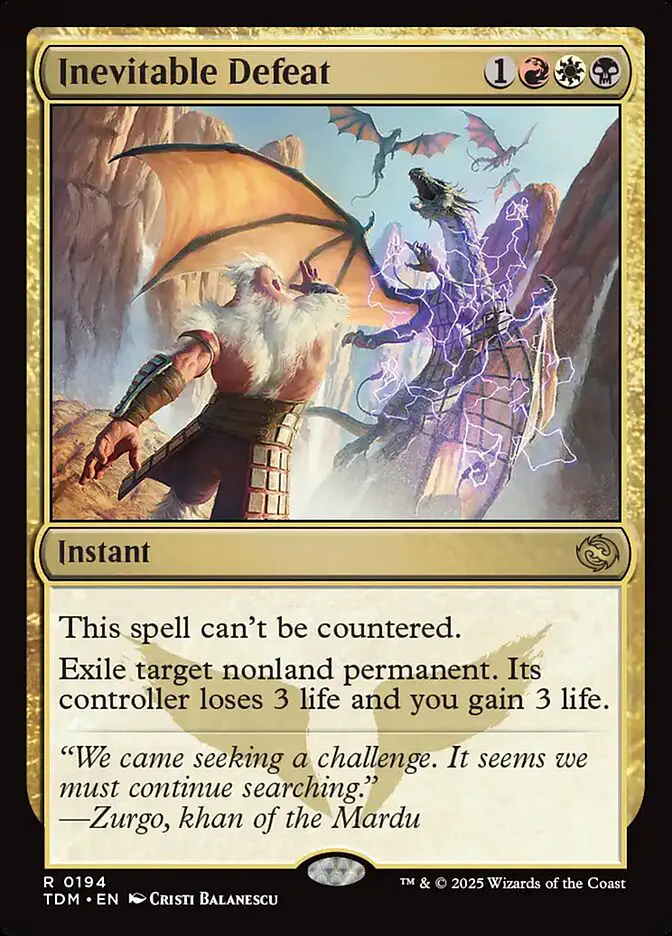
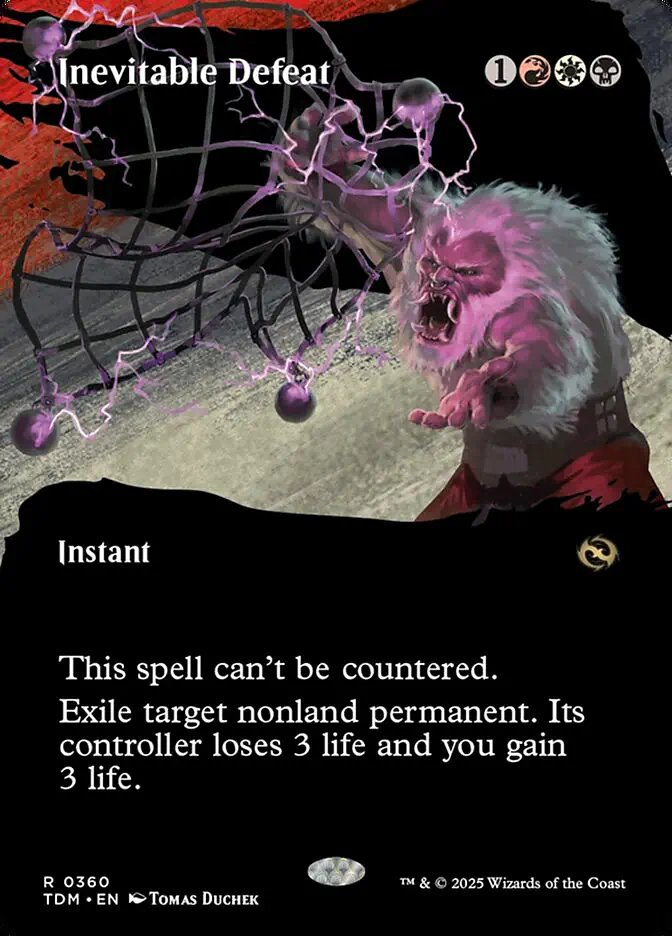
In modern Magic, offensive and defensive resources often mix. This is what I meant earlier when hypothesizing a “counterattack theory”. In the 4c Control deck in current Standard, the card Inevitable Defeat is used. This card is undoubtedly a disruption spell, according to Hahn's standards, as it exiles a nonland permanent.
At the same time, however, it erodes the opponent's life total and increases ours. This means it is also an offensive spell, as it concretely allows winning the game by acting on the opponent's life total resource. However, what it does can also be read as "stealing time from the opponent to develop their plan and increasing the time to develop ours." Of these two effects, the second is the most relevant, because it constitutes the biggest impediment to the opponent's plan development.
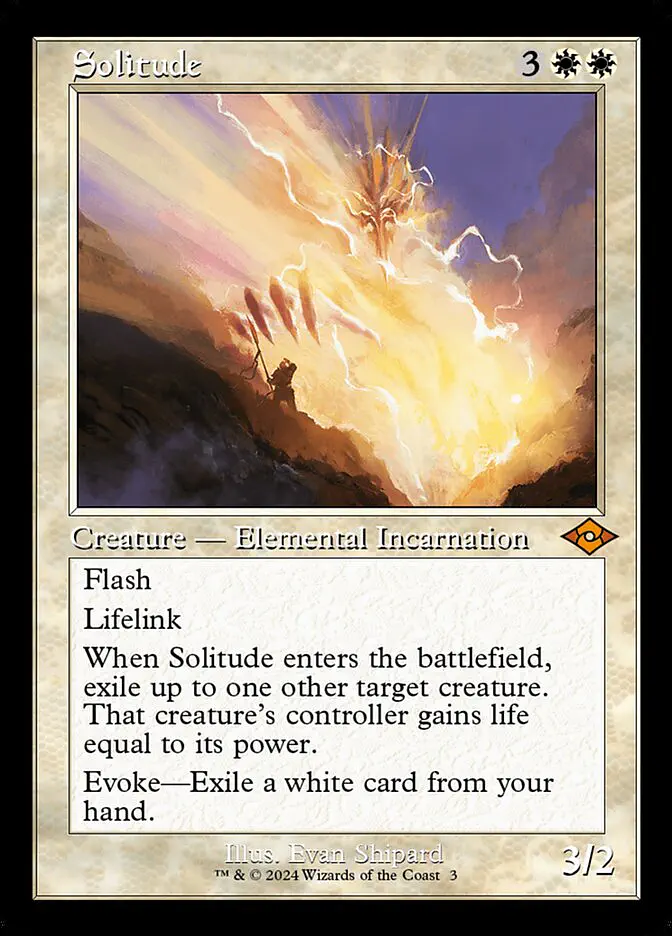
This is, again, a defensive characteristic. The spell Inevitable Defeat cannot be considered fully offensive nor solely defensive. It is more akin to a counterattack, combining both natures. It is not unique and not an isolated case; in fact, the game's development significantly multiplies this type of card. Solitude, Grief, Subtlety follow the same mentality. Jeskai Revelation and Phlage, Titan of Fire’s Fury have the same approach.
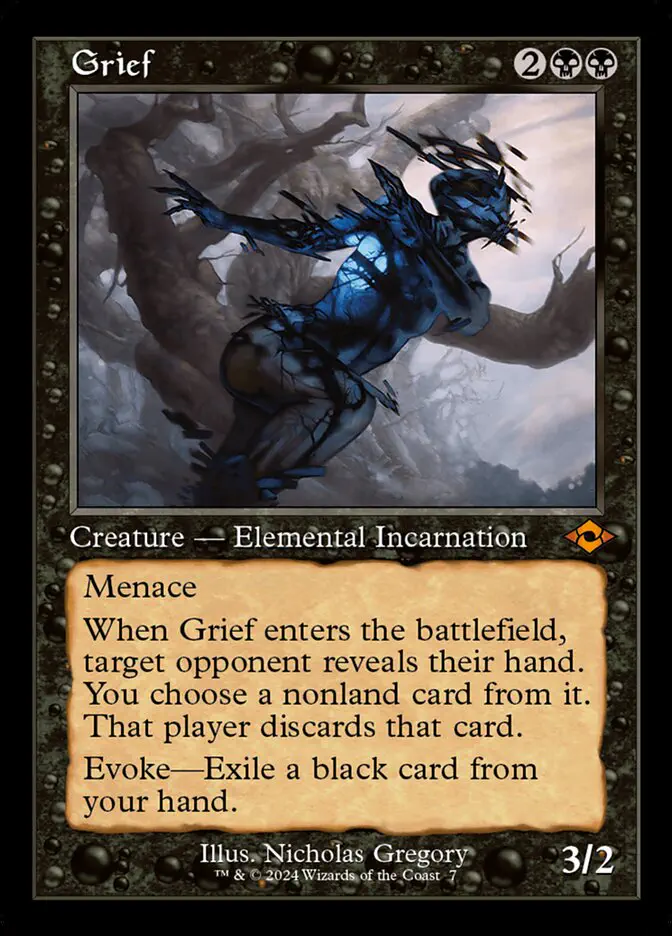
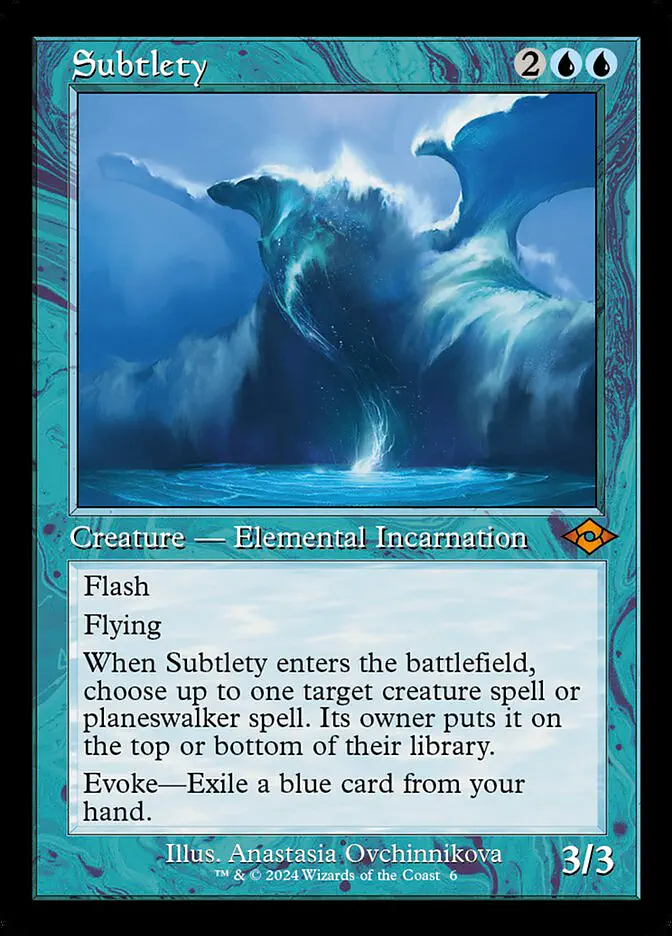
At most, we can say that, within the "counterattack" dimension, a certain card is skewed towards one of the two poles. Taking Inevitable Defeat again, we can say that its uncounterable-removal-gain life characteristics are defensive, while its lose life characteristic is offensive. So it will be a counterattack card skewed 75% towards defense and 25% towards offense. It is my belief, based on empirical observation of game development and competitive formats, that stronger decks increasingly seek to integrate this type of card.
Note, this is not a matter of flexibility, but of quantity and collateral action. The more things a spell does in different directions, the better. Furthermore, MTG has slowly evolved from being a stack-based card game (or even earlier, a batch-based game) to being a battlefield-based card game. This also means that, especially in competitive formats, the development of one's plan relies more and more on permanents, leaving less room for pure defensive spells.
There are fewer and fewer slots in a competitive deck to dedicate to pure counters or removals. This is why having counterattack spells, perhaps even permanents, is a far preferable inclusion to anything else. In essence, this is the "Counterattack Theory": at similar real mana costs, competitive decks will always include spells that integrate defense and offense, rather than spells focused solely on one of the two actions.
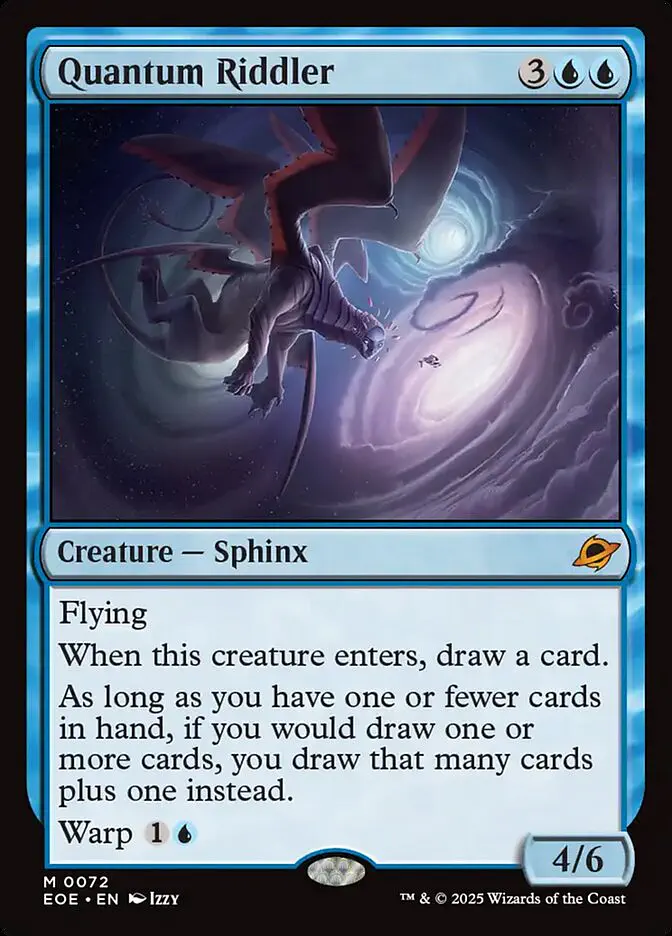
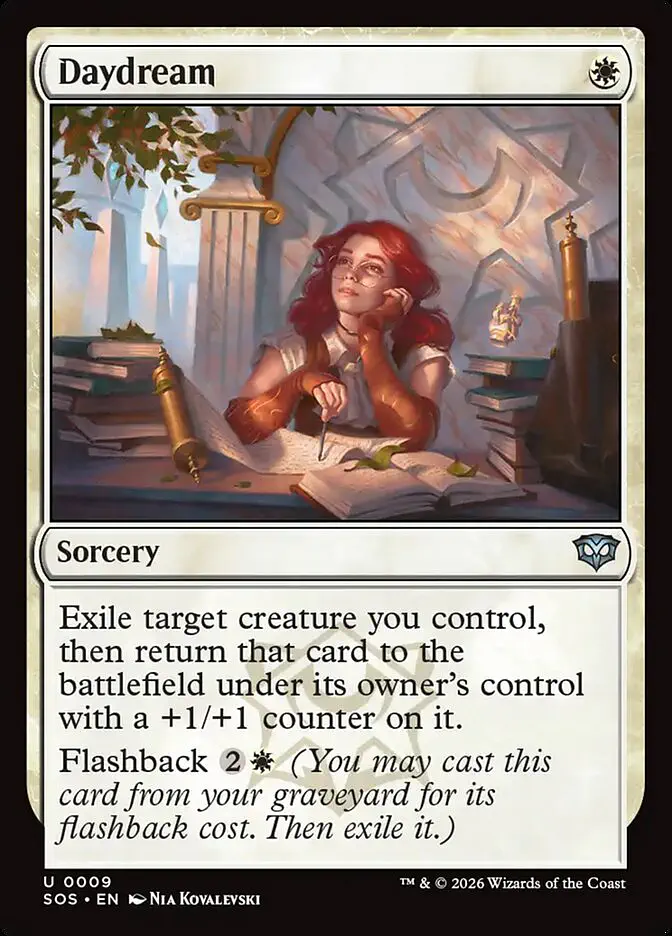
By “real mana costs” I mean the mana cost at which these spells are often consistently played, not the mana cost printed on the card. Inevitable Defeat always costs 2 mana and not 4 if played via Tablet of Discovery, and this is what makes it a card that can be included in 3 or 4 copies in a deck. Solitude always costs 1 mana and not 5 if flickered via Ephemerate. Quantum Riddler always costs 2 mana and not 5 if targeted with Daydream. In slang, these ways of playing are called "cheating out cards," but this is not relevant to the discussion. It is, however, significant to note that from the "Counterattack Theory" it would logically follow that counterattacking is the most effective mode of play because it is the most efficient.
Thus, it tends to take up more and more space compared to purely offensive and defensive dimensions. This theoretical postulate fully explains a practical observation, namely that in Magic, the concept of a pure removal spell or pure counterspell is now outdated. In competitive decks, pure counters or removals are included only when players are forced to use them because there is nothing better. But probably no one would use No More Lies or Requiting Hex if creatures with flash existed that did the same effect on ETB.
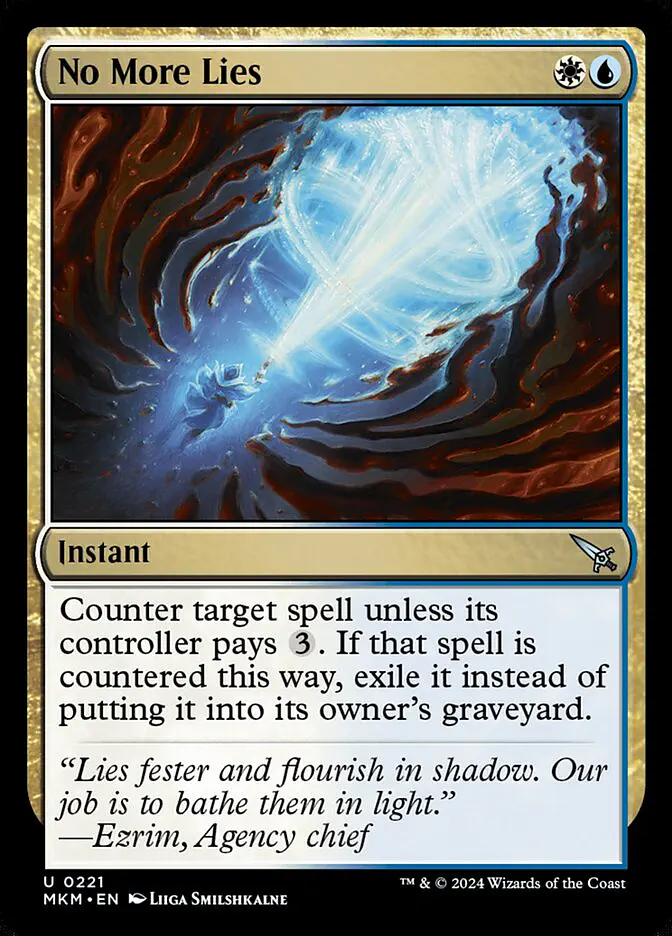
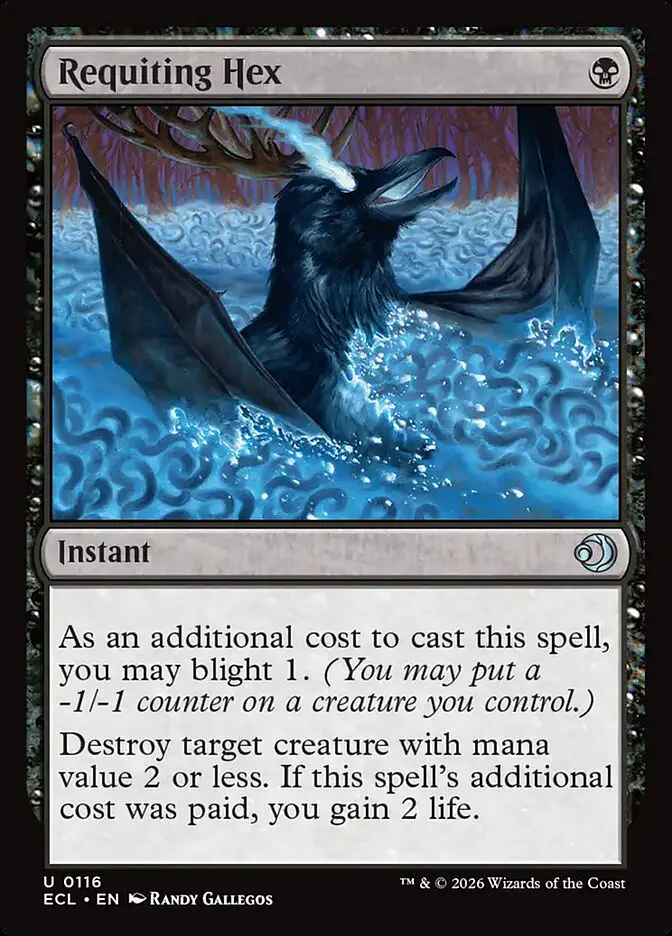
This would not depend so much on the fact that a spell can be responded to more easily than a triggered ability, but precisely on the fact that a creature has an offensive power that guarantees us a certain sprint, which we always evaluate positively.
Next Chapter: Efficiency in MTG >>
<< Previous Chapter: Speed in MTG