



Introduction
Hello everyone, I'm Niccolò Fioletti, but for many of you — especially if you frequent MTGO — my calling card is Lemure90.
After my first article, I'm happy to be back here on Metagame.it to tell you about my latest, intense competitive adventure. This weekend, I faced a true paper gauntlet, taking part in two of the most important and anticipated events in the Italian Legacy scene.
On Saturday, I broke the ice by participating in the prestigious Arcana Legacy Invitational: an invitation-only, closed tournament with a maximum capacity of 64 players, which gathers the best profiles from the national circuit qualified by sporting merit or through their respective city leagues. On Sunday, however, I competed in the 4Seasons Legacy Main Event, a truly demanding marathon that saw over 300 participants at the starting line.
The Genesis of the Idea Towards Eternal Weekend
I wanted to start with my deck from the last Eternal Weekend, but with a precise idea: make it White-Green instead of White-Black, or try the three-color route. I had no intention of playing 80 cards; my goal was to make it run at 60, inserting a dynamic engine capable of giving unpredictability and shrewdness to the game plan. That stimulus had a specific name: Birthing Ritual.
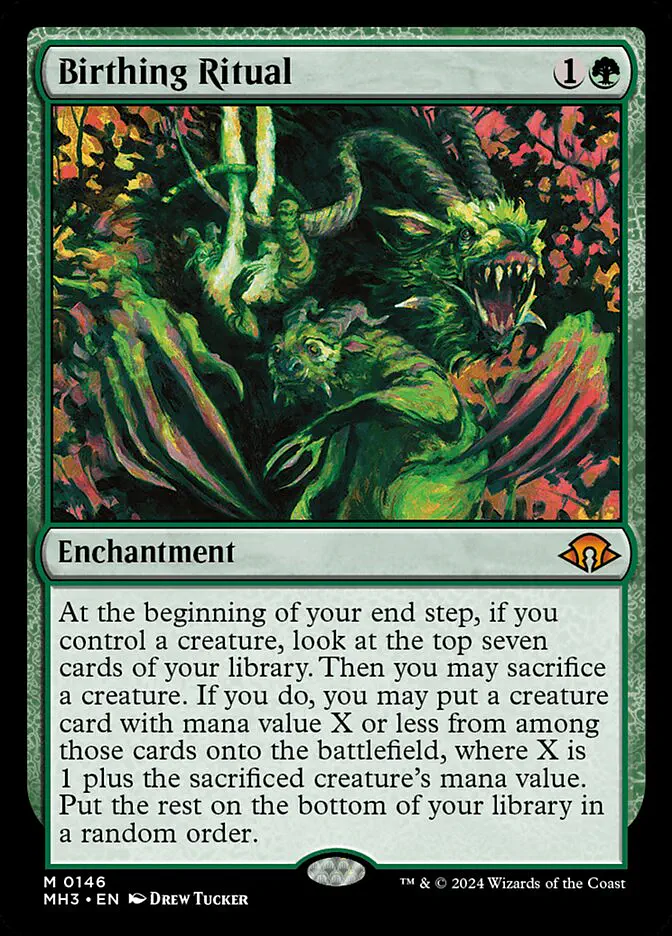
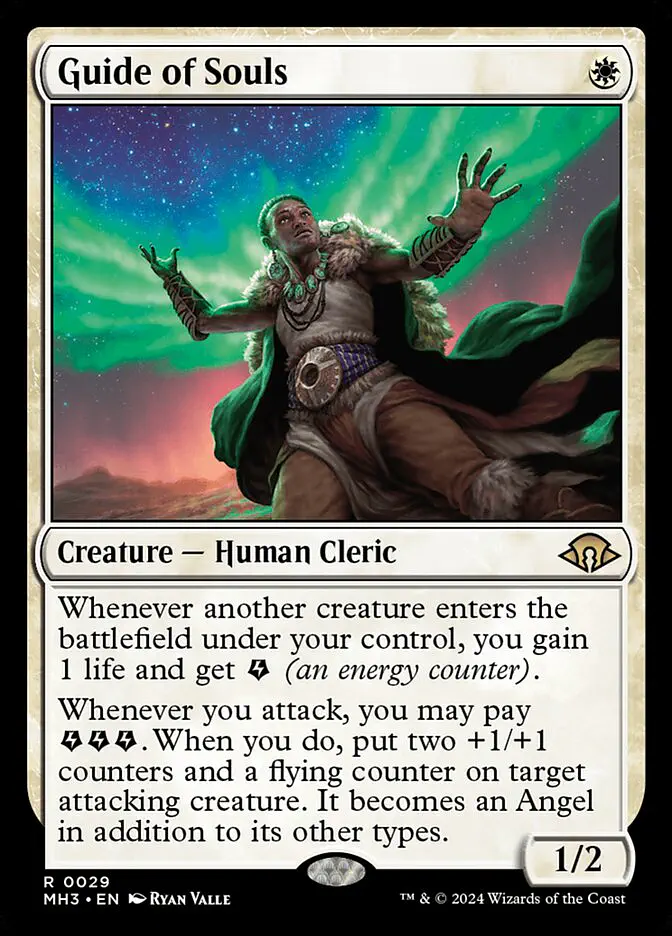
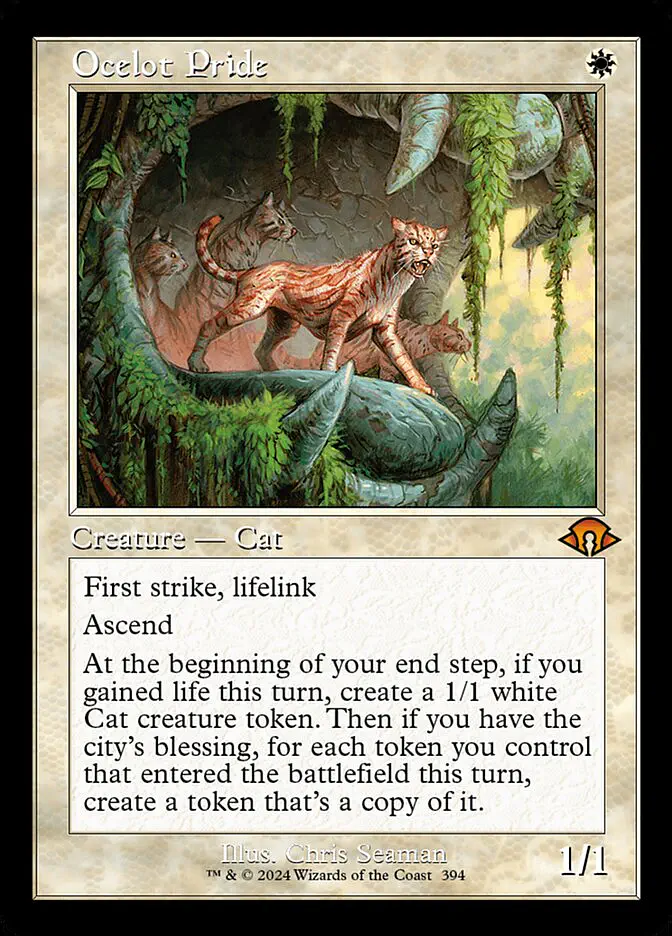
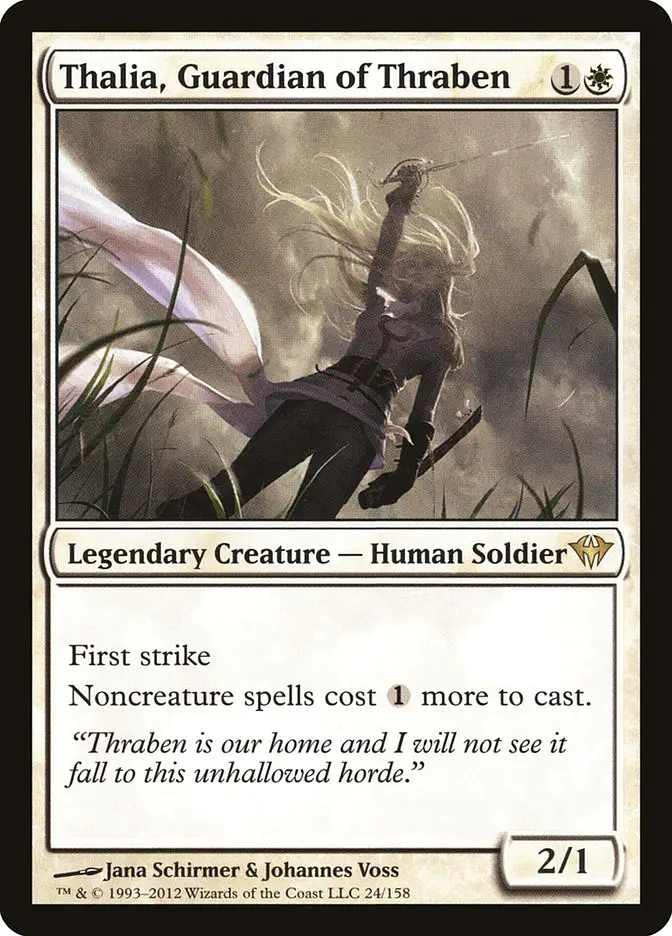
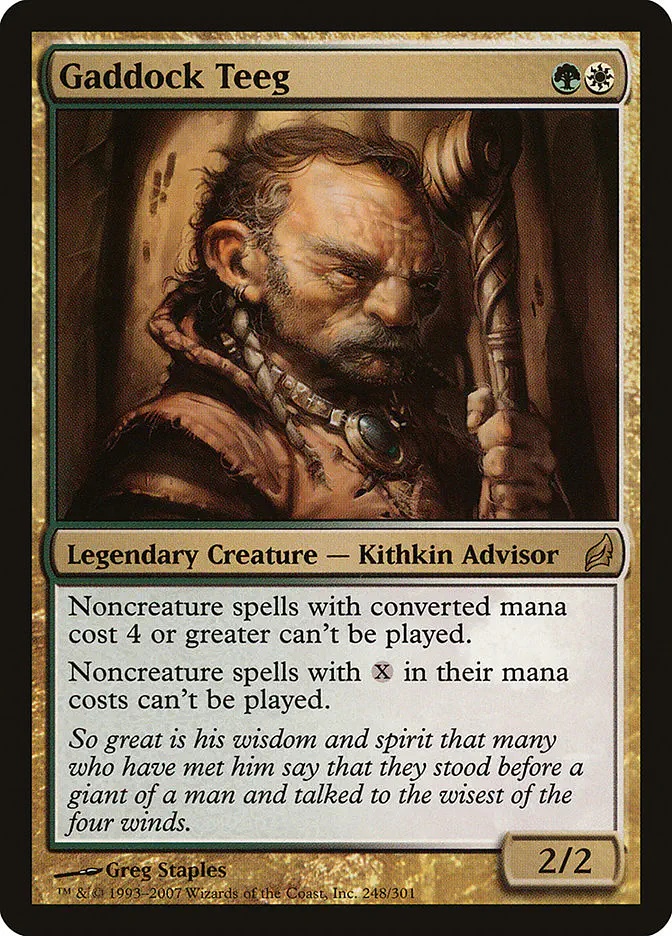
I wanted to find a way to fit this card in to search for Guide of Souls, Ocelot Pride, Thalia, Guardian of Thraben, Gaddock Teeg, but also Badgermole Cub and, why not, I would have loved to play even nostalgic cards like Qasali Ambusher.
The Token Engine: The idea was to play Orcish Bowmasters, generate the Orc and the token, then sacrifice the Orc token under Birthing Ritual's end step. A clean way to dig through the library for crucial 1-drops like Ocelot Pride or Guide of Souls.
The Hatebears Toolbox: Using Ritual as a repeatable tutor to lock down the opponent by casting the ideal heavyweight for the match-up at the right time.
The Value of Shepherds: Using Starlight Shepherd with its two-mana evoke cost to immediately fetch a basic plains or a one-cost creature from the deck. This allowed you to slot in Solitude immediately if needed.
The Protection Factor: Leveraging cards like Sylvan Safekeeper to protect the board, perhaps by sacrificing Flagstones of Trokair and thus protecting my creatures on the field.
The "Reality Check": When Things Don't Add Up
The theory was beautiful, almost poetic. But Magic, in the end, is a matter of mathematics and space.
After sketching out the first two or three drafts of the 60-card list, I realized there wasn't enough room to let all these ideas breathe. Fitting in the Birthing Ritual package, maintaining the 1-drops to make it work, protecting the manabase for three colors, making space for nostalgic cards, and simultaneously cramming in tutors and answers was simply impossible. The math never added up, and space was far too limited.
It was only after these failed attempts that I had to surrender to the evidence and realized I would have to switch to the tried-and-true 80-card Yorion, Sky Nomad.
The Decklist's Evolution, Brainstorming with Alex, and a Meta Shift
First Adjustments and Targeted Choices
Looking closely at the first list that recorded the initial 5-0 on MTGO, there were several peculiarities that deserve an explanation, starting from some "leftovers" from previous drafts to specific tech choices.
For completeness, here is the very first list I started playing seriously:

Birthing Taxes
- 4 × Phelia, Exuberant Shepherd
- 4 × Recruiter of the Guard
- 4 × Solitude
- 4 × Stoneforge Mystic
- 4 × White Orchid Phantom
- 4 × Witch Enchanter
- 3 × Flickerwisp
- 3 × Skyclave Apparition
- 1 × Cloud, Midgar Mercenary
- 1 × Gaddock Teeg
- 1 × Lion Sash
- 1 × Sylvan Safekeeper
- 1 × Thalia, Guardian of Thraben
- 4 × Swords to Plowshares
- 4 × Birthing Ritual
- 4 × Aether Vial
- 2 × Pre-War Formalwear
- 1 × Batterskull
- 1 × Meteor Sword
- 5 × Plains
- 4 × Flagstones of Trokair
- 4 × Marsh Flats
- 4 × Wasteland
- 4 × Windswept Heath
- 3 × Karakas
- 2 × Lush Portico
- 2 × Savannah
- 1 × Forest
- 4 × Deafening Silence
- 3 × Disruptor Flute
- 2 × Surgical Extraction
- 2 × Wrath of the Skies
- 1 × Collector Ouphe
- 1 × Faerie Macabre
- 1 × Gaddock Teeg
- 1 × Yorion, Sky Nomad
La Prima Lista del Test (MTGO 5-0)
The “Accidental Survivor”
You'll immediately notice the presence of Sylvan Safekeeper. In all honesty, it ended up in this list by mistake, as a legacy of a previous version that included Starlight Shepherds which were supposed to tutor for it. However, I gave up on the Starlight Shepherds almost immediately: I didn't have enough free slots, and my absolute priority was to secure the early game to survive and transition the game to the late game, where the deck is already very well positioned. Consequently, the Shepherds were out, but the Safekeeper remained due to an oversight.
The Role of Cloud, Midgar Mercenary
This card simply functions as a second Stoneforge. It's slightly less powerful than the original Mystic because it doesn't allow you to put equipment into play by paying two mana (which is particularly noticeable with Meteor Sword). However, this deck wants a lot of ETB (Enter the Battlefield) effects: Cloud is a fast two-cost card that often does the exact same thing as Stoneforge and, sometimes, is even better because it has the advantage of being legendary. Thanks to Karakas, I can make creative blocks, return it to my hand, and in the late game, use it as bait to exile to pay for Solitude's cost. Plus, having inverted attack and defense compared to Stoneforge, it also hits a bit harder. It was truly one of the most painful absences in the final list, sacrificed solely due to a ruthless slot issue, because it remains a fantastic utility that helped me get Pre-War Formalwear, a card that proves fundamental in the late game.
Sideboard Choices (Ouphe and Grave-Hate)
In the first sideboard, you'll notice the presence of Collector Ouphe and cards like Surgical Extraction and Faerie Macabre. Regarding Collector Ouphe, after playing it for a bit, I realized that despite it being its ideal deck on paper and undoubtedly a very strong card, in the end, I didn't get along with it well and it didn't fully convince me.
Wild Testing Phase: Hunting for One-ofs
In the days following the first 5-0, I experimented extensively, testing a ton of powerful one-ofs to understand how far the deck's Toolbox could be pushed.
Among the various experiments, one of the most interesting cards was definitely Renegade Rallier (another major absentee). It proved to be a devastating choice: thanks to Revolt, if Birthing Ritual was countered or destroyed, Rallier can enter and put it directly back onto the battlefield from the graveyard. Furthermore, the synergy with Ritual itself is incredible: you sacrifice a creature under Ritual, Revolt activates, Rallier enters and immediately puts a permanent with cost two or less from your graveyard back onto the field, generating insane value.
I really tried many other impactful single cards, from Knight of Autumn to Samwise the Stoutheart, as well as many other options. Later in the article, if you're interested in trying the deck and tailoring it to your playstyle or local meta, I'll list quite a few of these options I've tested.
The Sideboard Dilemma and Maindeck Wraths
In subsequent testing versions, you'll notice a significant structural change. I want to specify that if you want to follow the evolutions step-by-step, all the various intermediate lists are visible in the official results reports of the latest leagues I closed at 5-0 on MTGO; within this article, for readability reasons, I decided to publish only the first and last.
The true origin of this idea of including no less than 4 Wrath of the Skies directly in the Main Deck stemmed from the desperate need to free up sideboard space. With only 14 slots available (one is fixed for Yorion), I absolutely had to make space in the side for specific cards against decks we practically never win against, such as Doomsday and Necrodominance, the two great historical enemies of this archetype. By moving the Wraths to the main deck, I could finally include lifesaver cards like Mindbreak Trap or Angel’s Grace on the bench.
The Hamlet-like dilemma was between two opposing options: playing 4 Wrath of the Skies or 4 Disruptor Flute in the main deck. To make room for this set of Wraths, however, I had to make painful sacrifices in the creature department, temporarily giving up on 1x tech cards that were performing very well, such as Cloud, Batterskull, Renegade Rallier, and Thalia herself.
This change immediately yielded good results, but in the long run, I realized it wasn't quite what I wanted yet.
Strength in Numbers: Alex Matteazzi Joins
Precisely at that moment, after recording two consecutive 5-0s online with maindeck Wraths, a League teammate of mine, Alex Matteazzi, contacted me. Having seen my lists on MTGO, and being a huge fan and connoisseur of Taxes (Death and Taxes) himself, he was immediately struck by the idea of the deck.
We immediately started discussing the list, dissecting every single choice, and we did a good job as a team, constantly sharing every single result, impression, and tech that emerged from our respective testing sessions.
The Meta Shift: The Impact of Flow State and My Return to Thalia
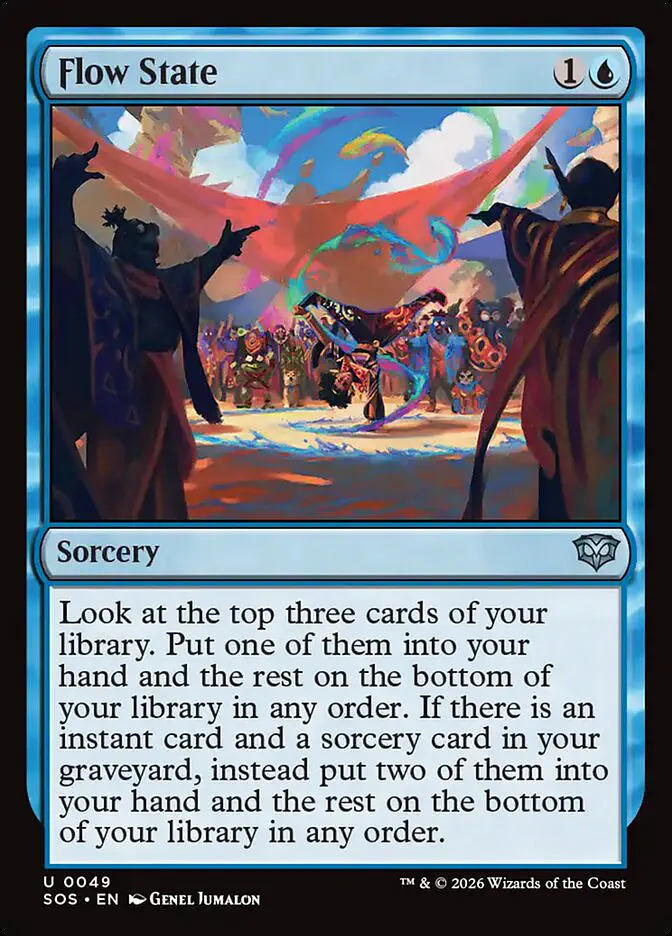
This continuous brainstorming proved to be very useful because, in the meantime, the meta was changing. With the powerful entry of Flow State into the format, I realized that matchups against blue-based decks that abuse Force of Will and, indeed, Flow State — such as UR Delver (Murktide/Cutter), UB Midrange and similar — were no longer as favorable as they were initially.
The situation required an immediate countermove: I had to find a solution to slightly trim down the late game (where I was already over-covered) and significantly boost the early game, the only way to ensure we transitioned the game safely to the later stages.
After numerous tests and reflections, I reached my first major conclusion: it was time to reintroduce the full set of 4 Thalia, Guardian of Thraben. Thalia in this context represented the perfect middle ground: a devastating card already in the Main Deck, but with the impact of a true Sideboard card against blue and combo decks. And, in fact, my choice to put her back in immediately gave a great boost to the win percentages.
The Grand Return of Canoptek Scarab Swarm
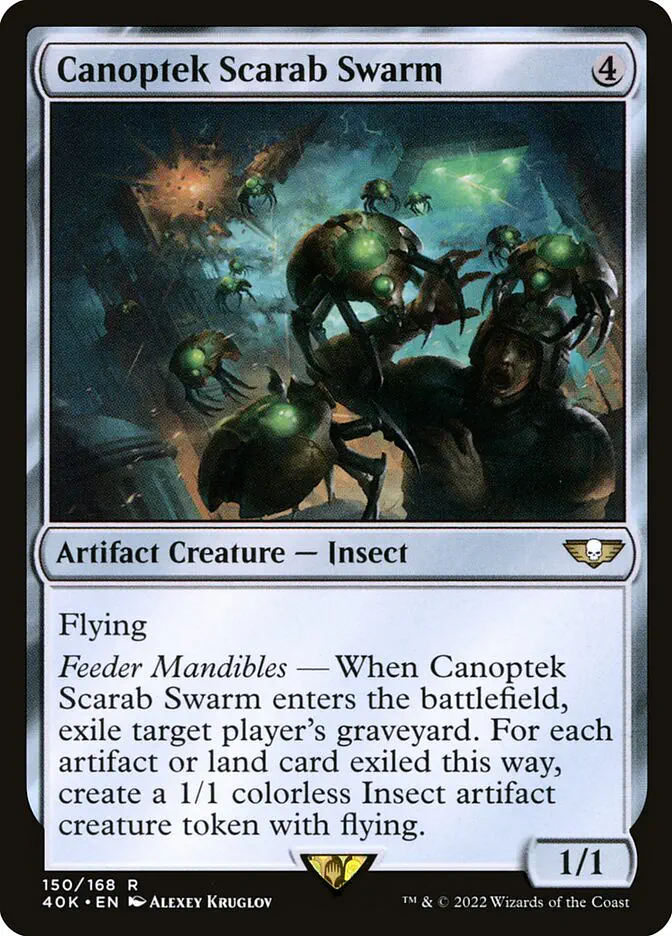
Still with this restructuring in mind, I decided to give importance to a card that I had always downplayed in the past: Canoptek Scarab Swarm. Along with Gaddock Teeg, it remained the only one-of utility creature to survive the optimization cuts.
When the Scarab Swarm enters the battlefield, it can single-handedly turn a game around and resolve it. It's extremely annoying against Flow State, it's lethal against all graveyard-based decks, but its true strength lies in its synergy with my deck's structure:
Much more playable than in the past: In old, classic Death and Taxes lists, Canoptek was a decidedly clunky card. On average, you were forced to set Vial (Aether Vial) to four to cast it by surprise out of nowhere, or you had to go through a decidedly slow process.
The synergy with Birthing Ritual: Now, thanks to Birthing Ritual, the interaction is immediate and extremely elegant: you just sacrifice a three-cost creature (like Skyclave Apparition or Recruiter of the Guard) under the End Step of the Ritual to fetch the Canoptek directly from your library, instantly clearing the opponent's graveyard. An exceptional resource born from this fortunate insight.
Curve Optimization and My "Crazy Cut" of Phelia
The true squaring of the circle came when I decided to take a further and definitive step back: the 4 Wrath of the Skies were removed from the Main Deck to make space for my full set of Thalia and that of Esper Sentinel.
This radical change positively transformed the deck's physiognomy. Replacing variable and potentially high-cost spells with agile 1 and 2-cost threats incredibly streamlined the structure, allowing me to make a delicate choice in an 80-card deck: I cut a land to recover the slot needed to include the crucial fourth Esper Sentinel.
One must be careful not to leave Sentinels down in the late game, because experienced players can deliberately make you draw to activate Bowmasters and kill vital pieces on your board, like Thalia, Flickerwisp, or Recruiter.
To make room for all this early-game efficiency, I made another illustrious farewell in the creature department: the drastic cut of Phelia, Exuberant Shepherd. While I played 4 copies in the first version, through testing I started reducing them until I decided to cut all four. I would have gladly played one as a utility, to be clear, but space was extremely tight and I wouldn't have given up anything else.
The reason for my choice is purely technical:
Lack of valid targets: In Taxes versions with a black splash, you have Overlord of Balemurk to blink; in blue ones, you have Quantum Riddler and other creatures with impactful ETBs. In pure White-Green, in the end, you don't have that many native targets that justify its presence. I almost never fetch the sword (Meteor Sword), and having it equipped on the field is a rarity.
The rise of Birthing Ritual: If we talk about turn economy under Birthing Ritual, you never want to fetch Phelia from your library; on the contrary, you always prefer to sacrifice it to climb the curve. In simple words, I had the epiphany that Birthing Ritual has almost entirely taken Phelia's place in this deck.
A Balanced Sideboard and the "Maindeck" Disruptor Flute
Once the Main Deck was settled with the inclusion of the fourth maindeck Thalia (a choice for which I sacrificed the fourth Deafening Silence in the side), my sideboard found an exceptional balance, based on absolute answers.
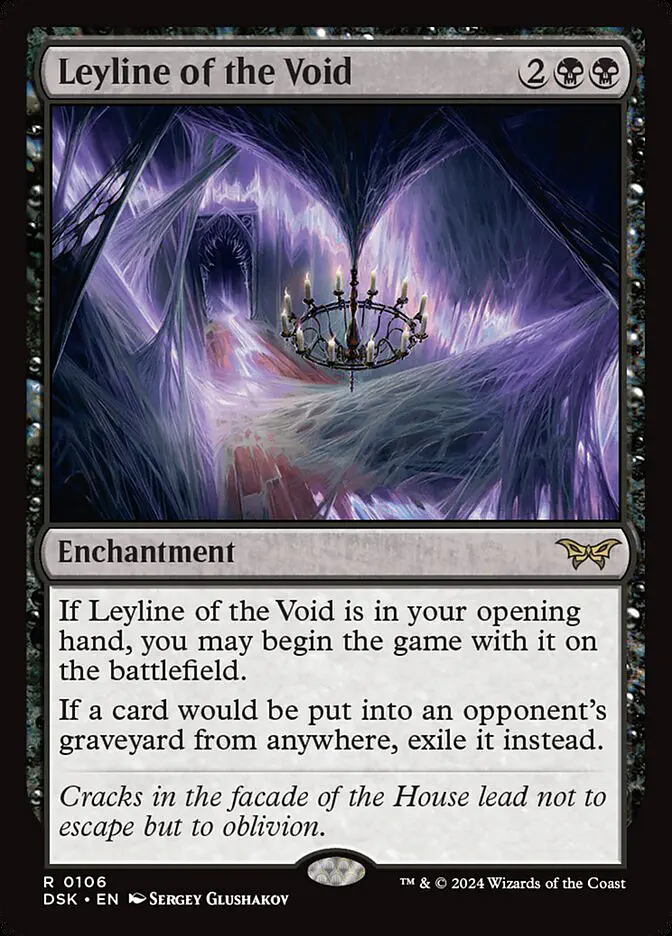
The Return of Leyline of the Void: While in the first list I used Faerie Macabre and Surgical Extraction, I eventually switched to the 4 black Leylines. Against many combo and graveyard decks, we start quite behind, and we desperately need that extra turn to play Thalia or Gaddock Teeg. Leyline grants you this breathing room because it enters for free and isn't affected by targeted discard on turn 1, which makes all the difference in the world against archetypes like Storm (which uses Beseech the Mirror) or less common but lethal decks like Dredge. Of course, if you draw it on turn 3 or 4 it's a dead card, but if you see it in your opening hand against the right deck, it wins you the game single-handedly. In the late game, theoretically, we should already be ahead through other means.
Other Sideboard Answers: I locked down the bench with 4 Wrath of the Skies (indispensable when they come in from the side to reset the board) and 3 Deafening Silence.
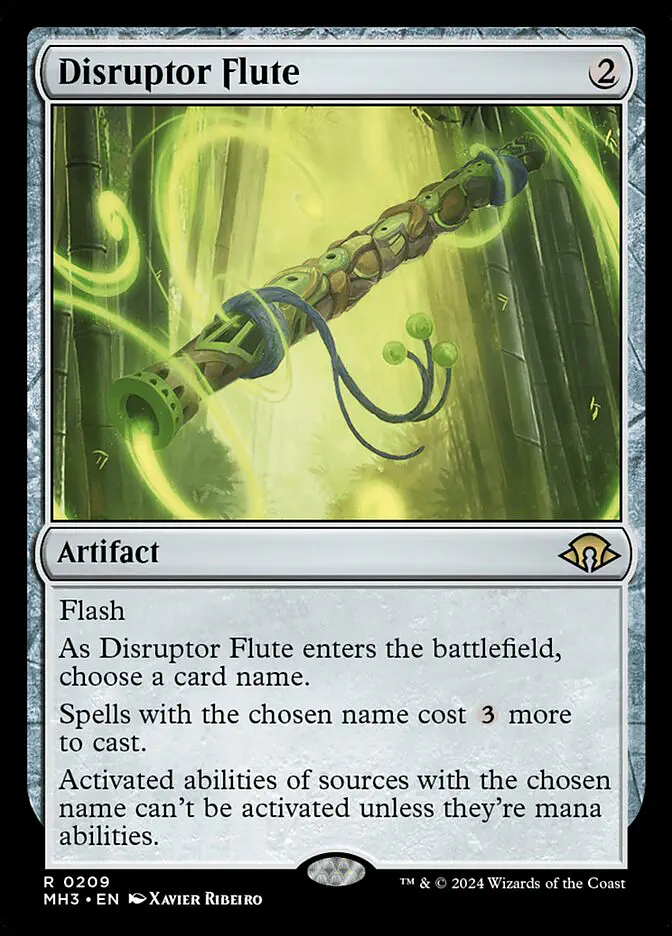
The Maindeck Disruptor Flute Tech: In the sideboard, you'll only see 3 Disruptor Flute, this is because I decided to play the fourth flute directly in the Main Deck. Having a good knowledge of the metagame, a flute is never a dead card against any deck. Having two in the main deck can risk clogging your hand, but a single copy is a fantastic utility that can disrupt anyone's plans from the start, protecting me throughout G1.
All these considerations led us to the final and definitive configuration, the perfect deck with which I presented myself at the paper tournaments of the weekend:
The Definitive List (Arcana Invitational & 4Seasons Main Event)

Birthing Taxes
- 4 × Esper Sentinel
- 4 × Recruiter of the Guard
- 4 × Solitude
- 4 × Stoneforge Mystic
- 4 × Thalia, Guardian of Thraben
- 4 × White Orchid Phantom
- 4 × Witch Enchanter
- 3 × Skyclave Apparition
- 2 × Flickerwisp
- 1 × Canoptek Scarab Swarm
- 1 × Gaddock Teeg
- 1 × Lion Sash
- 4 × Swords to Plowshares
- 4 × Birthing Ritual
- 4 × Aether Vial
- 2 × Pre-War Formalwear
- 1 × Disruptor Flute
- 1 × Meteor Sword
- 5 × Plains
- 4 × Flagstones of Trokair
- 4 × Marsh Flats
- 4 × Wasteland
- 4 × Windswept Heath
- 3 × Karakas
- 2 × Lush Portico
- 1 × Forest
- 1 × Savannah
- 4 × Leyline of the Void
- 4 × Wrath of the Skies
- 3 × Deafening Silence
- 3 × Disruptor Flute
- 1 × Yorion, Sky Nomad
The Toolbox: Options and One-ofs to Customize the Deck
If you want to pick up this archetype and tailor it to your playstyle or local metagame, the deck's structure allows you to rotate many different one-ofs. Here is a list of those I have personally tested:
• Starlight Shepherd
• Phelia, Exuberant Shepherd
• Palace Jailer
• Formidable Speaker
• Clarion Conqueror
• Extraction Specialist
• Collector Ouphe
• Ethersworn Canonist
• Phyrexian Revoker
• Renegade Rallier
• Cloud, Midgar Mercenary
• Batterskull
• Knight of Autumn
• Samwise the Stoutheart
• Enlightened Tutor: A very strong non-creature one-of to fetch Birthing Ritual or, if needed, specific answers and synergies like Lion Sash, Canoptek Scarab Swarm, or Pre-War Formalwear.
Stress Management and Match-up Preparation
One of my biggest concerns for the live tournaments was related to game duration. With a deck capable of generating so much value and complex situations, the risk of going long and ending in a draw – or worse, of not psychologically withstanding the intensity of a tournament progressing to the final stages – was real. To avoid being unprepared, I decided to do something I usually never do: I prepared a structured draft of sideboarding plans against the most common Tier decks in the metagame. Having a clear, pre-set action plan allowed me to approach each round with greater clarity, drastically reducing the time spent on decisions between games and preserving crucial mental energy to stay focused until the last round.
Here is the complete guide I used during the weekend:
SIDEBOARD GUIDE
AFFINITY / 8-CAST
Play: IN +3 Silence, +4 Wrath — OUT -Lion, -Gaddock, -Flute, -4 Sentinel
Draw: IN +4 Wrath — OUT -Lion, -Gaddock, -Flute, -Sentinel
ALL SPELLS / DREDGE
IN +4 Leyline, +3 Silence, 3 Flutes — OUT -4 Sentinel, -Prewar, -Flicker, -4 Vial
Dredge:[/b] -3 Skyclave
BG SMALLPOX LOAM
IN +4 Leyline, +4 Wrath — OUT -4 Sentinel, -Gaddock, -3 Thalia
CEPHALID
IN +4 Leyline, +3 Flutes — OUT -4 White Orchid, -Prewar, -Flicker Sword
If they play Saga: +4 Wrath
DOOMSDAY
IN +3 Silence, +3 Flutes — OUT -Gaddock, -Canoptek, -2 Sentinel, -2 Solitude
ELDRAZI
IN 4 Wrath — OUT Flute
ENERGY
IN +4 Wrath, +3 Flutes — OUT -Gaddock, -4 Sentinel, -2 Thalia
GRIXIS REANIMATOR
IN +4 Leyline, +3 Silence — OUT -4 White Orchid, -Prewar, -Gaddock, Flute
INITIATIVE
No changes.
If they have Chalice: +3/4 Wrath.
JESKAI / WIZARD / UW RIDDLER / GRIXIS CONTROL / BEANS
No changes.
LANDS
IN +4 Wrath, +4 Leyline, +3 Flutes — OUT -4 Sentinel, -4 Thalia, -Gaddock, -Sword, 1 Sentinel
MIRROR
IN +4 Wrath, +3 Flutes — OUT -Gaddock, -4 Thalia, -2 Sentinel
MONO RED STOMPY
IN +4 Wrath, +3 Flutes — OUT -Gaddock, -Canoptek, -Lion, -4 Sentinel
PAINTER
IN +4 Wrath, +4 Leyline, +3 Flutes — OUT -4 Thalia, -4 Sentinel, -Gaddock, -2 Vial
BLUE POST
IN +3 Silence, +3 Flutes — OUT -4 Sentinel, -2 Solitude
SHOW & TELL / ALUREN
IN +3 Silence, +3 Flutes — OUT -Lion, -Canoptek, -4 White Orchid
SNEAK & SHOW
IN +3 Silence, +3 Flutes — OUT -4 Sentinel, -Lion, -Canoptek
STORM (all versions)
IN +4 Leyline, +3 Silence, +3 Flutes, +4 Wrath — OUT -4 Vial, -4 Sentinel, -4 Solitude, -Canoptek, -Prewar
TRON
IN +4 Wrath, +3 Flutes, +2 Silence — OUT -4 Sentinel, -3 Solitude, -Lion, -Canoptek
UB MID
IN Flute — OUT Thalia
With Nethergoyf: IN +4 Leyline — OUT -Gaddock, -Flute, -Sentinel, -Thalia
UB REANIMATOR (Show and Tell)
IN +4 Leyline, +3 Flute — OUT -4 White Orchid, -Gaddock, -2 Skyclave
UB SHADOW / MOON
IN +4 Wrath — OUT -Lion, -Canoptek, -Gaddock, -Flute
UR DELVER
IN +3 Silence — OUT -Flute, -Gaddock, -Sword
ZENITH / NATURAL ORDER
IN +4 Wrath, +3 Flutes — OUT -Lion, -Canoptek, -4 Sentinel, 1 Thalia
## Arcana Legacy Invitational: My Saturday
There are 64 players for a six-round tournament. I'm not the type to take notes, so I'm reconstructing the day from memory.
The Group Stage
Round 1: Budri (Show and Tell with Aluren)
Excellent match-up. G1 lost despite board control, punished by a lucky draw. G2 and G3 won thanks to a turn one Esper Sentinel that secured card advantage.
Round 2: Michele Gaimarri (Mono Black Aggro)
G1 I suffered from his explosive start with Dark Ritual. G3, while I was about to close out in control, turns were called: I found myself on defense to avoid defeat. We're at two out of two matches ending in turns (or almost: with Budri I'm not sure I reached exactly turns, but I definitely ran out of time).
Round 3: Maffeis (UB Midrange)
Won 2-0. G1 the deck ran very well. G2 he was on 5 cards, I had an excellent hand: he conceded after a few turns.
Round 4: Samuele Dagani (UB Midrange)
Won 2-0. I remember almost nothing from G1, probably because my memory is clouded by a pleasant chat with him. In G2, he mulliganed to 5, I started slow but he recovered with Flow State; the game broke open thanks to the Flickerwisp lock on Pre-War Formalwear, which from that play onwards proved super performing with Birthing Ritual.
Round 5: Montani (UB Shadow)
Won 2-0. The match-up is favorable: Sword to Plowshares and Solitude prevent the opponent from safely playing their Shadows, as the risk of losing pieces and giving life to the opponent is too high. Despite Montani's skill, I took the point home. For those interested, the game is available online, as it was streamed.
Round 6: Intentional Draw
Access to Top 8.
The Top 8
These were three very long games, so I won't dwell too much on recounting them, as they are all available via streaming. My opponents were again Michele Gaimarri with Mono Black (won 2-1), Luca Semerari with Show & Tell feat. The One Ring (won 2-1), and finally the final against the new reigning champion, to whom I extend my congratulations: Luca La Loggia with Eldrazi.
The Final: Analysis of a decisive error - Twitch Video
My only comment is on a specific passage in Game 2 of the final, where I could have played better, but fatigue after over 12 hours of Magic played a bad trick.
I'm at 5 life; the opponent's board has four creatures: two Heralds, a Wastescape Battlemage, and a Thought-Knot Seer. In hand, I have Knight of the White Orchid and Pre-War Formalwear.
I draw Wrath of the Skies: the best possible card. With my five mana, I could have cleared the board, leaving only the Thought-Knot Seer alive. I would have taken an attack, dropping to 1 life, but I was terrified of giving him outs like Fleshraker or his lands. So I discarded the line with Wrath for the one with Recruiter and Solitude.
Miscalculation: after passing the turn, I realized that the chosen line would have still left me at 1 life, but without the necessary resources to re-establish a board next turn.
Saturday's Conclusions
Despite the late hour the tournament ended and the two-hour drive home that awaited me, it was a very positive day, far beyond my expectations. The initial intention was to view the tournament primarily as a testing ground for the deck. The main problem, at that point, was getting enough sleep to be able to return the next day to face the 4Seasons Main Event.
Sunday: 4Seasons Legacy Main Event
The Main Event saw about 330 players participate and took place over 9 rounds of pure Swiss, without a Top 8. It was an important day: Alex also participated in this tournament, choosing to field my exact list with my exact sideboard guides. It was another, decidedly serious, test to understand how the deck performs in a highly competitive live setting. Unfortunately, I wasn't able to retrieve the standings with the official names, so I'll proceed by recounting the matches from memory.
The Group Stage
Round 1: Italian Opponent (URW Control with no creatures)
The tournament began with an Italian opponent, a player who mainly frequents Modern, but who for the occasion chose to field a URW Control list devoid of creatures. I don't precisely remember the order of victories in the first two games, but I do remember well that the challenge stretched to Game 3 and concluded in additional turns. An immediately intense start that nonetheless allowed me to begin the tournament with a win.
Round 2: Scottish Opponent (UR Show and Tell)
G1 was an incredible game. He started with a very fast Show and Tell. I had no answers in hand, not yet knowing what he was playing, and I put a Thalia into play hoping to stem the damage and, if he had Omniscience, to force him to pass the turn without any mana available, and if he had creatures in hand, to still limit the damage. He played Atraxa, sorted his hand, discarded, and passed. From there, although I don't perfectly remember all the steps, I managed to get back on track and turn around a situation that seemed compromised.
G2 he kept a hand that would have allowed him to play Sneak Attack on turn one and close the game on turn two, but he decided not to. A choice that proved risky, because after sideboarding I brought in Deafening Silence.
In Game 3, in fact, I started with Deafening Silence supported by a good sequence of cards that allowed me to prevail. This match also concluded in additional turns, earning me my second victory of the day.
Round 3: Opponent (Lands)
I lost G1 badly because he started too well. G2 I won thanks to a Leyline that prevented him from finding answers in time.
G3 presented an absurd spot: I was almost about to concede, but I decided to wait one more turn. He was in a loop with Crucible of Worlds, Exploration, and two Ghost Quarters; I only controlled a Stoneforge Mystic, and after the double land-hate, I had only one basic land left in my deck.
At that point, I thought I had no chance of winning: no card I could draw seemed able to reopen the game, perhaps only Wrath of the Skies. In his second main phase, however, he played Torpor Orb, and I was about to concede definitively when I realized I had two Solitudes in hand. I cast them, and over the next three turns, I managed to deal the seven damage needed to close a game that seemed completely lost.
Round 4: Opponent (UB Midrange)
Victory 2-0. In both games, if I'm not mistaken, Birthing Ritual came in and performed admirably. I always felt in complete control of the matches, managing the pace of the game without particular worries.
Round 5: Riccardo Biava (UBR Control)
Loss 0-2. This was the only match lost during the entire day. Riccardo is a very skilled and well-known player, so the loss is understandable, but the way it happened left a bitter taste.
In G1, I probably would have had better chances by winning the die roll: playing on the play, he wouldn't have been open on turn one with Spell Pierce, and I could have resolved Aether Vial. The game unfolded like this: turn 1 I played Aether Vial and he responded with Spell Pierce; turn 2 I tried Birthing Ritual and it resolved; turn 3 I played Recruiter of the Guard and it was countered by Force of Will; turn 4 I played Witch Enchanter and a second Force of Will came down. On turn five, looking at my hand, I had only Swords to Plowshares, Solitude, and three or four lands; from that moment on, it was just a slow slide towards defeat, waiting to succumb to the damage dealt by Forth Eorlingas!.
In G2, despite managing to get him down to 4 life, I never really felt ahead; in crucial moments, when a simple creature would have been enough to try and turn the game around, I always drew poorly — lands and now useless Aether Vial — and there's not much to complain about: the game just went that way.
Round 6: Opponent (Painter 3-color: Red, Blue, White)
Victory 2-1. This is probably the only matchup where I truly feel superior, thanks to my sideboard.
G1 I chose to keep a hand that at first glance might have seemed mediocre, but which proved perfect against him: two Swords to Plowshares, two Wastelands, a Solitude, a Plains, and a card I don't remember. With this hand, I managed to win the game.
G2 was a difficult moment: at seven cards, I saw nothing, at six, neither. I kept a very marginal five-card hand, with turn one Swords to Plowshares and a creature on turn two, but he started very solidly on seven and punished me.
G3 I feared a repeat of G2: at seven cards, I saw neither Wrath of the Skies, nor Leyline, nor Flute. I mulliganed to six and, even though I didn't find the main hate cards here either, I had a good hand with Swords to Plowshares, a decent curve, and Birthing Ritual, with which I managed to get going and close out the match.
Round 7: Opponent (Necrodominance)
Victory 2-1. A match I deeply feared, probably the worst possible matchup for my deck, against which I have very few sideboard cards.
G1: I win the die roll and keep a slow but valid hand. I try to find Thalia, Guardian of Thraben or Gaddock Teeg using the surveil land and draws, but I don't see them. I play White Orchid Phantom to destroy one of his lands, hoping to verify the absence of basic lands in his deck, and I prepare the line for the next turn: play Flickerwisp on my White Orchid Phantom to destroy a second land and try to gain the necessary time. He indeed doesn't play basic lands, but on his turn he plays land, double accelerator, Necrodominance and closes the game.
G2: I look for Deafening Silence, but I only play three copies. After a mulligan to six, I keep a resigned hand with turn two Thalia. Fortunately, although he kept seven, he doesn't close immediately; Thalia enters and blocks everything, leading me to victory. At the end of the game, he will show me a hand full of answers for artifacts and enchantments.
G3: Both in difficulty, we mulliganed down to four cards. I kept a hand with two lands, Esper Sentinel, and Gaddock Teeg. He, after long reflection, also decided to keep a hand consisting of Necrodominance, land, Green Pact, and Manamorphose. He started with land, Green Pact to get Elvish Spirit Guide, and then Manamorphose, but despite the attempt, he found none of his twelve outs (four Lotus Petals, four Cabal Rituals, and four Dark Rituals) to close the combo. A heart-stopping ending that granted me the victory.
Round 8: Opponent (UB Midrange) - Twitch Video
Victory 2-1. This match proved decisive, as a win would have guaranteed me the possibility of splitting the last round. We found ourselves under the cameras again for the stream. It was a very close match, concluding in additional turns in my favor; anyone curious to see the progression can find the match online.
Conclusions: The Verdict of the Test
I finished this tournament with a record of 7-1-1. After the draw in the last round, all that remained was to cross my fingers while waiting for the official standings: by a hair, my rating rewarded me, allowing me to finish in eighth place in the final ranking. It was an unexpected result, especially considering the physical and mental fatigue accumulated during Sunday, a day when I would have struggled to predict such endurance. My teammate, Alex, also confirmed the validity of our strategy by finishing an excellent tournament in the Top 16.
All in all, it is fair to be honest: we are not talking about a Tier 1 deck. However, the list proved to be extremely valid, satisfying to play, and, above all, different from the usual metagame standards. The deck showed it could hold its own and was an excellent alternative in such a competitive context.
Now remains the big question that accompanies every player after such a performance: is this the definitive configuration to present at Eternal Weekend, or is it time to embark on a new deckbuilding adventure starting from scratch? Only time and future tests will tell us. For now, the deck has proven itself worthy, and that, in itself, is an excellent starting point.
Until next time, Niccolò.