


Choose Your Decklist with a Single Click
In the first chapter of this series, we talked about Pauper as the place where different generations of Magic can still meet at the same table. In the second, we dived into the heart of Leagues, looking at how local game stores, tournament organizers, and players transform a series of events into a genuine community.
But now we've reached a fundamental step: choosing the deck you'll actually sit down with at that table.
In today's Pauper, the possibilities are virtually endless. New decklists pop up every week, historic archetypes shift their configurations, and a single clever tech choice can completely alter how the metagame is approached. With just a few clicks, we can browse results, compare lists, and discover strategies from every corner of the globe.
Finding sixty cards has never been easier. Figure out which ones are actually right for you, however, requires something more.
Behind every list is more than just a sum of its parts. There is a play philosophy, a plan to win, a way of managing resources and navigating decisions. Choosing a deck therefore means choosing how you want to experience the game—and, at least in part, sharing what kind of player you are.
A downloaded online list is only the starting point. The rest comes from study, matches, mistakes, and all those tweaks that, over time, transform someone else's deck into your deck.
The Great Pauper Menu
Pauper offers a massive spread of wildly different strategies. You can go from the relentless pressure of Mono-Red Madness to the sheer value-generation of Grixis Affinity, from the protected threats of Mono-Blue Terror to the grindy attrition battles of Jund Wildfire, all the way to more unique game plans like Snacker Gates and the infinite flavors of Tron.
This diverse landscape is one of the format's greatest strengths, but it can also make your initial choice overwhelming. Faced with so many options, the temptation is to copy-paste whatever list just won a tournament and call it a day. In reality, the result of a single event only tells part of the story.
Behind any published decklist lie weeks of testing, tuning, discussion, and decisions tailored to a very specific metagame. Some choices were made to beat highly anticipated opponents; others depended on the pilot's personal preferences or how they prepared for that specific field. Copying those exact seventy-five cards without understanding the context gives you the tool, but not the instructions on how to use it.
Databases, community sites, tournament results, and forum discussions are invaluable resources. They let you track the evolution of the format and tap into the hard work of players worldwide. However, that click only hands you a snapshot—it is up to you to understand what it represents and whether that list can actually perform in your hands.
Reading the Metagame Before You Choose
Metagame shares, results, matchup spreads, and archetype popularity help you understand which strategies are currently finding the most success. This is crucial data, but it shouldn't be read as an absolute ranking of "right" and "wrong" decks.
A highly played archetype is not automatically the best choice for every tournament or every player. Likewise, a less-represented strategy isn't necessarily weak; it might be difficult to pilot, fly under the radar, be poorly positioned for the global metagame but highly effective in your local scene, or simply remain unexplored.
Even tournament results require context. A list might have won because it was teched perfectly to beat that day's specific field, because it was piloted by an expert specialist, or because it hit a run of highly favorable matchups. None of this diminishes the win, but it serves as a reminder that the number next to a decklist doesn't tell the whole story of the performance.
Studying the metagame means asking yourself questions. What decks will I run into most often? Which strategies are on the rise? Against which archetypes is this list favored, and where will it have to fight uphill? Do these sideboard cards actually answer the problems I'll face in my local League, or do they belong to a completely different meta?
Data is the starting point, not the final answer. The best choice comes from combining the available info with a solid understanding of your local play environment and a clear awareness of your own playstyle.
Choosing Your Style of Play
Once you've analyzed the format, you get to the most personal part: deciding what kind of experience you want to have at the table.
Some players feel most comfortable applying immediate pressure and forcing the opponent to react. Others prefer to slow the game down, trade resources, and build a gradual advantage. Some look for specific sequences and explosive synergies that can turn a game on its head, while others want a flexible deck capable of shifting roles depending on the matchup.
Labels like Aggro, Control, Combo, and Midrange only capture a fraction of these differences, but they give you a starting point. We don't all process the game the same way, and we don't all get satisfaction from the same types of decisions.
A tier-one deck can yield mediocre results if you hate playing it, or if it forces you to make decisions that go against your natural way of reading the board. Conversely, a strategy you know inside and out can let you outperform what the general win rates might suggest.
This doesn't mean ignoring the metagame and picking purely based on vibes. It means finding a balance between competitiveness and personal affinity. The right deck must have the tools to compete in the format, but it must also make you want to play, test, and keep learning even after a tough loss.
Netdecking Is Not Understanding
Once you've chosen a decklist, the real work begins. Knowing a deck isn't just about memorizing the cards in it or recognizing a keepable opening hand. It means understanding how it functions to the point where you know exactly why every single card is earning its slot.
What is the primary game plan? In which matchups does that plan need to shift? Which resources must be protected and which can be safely sacrificed? When should you be the beatdown, and when should you play defense? Which opening hands look great on paper but don't actually advance the deck's goal?
Every list has its own language. You learn it by playing, but also by paying close attention to what happens during a game. Drawing a card at the wrong time might make you realize you're running too many copies; a threat you can never seem to answer might point to a gap in your sideboard; a sequence you pull off successfully time and again might reveal the true engine of the strategy.
Understanding also comes from the details that don't show up on a decklist: the order in which you play your lands, the information you choose to hide, the turns where it's correct to hold back and not develop your board, and the spots where you simply have to take a risk. These are decisions that no "Import Deck" button can make for you.
From the Screen to the League Table
A decklist can look absolutely flawless when you're staring at it on a screen. But it's only at the table that it collides with the variety and unpredictability of real games.
Your local League is the perfect testing ground. The regular schedule lets you face a wide range of opponents, play matchups repeatedly, tweak individual cards, and see over time whether those adjustments actually made the deck better.
During an evening of magic, problems you never anticipated will crop up. A theoretically perfect hand might turn out to be way too slow, a sideboard card might underperform, or a supposedly favorable matchup might require a completely different game plan. This is the kind of insight you rarely get from just reading tournament reports and percentages.
Talking with other players adds another layer of value. Discussing a play, dissecting a sequence, or asking your opponent how they saw the match lets you view your deck from a fresh perspective. Sometimes, the best tweaks come from a post-match chat, long after the match slip is turned in but right when the real learning has begun.
So, bringing a deck to your League isn't just about measuring its raw power. It's about figuring out if you can unlock its potential, and if that strategy is still how you want to play the game.
The Tournament Doesn't End with the Results
One of the most effective habits for improving is analyzing your tournament once it's over, trying to separate the quality of your decisions from the actual outcomes.
A loss doesn't automatically mean you chose the wrong deck. You might have played beautifully in a rough matchup, built a winning position, and lost to a runner-runner sequence you had zero control over. Similarly, a win doesn't make all your decisions perfect: you can win in spite of a misplay, off a lucky topdeck, or because your opponent made an even bigger mistake.
The final result matters, but it's only the last line of the match. To grow, you have to look back at the pivot points: which hands did you keep, which cards sat dead in your hand, when did you lose control of the board, and what other lines were open to you?
The deck itself needs the same analytical approach. A card that underperformed in a single game shouldn't immediately be cut, just as a card that clutched out one match doesn't automatically deserve to be a four-of. Before you change the list, distinguish between a structural issue and an isolated incident.
The real value of the post-tournament review lies in this process: turning what happened into actionable information. Every event can leave you with a mistake to correct, a line to practice, a matchup to study, or a new insight into how you make decisions under pressure.
When the List Truly Becomes Yours
Over time, that initial decklist will start to morph. Some changes will be direct responses to your local meta, others will stem from your growing experience, and some will simply reflect how you personally pilot the deck.
Personalizing a deck doesn't mean swapping cards just to look different. Every change should have a clear, testable reason. What problem does this solve? In which matchups does it improve our plan? What do we lose by slotting it in? Does this new configuration make the deck more cohesive, or does it just cater to our preferences?
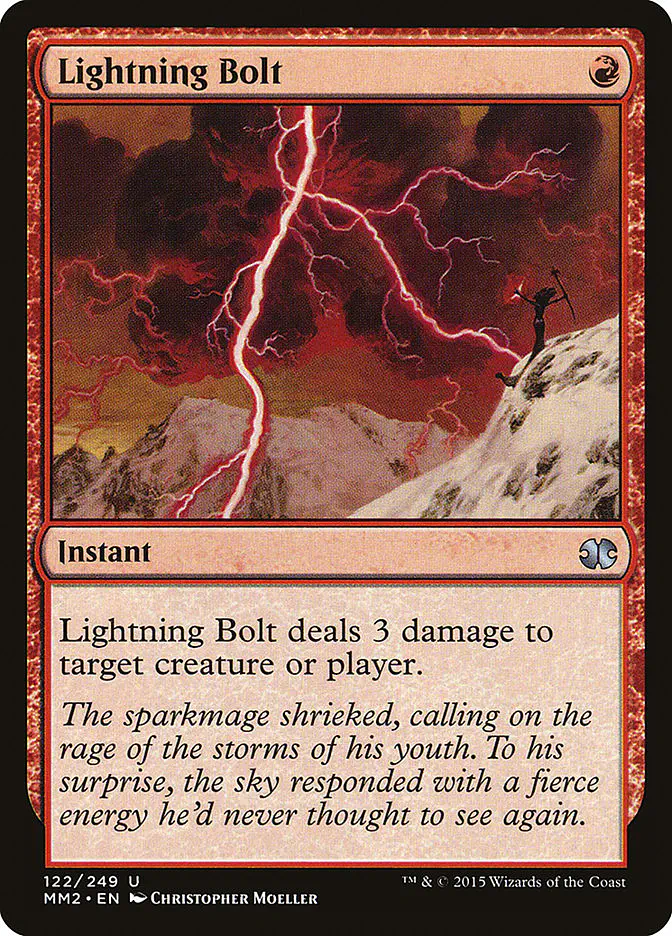
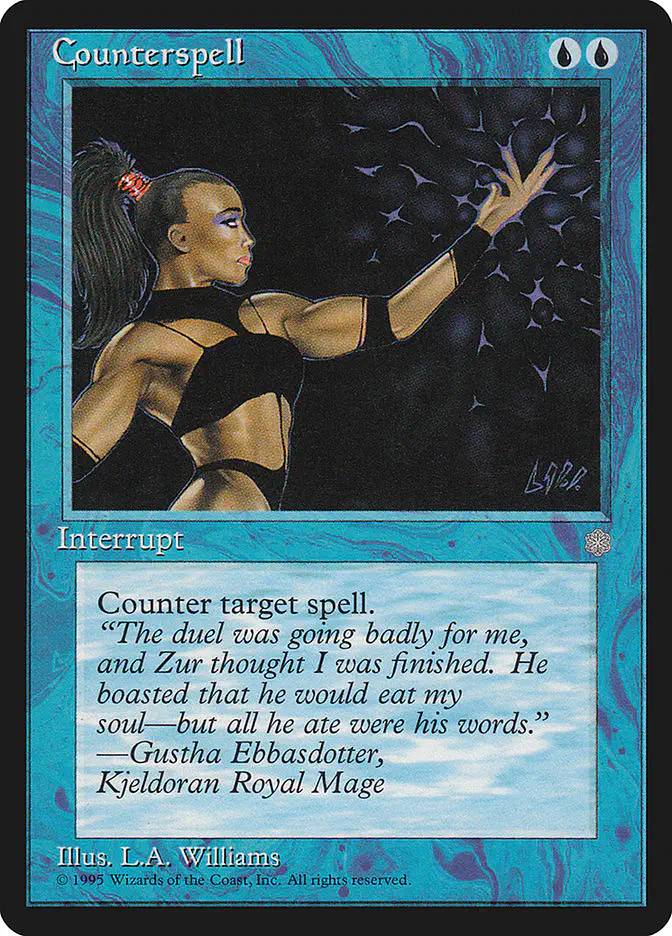
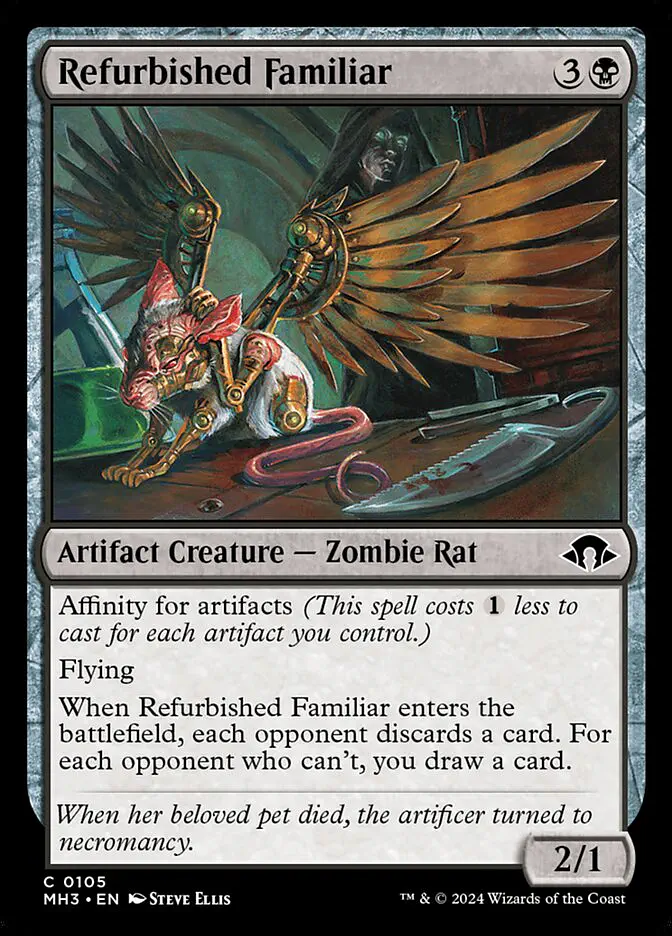
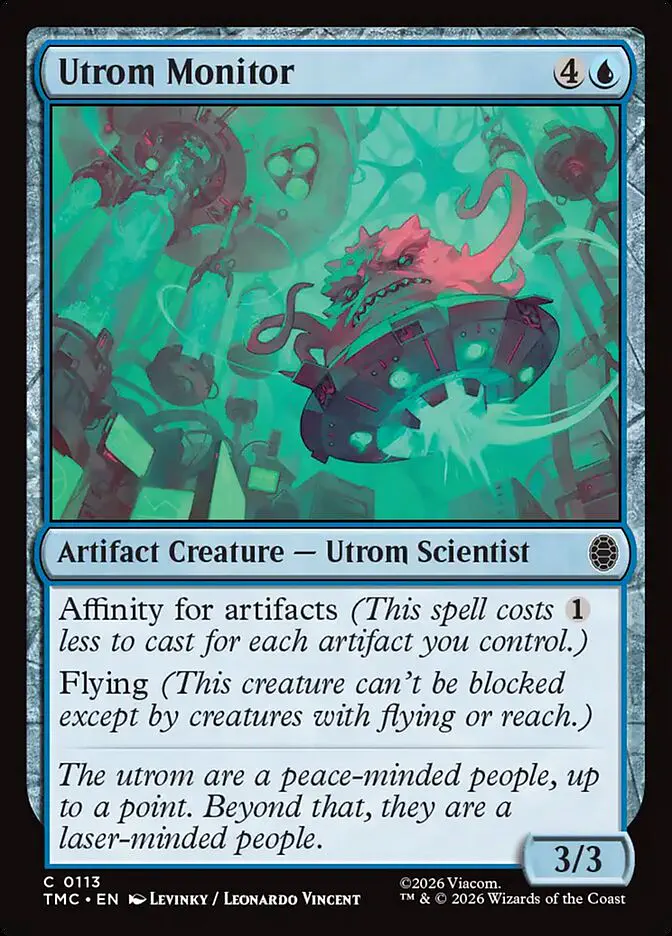
Even a single card choice can speak volumes. Lightning Bolt represents speed and direct pressure; Counterspell stands for patience and control; Refurbished Familiar shows a drive for value through synergy; Grab the Prize is about converting resources into velocity; and Utrom Monitor represents maximizing a dedicated artifact shell.
None of these cards define a player on their own, but how you choose to play them, protect them, or integrate them into your strategy is what builds your identity at the table.
This is the exact moment when the list stops being just a deck code you copied from a website. After enough matches, you know the reasoning behind every slot, you understand the changes you've made, and you can clearly explain the plan you want to execute. The deck hasn't necessarily become objectively better, but it has become more refined and better suited to you.
A Click Is Only the Beginning
Today, a single click really is all it takes to access thousands of Pauper decklists. We can see what won a tournament on the other side of the world, compare different versions of the same archetype, and import a full seventy-five in seconds.
This accessibility is a massive boon. It lets us learn from the collective work of other players, discover brand-new strategies, and jump into a deep format without having to reinvent the wheel every time. But we shouldn't mistake having access to information for actually possessing knowledge.
Behind every competitive deck lies a process of building, theorycrafting, discussion, and countless matches. Sometimes that work comes from the spark of a single player; other times, it's the collaborative effort of a group or team. The list you find online is the polished end result of that journey, but it doesn't automatically come packaged with the experience that forged it.
Your own journey begins the moment you decide to sleeve it up. You study the cards, play through your first matchups, make mistakes, pivot your thinking, and learn to separate what's a feature of the deck from what's a result of your play.
Ultimately, Pauper is exactly this: choosing sixty cards out of thousands of possibilities and shaping them, game after game, into your own personal way of experiencing Magic.
Building a deck with a click is easy. Learning to love it, understand it, and truly make it your own is the best part of the game.
Until next time, Flavio