


Hey Boys & Girls, since I organized a tournament for our favorite card game on 2026/05/24, you're now getting a thrilling TO retrospective full of suspense, game data, tournament analysis, and a few conceptual Easter eggs.
Last Sunday, the second MOLE Destination Qualifier of 2026 was held. It qualified the top four players for the Regional Championship in Ghent (October 9-11, 2026). The aforementioned RC Ghent, in turn, will qualify its top players for MTG's most prestigious paper tournaments: the World Championship and the Pro Tour.
Not only that. This MOLE Destination Qualifier was also a Premier EUL Event. The European Unity League (EUL) is a private and independent European competitive circuit that qualifies players for its top tournaments, namely the Nationals of various states and the European Championship, through a mixed system of points and direct qualifications.
In addition to this plethora of qualifications, other prizes awarded to the top 16, and the highest possible EUL multiplier, I decided to commission a celebratory trophy for the tournament champion.
That was the setup, now let's talk about the game.
The format chosen for this particular tournament was Modern. The event is one of the first paper tournaments to look at for recording the formation of a new metagame post Banned and Restricted Announcement. Just five days before the Destination, Modern was hit with two bans and two unbans. Phlage, Titan of Fire's Fury and Lotus Field bid us farewell, while Violent Outburst and Umezawa's Jitte make their return through the back door.
Following this change, Modern experienced a significant reduction in the number of active players. It is likely that this phenomenon is partly physiological. After all, these changes have cut across the decklists of Boros Energy, Jeskai Blink, Amulet Titan, and 5c Domain. Players who primarily relied on those decks still need to figure out how to modify their archetypes, or what to play instead in an undefined meta.
Amidst these still-hazy choices, let's see what spicy insights this MOLE Destination Qualifier – Premier EUL tells us. The field distribution was as follows:

 Affinity 10.3%
 Goryo 8.6%
- Prowess 8.6%
- Living End 6.9%
- Broodscale Combo 5.2%
- Eldrazi Tron 5.2%
 Ritual 5.2%
- Rhinos 3.4%
- Ruby Storm 3.4%
- Amulet Titan 3.4%
- Ponza 3.4%
- Others 36.4%
The "Others" category includes all decks brought by players that don't reach 3% of the metashare. Constituting over a third of the field distribution in a competitive tournament, this is a significant initial finding. A substantial portion of players decided to play outside the meta before the ban, rather than trying to update it. Another part of the meta, however, chose to leverage the unban of Violent Outburst by updating Living End, or re-assembling Rhinos.
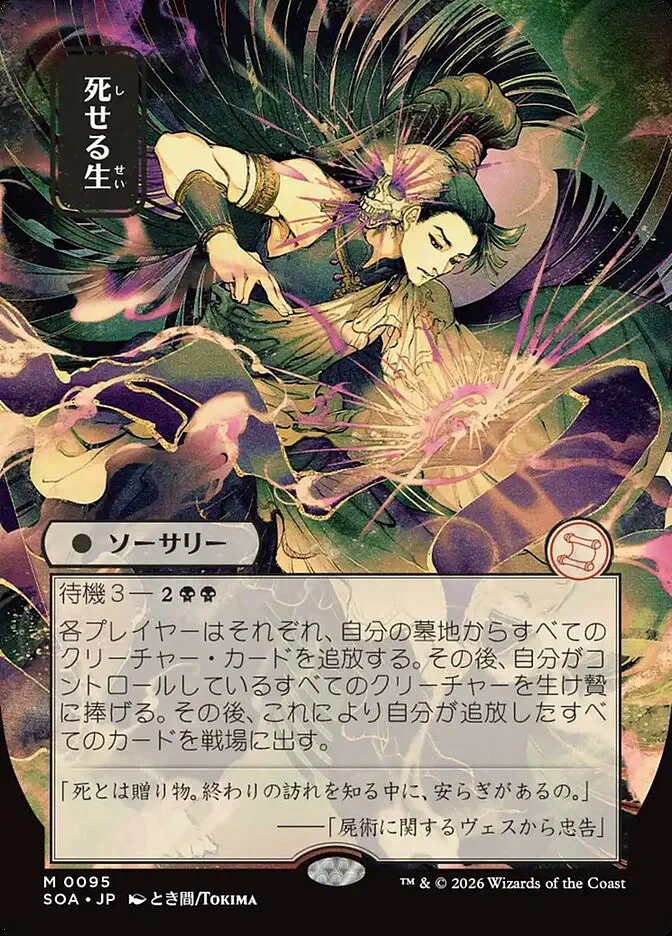
Living End
Sorcery
Suspend 3—
Each player exiles all creature cards from their graveyard, then sacrifices all creatures they control, then puts all cards they exiled this way onto the battlefield.
However, this significant minority had the lowest win rate overall compared to the rest of the field. It's very interesting to note how, between the two, the one that was supposed to be the favorite, namely Living End, performed worse. Here is the win rate from the Swiss rounds only for the most played decks:
- Broodscale Combo 75%
- Prowess 57.4%
- Ruby Storm 50%
- Ponza 50%
- Goryo 48.3%
- Ritual 47.2%
- Eldrazi Tron 41.7%
- Affinity 44.8%
- Amulet Titan 41.7%
- Rhinos 40%
- Living End 29.4%
The best read was by players who opted for Broodscale Combo. A deck that emerged unscathed from this round of bans and started with three advantages. Firstly, it has the most efficient card selection package in the format (Malevolent Rumble, Ancient Stirrings, and for those who play it, Traverse the Ulvenwald).
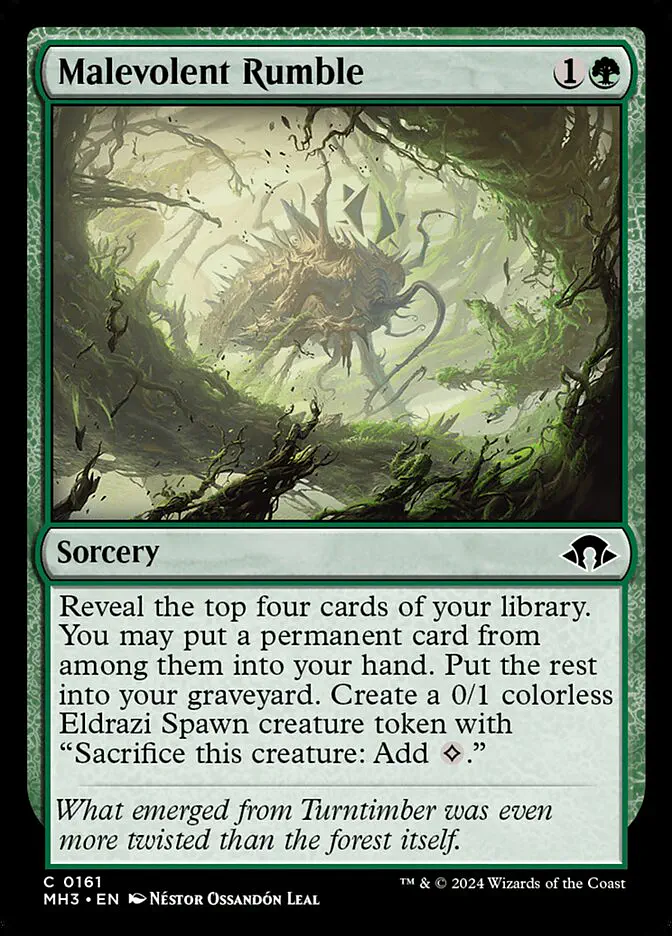
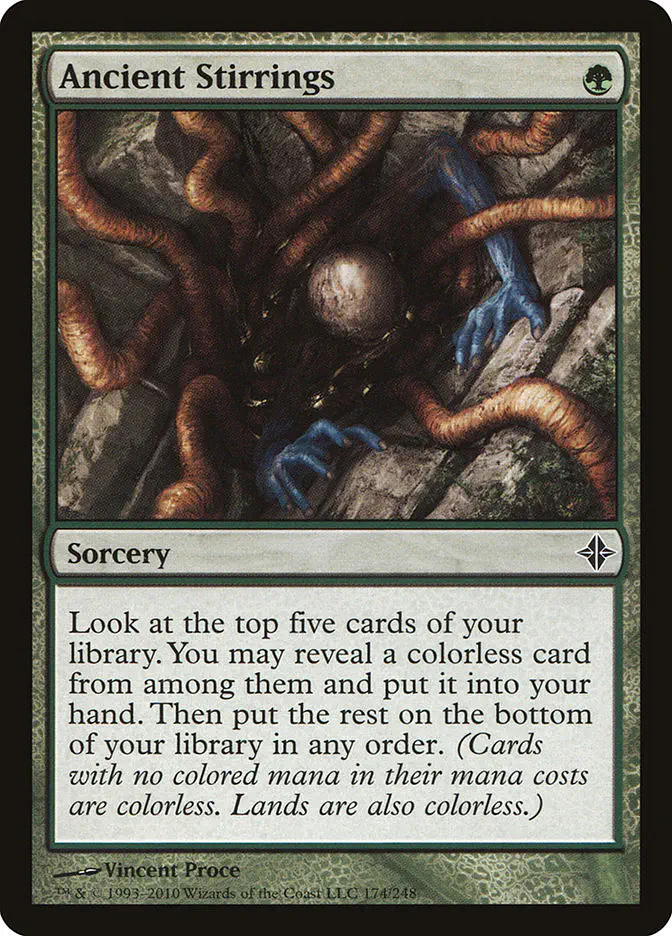
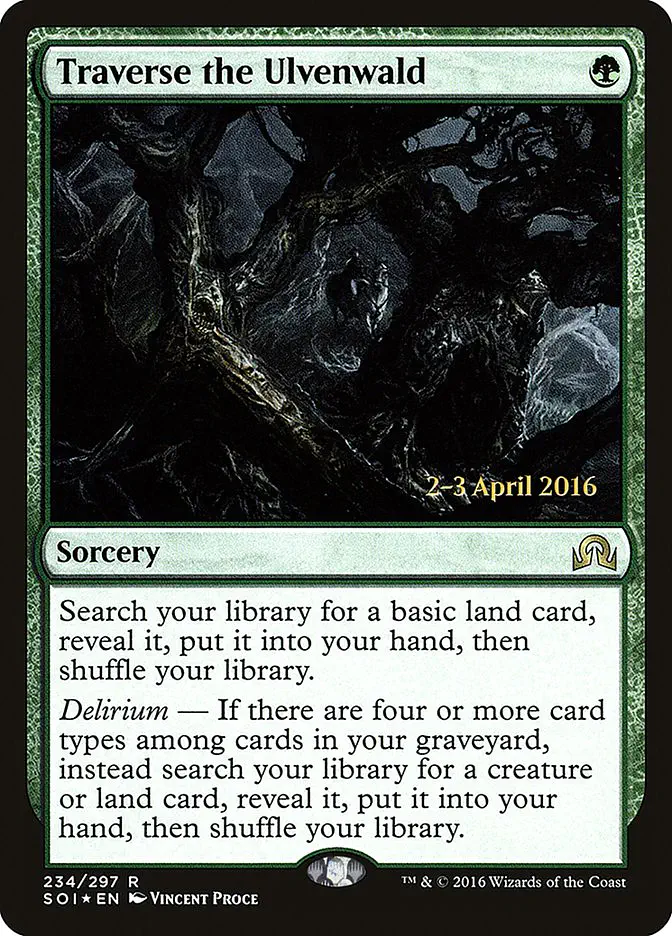
Secondly, it's probably the deck that best optimizes Kozilek's Command, and finally, besides relying on a straightforward two-card combo (Basking Broodscale and Blade of the Bloodchief), it possesses very dynamic alternative win conditions consisting of Glaring Fleshraker and, at times, Walking Ballista. Such a deck focuses its playing difficulty on knowing when to prioritize card quality versus when to deploy threats.
In the post-ban scenario, it was the deck that, on one hand, didn't require any change in play pattern, and on the other, more easily allowed access to an unfair advantage that was difficult to contain. One might think that luck also contributed to raising the deck's win rate. Goryo had a strong presence in the metashare, which is theoretically positive for Broodscale Combo.
In fact, it can make excellent use of the last mode of Kozilek's Command for graveyard hate on Goryo's targets. However, in practice, there was only one match-up between the two decks during the tournament, and it ended in a draw. So, luck contributed very little to its result.
Another interesting point is the non-negligible presence of Amulet Titan. A very strong deck, but not too popular lately and mildly affected by the ban of Lotus Field. It still didn't perform well. No conversions to top finishes and few wins in Swiss pairings.
An atypical curiosity that I'm not sure how to evaluate: Amulet Titan reported 75% of its wins against decks that were upgraded or downgraded by the banlist update (Living End, Rhinos, and the Energy decks without Phlage, Titan of Fire's Fury). Conversely, 85% of its losses were to decks unaffected by the ban.
This could be practical evidence to suggest that Amulet Titan is the least affected archetype among the weakened ones by the recent format change.
The participation and win rate of Prowess are also indicative. Players who made this read performed less than expected, but they reasoned well. A solid and linear deck, with no card hemorrhages, that does its job and always acquires excellent resources. Furthermore, if you need to play a base, you can look at that, Affinity or Ruby Storm.
However, against Affinity, it's legitimate to expect players to integrate a strong plan against 0-cost spells, since the deck is very present; and in fact, Affinity won this tournament, but its performance ratio was mediocre. Ruby Storm, on the other hand, has the best matchups against Blink decks. The latter, however, are a category of decks whose dominant, Jeskai Blink, was destroyed by the removal of Phlage, Titan of Fire's Fury.
Therefore, a very low representation of the category was to be expected. This argument, however, can also be used in reverse. In fact, Phlage, Titan of Fire's Fury also made a deck that was already declining disappear from the radar, namely Domain Aggro. Ruby Storm had a terrible matchup against Domain Aggro, so it would have been right to bring it.
The truth is that in an undefined meta, Prowess, a proactive deck, offers more statistical security compared to a linear combo against which it is very easy to set up and which sees an increase in playable resources capable of preventing players from casting more than one spell per turn. I think all these elements should have guided players towards choosing Prowess, which has one unique problem: any Power Play from other Modern decks is stronger.
This creates the paradoxical situation where Prowess becomes one of the fairest decks in the format. Precisely for this reason it did not shine, even though its Performance Ratio was 11% higher than the rest of the meta.
The Performance Ratio itself is a metric rarely provided to players, yet I find it one of the most relevant for understanding how a certain deck performs and how much credit goes to its player. Let's do a quick example by listing the top 8 winning decks, their win rate (this time including Swiss and playoffs), and their Performance Ratio:
- Decio Sacco Affinity / Winrate 50% / 0%
- Milos Mrkic Ponza / Winrate 53.3% / +6%
- Marcio Fodi Broodscale Combo / Winrate 72.5% / +45%
- Niccolò Possati Yawgmoth / Winrate 68.8% / +38%
- Simone Crivellin Goryo / Winrate 46.7% / -7%
- Lorenzo Simeoni Blink / Winrate 71.4% / +43%
- Pietro Maria Oltolina Prowess / Winrate 55.4% / +11%
- Riccardo Puglia Blue Moon / Winrate 64.3% / +29%
The most interesting observation here is that the first and fifth place players achieved excellent results during the tournament, despite their decks collectively having a neutral or negative performance. This allows us to recall two important lessons from this beautiful game. The first is that players win tournaments, not decks.
Decio Sacco, in first place, and Simone Crivellin, in fifth, did not achieve those results because their decks were well-positioned in this specific tournament, but because they played them masterfully despite being at a disadvantage. Netdecking their lists believing they were intrinsically the strongest would be a logical error. From that perspective, any other deck in the rest of the top is better.
Both players belong to the Trecani competitive team, which consistently demonstrates its quality of play and thought.
The second important lesson is that the game is not just mathematics. I always enjoy performing advanced statistical analyses and interpreting data. It is very useful for obtaining logically based evidence with a high degree of certainty. However, the philosophy of the game cannot be reduced to the philosophy of arithmetic.
A player who is comfortable and prepared with a deck at a disadvantage compared to the meta average can easily close the gap and surpass a player who chooses an optimally positioned deck but lacks the same level of practice. For example, Pietro Maria Otolina or Milos Mrkic piloted two decks whose performance ratio was extremely modest, even if positive.
Yet they converted to the top, passing other decks present in the room, like Broodscale Combo, which reported significantly higher advantage rates. As always, in Magic, having the best tool matters a lot, but knowing how to use it is equally important.
This topic is particularly dear to me. I often use it on multiple occasions. For instance, when teaching new players how to approach MTG, I am often asked: "What is the best format?" This question seems innocuous, but in truth, it is profound.
If we don't reduce it to mere personal taste, i.e., "the best format is the one I like most," then the question must be read as "what is the healthiest format?" meaning a format where everyone can win by putting in effort, without most games being decided by a roll of the dice. That is, the distributive equity of victory under equal conditions.
I won't say here what I think is currently the best format in Magic, but it's well-known that I find the usual arguments given to answer this question to be poor and trivial. "It's the most balanced format... the cheapest... the one with a more stable meta... the one with only two or three tier 1 decks... etc." My usual answer is that "the best Magic: The Gathering format is the one where the most significant factor in winning is the player's skill in the game."
Everything fits within this answer. All discussions about color balance, power level, meta variability rate, etc. It tells us everything, and it's so simple.
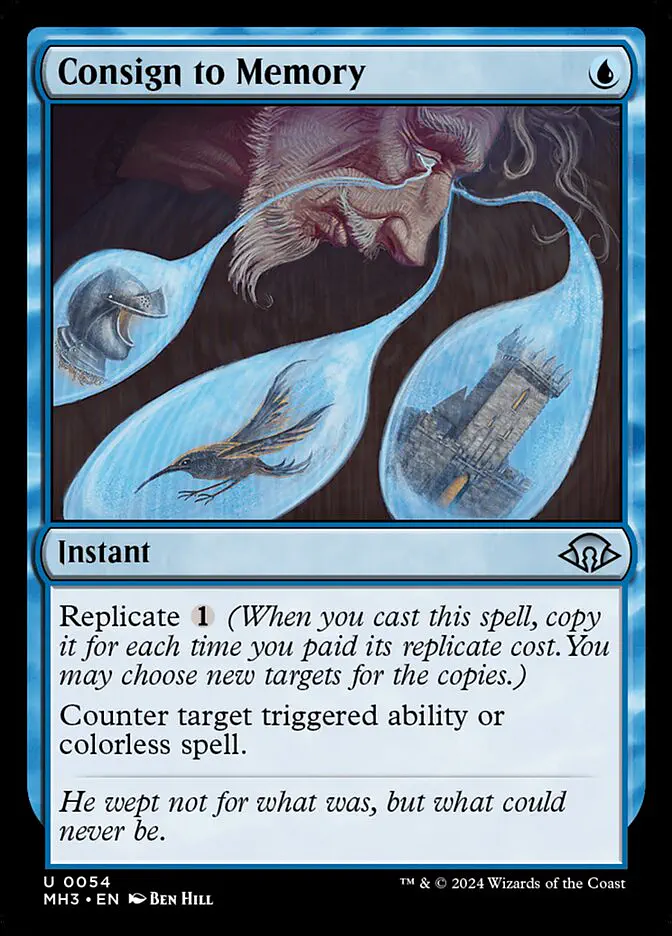
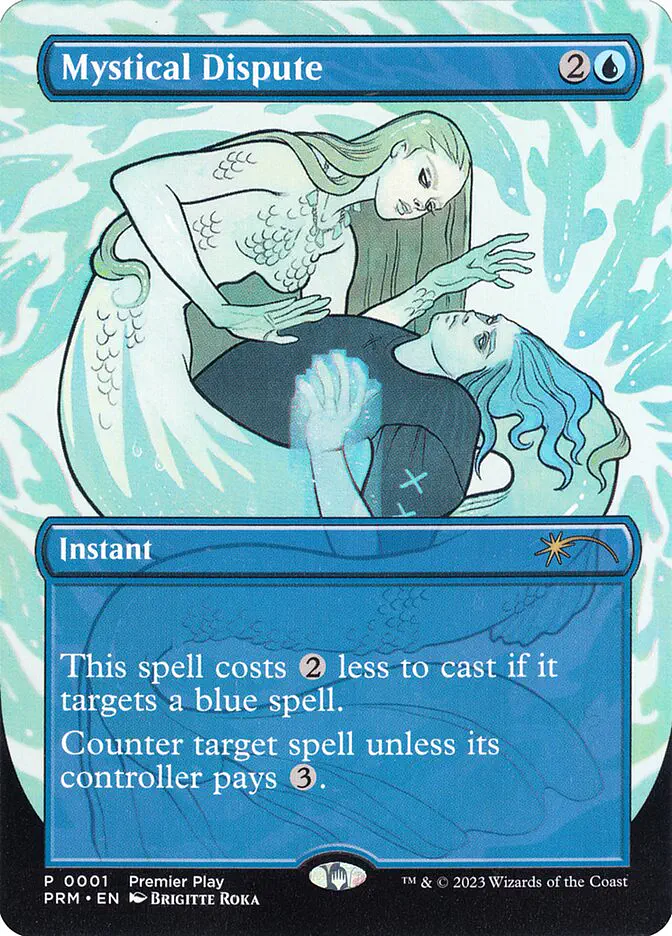
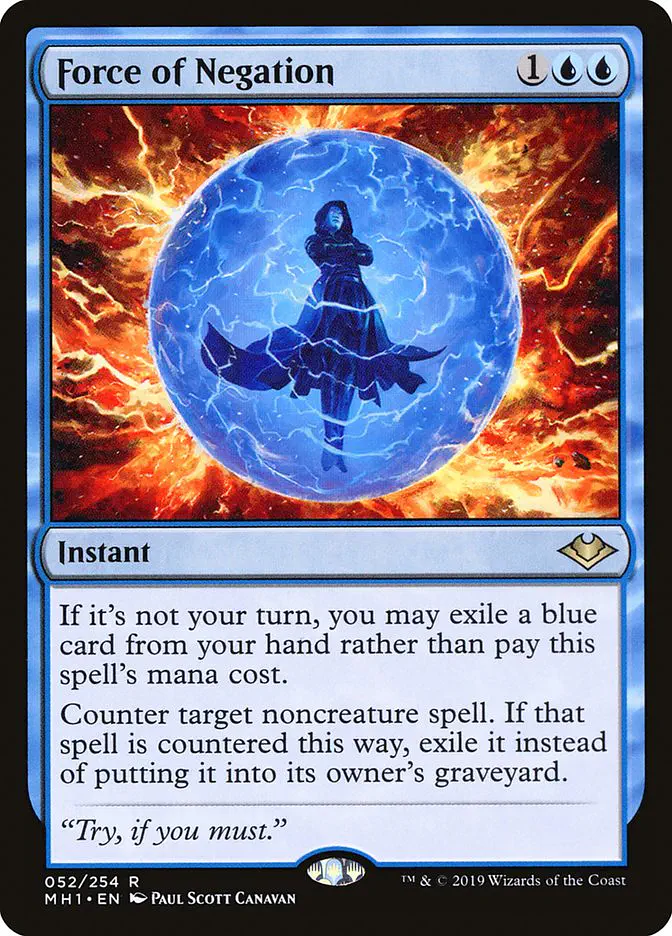
Returning to the tournament, the top three most used cards were Consign to Memory, Mystical Dispute, and Force of Negation. This indicates that players feel the need for efficient and fast tools to block an opponent's line or protect their own, regardless of the strategy used. This obviously doesn't mean that all decks play them.
It means that all players are prepared either to stop a sudden acceleration, or to win through a sudden acceleration, or to expect to be blocked when they start to speed up the arrival of the Fundamental Turn and want to respond to the obstacle (Mystical Dispute). It follows that the format, as is well known, tends to compress game times. This inevitably develops certain skills.
It makes some choices, like keeping a hand, require more care than in other formats. Or it rewards an accurate read of the opponent's response despite them being tapped out. But it also means the format tends to be more dependent on dice rolls and mulligan quality. Negative and positive aspects. The balance is left to the readers.
Along with the rest of the opinions, below I leave you the winner's decklist, and here you have the Top 8 of the tournament.
I'd like to continue the article with some colorful notes on two spicy lists. I'm referring to Riccardo Puglia's Blue Moon and Andrea Incerti's Grixis Reanimator. Two decks that performed very well and come from afar. Blue Moon, an old-school control deck, but one that has changed a lot. Early last year, it still played with a core composed of Blood Moon and Chalice of the Void to shut down every opposing plan.
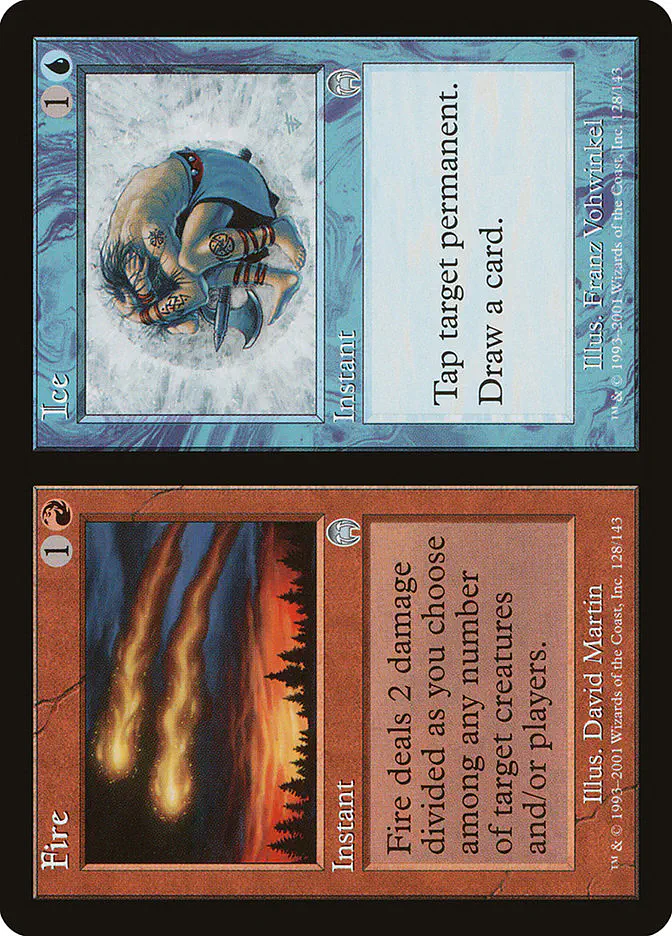
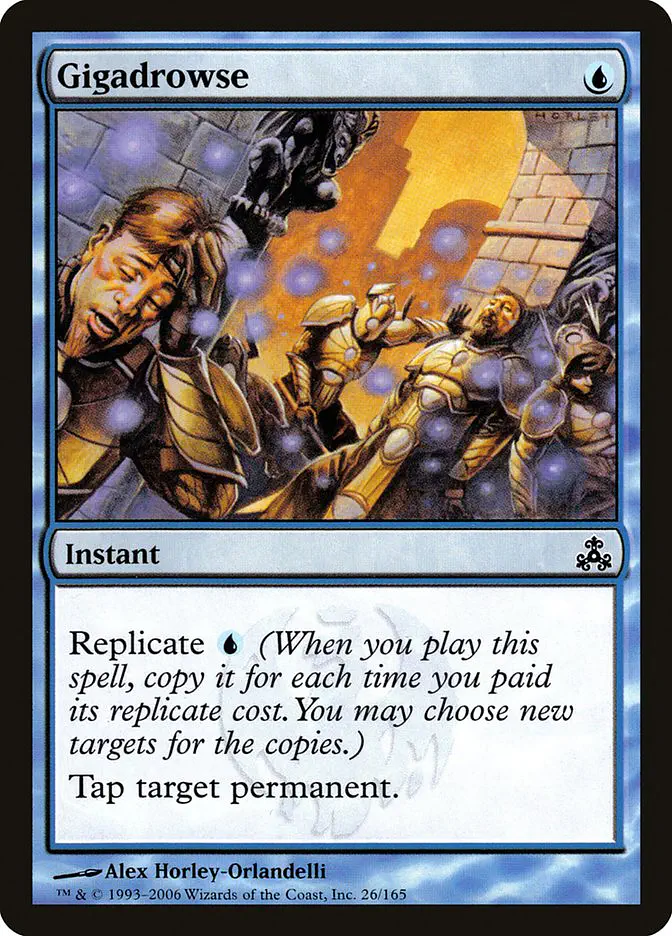
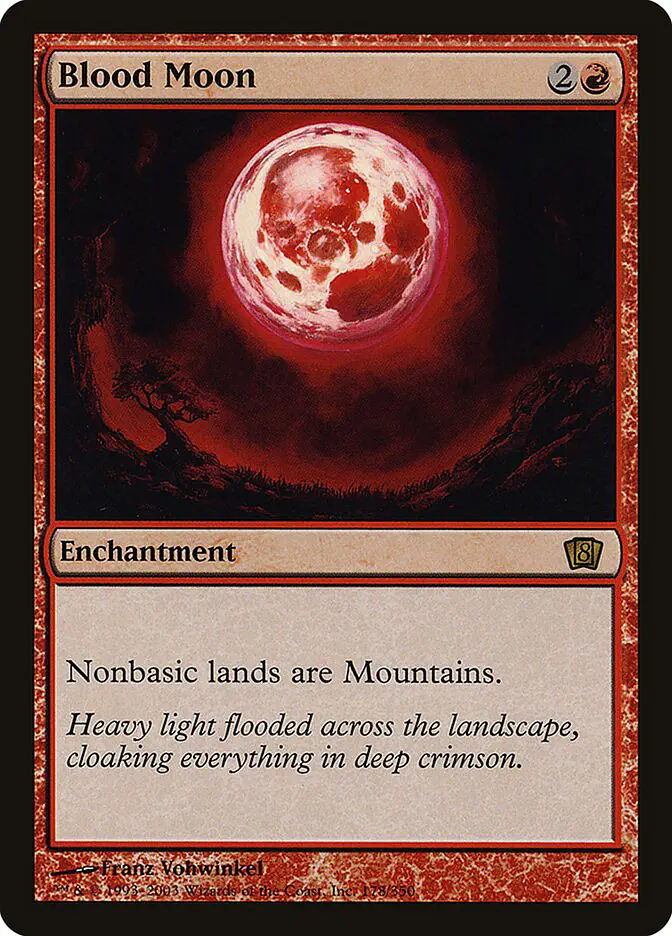
Along with this, it incorporated old-style slowing plays like Fire // Ice to tap lands in the opponent's upkeep in the early turns. A play that itself derived from the same action applied with Gigadrowse years before. All things that no longer exist. Puglia created a much leaner list, where only one Blood Moon remains in the main deck. It almost looks like a different deck. But truly a beautiful display of style and deckbuilding work.
The main deck integration of new cards like Traumatic Critique, also much discussed in Standard, was highly appreciated.
As for Grixis Reanimator, it's always great to see these types of decks in the format because they follow a truly different play pattern from the rest. It's not obvious when to use looting for advantage, and the trick responses the deck can have to specific hate are very enjoyable. For example, responding to an opponent's Surgical Extraction targeting our Archon of Cruelty by exiling it with the last activated ability of Psychic Frog.
The two Force of Despair in the sideboard are also very flavorful, providing an asymmetrical win rate that is always welcome. I'm leaving the list here, along with our compliments.
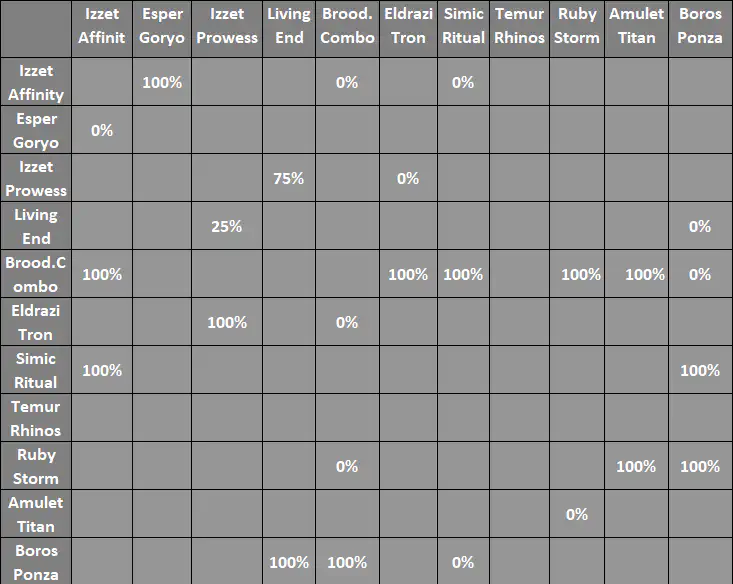
To conclude in style, I constructed the match-up matrix for the 11 most represented decks. Then I erased all the results obtained and kept only those where one deck acted as a predator to another. Predator means it achieved 100% of won matches, or almost, every time the two decks met, despite sideboarding operations. I excluded all samples consisting of a single match, from which no significant statistical conclusions can be drawn, as well as drawn games and mirror matches.
This TO retrospective on the tournament ends here. Remember to check your EUL ranking to verify that your points have been correctly attributed. For those who still don't know the circuit, it's valid. Go to your trusted WPN Stores and ask them to offer you tournaments from the European Unity League circuit, which range from simple locals to the European Championship at the end of the season.
It was great.
See you Space Cowboy
Francesco