

Premodern is a fantastic format that has been around for almost 15 years: it was born in 2012 thanks to Martin Berlin, who still manages its ban list today. Legal sets span roughly from 1995 to 2003, making it a (mostly) immutable format that sits between Old School (93-94) and Modern (2003 onwards). I recently got into it, and it has been a truly exciting experience.
Premodern allows you to play a huge number of fascinating historical cards, games are very different from modern Magic, and there is a wide variety of competitive decks for every archetype. The format is becoming increasingly popular, especially now that it is officially supported on Magic Online (MTGO): that's what convinced me to try it. Today, I'll not only give you great reasons to start playing Premodern, but I'll also offer an overview of the format and a look at some of the best decks. Let's get started!
Why You Should Play Magic: The Gathering's Premodern Format

Honestly, I've been very impressed with Premodern and would wholeheartedly recommend it. It's quite different from most versions of Magic you might play, but I've found the games fun, the decks interesting, and the overall experience truly engaging. Here are the format's main strengths:
Nostalgia: If you've ever played (or even just read about) old Extended or Legacy from that era, Premodern perfectly recaptures that experience. These decks are very similar to what was seen when I started playing Pro Tour Qualifiers (PTQs), and it was really cool to relive that time. Even if you didn't play back then, Premodern is full of iconic cards and archetypes from Magic's history, and being able to play them for the first time is just as exciting. You can sleeve up cards like Psychatog, Gush, Rishadan Port, Goblin Lackey, Phyrexian Dreadnought, Survival of the Fittest, Standstill, Swords to Plowshares, and many, many more.
Decks are focused: Every Premodern deck has a very specific game plan it tries to execute, and that's refreshing. It doesn't mean current decks aren't focused, but when you look at Enchantress, Goblins, Stifle-Nought, or many other archetypes in the format, they are built to do exactly their thing, and each archetype emerges with a stronger identity than many modern decks. Furthermore, while format staples exist (like Swords to Plowshares, Gush, Duress, etc.), most powerful engine cards tend to be the heart of a single deck. This greatly reduces overlap between lists compared to what you might expect. This is an aspect I really appreciate, because each deck truly feels like it's doing something unique and not sharing too many cards with others.
Gameplay: The way games play out is decidedly different. On one hand, some matches can last a very long time, even over 15 turns in many games. When you play Psychatog against Mono-White Prison or The Rock (Green-Black Midrange) against almost anything, epic and very deep games can arise. On the other hand, Stifle-Nought or Goblins can effectively end the game on turn two, and Storm can literally do so. Games and matchups can be polarized, but the presence of very impactful sideboards and numerous efficient answers (like Swords to Plowshares, Duress, Daze, and Counterspell) helps maintain a varied metagame and generally very interactive games.
Considering that on MTGO you can rent a deck and try it out without too much difficulty, I would definitely give Premodern a shot if any of these aspects pique your interest. Let's now talk more in detail about the format, starting with the banlist, and then analyzing some of the main decks.
Which Magic: The Gathering cards are banned in Premodern?

The banlist can be consulted here and currently includes 33 cards. All ante cards are banned, along with other cards deemed too powerful and capable of warping the format if they remained legal.
As mentioned, Martin manages the banlist, but he also listens to community feedback, and changes are not made lightly. The most recent addition was Parallax Tide, due to how oppressive it was in combination with Stifle, Chain of Vapor, and Seal of Cleansing (an interaction that led to permanently exiling all of the opponent's lands).
Looking at the list, it's still quite obvious why most of the cards were banned:

Cards like those mentioned above would obviously dominate the format (and not without reason), but they are not allowed. Bans do not happen with great frequency: in recent years, there have only been a few interventions.
All sets from 4th Edition up to Scourge are legal, except for the cards on this list:
Amulet of Quoz
Balance
Brainstorm
Bronze Tablet
Channel
Demonic Consultation
Earthcraft
Entomb
Flash
Force of Will
Goblin Recruiter
Grim Monolith
Jeweled Bird
Land Tax
Mana Vault
Memory Jar
Mind Twist
Mind's Desire
Mystical Tutor
Necropotence
Parallax Tide
Rebirth
Strip Mine
Tempest Efreet
Tendrils of Agony
Time Spiral
Timmerian Fiends
Tolarian Academy
Vampiric Tutor
Windfall
Worldgorger Dragon
Yawgmoth's Bargain
Yawgmoth's Will
Interestingly, since it's a static format, bans and unbans are the only way the format changes structurally. However, there are so many decks and so many different ways to build them that the format doesn't feel stale at all.
The Best Premodern Decks in Magic: the Gathering
As mentioned, the format is very broad, so it's impossible to cover every single deck. However, I want to offer you an overview of some of the best archetypes, along with my impressions of those I've had the chance to play personally.
Burn

Game Plan: Get to 20.
Burn is exactly what it sounds like: an exercise in dealing 20 damage to your opponent before they can do whatever they're trying to do. It's a focused, essential deck that harshly punishes slow draws or ineffective hands.
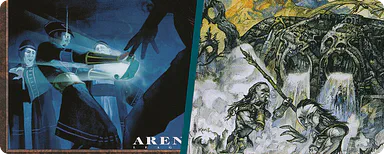

When playing Burn, the main thing to avoid (if possible) is using damage spells on opposing creatures: it quickly becomes a losing battle when you're forced to divert your win conditions onto their cards instead of directly onto their life total.
Landstill (Azorius Control)

Game Plan: Draw extra cards with Standstill and Fact or Fiction, then counter or remove every opponent's threat. Close out the game with Decree of Justice or various creature lands.
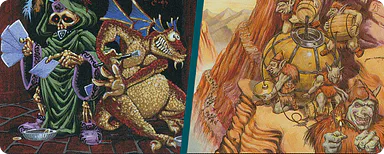


I've just tried this deck, and as you can imagine, it's perfectly up my alley. It doesn't always play Standstill, as there are versions that use other draw spells, but the main game plan remains unchanged.
The deck makes the most of some of the best answers in the format, with Counterspell and Swords to Plowshares being light-years ahead of many modern interactions.
Be warned, though: games are long and very "grindy," so be prepared to play quickly and efficiently.
Stifle-Nought

Game Plan: Put a "free" Phyrexian Dreadnought onto the battlefield using Stifle or Vision Charm, then protect the threat until the win with cheap or free counters.
Stifle-Nought is one of my favorite decks in the format: it's a (somewhat) mono-color and super-focused combo deck. It threatens a 12/12 as early as turn two, often with a free counter for protection, and is surprisingly consistent.
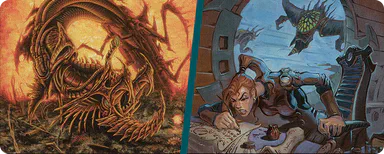
It plays only Islands, cheap draw spells, and low-cost interactions, which makes it extremely reliable in doing the same thing game after game.
It can also sideboard in Brain Freeze and/or Morphling as alternative win conditions against opponents full of Phyrexian Dreadnought removals, and these plans are absolutely effective.
It's a truly fascinating deck that highly rewards experience and a deep understanding of its play lines.
Enchantress

Game Plan: Put an Argothian Enchantress (or Enchantress’s Presence) onto the battlefield, then flood the board with as many enchantments as possible, generating explosive turns thanks to Serra’s Sanctum. Lock down the opponent with various prison-style enchantments and close out the game with Opalescence.


I have a soft spot for Enchantress, having actually played a very similar list at the World Championship in 2007. It's surprising how similar the current versions are, and I'm glad to see Enchantress as a real and competitive part of the Premodern environment. The deck is a solid combo package and, once again, extremely focused on advancing its game plan.
Goblins

Game Plan: GOBLIN!
This deck lives or dies on a turn one Goblin Lackey: its most devastating starts revolve around its one-drop putting three, four, or five mana cards onto the battlefield for free. Even outside of these explosive hands, it remains a solid aggro deck, capable of building an imposing board if the game goes long.
It can also attack the opponent's mana base with Wasteland and Rishadan Port, and has several removals to handle problematic cards in the format. Goblins is a solid choice, although it can be a bit vulnerable against some combo decks.
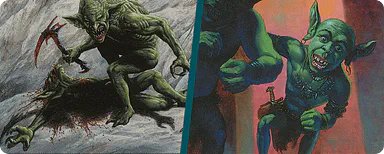
There are many other decks in the format, but these give you a good idea of some of the most played ones: personally, I've faced a different deck almost every round. That's a fantastic aspect, and I've been positively impressed by the actual variety present in the metagame.
Now that you've taken a deep dive into Premodern, what's stopping you from trying it out? It's easily playable on Magic Online and also has a very active paper community, making it an excellent format to get into. I'm enjoying it immensely, and if you're curious, I truly recommend giving it a chance.
Original Article by ChannelFireball: A Beginner's Guide to Premodern, Magic: The Gathering's Fastest-Growing Fan Format