



Hello everyone, my name is Alessandro Galli (aleVgalli on X). I love playing control decks in practically every MTG format, and I've been enjoying Premodern for over a year now. I previously wrote a Primer on UW Tidestill, and like many of us, due to the January 2026 banlist update, I had to set aside my beloved Parallax Tides. The natural choice was to start getting familiar with classic UW Landstill which, despite losing its "I win" button, is a stronger deck in its pure control plan. This iteration of control especially rewards patience, precise play, role assessment, and resource management.
Uw Landstill
This deck is a classic control build that aims to interact with opposing threats via 1-for-1 interactions like removal and Counterspell, to generate 2-for-1s and 3-for-1s with wrath and card advantage spells like Fact or Fiction, and to warp the game with Standstill.
With Standstill in play, your goal is to make land drops and break parity in your favor thanks to manlands, Dust Bowl, and finally accumulate a wide board of Soldiers thanks to the triggered cycling ability of Decree of Justice to close out the game.
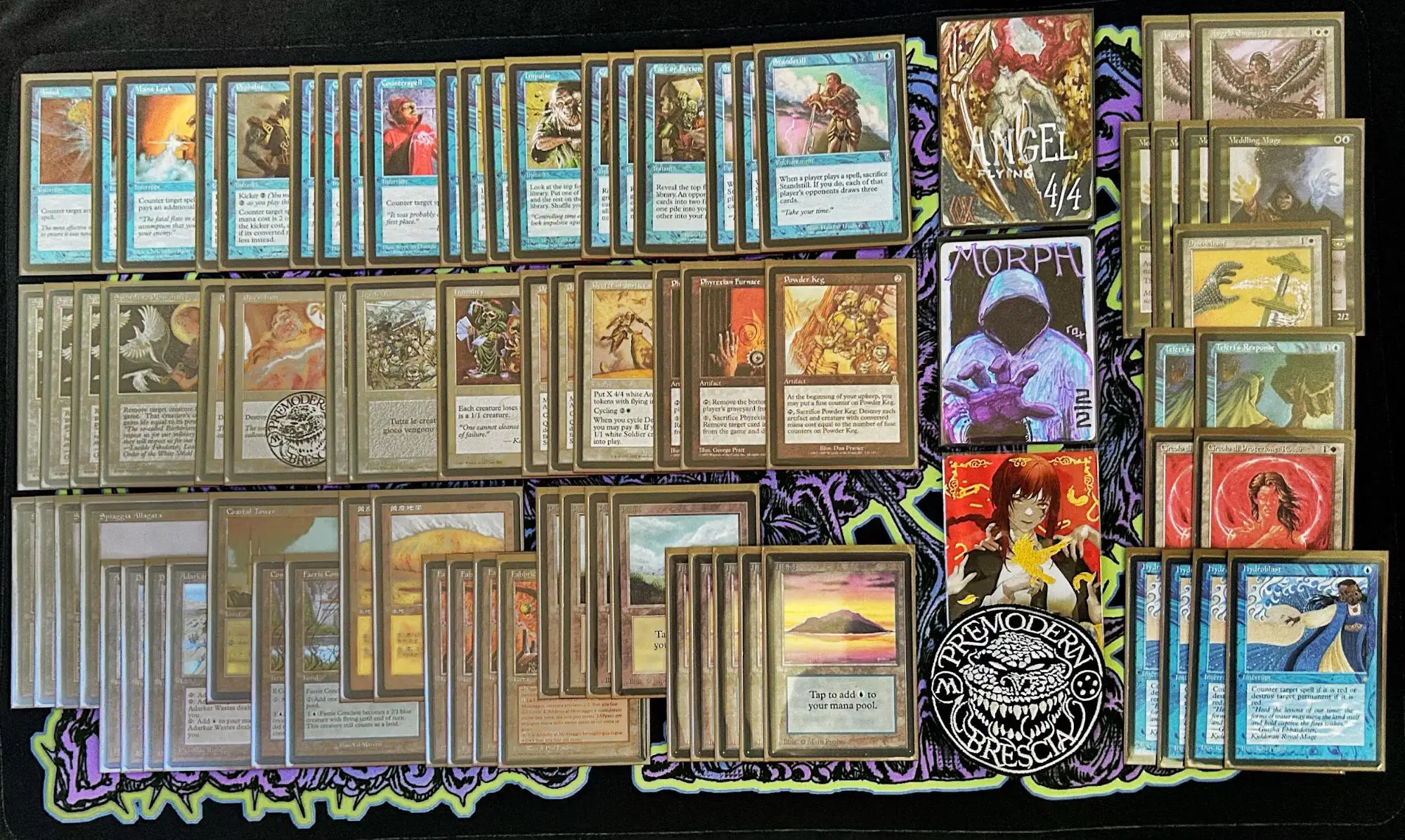

Uw Landstill
- 4 × Counterspell
- 4 × Impulse
- 4 × Swords to Plowshares
- 3 × Fact or Fiction
- 2 × Disenchant
- 2 × Mana Leak
- 2 × Prohibit
- 1 × Annul
- 3 × Decree of Justice
- 2 × Wrath of God
- 3 × Standstill
- 1 × Humility
- 2 × Phyrexian Furnace
- 1 × Powder Keg
- 5 × Island
- 4 × Adarkar Wastes
- 4 × Flooded Strand
- 4 × Mishra's Factory
- 4 × Plains
- 2 × Dust Bowl
- 2 × Faerie Conclave
- 1 × Coastal Tower
- 4 × Hydroblast
- 4 × Meddling Mage
- 2 × Circle of Protection: Red
- 2 × Exalted Angel
- 2 × Teferi's Response
- 1 × Disenchant
Let's start with a card-by-card analysis:
MAINDECK
4 Swords to Plowshares:Probably the best spot removal in Premodern, Swords to Plowshares can deal with any type of creature and is the backbone of the deck's interactive package.
2 Wrath of God: Wrath ensures we can deal with wide boards of creatures. We play 2 of them, split with 1 Humility (which will be discussed later) to see them in the mid/late game. A third copy could be added in place of Humility, especially if you're considering playing Exalted Angel maindeck.
1 Humility: Landstill players often have very divided opinions on this card. Some say it's too situational and, being a singleton, you rarely see it when you truly need it. Personally, I love Humility because it steals games against many decks, from combo to aggro, especially in game 1, and unlocks the full potential of your Soldier boards created by Decree.
This card often leads to strange ruling situations, so I'll cover everything about it later.
2 Disenchant: Premodern is full of dangerous enchantments and artifacts, making this card an optimal (or at least useful) spot removal in almost every matchup, except Goblins and very few others.
Some lists also play 1 Seal of Cleansing, but I think it's not worth it since we no longer need to enable Parallax Tide. Seal also fails against Stifle and other Seal effects and requires you to tap out, while Disenchant is always available and unexpected.
3 Decree of Justice: A large board of Soldiers created by Decree is our primary way to win, usually paired with a Standstill already in play and/or Humility, to ensure the opponent either has to endure our legion's attack or break it and let us surge ahead in card advantage.
You'll rarely cast it, especially against other blue decks, due to its prohibitive mana cost, but sometimes you'll also find yourself creating a few Angels in some long, grindy games.
4 Counterspell: Clean 1-for-1 interaction on the stack, nothing more and nothing less. It always stays live as the game progresses, being a "hard counter." Be careful when evaluating whether something is worth countering: resource management is crucial with this deck.
2 Mana Leak: Another counter with an easier cost to pay. It gets worse as the game goes long, so it's usually better in the early/mid game, especially on curve. Its relevance can vary, however, if you manage to keep the opponent's manabase in check with Dust Bowl, as we once did with Tide. Most lists play 3 or 4, but its fluctuating value as the game progresses has led me to play only a couple, splitting them with…
2 Prohibit: Prohibit is a situational hard counter that stays live throughout the game, but only hits spells with mana value 2 or less for two mana. Its cost is similar to Leak, which sometimes makes it unexpected, as opponents will think they're safe with three mana available to play around Leak. This counter's kicker cost isn't too prohibitive (pun intended) and is the icing on the cake: it allows you to hit spells with mana value 4 or less for four mana, dealing with almost every dangerous spell in the format, like Armageddon or Replenish, to name a couple.
1 Annul: Primarily a flexible slot, but truly strong especially on the draw. Annul is usually a sideboard card that earns a maindeck spot due to its relevance in many matchups and completes our Counterspell package.
4 Impulse: This cantrip is the glue that keeps the deck flowing and ensures we always find our reactive cards, land drops, or whatever else is needed at the opportune moment.
3 Fact or Fiction: There's an old saying that goes: "End of turn, Fact or Fiction, you lose." This four-mana card advantage spell lives up to its infamous legacy and puts opponents in difficult situations, trying not to let you gain too much advantage from the top five cards of your library. Paired with Standstill, FoF is the foundation of the deck's card advantage engine.
3 Standstill: Standstill is the situational card that gives the deck its name. It requires you to be ahead in terms of board or hand equity. Paired with an empty board or cards like manlands, Dust Bowl, and Decree of Justice, it ensures the game stalls in your favor.
You need to understand when to commit to it and against which decks it is safe or dangerous to do so, making it a difficult card to evaluate and play.
I'll cover each of its applications in the matchup and sideboard guide section.
2 Phyrexian Furnace: Another situational card that helps us keep graveyards in check; it can cycle itself in matchups where its primary purpose isn't useful.
1 Powder Keg: This card is a very versatile board wipe that can keep things like manlands, tokens, Mox, and small creatures/artifacts in check for the economical cost of two mana. One copy rounds out our board interaction package by adding diversity.
4 Mishra's Factory: One of the best creatures in Premodern is also a land and works wonderfully in multiples. It helps close out the late game or as a blocker in early turns.
2 Faerie Conclave: Another manland that helps close out the game in later stages. Flying is a great bonus, giving it evasion.
2 Dust Bowl: This land ensures that greedy manabases and opposing manlands remain in check; it's no surprise that it's one of the strongest cards in grindy matchups and control mirrors. With Mishra, it brings the colorless land count to 6, which is a lot in a two-color deck. We could say it's almost like having a third color, and that wouldn't be too far from the truth.
SIDEBOARD
2 Exalted Angel: If you've already read my old article on UW Tidestill, you know how much I love this card. Exalted Angel is a war machine ready to bring home post-side games, especially against aggro, black, midrange/Terravore, burn, mirrors, and grindy decks in general. It forces opponents to respect it by keeping awkward removal against a control deck, or succumb to its race with no ways to answer it! We play a couple because our sideboard is full, but I would gladly play a third copy if the meta became grindy.
4 Meddling Mage: MM is a useful card against every type of combo deck: Stiflenought, Tinker Fling, Full English Breakfast, Storm, Aluren, and prison decks like Stasis or MUD, to name a few, are all matchups that benefit from the annoying little Mage. But hey… I paid my two mana, now what do I name? It depends on the matchup, your hand composition, the opponent's opening, and how the game is developing. It's a complex card that rewards experience, and I'll try to cover its usage better in the Sideboarding section of this article. We play the full playset because it vastly improves in multiples: naming removal and then lock/combo pieces, for example.
1 Disenchant: Enchantment/artifact hate is always welcome! I like to play an extra copy of Disenchant because I don't think Annul is as necessary in a world without Tide, but you could also try the extra counter in this slot if you prefer it. Another card that would fit well in this slot is Aura of Silence, especially in metas full of Enchantress.
2 Teferi's Response: Because it is:
- Vital against Ponza and Terrageddon decks.
- A great tool in Control mirrors to protect manlands from removal and Dust Bowl.
- An inclusion against Goblins to stop their Rishadan Ports, Wastelands.
It also works against black decks if they play Wasteland. The blowout this spell causes is often very difficult for the opponent to recover from, being an easy 3-for-1 exchange in terms of resources.
2 Circle of Protection: Red : Goblins and Sligh are tough matchups, COP is here to ensure we buy enough time to stabilize and get an Exalted Angel into play to close out the game. Just make sure to play around Anarchy! We play two copies just to increase the chances of seeing one in the opening hand.
4 Hydroblast: The cheapest and strongest interaction against red decks like Sligh and Goblins; it also comes in handy against non-red decks that sideboard Pyroblast / Red Elemental Blast.
Keeps and Mulligans
Assuming we're playing game 1 against an unknown opponent, Landstill doesn't mulligan much: we're likely heading for a long game of attrition where resources matter, not a particular combination of cards to close quickly.
Being a reactive deck, we look for a hand with a mix of early interaction in the form of removal/counters and card advantage spells like Standstill and FoF.
Land drops should be at least two or three, possibly with an Impulse ready to find more if needed. As a general rule, keep in mind to NEVER keep a one-land hand with this deck: it doesn't matter if you're playing game 2 against Goblins on the play looking at a hand with a single Adarkar Wastes, 2 Swords to Plowshares, and Hydroblast, mulligan that trap hand as soon as possible! Making land drops, especially from 1 to 4, is vital with this deck.
Let's look at some example hands:
HAND 1
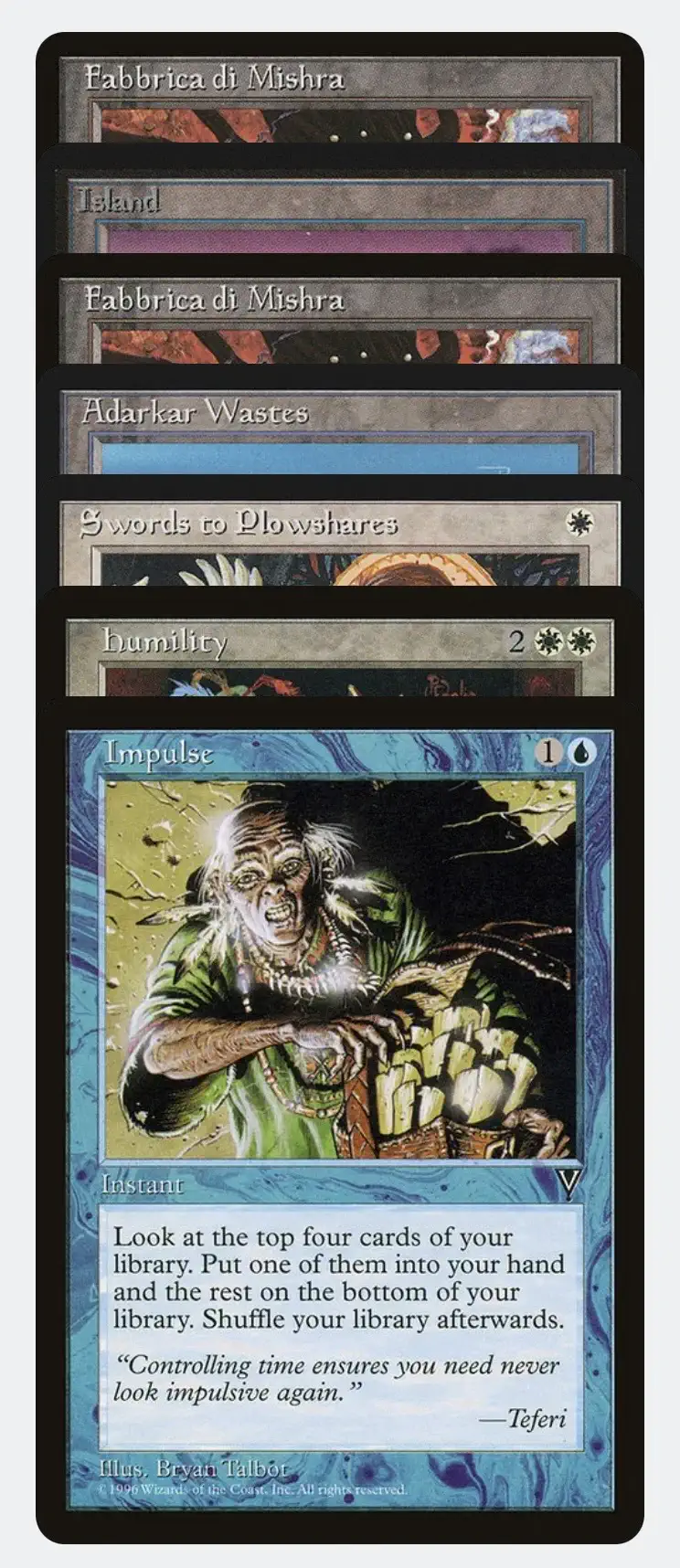
This hand is a snap keep. It has everything we need to set up the game: early interaction in Swords to Plowshares, Impulse to cantrip and find more gas, Humility which can be lights out in several matchups, and a good amount of land drops (some of which are also manlands).
HAND 2
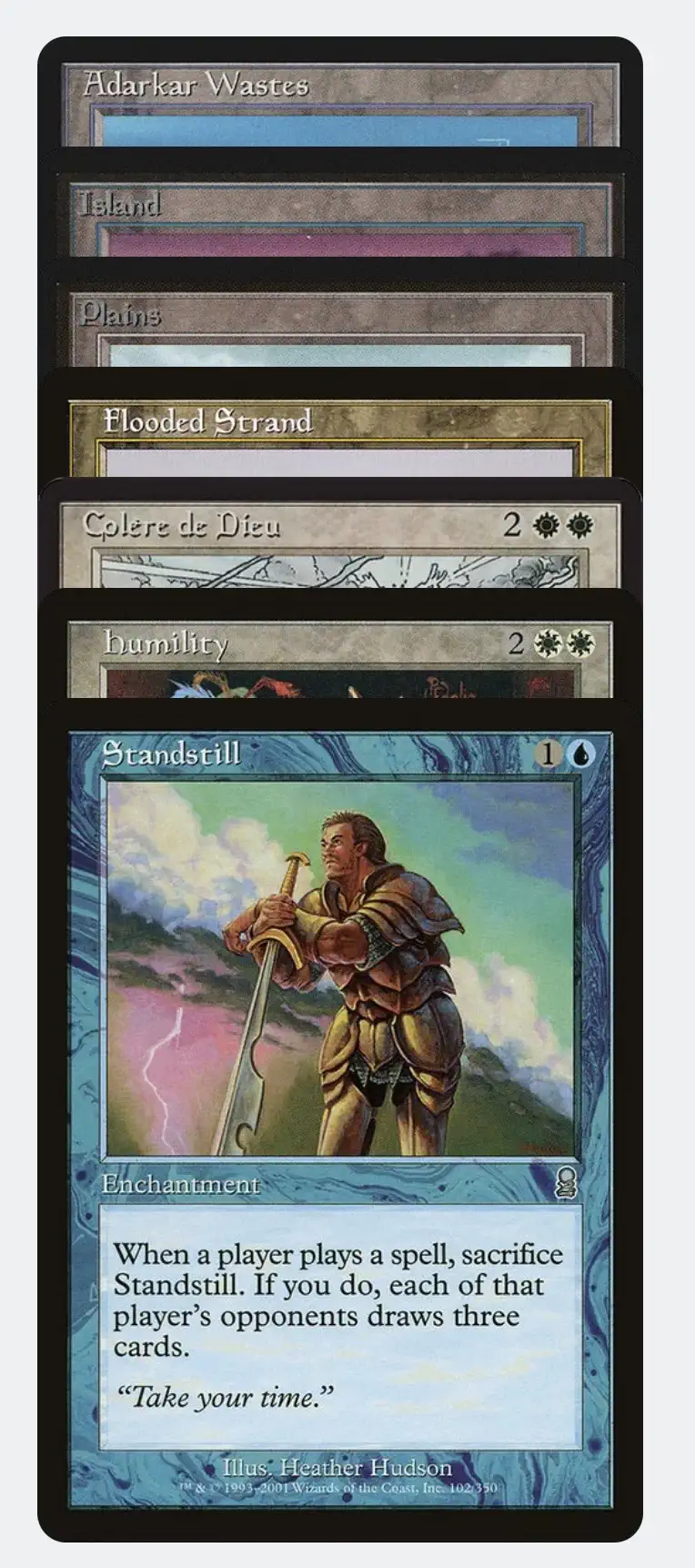
This hand is a trap, especially if you're on the draw: there's no form of early interaction, and its absence, coupled with the absence of manlands, means playing Standstill will be difficult and likely dangerous. There are many matchups where you'll likely lose before casting Wrath or Humility on turn 4 if you let the opponent do whatever they want in the early turns. Mulligan!
HAND 3
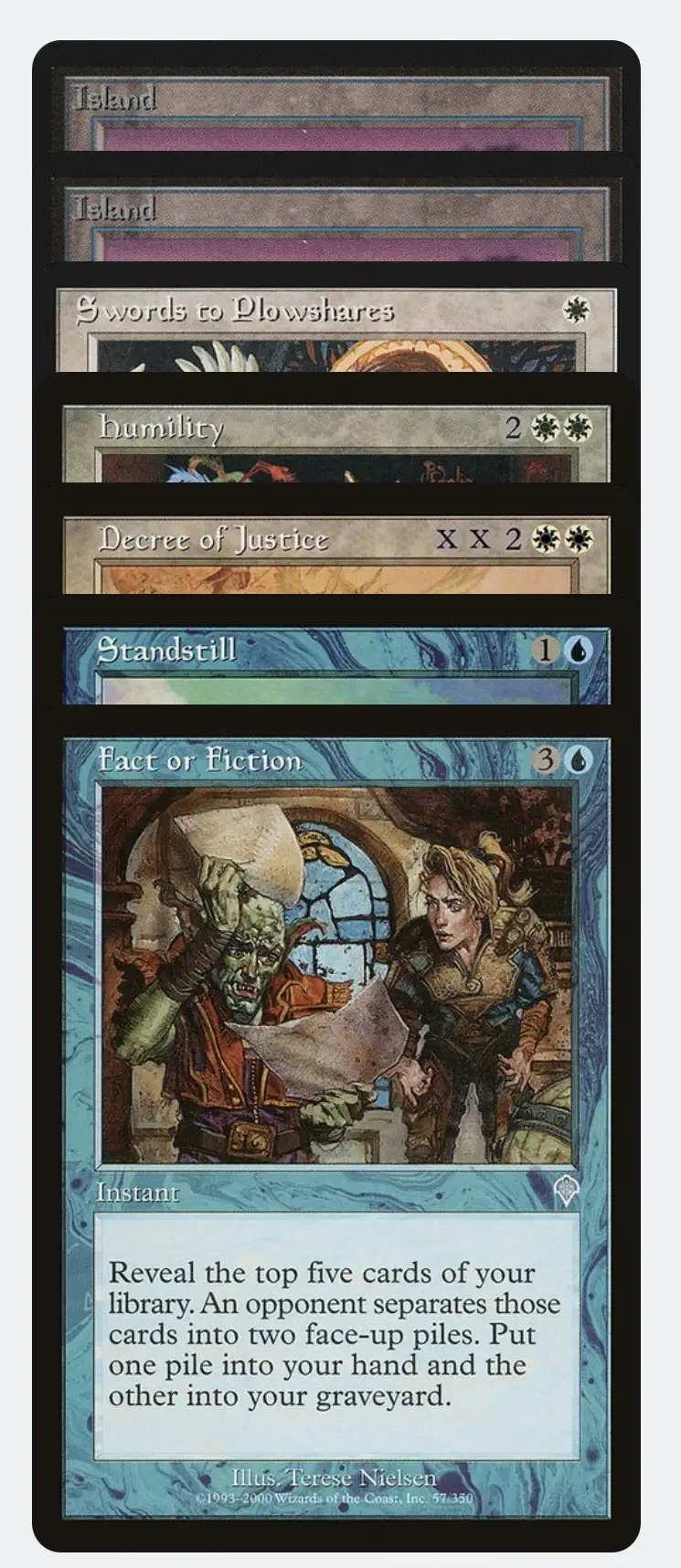
Another mulligan: having two land drops might work, but not having white mana means relying on blindly playing Standstill on turn two or topdecking a white source. Both these scenarios are pretty bad, so don't hesitate to look for a better start.
HAND 4
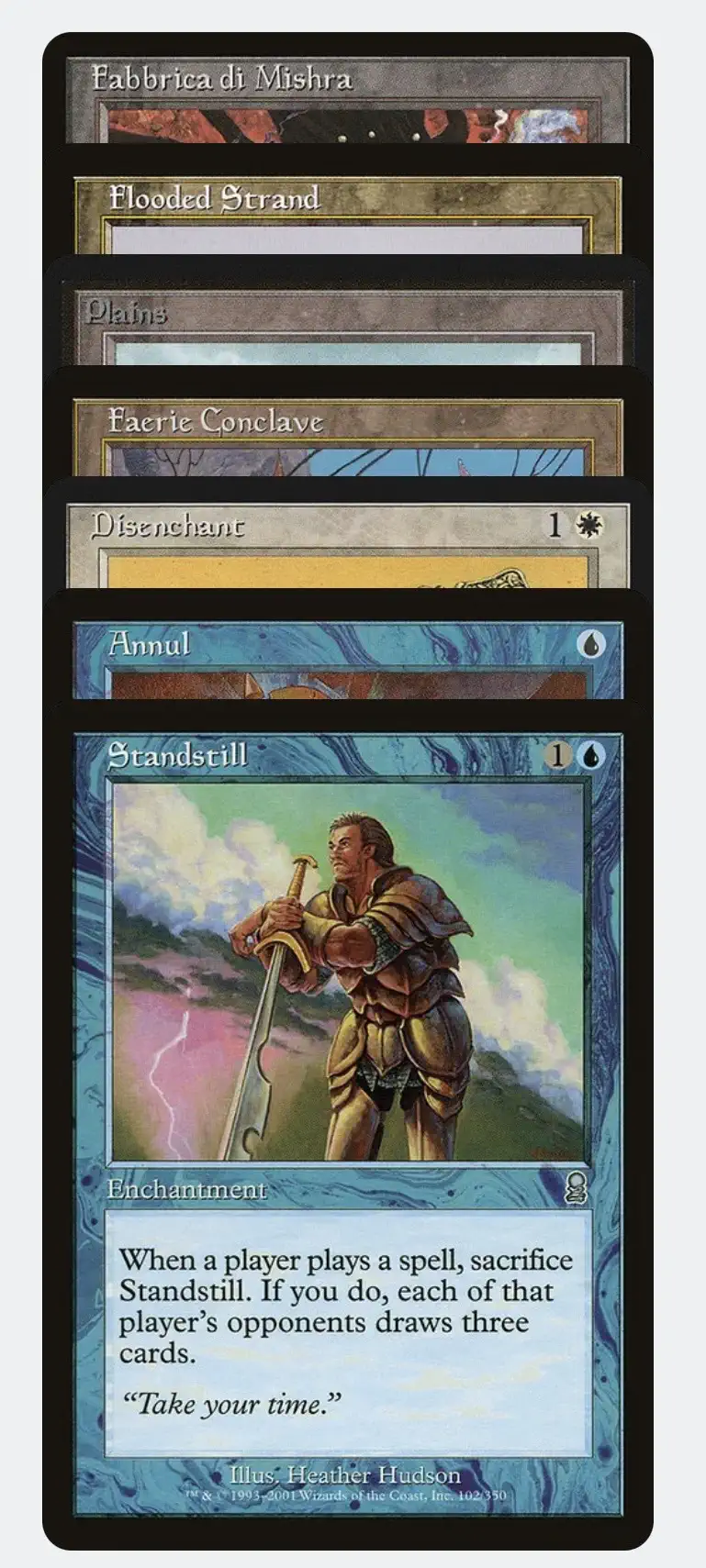
A good hand with some interaction, Standstill, and manlands to make it work correctly. Having a Swords to Plowshares would have been nice, but even without creature removal, it's still a hand I would gladly keep.
HAND 5
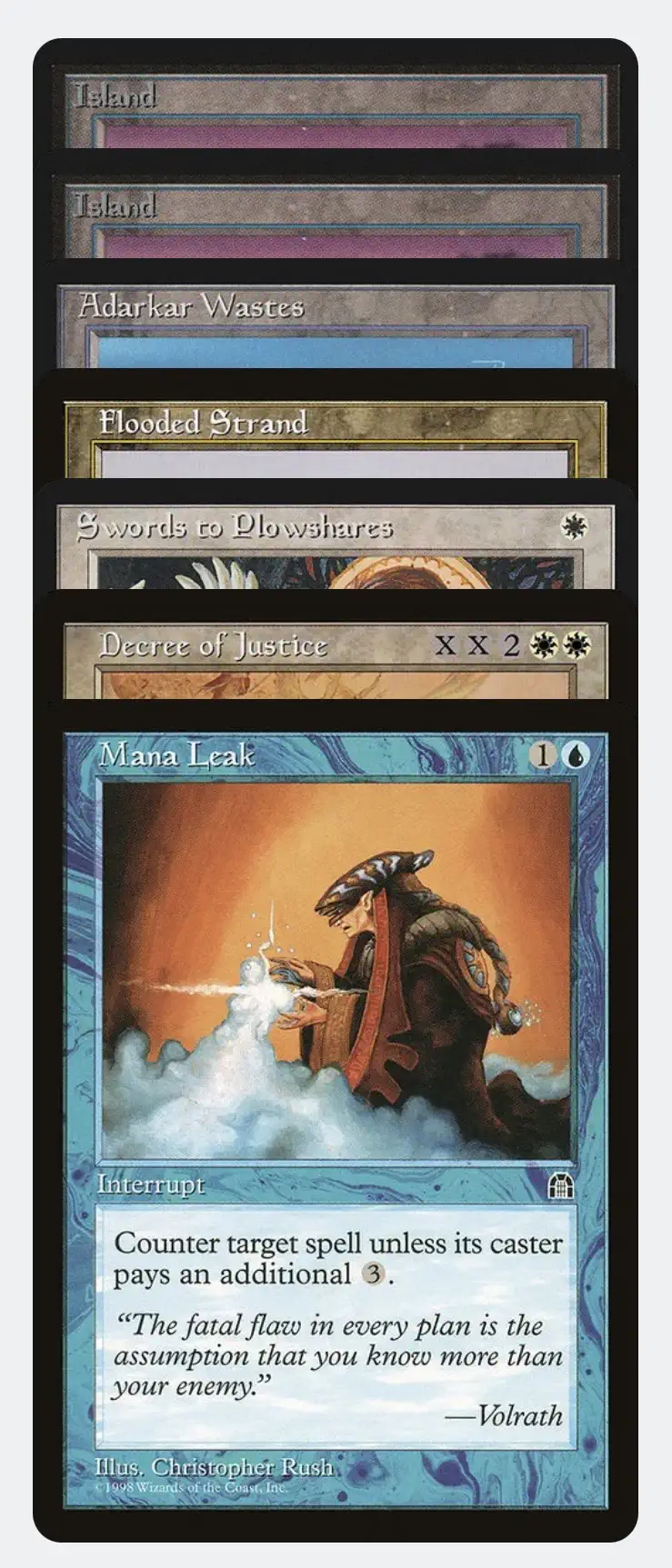
Another good hand: having Decree in the opening hand can be clunky in multiples due to its high mana requirements (at least 5 mana to work correctly). One copy is fine, and the rest of the hand also looks pretty good. Keep!
HAND 6
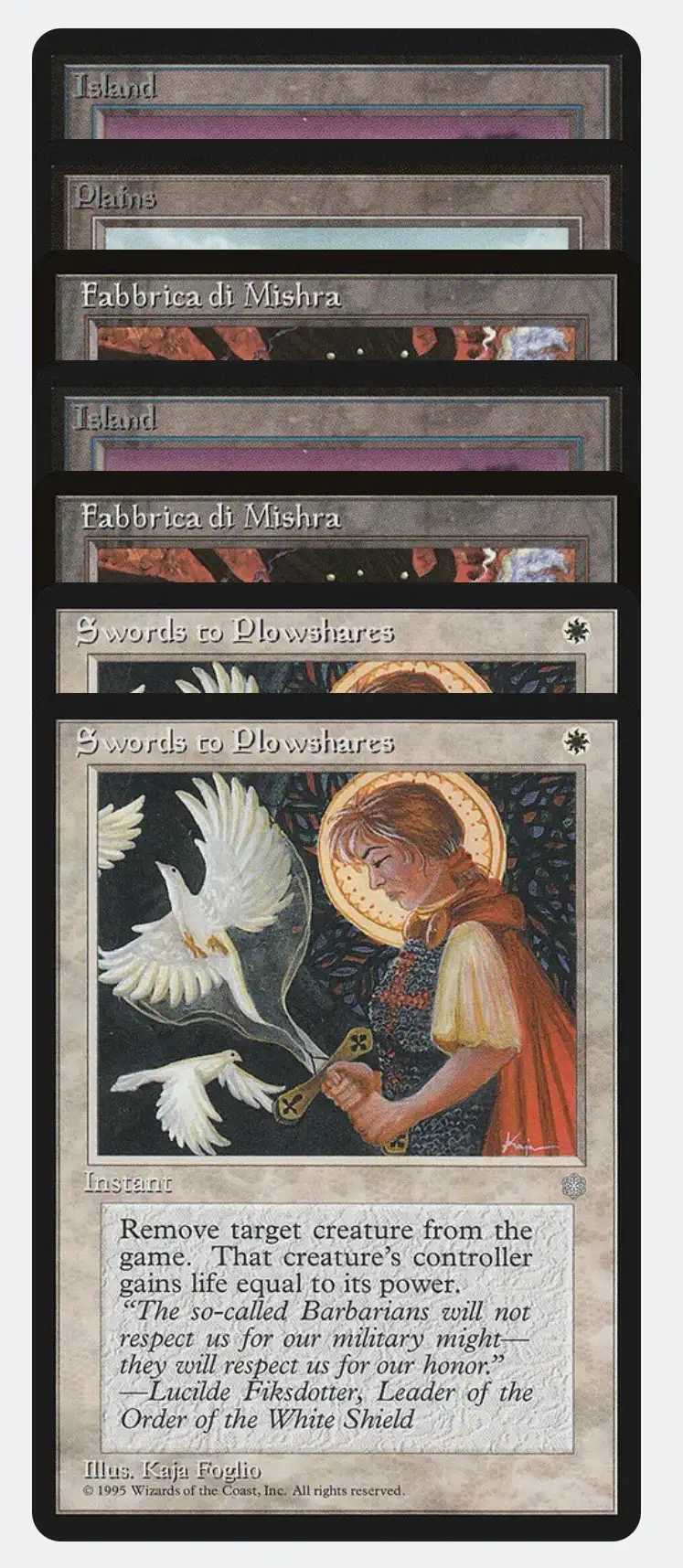
This hand is quite risky: it has removal, land drops, and manlands, but lacks interaction on the stack and depth in the form of card advantage or filtering. It's not a mistake to try it, but in blind, I would consider a mulligan.
HAND 7
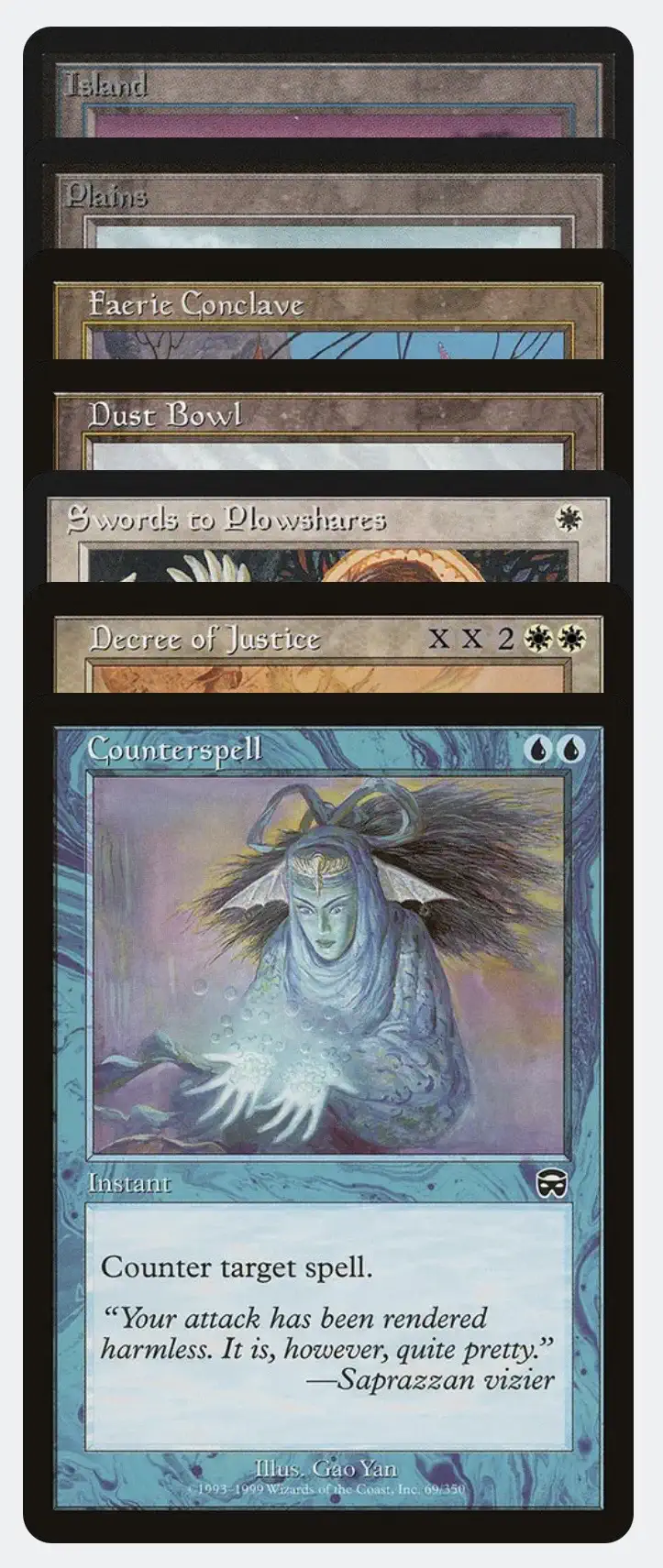
Another hand with everything needed to set up our gameplan, easy keep!
HAND 8
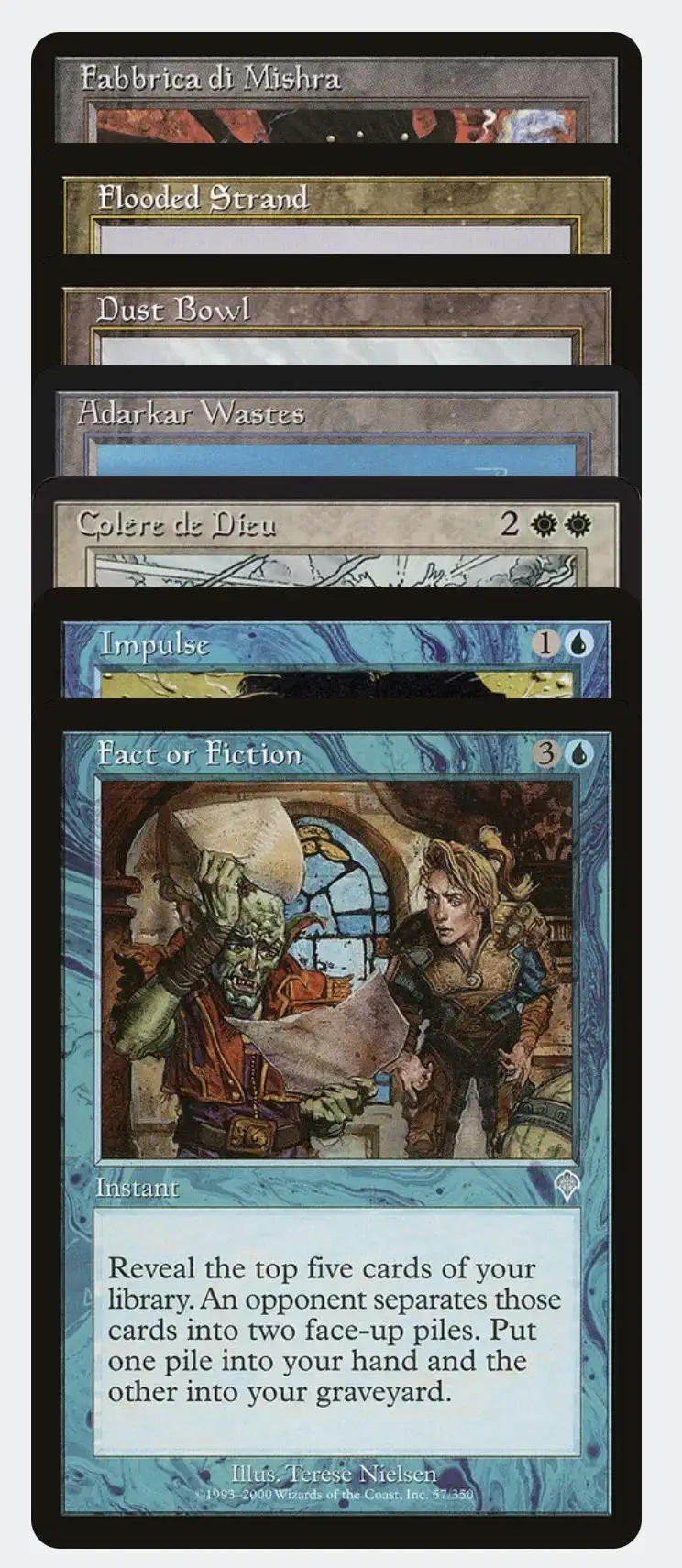
Not the best hand, but the presence of Mishra's Factory makes it better by helping us absorb damage while we prepare to wrath or cast FoF: I would keep this one too.
HAND 9
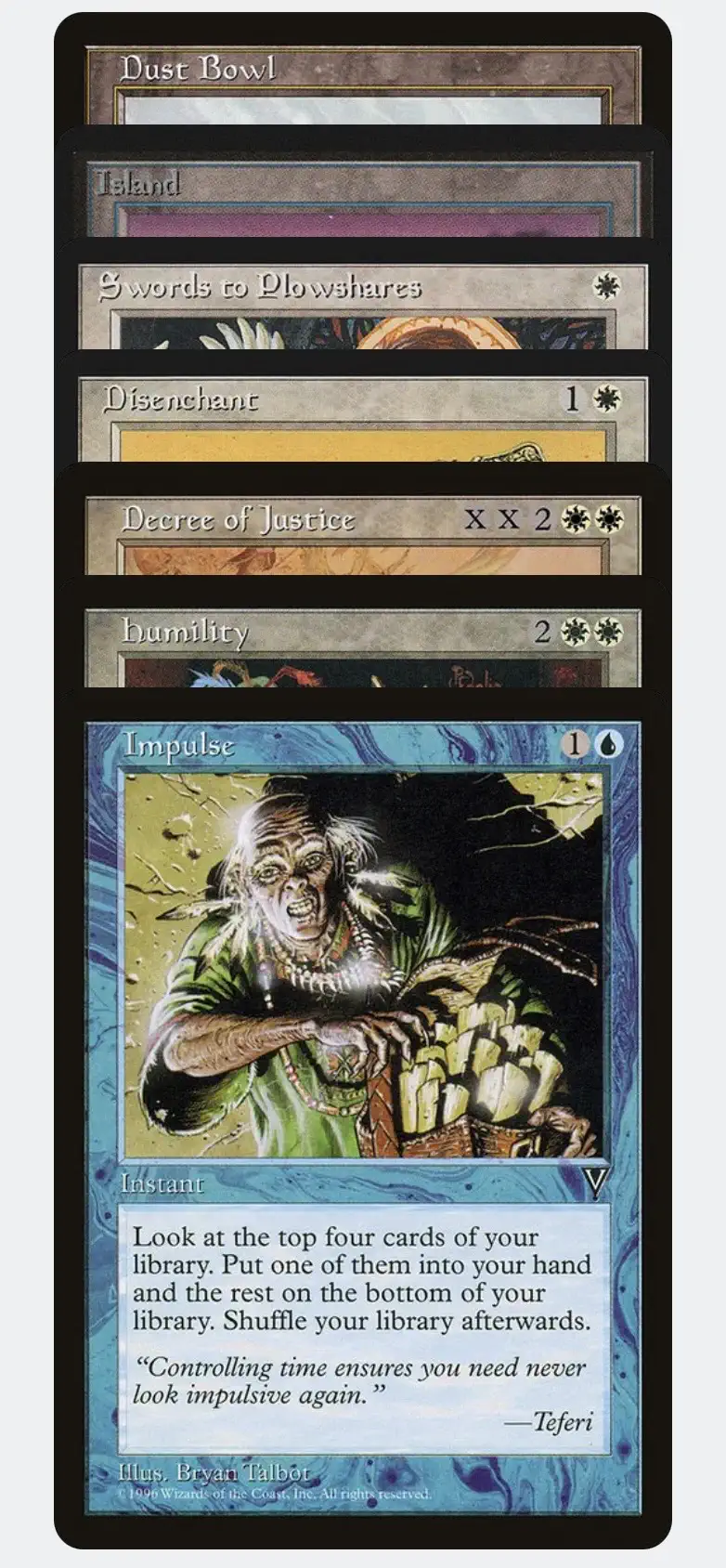
This is a high risk, high reward hand: sometimes you'll be rewarded by a brave keep like this, and sometimes you'll be punished. The presence of Impulse makes it okay to keep and try to find a white land, but it could be dangerous against discard spells, especially on the draw.
HAND 10
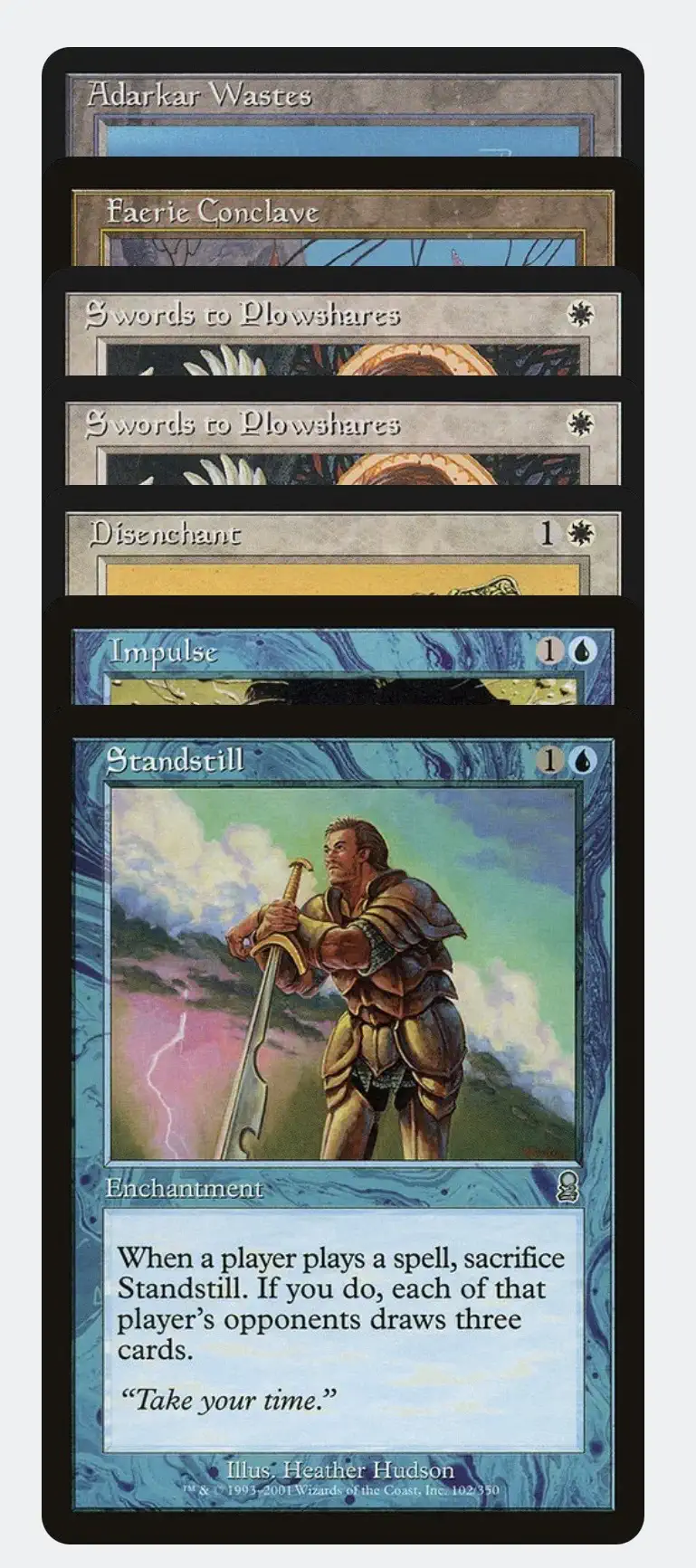
Similar to the previous one, here we rely on two land drops (this time of both colors) with Impulse to get us ahead. This hand is particularly vulnerable to Wasteland, but I would gladly keep it for the density and variety of spells.
HAND 11
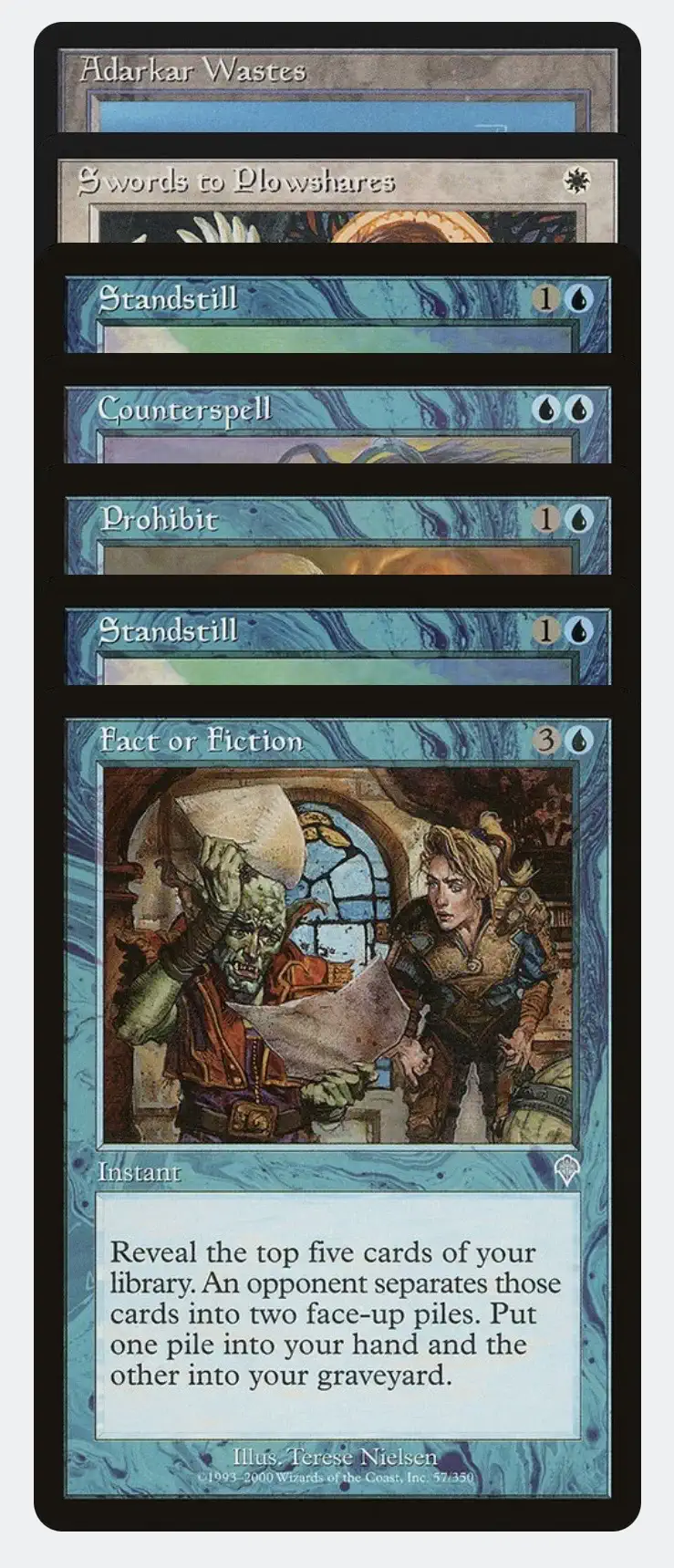
I guess you already know what to do… Mull Mull Mull on sight!
HAND 12
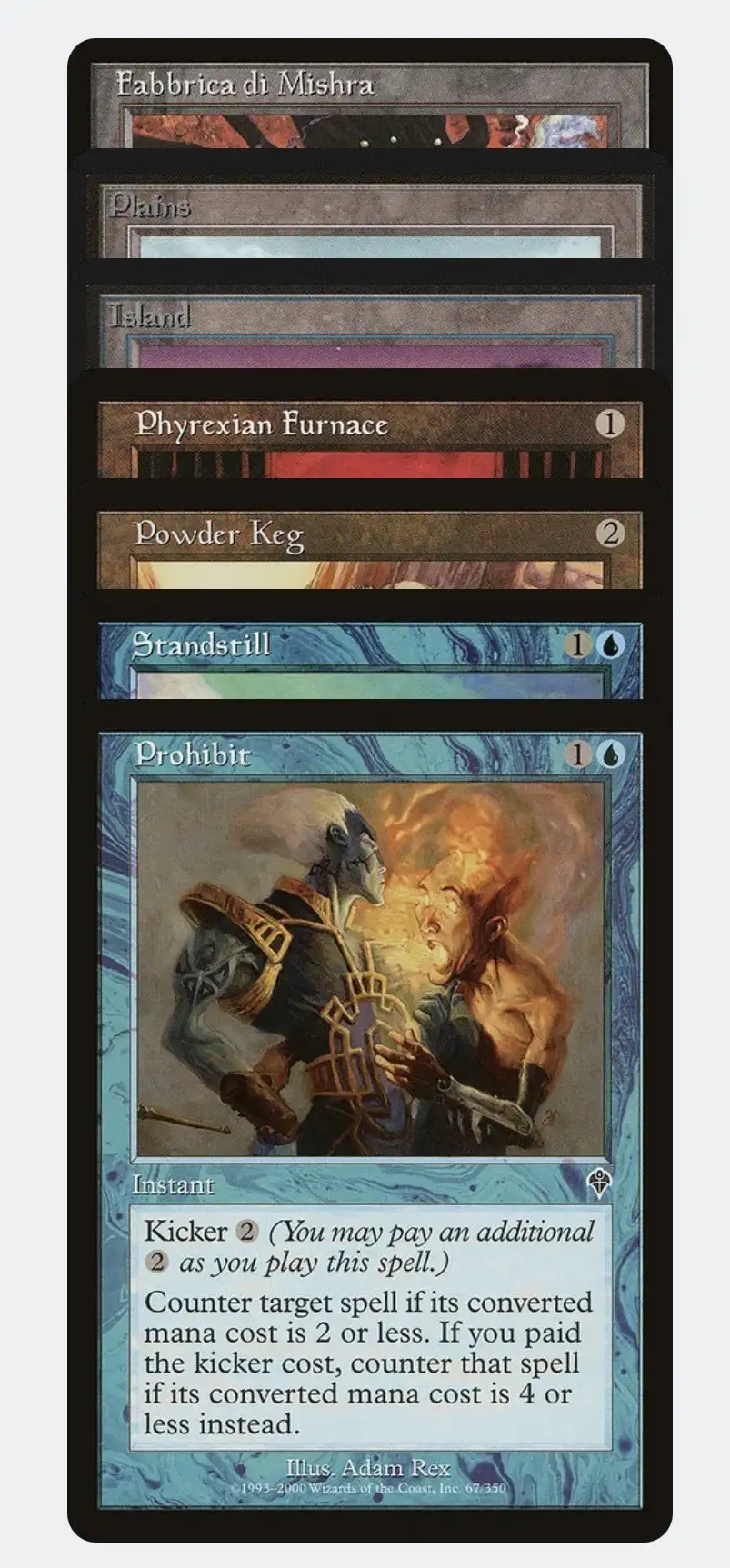
This hand is fine: it's missing Swords to Plowshares, but it has a good manabase, Furnace to cycle if not needed, and a nice mix of spells. Keep!
HAND 13
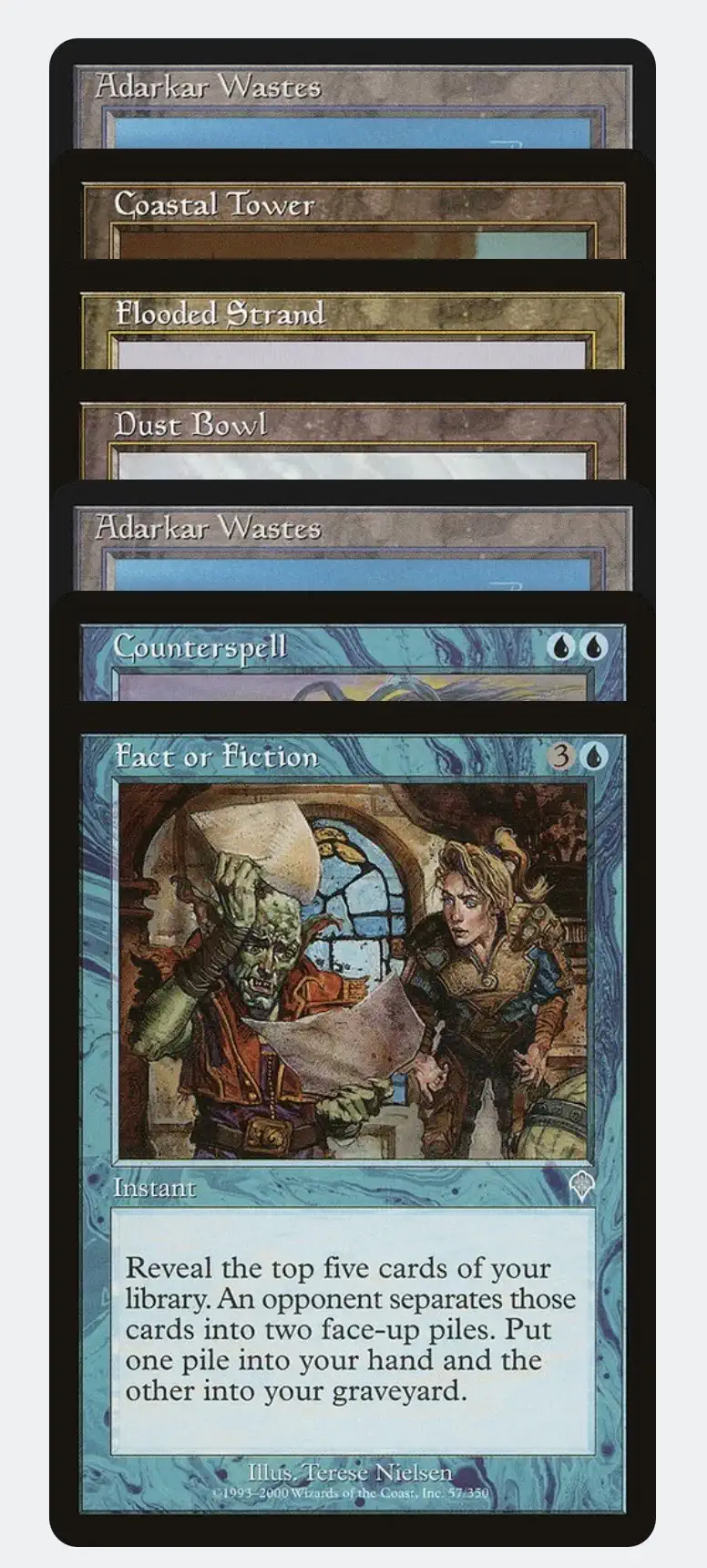
The last one is interesting: this hand is quite slow and relies only on one CS to ensure we cast that FoF. It would be a snap keep in a mirror, but since we don't know what we're about to face, I would keep it on the play and probably mulligan on the draw!
Humility Rulings:
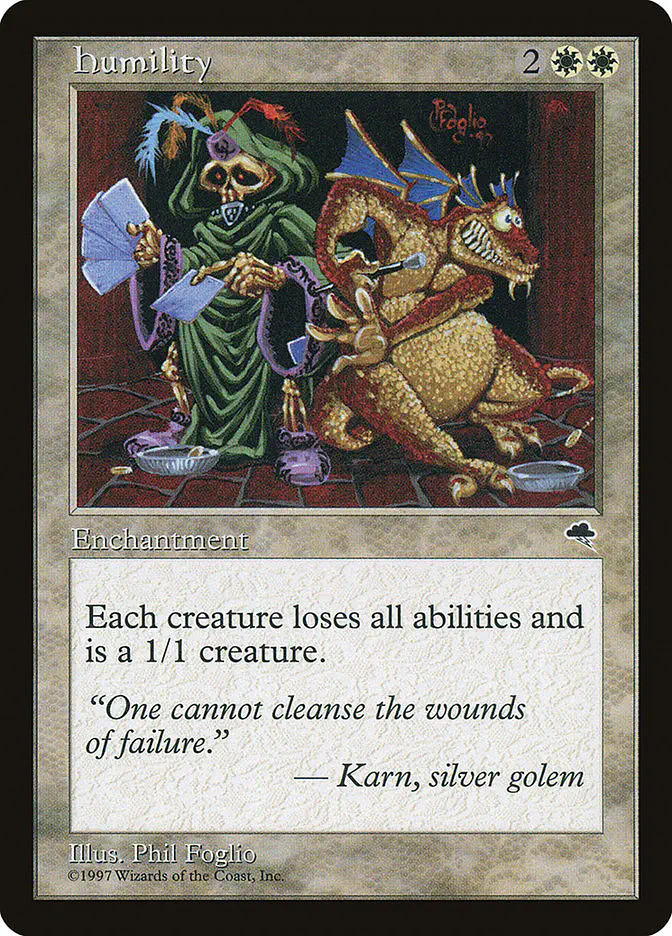
Humility
Enchantment


All creatures lose all abilities and have base power and toughness 1/1.
This card, first introduced as a singleton in our deck, is more complex than it seems and can lead to embarrassing situations and judge calls due to its rulings.
Let's take a closer look, to better understand how Humility works let's start with the basics:
"All creatures lose all abilities and are 1/1 creatures"
An ability is text and a characteristic on an object that is not italicized, so it is neither Flavor Text nor Reminder Text. Creature abilities fall into one of three categories.
- Triggered Abilities: Such as: “when this creature enters the battlefield,” “when this creature dies…,” or “at the beginning of….”
- Activated Abilities: Those that require an activation cost, such as Llanowar Elves' ability: “Tap: Add one green mana.”
- Static Abilities: these create continuous effects that last while the creature is on the battlefield or in the correct zone. Keywords like Flying or Trample and similar also fall into this category. Let's take Elvish Champion as an example: "All Elves get +1/+1 and have forestwalk."
- Effects like Meddling Mage's ability, which reads "As this creature enters…," are linked to a permanent's abilities that would be removed on the battlefield due to Humility, so they will not apply either.
None of the abilities listed above will function as long as Humility is on the battlefield, but to fully understand its operation, we just need to know how the Layer System works.
The Layer System
This system allows for defining the characteristics of permanents in play. In these seven layers, effects are applied as you can see in this image:
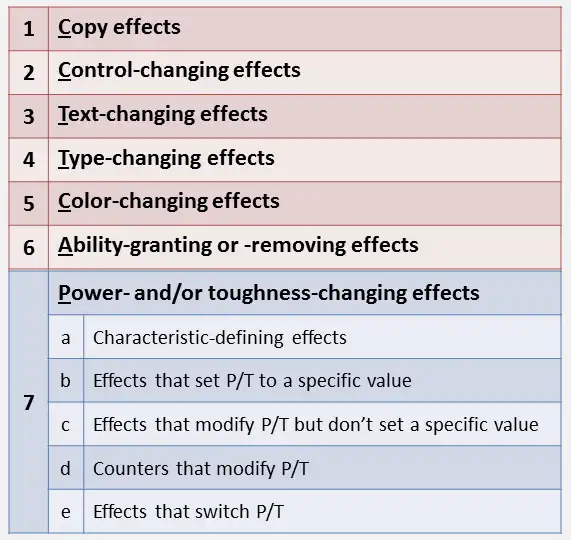
Humility works on LAYER 6 (all creatures lose all abilities) and on LAYER 7b (all creatures are 1/1).
But what happens if an effect gives an ability back to a creature when Humility is already on the battlefield?
Let's say Humility is in play and we have a Faerie Conclave. After paying its activation cost of 1U, our manland's P/T will be set to 2/1 and it will gain Flying, overwriting the information in the respective Layers even if Humility is present.
This happens because of Timestamp Order, which determines how different effects on the same Layer work.
The Timestamp rule states that the last effect set in play on the same Layer is the one that will be applied, overwriting the previous one.
For the same reason, activating Mishra's Factory's ability with Humility in play will make it a 2/2 again by overwriting the timestamp on Layer 7b; then Humility will remove Mishra's Factory's pump and mana abilities on Layer 6 (unlike Conclave's Flying, those are not returned by the activated ability that animates it), resulting in a vanilla 2/2.
Here's another example that won't appear in Premodern but perfectly explains how Layers work: if Humility and Magus of the Moon are both in play, Magus will be a 1/1 due to Humility's work on LAYER 7b, it will have no abilities due to Humility's influence on LAYER 6, but all non-basic lands will still be Mountains because Magus's type-changing effect works on LAYER 4.
Other Common Humility Interactions
- A creature with morph will enter the battlefield as a 1/1 with no abilities under Humility.
- A creature with morph cannot be turned face up if Humility is in play.
- OPALESCENCE / OPALESCENCE then Humility: Opalescence played before Humility will be a 1/1 creature, but its type-changing ability (which works on LAYER 4) will also make Humility a 1/1 creature due to Timestamp order on LAYER 7b.
- Humility then OPALESCENCE / OPALESCENCE: Opalescence played after Humility will make it a 4/4 creature, again thanks to Timestamp order on LAYER 7b.
- If a player sets multiple effects on the same Layer, they choose the Timestamp order in which to apply them. For example, Replenish putting Humility and Opalescence into play at the same time. In this scenario, its controller can choose whether Humility will be a 4/4 or 1/1 creature.
- Effects of non-creature permanents like Glorious Anthem: "Creatures you control get +1/+1" work on LAYER 7c, so they always apply with Humility in play.
- Effects like Wonder's ability that grants Flying will function if Wonder ends up in the graveyard when Humility is already in play, again due to Timestamp order on LAYER 6.
- If you play Meddling Mage naming a card and then Humility enters play, the Mage will obviously be a 1/1 with no abilities. When Humility leaves the battlefield, that Mage's ability will resume functioning on the same card you named before Humility entered play.
These are most of the common scenarios you'll face playing Humility with this deck in Premodern; if I've missed anything, write to me and I'll add it!
Sideboarding and Match-ups
In this section, I will cover some of the popular matchups you will face in Premodern from our deck's perspective. Obviously, this is just what I like to play and I don't claim it to be 100% accurate; these sideboard plans suit my playstyle and might not be for everyone. Let's start with the elephant (can I say SHRIMP?) in the room.
MONO U STIFLENOUGHT
WINNER - Stiflenought
- 4 × Phyrexian Dreadnought
- 4 × Counterspell
- 4 × Foil
- 4 × Gush
- 4 × Opt
- 4 × Stifle
- 4 × Vision Charm
- 2 × Daze
- 2 × Flash of Insight
- 2 × Impulse
- 1 × Chain of Vapor
- 1 × Misdirection
- 1 × Peek
- 1 × Thwart
- 4 × Portent
- 1 × Powder Keg
- 17 × Island
- 3 × Annul
- 3 × Essence Flare
- 2 × Blue Elemental Blast
- 2 × Brain Freeze
- 2 × Hydroblast
- 2 × Tsabo's Web
- 1 × Chain of Vapor
SIDEBOARD PLAN:
-2 Wrath of God / -1 Humility / -1 Swords to Plowshares / -1 Mana Leak / -1 Dust Bowl
+4 Meddling Mage / +1 Exalted Angel / +1 Disenchant
This deck's plan (at least in game 1) is to resolve a Phyrexian Dreadnought and then Stifle its sacrifice ability with Stifle itself or phase it out with Vision Charm, so that the trigger resolves while the Shrimp will phase in later and thus be cheated into play. Their next objective is to finish you off with a couple of combats, protecting their queen with Counterspell and "free spells" like Foil and Thwart.
The Shrimp is usually the only threat, but some lists also play a couple of Mishra's Factory.
The rest of the deck consists of cantrips and card advantage spells like Gush, Accumulated Knowledge, Portent, Flash of Insight, and Opt to hold the deck together and arrange the hand so everything works as intended.
We are full of interaction to manage their main plan in the form of counters, Swords to Plowshares, Disenchant, and Powder Keg.
Be careful: effects like Keg or Seal of Cleansing can be stifled, making them a bit less reliable. The token-creating trigger of Decree also falls under Stifle, making it difficult to accumulate a board of Soldiers.
Standstill works wonderfully here, as the Shrimp is their only threat in most cases.
Furnace helps keep their graveyard in check to ensure their Accumulated Knowledge and Flash of Insight aren't as strong.
Humility in game 1 is difficult to resolve being a four-mana sorcery-speed spell against a deck with cheap (and some free) counters, but it's usually lights out for them as they can't remove it once it resolves. Post-side they can deal with it with Chain of Vapor, so we'll remove it in favor of cheaper and more impactful cards.
Speaking of post-side plans: Shrimp changes a lot against control in game 2/3.
They usually remove two or three Dreadnoughts and switch to Brain Freeze to try and mill us out. They add Dominate and Tsabo's Web to the mix (stopping our manlands), which can be very annoying. This plan gives them a lot more inevitability, but we have good options to respond: Meddling Mage can destroy their entire plan.
The first one usually names Chain of Vapor (their only way to permanently deal with it) and the second one names Brain Freeze. They can steal Mage with Dominate, so watch out for that too. Disenchant is another automatic inclusion: it can deal with any remaining Shrimps or other annoying things like Tsabo's Web, Winter Orb, and Back to Basics. Exalted Angel is good here because they can't consistently deal with it on the battlefield. Remember that the CMC of the morph in play is 0, make sure you don't get it stolen by an annoying Dominate.
SLIGH RED

TOP 8 - Burn
- 4 × Grim Lavamancer
- 4 × Jackal Pup
- 4 × Mogg Fanatic
- 1 × Orcish Librarian
- 4 × Fireblast
- 4 × Incinerate
- 4 × Lightning Bolt
- 2 × Urza's Rage
- 2 × Volcanic Hammer
- 4 × Seal of Fire
- 4 × Cursed Scroll
- 15 × Mountain
- 4 × Rishadan Port
- 4 × Wasteland
- 3 × Ensnaring Bridge
- 2 × Anarchy
- 2 × Overload
- 2 × Phyrexian Furnace
- 2 × Pyroblast
- 1 × Mogg Salvage
- 1 × Pyrostatic Pillar
- 1 × Red Elemental Blast
- 1 × Sulfuric Vortex
SIDEBOARD PLAN:
-2 Wrath of God / -1 Humility / -1 Decree of Justice / -1 Fact or Fiction / -1 Counterspell / -1 Phyrexian Furnace / -1 Dust Bowl
+4 Hydroblast / +2 COP: Red / +2 Exalted Angel
Sligh is a hyper-aggressive red burn deck, full of cheap threats and damage spells aimed at your face.
Game 1 is usually tough because we have no ways to gain life other than plowing our Mishra, which is usually a desperate move. Fireblast is by far their most powerful burn spell: 4 damage and can be cast "for free" by sacrificing two Mountains, so be careful. Post-side our goal is to open up or find COP: Red as soon as possible to buy enough time and get an Exalted Angel into play.
Just be careful about their Anarchy, a four-mana sorcery that can deal with COP and Angel at the same time. Keeping a Furnace is useful for dealing with Lavamancer and Barbarian Ring. We also sideboard in Blasts, a cheap answer to almost everything they play except Cursed Scroll. Keep in mind that they will also add Pyroblast, so try to play around it. We keep Annul and Disenchant to deal with Scroll, Sulphuric Vortex, and Seal of Fire.
RG GOBLINS
WINNER - Goblins
- 4 × Gempalm Incinerator
- 4 × Goblin Lackey
- 4 × Goblin Matron
- 4 × Goblin Piledriver
- 4 × Goblin Ringleader
- 4 × Goblin Warchief
- 4 × Mogg Fanatic
- 3 × Siege-Gang Commander
- 1 × Goblin Sharpshooter
- 1 × Goblin Tinkerer
- 3 × Naturalize
- 8 × Mountain
- 4 × Karplusan Forest
- 4 × Rishadan Port
- 4 × Wooded Foothills
- 3 × Wasteland
- 1 × Forest
- 4 × Pyrokinesis
- 3 × Tormod's Crypt
- 3 × Tranquil Domain
- 2 × Pyroblast
- 2 × Red Elemental Blast
- 1 × Goblin Tinkerer
SIDEBOARD PLAN:
-2 Phyrexian Furnace / -1 Annul / -2 Disenchant / -1 Fact or Fiction / -1 Decree of Justice / -1 Mana Leak / -1 Counterspell / -1 Standstill
+2 Exalted Angel / +2 COP: Red / +4 Hydroblast / +2 Teferi's Response
Another aggressive red deck, full of creatures from the eponymous tribe and often splashed green for Naturalize maindeck and some sideboard cards like Caller of the Claw and Tranquil Domain.
Game 1 can be tough because we have to blindly keep a hand that can deal with their turn one Goblin Lackey. Lackey is PUBLIC ENEMY NO.1: if it connects, they will put a Goblin onto the battlefield regardless of cost, making the game very difficult to navigate from turn two.
To avoid this, our only solutions are Swords to Plowshares or Mishra's Factory in the opening hand (Mishra only works on the play, of course).
Wrath of God, Swords to Plowshares, and Humility are great here, and making Standstill work isn't that difficult.
Their Wasteland and Rishadan Port can be very annoying, taxing our mana to keep us behind in the game.
Speaking of their threats besides Lackey: Mogg Fanatic, Goblin Matron, and Goblin Piledriver are the least dangerous; Goblin Warchief must stay off the board, and Goblin Ringleader must not resolve at all because it allows them to fill their hand with fresh troops. Siege-Gang Commander is one of their strongest threats, but its prohibitive CMC of five mana makes it a real threat only if they can cheat it into play with Lackey in the early turns.
Post-side we have Hydroblast to help mitigate their Lackey starts and counter/destroy their low-cost creatures.
COP: Red is a good card here; it doesn't win the game on its own, but it helps us buy the necessary time to stabilize and Wrath or get an Exalted Angel into play.
Keep in mind that they might keep Naturalize for COP / Mishra / Humility, and they might also add Anarchy to the mix.
Teferi's Response helps us deal with Wasteland and Port.
As I said, some Goblins lists also play Caller of the Claw in the sideboard (not everyone likes it because it's not a Goblin and weakens Ringleader), so be careful and try to notice if they play holding 3 mana available with green open, especially in the face of a possible Wrath.
The truly degenerate Goblins players also play a singleton Goblin Pyromancer, which can steal games unexpectedly for four mana, but most lists don't play it.
GW ENCHANTRESS

WINNER - Enchantress
- 4 × Argothian Enchantress
- 3 × Swords to Plowshares
- 1 × Replenish
- 4 × Enchantress's Presence
- 4 × Exploration
- 4 × Sterling Grove
- 4 × Wild Growth
- 3 × Mirri's Guile
- 2 × Aura of Silence
- 2 × Opalescence
- 2 × Parallax Wave
- 2 × Solitary Confinement
- 1 × Elephant Grass
- 1 × Seal of Cleansing
- 1 × Sylvan Library
- 5 × Forest
- 4 × Brushland
- 4 × Serra's Sanctum
- 4 × Windswept Heath
- 3 × Plains
- 2 × Wooded Foothills
- 2 × Aura of Silence
- 2 × Defense Grid
- 2 × Tormod's Crypt
- 2 × Tsabo's Web
- 1 × Elephant Grass
- 1 × Gaea's Blessing
- 1 × Krosan Reclamation
- 1 × Replenish
- 1 × Sacred Ground
- 1 × Swords to Plowshares
- 1 × Worship
SIDEBOARD PLAN:
-1 Wrath of God / -2 Swords to Plowshares / -1 Mana Leak / -1 Powder Keg
+4 Meddling Mage / +1 Disenchant
This matchup is one of the hardest to navigate. Enchantress is a combo deck disguised as midrange, with an overwhelming card advantage engine in Argothian Enchantress and Enchantress's Presence, fueled by many enchantment spells. Once it starts to snowball, it's really hard to stop, and Argothian with Shroud plus Sterling Grove makes it very difficult to interact with this deck off the stack. Exploration and Serra's Sanctum lead to explosive starts, while Mirri's Guile and Sylvan Library add card selection to the mix.
Their goal is to accumulate a lethal board of enchantments to animate with Opalescence and attack. Parallax Wave does double duty removing opposing creatures and protecting their board once paired with Opalescence in play. Replenish acts as a secondary finisher, bringing back every enchantment from the graveyard in grindy games. Solitary Confinement and Elephant Grass can help them buy enough time to set up their board. Sounds like a nightmare for us, right?
Our goal in game 1 is to manage their draw engine, which is a tough but feasible task as long as their start isn't too explosive, and preferably on the draw.
Try to counter or remove Presence, Argothian, and Library as soon as possible. Mirri's Guile is a bit less dangerous, but try to keep it off the board if you can. Manland beatdown and small Soldier boards should be the key to taking them down as quickly as possible. Humility falls to their Seal of Cleansing and Opalescence + Swords to Plowshares, but it can still help us slow them down.
Wrath can handle multiple Argothians. Furnace helps us manage their graveyard to prevent Replenish. I wouldn't recommend trying to deck them: a good Enchantress player will never get to that point, and letting them draw whatever they want will only ensure they find Opalescence and Replenish faster and in greater quantities than your answers.
Post-board we keep a couple of Swords to Plowshares to deal with their Xantid Swarm (a real pain if it stays in play). Some prefer to play Defense Grid, but you'll never know what they have, so keeping some Swords to Plowshares is a necessary evil. Meddling Mage is once again here to help us turn the game around: it's our best card in the matchup! I usually like to name Parallax Wave / Opalescence / Replenish.
They might also keep some Swords to Plowshares; if you fear they have one ready, you can start chaining Mages by naming that. If your meta is heavy on this matchup, some cards to consider for the sideboard are: Cleansing Meditation, Aura of Silence, and Tormod's Crypt. Serenity is a bit less reliable due to Seal of Cleansing. Another sideboard approach could be Presence of the Master alongside Mage on Replenish and Swords to Plowshares. While it might be a bit tricky to set up, it's a lock they simply can't get out of.
REPLENISH
WINNER - Replenish
- 4 × Swords to Plowshares
- 3 × Frantic Search
- 3 × Intuition
- 2 × Mana Leak
- 1 × Abeyance
- 4 × Replenish
- 4 × Attunement
- 4 × Opalescence
- 4 × Parallax Wave
- 3 × Decree of Silence
- 2 × Seal of Cleansing
- 5 × Island
- 5 × Plains
- 4 × Adarkar Wastes
- 4 × Ancient Tomb
- 4 × Flooded Strand
- 4 × Skycloud Expanse
- 4 × Meddling Mage
- 2 × Abeyance
- 2 × Exalted Angel
- 2 × Hydroblast
- 2 × Seal of Cleansing
- 2 × Tsabo's Web
SIDEBOARD PLAN:
-2 Wrath of God / -2 Swords to Plowshares / -1 Humility / -1 Powder Keg
+4 Meddling Mage / +1 Disenchant / +1 Exalted Angel
This deck took a hard hit with the ban of Parallax Tide, but its core remains strong with a game plan revolving around putting enchantments into the graveyard to bring them back with the eponymous card. Similar to Enchantress, it abuses the power play of Wave + Opalescence to close out the game. The latest addition to the list is Decree of Silence to complete the Replenish blowout.
This card is a bit clunky when it doesn't return from the graveyard, but it can also be cast from hand in a long control game, thanks to Sol Lands like Ancient Tomb. This deck plays some interaction, usually in the form of Swords to Plowshares and Mana Leak. In game 1, we should focus on preventing their enablers from resolving (especially Attunement and Frantic Search) and then keep an eye on the big payoff Replenish if things don't go as planned.
Furnace is key in keeping their graveyard empty, while Swords to Plowshares, Keg, Humility, and Wrath are almost useless. Our goal is to put them on a clock as soon as possible with manlands and small Soldier boards, just like against Enchantress. In game 2/3, they will likely bring in Meddling Mage and Exalted Angel, adding a midrange attack angle.
Cards like Orim's Chant and Abeyance can be really annoying and protect their combo win (keep in mind that Abeyance also prevents you from activating cards like Furnace or Tormod's Crypt). Fortunately, Meddling Mage is also on our side of the table, ready to lock down the game.
What to name here depends on their opening and your hand composition: if you can deploy a couple of Mages quickly, start with Wave or Swords to Plowshares and then move on to Replenish or Opalescence, depending on your board setup.
Keep in mind that naming Swords to Plowshares might put you in a situation where a resolved Angel on their side can mean game over, so be careful when choosing. Some lists have access to Defense Grid and most also play Tsabo's Web, so Disenchant here is obviously premium. Try to save it for these cards.
UW LANDSTILL (MIRROR)
SIDEBOARD PLAN:
-2 Wrath of God / -1 Humility / -3 Standstill / -2 Phyrexian Furnace
+2 Teferi's Response / +2 Exalted Angel / +4 Meddling Mage
Land go, land go, land go… And then?
Jokes aside, first of all, the most important thing here is to consistently make land drops every turn and never fall too far behind.
To better understand how to play the mirror, we need to identify its key cards:
The biggest curveballs are Dust Bowl, Decree, and manlands.
Dust Bowl is your most valuable land here, so try to protect it from the opponent's and keep it in hand until they tap theirs to take it if they already have it in play.
Decree can lead to very swingy game scenarios, so try to get the most value out of it; don't waste it by cycling it for X=0 unless you're looking for a land drop you don't have ready.
Manlands are your best threat and the quickest way to put a clock on the opponent.
Swords to Plowshares is good for hitting opposing manlands, Wrath of God and Humility are almost useless, while Powder Keg is fantastic: you should always keep it at zero charge counters to control enemy Soldier tokens and manlands. Disenchant can hit opposing Mishra and Keg, but it will often be a dead card in hand.
The only card advantage spell you can truly rely on here is Fact or Fiction, so try to cast it for six mana with a counter open to protect it. Standstill is REALLY DANGEROUS here because equity is hard to break in your favor and it always shifts quickly between players. You could easily think you're fine playing Standstill with a Decree in hand only to succumb to Dust Bowl and manlands, or vice versa.
I'm not saying you should never play Standstill when playing the mirror: you just need to be extra careful doing so and be prepared if the plan backfires. Post-board Angels increase threat density; Meddling Mage does the same, although it's not easy to decide what to name since every card is shared by both players.
Evaluate your calls based on the board and game state. Teferi's Response helps deal with enemy Dust Bowls and also protects your manlands from spot removal if necessary. If your opponent is playing Accumulated Knowledge, keep Furnace in and cut a couple of Mages.
UW CONTROL

WINNER - Uw Control
- 2 × Exalted Angel
- 1 × Eternal Dragon
- 4 × Counterspell
- 4 × Impulse
- 4 × Swords to Plowshares
- 3 × Fact or Fiction
- 3 × Mana Leak
- 1 × Absorb
- 1 × Disenchant
- 1 × Dismantling Blow
- 1 × Miscalculation
- 3 × Decree of Justice
- 2 × Akroma's Vengeance
- 2 × Wrath of God
- 2 × Tsabo's Web
- 1 × Phyrexian Furnace
- 8 × Island
- 6 × Plains
- 4 × Adarkar Wastes
- 4 × Flooded Strand
- 2 × Coastal Tower
- 2 × Temple of the False God
- 3 × Blue Elemental Blast
- 2 × Annul
- 2 × Circle of Protection: Red
- 2 × Disenchant
- 2 × Tormod's Crypt
- 1 × Aura of Silence
- 1 × Hibernation
- 1 × Stifle
- 1 × Wrath of God
SIDEBOARD PLAN:
-2 Wrath of God / -1 Humility / -2 Standstill / -2 Swords to Plowshares
+2 Teferi's Response / +2 Exalted Angel / +3 Meddling Mage
It's not exactly a mirror, as this version doesn't play manlands or Dust Bowl to gain advantage by playing Tsabo's Web. That said, it plays more or less the same way. It also plays Angel maindeck and Eternal Dragon. Furnace hits AK and Dragon in the graveyard; Standstill is more reliable here because they don't have manlands / Bowl and rely only on Decree to break equity in their favor.
TERRAGEDDON

FINALIST - Terrageddon
- 4 × Terravore
- 3 × Nimble Mongoose
- 3 × Weathered Wayfarer
- 1 × Anurid Brushhopper
- 4 × Swords to Plowshares
- 2 × Fire // Ice
- 1 × Disenchant
- 1 × Naturalize
- 4 × Armageddon
- 3 × Call of the Herd
- 4 × Sylvan Library
- 4 × Mox Diamond
- 4 × Wasteland
- 4 × Windswept Heath
- 3 × Gemstone Mine
- 2 × Forest
- 2 × Plains
- 2 × Rishadan Port
- 2 × Rith's Grove
- 2 × Treetop Village
- 1 × Battlefield Forge
- 1 × City of Traitors
- 1 × Karplusan Forest
- 1 × Secluded Steppe
- 1 × Tranquil Thicket
- 3 × Pyroclasm
- 2 × Cursed Totem
- 2 × Pyroblast
- 2 × Ray of Revelation
- 2 × Zuran Orb
- 1 × Aura of Silence
- 1 × Red Elemental Blast
- 1 × Sphere of Law
- 1 × Tormod's Crypt
SIDEBOARD PLAN:
-3 Standstill / -1 Mana Leak
+2 Exalted Angel / +2 Teferi's Response
Terrageddon is a midrange deck that aims to deploy Terravore and grow it with fetches, Wasteland, and finally Armageddon to seal the game. Its creatures can be difficult to deal with, like Nimble Mongoose and the annoying Anurid Brushhopper which should always be countered if you have the chance.
Weathered Wayfarer is very annoying and should be killed on sight because it gives them Wasteland and Port to tax your mana while they advance their game plan. Sylvan Library is another card to deal with as quickly as possible to avoid being overwhelmed by card advantage. Also, Armageddon is a complete disaster for a control deck in the mid/late game, so make sure it doesn't resolve. All of this makes Terrageddon a truly challenging and grindy matchup that requires experience and precise play in resource management.
Wrath and Humility are good tools for keeping the board in check, and Powder Keg at 0 is fantastic for clearing it of Mox, manlands, and Elephant tokens (Call of the Herd). You can try keeping Keg in hand and baiting them to animate their lands to block a couple of Soldiers, to get the maximum blowout.
Prohibit shines throughout the game (unlike Mana Leak) and can hit Armageddon in the late game. Standstill is pretty bad here: the presence of manlands, land denial, and many large threats makes it really difficult to break equity in our favor. Furnace is one of the best cards in this matchup, clearing the graveyard of lands and eating Call of the Herd.
Post-board Angel is our key to victory because it can only be hit by their Swords to Plowshares and blocks almost everything except a large Terravore. Teferi's Response can lead to huge blowouts: if you can hit a Port in the early turns with it, you'll get a 4-for-1 and it will be really hard for them to recover. Keep in mind that some lists also splash red for Pyroblast.
OATH PONZA

TOP 4 - Oath Ponza
- 4 × Terravore
- 4 × Swords to Plowshares
- 2 × Naturalize
- 4 × Thermokarst
- 4 × Winter's Grasp
- 4 × Oath of Druids
- 2 × Sylvan Library
- 4 × Mox Diamond
- 4 × Sphere of Resistance
- 4 × Gemstone Mine
- 4 × Mishra's Factory
- 4 × Rishadan Port
- 4 × Treetop Village
- 4 × Wasteland
- 3 × Windswept Heath
- 2 × City of Brass
- 2 × Forest
- 1 × Plains
- 4 × Meddling Mage
- 4 × Pyroclasm
- 3 × Call of the Herd
- 2 × Aura of Silence
- 2 × Naturalize
SIDEBOARD PLAN:
-1 Wrath of God / -1 Humility / -3 Standstill
+2 Exalted Angel / +2 Teferi's Response / +1 Disenchant
Oath Ponza is a mana denial deck with spells like Sphere of Resistance, spot land removals, Wasteland, and Rishadan Port, which can be very annoying for us. Oath of Druids allows them to cheat large Terravores into play, but this part of the plan requires the opponent to play creatures, so it doesn't work well against us.
They also play many manlands in the form of Mishra's Factory and Treetop Village. Their only card advantage engine is the well-known Sylvan Library. Although they share many cards, don't be fooled… This is a different deck from Terrageddon.
Oath Ponza is a control deck without blue and you should treat it as such. Their fast starts with land, Mox, and then Library or Sphere into land destruction spells can be devastating for us. Standstill doesn't work much here due to the strong presence of Wasteland / Port and manlands. Furnace is still great while Wrath and Humility aren't as strong. Powder Keg at 0 works wonderfully.
Post-board Teferi's Response and Exalted Angel are our best friends here. They usually don't have many sideboard cards against us: you can expect some Call of the Herd, Pyroblast, and perhaps Hidden Gibbons.
DEVOURER COMBO (AKA TINKER Fling)
SIDEBOARD PLAN:
-2 Wrath of God / -2 Swords to Plowshares / -1 Decree of Justice / -2 Phyrexian Furnace / -1 Mana Leak
+4 Meddling Mage / +3 Hydroblast / +1 Disenchant
This is a combo deck that revolves around Phyrexian Devourer and Fling. Once they get Devourer into play by cheating it with Tinker or casting it thanks to Sol Lands (Ancient Tomb, City of Traitors, and Crystal Vein), they proceed to activate it even with its death trigger on the stack to make it large enough to Fling at your face and kill you in one shot.
The other combo line requires Devourer and Altar of Dementia in play to mill you in one shot. The rest of the deck is mana acceleration in the form of rocks like Lotus Petal or Thran Dynamo, Stax elements like Tangle Wire, Tsabo's Web, or Defense Grid, and some filtering with Impulse and Chromatic Sphere.
Their Tomb + Grid starts are very annoying and difficult to deal with. Disenchant and Keg are good here, counters are your best friends, and Humility is lights out for them in game 1: you can steal the game by simply resolving it, as they usually don't have an out in the maindeck.
Their manabase is very greedy, Dust Bowl is useful for disrupting it. Post-board they don't have a plan B, but they try to protect the combo with Xantid Swarm (that's why we keep some Swords to Plowshares in) and add spells like Rushing River to bounce problematic permanents like Humility or Meddling Mage.
Speaking of Mage, they might also have Pyroblast/REB or Pyroclasm, so be careful. The first Mage should usually name Tinker. As in most combo matchups, your tools line up well against them, so it all comes down to understanding what they're trying to do, so they don't catch you off guard.
HERMIT FEB

TOP 4 - Full English Breakfast
- 4 × Birds of Paradise
- 4 × Hermit Druid
- 3 × Volrath's Shapeshifter
- 3 × Wall of Roots
- 2 × Elvish Spirit Guide
- 1 × Akroma, Angel of Wrath
- 1 × Battlefield Scrounger
- 1 × Karmic Guide
- 1 × Palinchron
- 1 × Phyrexian Devourer
- 1 × Psychatog
- 1 × Squee, Goblin Nabob
- 1 × Triskelion
- 1 × Krosan Reclamation
- 4 × Cabal Therapy
- 4 × Unearth
- 4 × Survival of the Fittest
- 1 × Animate Dead
- 4 × City of Brass
- 4 × Gemstone Mine
- 4 × Llanowar Wastes
- 4 × Yavimaya Coast
- 3 × Reflecting Pool
- 1 × Treva's Ruins
- 1 × Underground River
- 1 × Undiscovered Paradise
- 2 × Duress
- 2 × Gloom
- 2 × Naturalize
- 2 × Pyroclasm
- 1 × Ghitu Slinger
- 1 × Monk Realist
- 1 × Ray of Revelation
- 1 × Swords to Plowshares
- 1 × Uktabi Orangutan
SIDEBOARD PLAN:
-2 Wrath of God / -2 Decree of Justice / -1 Powder Keg
+4 Meddling Mage / +1 Disenchant
Full English Breakfast is one of the strongest Combo decks in Premodern, but it's not as represented because it's difficult to play. It has two main combo lines. The first revolves mainly around Hermit Druid, the second is powered by Survival of the Fittest and revolves around Volrath's Shapeshifter.
To complicate matters, they play discard spells and sometimes post-board Meddling Mage or Xantid Swarm to protect the combo. Humility obviously shines here, while our Mages ensure we can lock them out of the game.
Try to understand which combo line they might pursue based on their initial setup: if they are getting Survival into play, for example, name Volrath's Shapeshifter with Mage. Remember that they can retrieve their combo creatures when they are countered thanks to Unearth. Even though their combo relies heavily on the graveyard, Furnace doesn't work too well here due to the nature of their combos.
It's not easy to explain how their lines work correctly, so here's a link to an FEB video Primer if you want to perfectly understand how this intricate deck works! FEB PRIMER - Impulse CREW - YOUTUBE
STASIS

FINALIST - Stasis
- 4 × Chain of Vapor
- 4 × Counterspell
- 4 × Gush
- 4 × Impulse
- 3 × Thwart
- 2 × Daze
- 1 × Flash of Insight
- 1 × Foil
- 1 × Mana Short
- 4 × Portent
- 1 × Upheaval
- 4 × Stasis
- 4 × Black Vise
- 1 × Powder Keg
- 18 × Island
- 4 × Forsaken City
- 4 × Chill
- 3 × Annul
- 2 × Blue Elemental Blast
- 2 × Brain Freeze
- 2 × Essence Flare
- 2 × Gaea's Blessing
SIDEBOARD PLAN:
-2 Wrath of God / -4 Swords to Plowshares / -1 Humility
+4 Meddling Mage / +1 Disenchant / + 2 Exalted Angel
Stasis is a Lock that works around the eponymous card, which ensures players skip their untap phase, Forsaken City and Gush / Thwart to fuel it, and Black Vise to close out the game. They play some problematic cards like Upheaval and Mana Short and Chain of Vapor to reset their Stasis and be able to untap only to play it again and keep you locked. Our goal here is to stay open and represent a counter as much as possible.
Meanwhile, accumulate land drops, sculpt your hand, then try to get some Soldiers into play or start chipping damage with Mishra's Factory. Don't panic if they start with an early Black Vise; you'll probably be able to reduce your hand enough to withstand it. Game 1 is tough, while post-board Meddling Mage leads the game to better scenarios. The first should name Chain of Vapor and then proceed to name Stasis.
Angel isn't strictly necessary here, but we have many dead cards so put it in: it will certainly be more useful than a Wrath. Keep in mind that many Stasis decks have Tsabo's Web and a Plan B with Brain Freeze in the sideboard for this matchup… Beware.
ELVES

TOP 8 - Elves
- 4 × Deranged Hermit
- 4 × Fyndhorn Elves
- 4 × Llanowar Elves
- 4 × Multani's Acolyte
- 4 × Priest of Titania
- 4 × Quirion Ranger
- 4 × Wall of Roots
- 4 × Wirewood Symbiote
- 2 × Masticore
- 1 × Anger
- 1 × Nantuko Vigilante
- 1 × Skyshroud Poacher
- 1 × Squee, Goblin Nabob
- 1 × Yavimaya Granger
- 4 × Survival of the Fittest
- 8 × Forest
- 4 × Gaea's Cradle
- 4 × Wooded Foothills
- 1 × Mountain
- 4 × Naturalize
- 3 × Call of the Herd
- 3 × Tormod's Crypt
- 2 × Tranquil Domain
- 2 × Wall of Blossoms
- 1 × Nantuko Vigilante
SIDEBOARD PLAN:
-2 Mana Leak / -1 Decree of Justice
+2 Exalted Angel / +1 Disenchant
This is a fast aggressive creature-based deck that uses Survival of the Fittest as an engine: it's important to keep it off the board as much as possible. Wrath and Swords to Plowshares are obviously good here, while counters are mediocre, especially Mana Leak (due to their mana dorks and Gaea's Cradle). Humility is fantastic, and they'll probably bring in some Naturalize post-board to deal with it. Some lists also play the annoying Tangle Wire. Angel is a nemesis for them once you stabilize, which can be tricky due to their explosive starts.
PSYCHATOG

WINNER - Psychatog
- 4 × Psychatog
- 1 × Wonder
- 4 × Accumulated Knowledge
- 4 × Counterspell
- 4 × Foil
- 4 × Gush
- 4 × Impulse
- 3 × Opt
- 2 × Smother
- 1 × Intuition
- 1 × Mana Leak
- 1 × Vendetta
- 4 × Portent
- 3 × Duress
- 1 × Deep Analysis
- 10 × Island
- 4 × Polluted Delta
- 3 × Underground River
- 2 × Swamp
- 3 × Engineered Plague
- 2 × Annul
- 2 × Blue Elemental Blast
- 2 × Control Magic
- 2 × Hydroblast
- 2 × Powder Keg
- 1 × Duress
- 1 × Tsabo's Web
SIDEBOARD PLAN:
-2 Wrath of God / -1 Humility / -2 Mana Leak / -1 Powder Keg
+2 Exalted Angel / +4 Meddling Mage /
This blue and black tempo deck relies heavily on filling its graveyard to attack with a large Psychatog in the late game. Atog is usually their only reliable win condition, making them fairly easy to manage. An early Furnace can make the game, and Humility is fantastic, albeit very difficult to resolve against all their counters.
They usually play Counterspell and Foil to protect their threat. Post-side, watch out for Tsabo's Web and keep in mind they might add Zombie Infestation as a singleton Plan B. Some Atog players also play Haunting Echoes, which can be hard to endure but fortunately isn't that difficult to counter due to its high mana cost.
Other sideboard plans against other decks:
Here are other decks you might face; for now, I won't go into detail on each, due to their rather intuitive matchups, and will simply add some sideboard ins and outs.
MONEYBALL BLACK:
-2 Mana Leak / -1 Counterspell
+2 Exalted Angel / +1 Teferi's Response
MADNESS:
-2 Disenchant
+2 Exalted Angel
BG THE ROCK:
-2 Mana Leak / -1 Counterspell
+2 Exalted Angel / +1 Disenchant
BW CONTROL:
-2 Wrath of God / -1 Humility / -2 Swords to Plowshares / -3 Standstill
+2 Exalted Angel / +2 Teferi's Response / + 4 Meddling Mage
BLUE STORM:
-2 Wrath of God / -1 Humility / -4 Swords to Plowshares
+4 Meddling Mage / +1 Disenchant / +2 Exalted Angel
WISHLIST:
Landstill is a deck that can be adapted to your playstyle and has many cards to experiment with to combat different metas.
Let's look at some of these options:
Accumulated Knowledge
The AK package strictly requires 4 copies and can be a useful tool for grinding out games in slower metas.
The first copy sucks as a two-mana cycle, but it gets stronger the more copies you manage to resolve.
I'm not a big fan of this card because other AK decks (especially Psychatog and Stiflenought) can benefit from their AKs (and even yours) faster and more consistently thanks to discard outlets and cards like Intuition, or they simply find their AKs faster than you. Furthermore, Landstill doesn't have a reliable way to put the first AK into the graveyard, making it particularly slow.
If you want to play it, I would consider cutting Standstill (split 4 AK, 2 FoF), but some lists play both Standstill and AK, cutting Impulse.
AK benefits from playing Phyrexian Furnace maindeck, which can help keep other players' copies in check in AK mirrors.
Absorb / Forbid
Three-mana hard counters can be good if you expect slow metas too. Absorb can gain some life, but it's harder to cast due to the UUW cost, while Forbid can be easier to play even if the buyback won't come up as often.
Exile
One of the few good white spot removals besides Swords to Plowshares. Exile can hit a non-white attacking creature for 3 mana with only one white, making it easy to cast and really strong. If you can catch a DN or a Terravore with it, the upside can be huge.
Seal of Cleansing
Disenchant's sibling requires you to tap out but stays on the board for later use, making it a good option for a split (particularly good against Cabal Therapy decks). Keep in mind, however, that it can fall victim to removal and Stifle.
Enlightened Tutor
This card was bad when you could put Tide on top and win games, and no, it doesn't get better now. The most it can do is tutor Humility and steal game 1 against HFeb, Elves, or Tinker Fling, but otherwise, it seems really mediocre being card disadvantage (especially in the early game, where you're trying to find land drops from the top).
If you want to play specific enchantments and are so desperately in need of seeing them in a deck with Impulse and FoF, I would simply recommend playing another copy of the card you want to draw.
Do yourself a favor and stay away from E Tutor.
Stroke of Genius
Eureka! Here's a nice card advantage spell. I'm currently trying it in place of the third FoF, and it's been pretty great. Its minimum impact is lower as a draw 2 for 5 mana, but it scales well in the late game and allows you to draw all cards, while FoF implies you'll probably end up putting some useful cards into the graveyard.
Remember that you choose which player to target: there's a chance to deck an opponent in mirrors, against DN, or against Feb/Angry Ghoul when it mills their entire deck forcing them to draw cards. Be careful with Misdirection though, an opponent stealing your big SOG can be brutal.
Akroma's Vengeance
This Wrath is slow but can be good in metas full of grindy midrange and Enchantress decks. I would prefer to play more Wrath of God before adding this one, however, if your only concern is creature decks.
Eternal Dragon
Landstill doesn't play enough Plains to benefit from this card like BW Control does, but it can still be an interesting recurring threat. Another card for grindy games.
Portent / Opt
Portent is nice for manipulating draws, but it doesn't get you a card immediately when you cast it, which is a big problem, while Opt only digs two cards. I find both underwhelming compared to Impulse in this deck.
Scroll Rack
This card can be an interesting choice if you expect a lot of mirrors and long attrition games. You can make it function like Sensei's Divining Top did in Legacy to manipulate topdecks. A couple of extra fetchlands can increase the consistency of the plan by ensuring you can shuffle away bad cards.
Capsize
Another interesting tool for slower matchups; it can be a lot of fun to play one every turn in the late game.
Other Interesting Sideboard Cards
Here is a list of the most popular sideboard cards you can try to customize the deck.
I won't go into detail on each one, as their use is rather straightforward and clear.
Morphling
Chill
Warmth
Sphere of Law
Tormod's Crypt
Arcane Laboratory
Sacred Ground
Wing Shards
Rain of Blades
Hibernation
Blue Elemental Blast
Light of Day
Cleansing Meditation
Presence of the Master
Aura Flux
Aura of Silence
Serenity
Stifle
CONCLUSION
It was once again a pleasure to write about my favorite deck; I hope this article is useful to you in approaching Landstill.
I would like to thank Federico “Fede Samba” Redolfi for helping me refine this decklist, Matteo Suman for contacting me with his good builds right after the Tide ban, the UW LANDSTILL DISCORD MEMBERS (especially Malowless and Garganelli) for suggesting some spicy cards and fostering interesting discussions about this deck, and last but not least, the fantastic PREMODERN BRESCIA community and all its incredible players for their constant support!
Sharing this passion with all of you is true happiness. Be sure to follow us here for more aesthetically pleasing Prem content: PREMODERN BRESCIA
If you made it this far, thank you for reading.
Keep calm and… Draw, land go!
Alessandro Galli