

One thing I heard often — and it’s frustrating not only for a critic, but also for a deck designer, and perhaps even for the most enthusiastic Magic fan of all time — is how much some people disliked Standard. It won’t surprise my long-time readers to learn that 2012 Standard, at the peak of Caw-Blade’s glory, was my favorite Standard ever.
From my perspective, the Caw-Blade deck gave us a lens through which to view the format, and what lay on the other side was beautiful. Unfortunately, the public, in general, disagreed. Yes, we had an incredible Deck to Beat.
Yes, it was truly difficult to beat: perhaps more difficult than any other Deck to Beat, always considering context and sustained evidence (and, as you’ll see later, there have been quite a few very strong ones). And that was part of the beauty of the game. Most top decks start strong, perhaps perform “too well” in the tournaments they were built for… then they are understood, countered, and disappear.
But not Caw-Blade. No sir.
Caw-Blade continued to evolve: it became faster, tighter, then looser and "disconnected", and finally methodical. Its advantage was flexibility. Deck specialists first learned to gain advantages by playing fewer lands, then to do so differently by playing more. Context and simultaneous development created alternative paths to success and pushed for further evolution.
Red offered an advantage with Lightning Bolt and Cunning Sparkmage for the "Angry Birds"; then the discovery (or rediscovery) of Mortarpod made the white-blue combination (and its many Tectonic Edges) the most consistent.
Caw-Blade was special.
It wasn't special, however, "just" because it was too strong and hated by the masses. In reality, much of Standard's existence has been characterized by the presence of certain decks (usually the most winning, or simply the most played) that a large segment of the population disliked. The peculiarity of Caw-Blade — and what allowed it to dominate — is that it generated a format where innovation was rewarded and player skill determined the outcome of most games, at every level.
We haven’t always been so lucky.
…but first: the current Deck to Beat (most recent incarnation)
White-Blue Delver
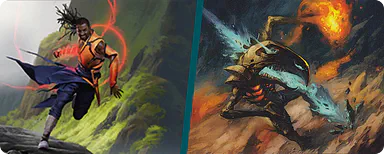


Many champions play this version of UW Delver, which took second place with Charles Gindy in the MOCS won by Reid Duke. This build has been piloted by numerous prominent players, including Josh Cho (Top 8), Huey Jensen, and designer Gerry Thompson.
The main differences in this version are: the return of Geist of Saint Traft as a 3-drop (typically four copies) instead of Blade Splicer (more common in defensive versions); Hero of Bladehold as a 4-drop; the use of “pumps” rather than equipment to buff creatures; Cavern of Souls instead of Moorland Haunt.
Playing zero copies of Moorland Haunt is certainly unusual these days: even mono-blue versions often splashed for Moorland Haunt. But Hero of Bladehold and its cost can put stress on the manabase. Furthermore, Delver of Secrets, Snapcaster Mage, and Hero of Bladehold are all Humans: so even a turn one Cavern of Souls can make a difference.
I spoke with Gerry Thompson about the choice of Hero of Bladehold over more recent options like Talrand, Sky Summoner and Restoration Angel. His reasoning was simple: all 4-mana creatures suck in the mirror. All of them. Whatever you play at that cost is destined to get Vapor Snagged. So, if they're not strong in the mirror, you might as well pick the card that's most useful against green decks.
Green decks that start with Birds of Paradise or Avacyn’s Pilgrim are effectively superior to the Blade Splicer–Restoration Angel line (because they're faster). And when you risk being overwhelmed by an uncounterable Thragtusk, you often find yourself backed into a corner. A more offensive Delver with Geist of Saint Traft and the "Titan-like" Hero of Bladehold is better suited to that game plan.
This version plays a significant number of Phyrexian mana cards: it's the first "high-level" deck I remember with a complete set of Gut Shot. In fact, it's a pre-side for potential strategies based on Talrand, Sky Summoner. Mutagenic Growth can save Geist of Saint Traft from Whipflare, while Gut Shot kills Birds of Paradise, Elves, opposing Delvers, and so on.
Then there's a new and "freshly printed" card: Knight of Glory. One of Delver's weaknesses is black decks with hundreds of removals (or losing the race against Zombies)... and Knight of Glory addresses exactly this aversion to Swamps.
Anyway: here's the latest great version of the deck you probably hated to death.
Now: 10 decks that absolutely nobody likes.
White-Blue Caw-Blade
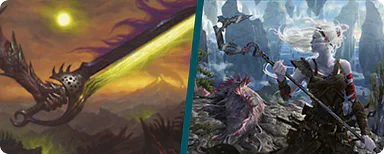
Ben Stark won Pro Tour Paris and kicked off what is arguably the greatest Standard deck of all time — certainly the greatest since Necropotence — and knocked over the first domino that would lead to the first serious Standard ban since the Ravager Affinity era.
How did it work? Caw-Blade was an almost perfect application of the concept "put all the best cards in the format into the same deck." It played Preordain as a one-cost spell (probably the best card in the deck after Jace, the Mind Sculptor), then obviously Jace, the Mind Sculptor, and the superstar two-drops Squadron Hawk and Stoneforge Mystic.
These creatures generated such a massive card advantage that the deck could afford to play equipment on only a few threats. Squadron Hawk was a more than adequate "swordsman" (and difficult to block); Stoneforge Mystic was a one-two punch of consistency and card advantage. The deck could play control or aggro-control better than almost any other and, despite having few creatures, had an excellent race.
Why did people hate it? Tournament attendance dropped. The cost of Jace, the Mind Sculptor on the secondary market and the fact that the better player won a dramatic percentage of mirrors probably played a role. As Mark Rosewater tried to teach us, luck and mana screw are "ingredients" of Magic. During the Caw-Blade era, Magic lost some of these "characteristics": Stoneforge Mystic and Jace, the Mind Sculptor took their place.
Jund
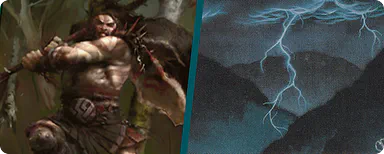
Jund
- 4 × Bloodbraid Elf
- 4 × Putrid Leech
- 4 × Sprouting Thrinax
- 3 × Broodmate Dragon
- 3 × Siege-Gang Commander
- 2 × Garruk Wildspeaker
- 4 × Lightning Bolt
- 4 × Blightning
- 3 × Maelstrom Pulse
- 2 × Rampant Growth
- 4 × Forest
- 4 × Raging Ravine
- 4 × Savage Lands
- 4 × Verdant Catacombs
- 3 × Mountain
- 3 × Swamp
- 2 × Dragonskull Summit
- 2 × Lavaclaw Reaches
- 1 × Rootbound Crag
- 4 × Deathmark
- 4 × Great Sable Stag
- 3 × Master of the Wild Hunt
- 2 × Terminate
- 1 × Maelstrom Pulse
- 1 × Pithing Needle
How did it work? Thanks to Bloodbraid Elf. Period.
The cascade mechanic gave the deck enormous card advantage: often 2-for-1, and sometimes even 3-for-1 depending on curve and luck. Sprouting Thrinax was an unpleasant creature to interact with; Bloodbraid Elf inspired "pro-ban" petitions among the general public; Broodmate Dragon was a double fatty.
Turn two Putrid Leech was so fast and powerful it rendered almost all other two-drops in the format obsolete. And then there was Blightning.
Why did people hate it? Bloodbraid Elf, cascade, Blightning…the same players who, years later, always flip Delver of Secrets revealing a Mana Leak.
Görtzen's deck was nicknamed "just lands, no removal," because he was among the first to understand that Jund was so strong it could only really lose by mana screwing: Simon played 27/60.
Jund had a strange combination of tempo and card/quality advantage… with atrocious mana. A single Spreading Seas could send a Jund player into a dark spiral. It wasn’t enough to be "lucky" to cast Blightning via Bloodbraid Elf: even managing to cast spells despite mana problems made the public particularly uneasy.
Faeries
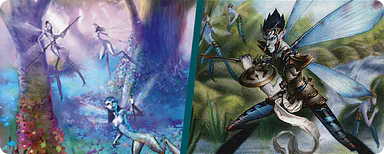

How did it work? Although Charles Gindy won Pro Tour Hollywood with Elves, it was Faeries that became the icon of the "evil Standard deck" of the era. The gist was: if a player resolved Bitterblossom on turn two, often not much else mattered.
I personally always found Mistbind Clique extremely frustrating, especially in combination with Bitterblossom. Mistbind Clique made it difficult to play a "decent" game of Magic, and even though R&D tried to provide tools like Jund Charm and Volcanic Fallout, Bitterblossom's tribal nature made it almost impossible to deal with the Clique.
Why did people hate it? It was an extremely restrictive deck: without instant-speed removal, it was almost impossible to interact with Mistbind Clique. Many stopped exploring new and more fun strategies. A turn-two Bitterblossom was incredibly difficult to recover from. And then there were starts with Ancestral Vision or similar…
Faeries arrived shortly after the beloved Ravnica release: the transition from the great diversity of the “tier 2 metagame” to a more linear one was a shock. In short: a punch to the gut.
Tooth and Nail
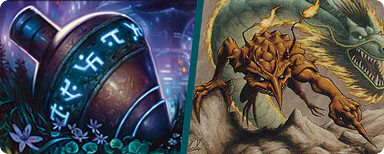


How did it work? It was supercharged Ramp. Sakura-Tribe Elder fetched an extra land; Sylvan Scrying searched for the right land to complete Tron.
When Tooth and Nail resolved, anything could happen: destroy lands with Sundering Titan, remove creatures with Duplicant, generate a flood of copies with Kiki-Jiki, Mirror Breaker, or chain value with Eternal Witness.
Why did people hate it? They probably needed something to hate after the bans that eliminated Ravager Affinity. It dominated Regionals, partly because some rivals (RDW, Kuroda-Style Red, Mono-Blue Tron) weren't mature yet. But, unlike other decks on the list, perhaps it didn't deserve all that wrath: we're talking about casting 9-mana spells.
Ravager Affinity
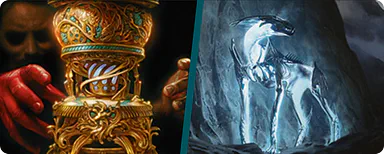
How it worked… it just worked. It was one of the most dominant decks in Standard history. Offensively, it was almost unstoppable: Disciple of the Vault paired with Arcbound Ravager was devastating, and the deck could win on turn three.
There was no shortage of powerful cards: the artifact lands ended up banned. What harm had Tree of Tales ever done? And Ancient Den?
Arcbound Ravager, Disciple of the Vault, and Æther Vial were banned in some formats. I would have also mentioned Skullclamp, but when Kamiel showed us that deck, it had already been banned.
Why did people hate it? It was simply too good: fast and full of power. Thoughtcast often cost one mana. Æther Vial transformed 1- and 2-drops into "uncounterable instants." And Affinity regularly beat even anti-Affinity decks.
Psychatog
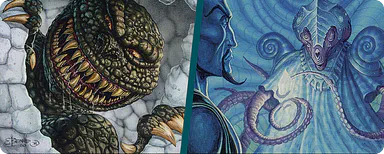
How did it work? Nine mana, Upheaval, Psychatog, you play a land and leave blue mana open for Circular Logic. The deck got there with cantrips and control, then closed out the game.
Why did people hate it? It was a "suffocating" U/B creature deck that rewarded skill like Caw-Blade… but with one difference: it was much more boring. It forced you to wait nine turns just to see your board swept away and lose to a virtually unstoppable Psychatog.
Fires of Yavimaya
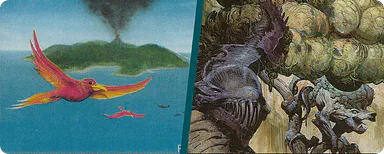
How did it work? You cheated: Turn 1 Birds of Paradise, Turn 2 Fires of Yavimaya, Turn 3 Blastoderm (plus attack), Turn 4 Saproling Burst (you’re toast).
Why did people hate it? It was hard to "break": there were no truly efficient tools. Removal like Flametongue Kavu and Thornscape Battlemage cost 4 and killed one creature. Using Urza’s Rage on a Birds of Paradise? Meanwhile, the opponent was already ahead. The fastest option was Ghitu Fire, but often too slow, especially if the other player started first or tapped your lands with Rishadan Port.
Academy
How did it work? The 1998–1999 era was a whirlwind of Tolarian Academy, Time Spiral, Windfall, Dream Halls, Yawgmoth’s Bargain…
Lines like: Mox Diamond (discarding Ancient Tomb), Mana Vault, Voltaic Key, Lotus Petal, Tolarian Academy, Time Spiral… then you closed with Mind Over Matter to untap the Academy and finish with Stroke of Genius and/or other Spirals.
On which turn could you do all this? One.
Why did people hate it? Turn one. The end.
Deadguy Red
How did it work? A predecessor to Red Deck Wins, but it could kill you with Fireblast as early as turn four.
Why did people hate it? It punished slow draws and could circumvent hate. Over time, the double Fireblast draw would "flatten" anyone at the amateur level. And if you started with a turn one Jackal Pup and a turn two Wasteland… you could steamroll anyone.
Dave taught Magic players that they had to be on guard, right from the start. He punished clumsy draws and had figured out how to circumvent hate cards. When he proclaimed himself God of Fire with his X-0 at the 1997 US Nationals, the crowd initially cheered him excitedly, as they initially thought they hated Thawing Glaciers-control (they would only learn later what the real deck to hate was!). And they did the same when he won the Pro Tour (again with the red deck) in the spring of 1998.
But over time, any amateur player would be flattened by the double Fireblast draw... well, it was a taste of the draws from the Fire decks that, just a couple of years later, would leave them powerless in the face of defeat. It's interesting how some critics loved the Deadguy Red era from an amateur perspective. Perhaps at no other time in Standard's history has the format been so leveled, and the difference between an absolute champion and a lucky scrub so small. Did you draw two Fireblasts? Was your turn one Jackal Pup accompanied by a turn two Wasteland? Then you, too, could have flattened Jon Finkel like a pancake.
This is the version Ben Rubin brought to the 1998 World Championships:
Necropotence
How did it work? Very simply: Necropotence was (and perhaps still would be) the greatest draw engine ever. You could start on turn one with Dark Ritual (or with Hypnotic Specter); you could demolish their hand with Hymn to Tourach. There was everything: threats like Order of the Ebon Hand, "get out of jail free" cards like Nevinyrral’s Disk, Drain Life for recovery… and even if you survived, the greatest engine of all time remained.
Why did people hate it? Because it beat almost everything. And most of the best players of the time chose to play it. Magic was young.
Conclusion
As you can see, there have almost always been "frightening" decks in Standard. This is why I disagree with the idea of "the good old days" where you could (competitively) "play whatever you wanted." Many past Decks to Beat were nastier, more restrictive, and harder to beat than those encountered in recent years; often also less skill-testing.
And yet, for all the ugly and nasty decks there have been, we’ve also seen rogue decks, anti-decks, innovations, and heroes. Without Necropotence and its hunger for mana that allowed for a "mana-independent" card advantage, perhaps we would never have seen things like Turbo-Stasis and its lockdown evolutions. The existence of Psychatog skyrocketed interest in humble cards like Yavimaya Barbarian (absurd, but true). Even Green-Blue Madness and other ideas were born as responses to dominant threats and plans.
Our heroes are often defined by the strength of their enemies. The history of Standard is marked by the power of its strongest decks.
And I’ll leave you with a quote from Worth Wollpert, on the occasion of my first PTQ win (with Necropotence): “If you can’t beat ’em, join ’em.”