


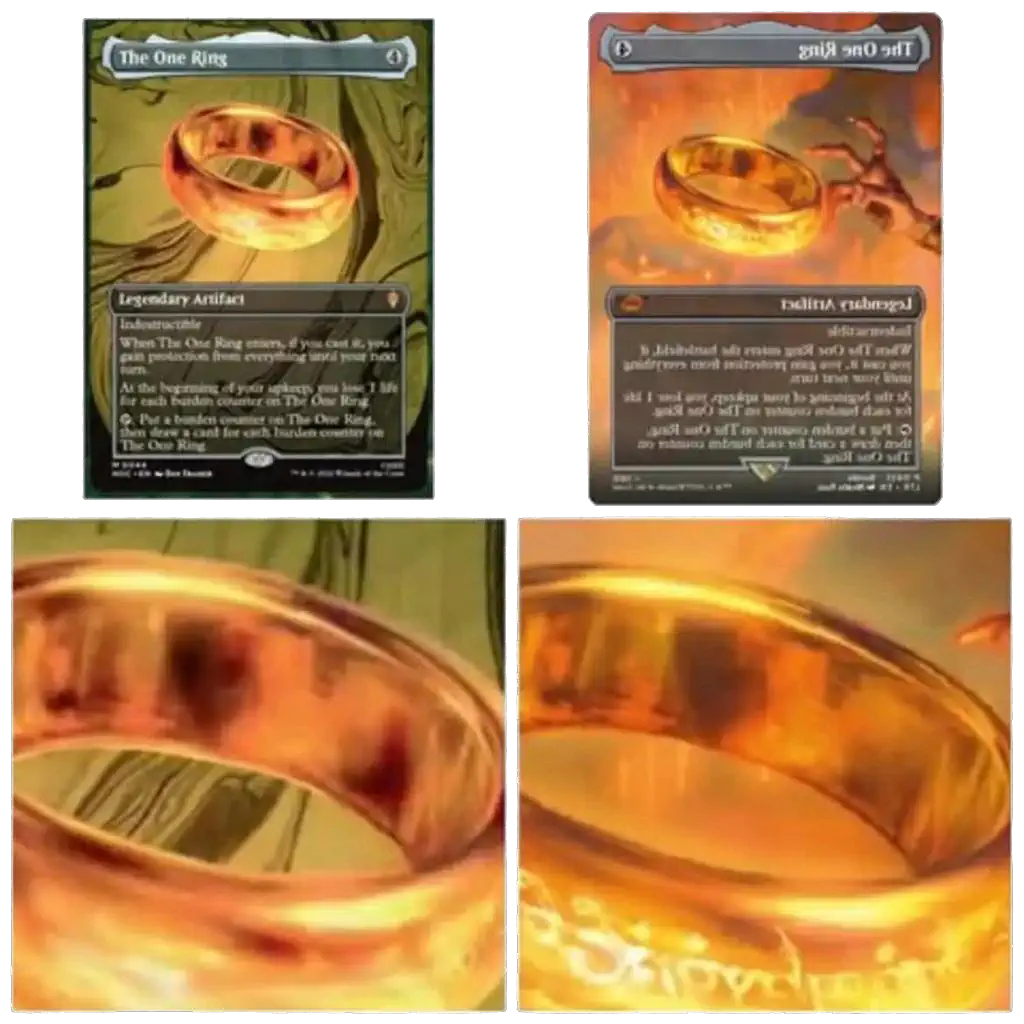
Shortly after the MagicCon Las Vegas Preview Panel, which showcased the Box Topper version of The One Ring in the upcoming The Hobbit Commander, fans quickly noticed similarities between the new artwork and a previous version of the card, which appeared to have simply been mirrored and blurred.
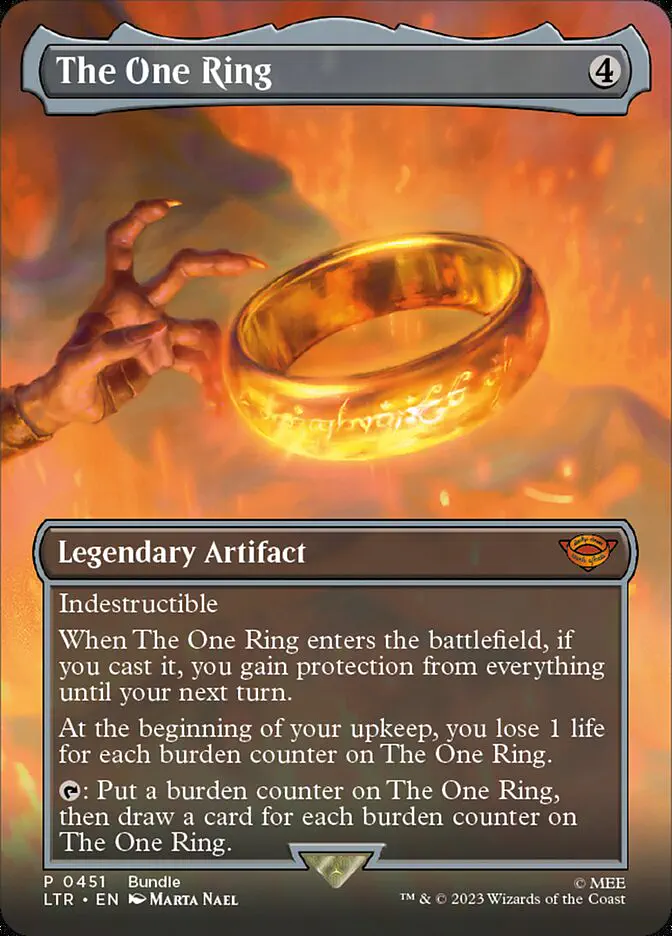
The new reprint, with artwork by Dan Frazier, clearly features a background consistent with the artist's style, but the depicted ring appears strikingly similar to that of the borderless version of The One Ring from The Lord of the Rings: Tales of Middle-earth (2023). Players immediately began discussing it on social media, with direct comparisons between the two images: the ring matches almost perfectly, though the original inscription has been removed.
Just one day after the online controversy erupted, Wizards of the Coast (WotC) responded officially alongside Frazier. The artist apologized for painting over Marta Nael's illustration without "truly making it his own," while WotC, in turn, apologized to Nael, specifying that both artists would be credited on the digital version of the card and that Nael would be compensated.
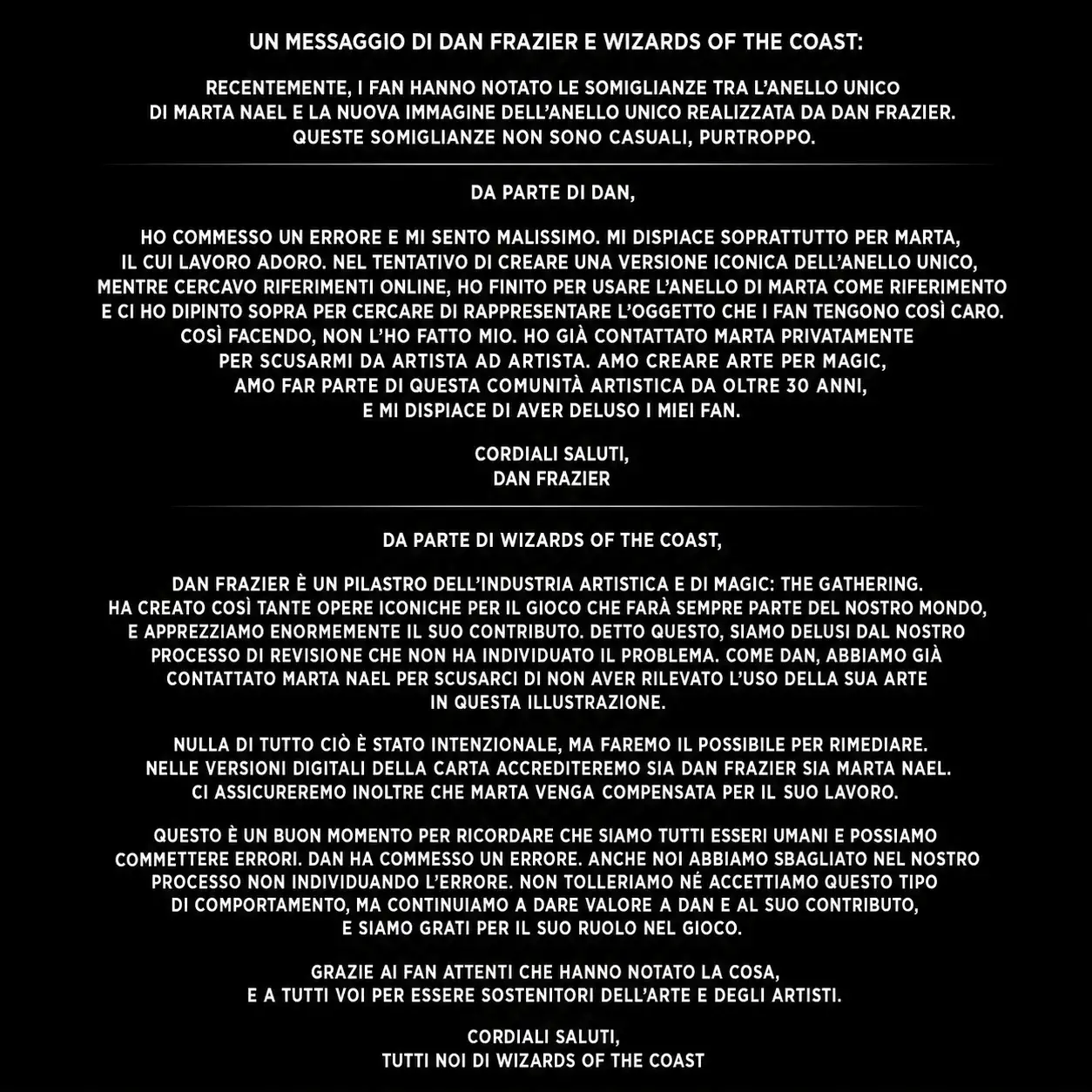
WotC also acknowledged a flaw in their review process, stating that they had made mistakes in failing to catch the issue during the artwork check. Many pointed out that even a minimal review should have highlighted the similarities between the two images.
Donato Giancola, another high-profile Magic artist who stopped working for the game a couple of years ago, published a Facebook post calling this situation "another example of Hasbro's failures in mismanaging the Magic: The Gathering brand." In the post, he detailed the problems related to creating illustrations for Universes Beyond products and described the contracts for producing artwork for these sets as "exploitative." Giancola explained that Hasbro and WotC require exclusively digital work-for-hire contracts for Universes Beyond sets, which means artists cannot create any original materials related to these works (he cited elements such as sketches, drafts, or any physical painted or created work), nor can they produce subsequent prints, playmats, artist proofs, or other products to sell later.
According to Giancola, this makes it more difficult to earn a living as an artist and leads to a lower level of commitment, knowing that it won't be possible to recoup the time invested beyond the initial contract compensation. He also emphasized that the lack of quality control leads to cutting corners in all aspects of artistic creation, from direction to production.
In another post, Giancola speculated that Frazier did not have real control over the final artwork, which prompted Frazier's agent (Mark Aronowitz) to comment: "He did not. After several requested modifications, we never saw this version." Aronowitz also added that he was looking forward to returning from MagicCon to see Frazier's final work, which he had never seen. He further stressed that Frazier was "so frustrated" by WotC's requested changes.
It's noteworthy that, in their official response, WotC did not use the term "plagiarism" nor did they state any intention to discontinue their collaboration with Frazier.