


Introduction
White Weenie is one of Magic's oldest archetypes, tracing its origins all the way back to Alpha. Its timeless plan, based on fast, efficient creatures backed by pump effects, removal, and a game-ending finisher, has found a home in almost every format in the game's history; Premodern is no exception. Long considered uncompetitive, White Weenie variants have achieved unexpected results and top finishes since 2023 and continue to do so, proving the deck is a true contender and reigniting interest in it.
Deck Construction
Structurally, a White Weenie deck generally includes:
- 20 or more creatures, mostly with a mana value of 2 or less;
- 4 Swords to Plowshares;
- 2 or more Disenchant;
- 17 to 24 lands;
- mana denial, creature buffs, utility cards, and/or additional removal.
The choice of creatures and support spells offers ample room for customization. Numerous variants, each focused on different themes, have found success. The key is to adapt the configuration to the metagame's needs. White Weenie is not a deck capable of overwhelming most opponents with brute force alone. To succeed, one must assess the variety of decks likely to be encountered and build a list that can consistently present a reasonable plan to beat almost all of them. For this reason, there is no "correct" configuration in the abstract: it will change from one metagame to another.
Here are some examples of lists that have achieved significant results, each with different priorities:
- 5c White Weenie, Jacob Poulsen, European Championship 2023 Sep-2023, Rank #2
- White Weenie, Gregor Posinek, Italian Nationals Premodern 2023 Nov-2023, Rank #1
- Wu White Weenie, Gary Roth, Premodern Online Monthly Jan 2024, Rank #1
- Wr White Weenie, Nudelauflove, CPS Showdown Aug-2024, Rank #1
- White Lightning, Gabe Menendez, Evansville Eternal Open 2025, Rank #4
- White Weenie, Mário Dias, PIL Online League May-2026, Rank #1
- 5c White Weenie, Gary Roth, Grand Pre Louisville Jun-2026, # Rank 4

White Weenie





It should be noted that, while sharing some cards with White Weenie, decks like Clerics, Rebels, Quiet Birds, and Temporary Solution have very different structures, strategies, and tactics. To keep this guide focused, neither these decks nor the specific cards that characterize them will be discussed. For further reading, consult the article "The Taxonomy of Blue White decks in Premodern."
The rest of this section examines card selection in more detail, grouped by their typical role. For ease of reference, the need for a splash is indicated by the relevant mana symbol , , , or , while [ET] indicates that the card can be part of an Enlightened Tutor package.
Creatures
The core of the deck is its creature selection. They must be mostly cheap and efficient on offense, and offer useful abilities to win combat or disrupt the opponent. The deck typically includes over 20 creatures, though three-to-five-color variants may play fewer.
Key Creatures
These are the creatures that should always be considered and appear most frequently in lists.
- Mother of Runes, or "Mom," protects your creatures from removal, makes them unblockable, and turns them into virtually invulnerable blockers.
- Savannah Lions is the most efficient unconditional aggressive creature; its additional power more than compensates for the lack of abilities.
- Meddling Mage , or "Pikula,"'s primary job is to stop combos and mass removal. With sufficient format knowledge, it is almost always possible to use it well. Pikula is the main reason to splash blue and can single-handedly win some matchups.
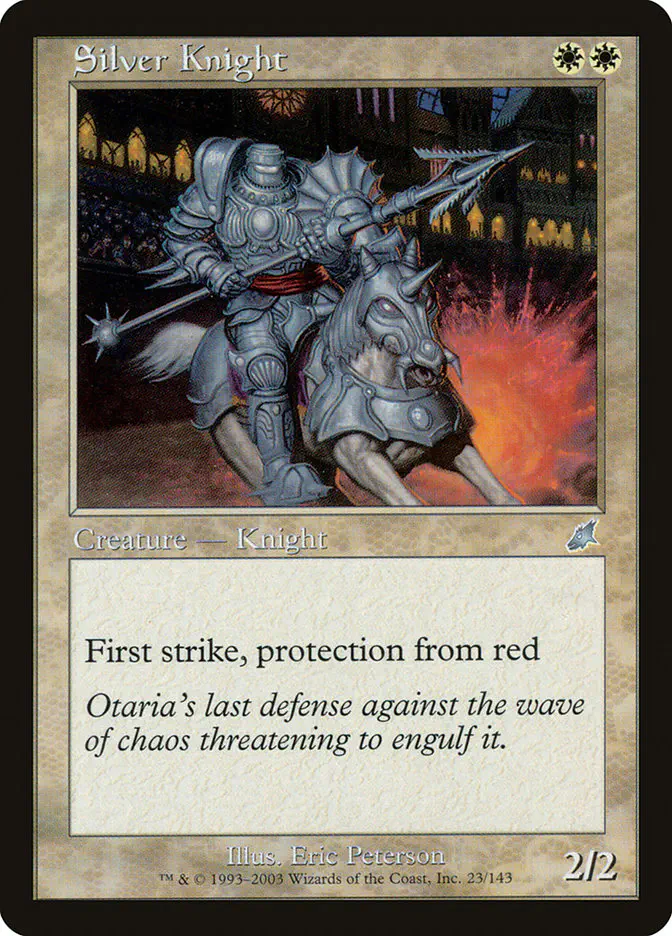
- Silver Knight is an excellent blocker against aggressive decks, especially red ones; it resists red mass removal, like Shard Phoenix, and can attack into some swarms of small creatures, such as those of Elves.
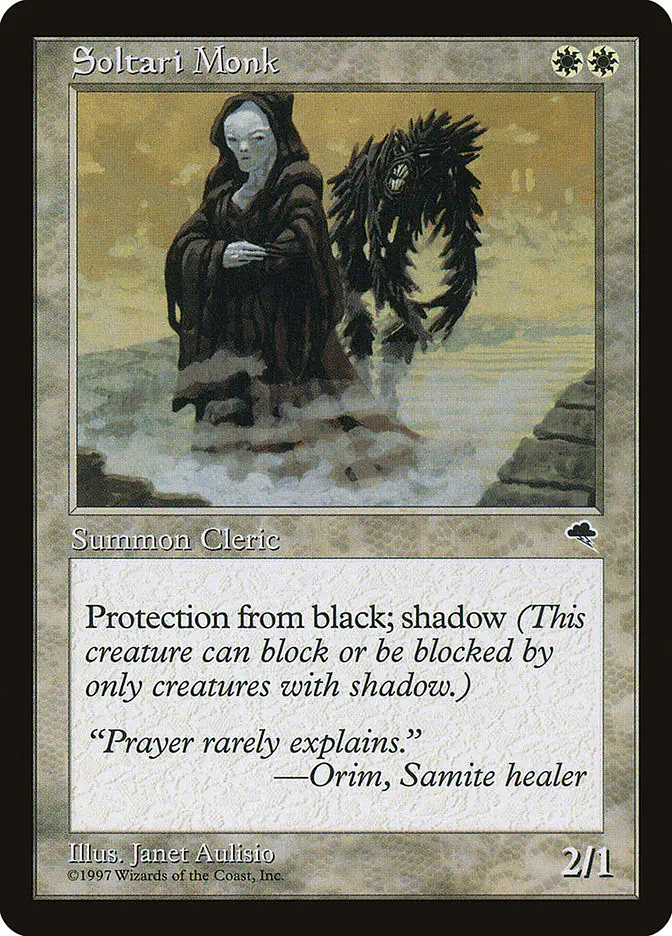
- Soltari Priest and Soltari Monk are extremely useful evasive threats. The Priest is more common, but in some metagames the Monk is the better choice.
- Whipcorder is a valuable combat control card that complements removal. It is particularly effective against Phyrexian Dreadnought, Terravore, opposing Exalted Angels, and much more. It can also be played morphed to serve as a decoy, leading the opponent to believe it is Exalted Angel.
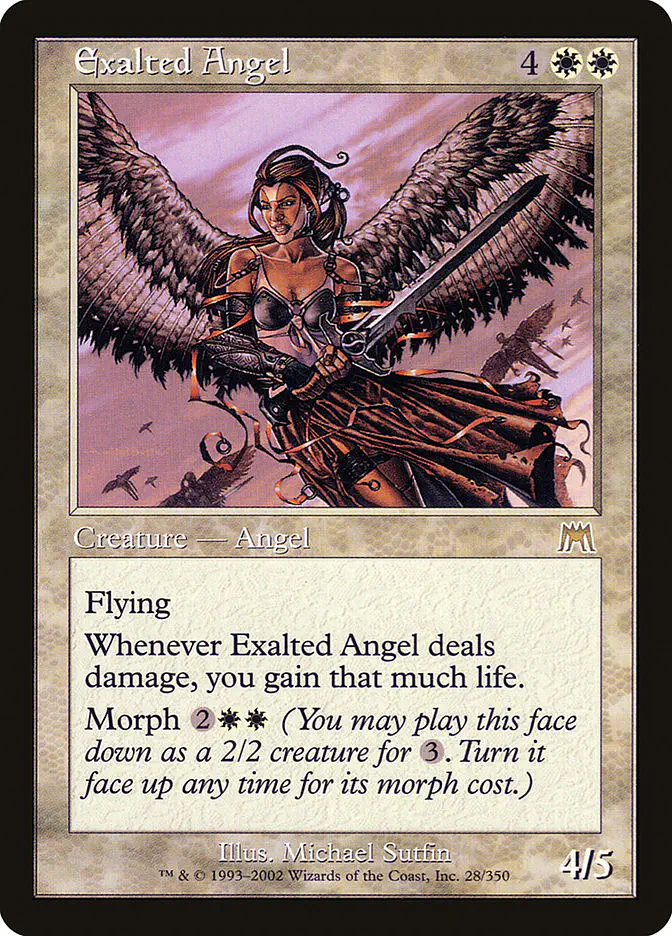
- Exalted Angel is the format's battleship: it resists removal well, is difficult to beat in a race, and even harder to overcome in terms of size and impact. It often represents inevitability on its own, and its power is the sole reason to include such an expensive card.
Flexible Creatures
The following creatures are also reasonable choices, though less common and often more specialized.
- Deftblade Elite is an option in metagames full of small creatures, especially when backed by cards like Mom or Crusade. Provoke, however, is not effective against mana dorks.
- Devoted Caretaker offers redundancy to Mom and blocks Goblin Lackey well, but requires a lot of mana. Since it can also protect non-creature permanents, it allows for greater reliance on artifacts and enchantments capable of controlling the battlefield.
- Nova Cleric can be devastating against decks like Enchantress and Oath, although it is often too slow to respond to the latter's namesake card, and blocks Goblin Lackey well.
- Ramosian Sergeant can become interesting after the third Whipcorder is added, offering a path to an overwhelming board presence.
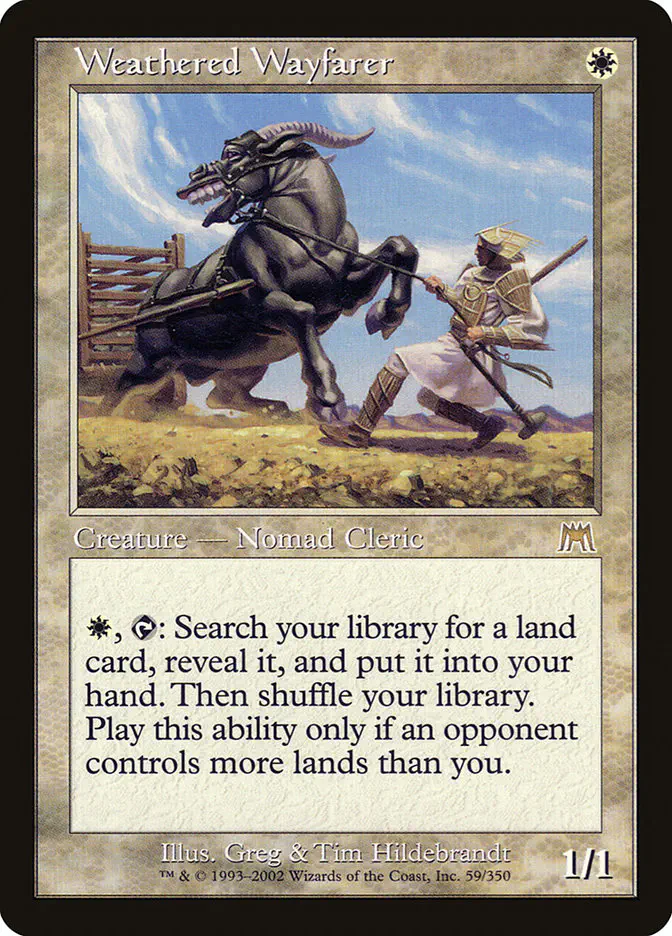
- Weathered Wayfarer allows for building a land toolbox; in particular, it enables chaining Wasteland against decks with fragile manabases.
- Steadfast Guard is strong against Stasis and can be found by Ramosian Sergeant.
- True Believer neutralizes a curious range of niche effects, especially Oath of Druids. That said, it can immediately attract opposing removal.
- White Knight is strong against Suicide Black and decent against Elves and Goblins.
- Anurid Brushhopper is slow, but out-races most aggressive creatures and can resist removal.
- Call of the Herd is slow, but very effective at overwhelming aggro or control decks.
- Mystic Crusader is a slow but decent blocker against black and red decks in the early stages; later on, it can become an evasive, removal-resistant, and very impactful threat.
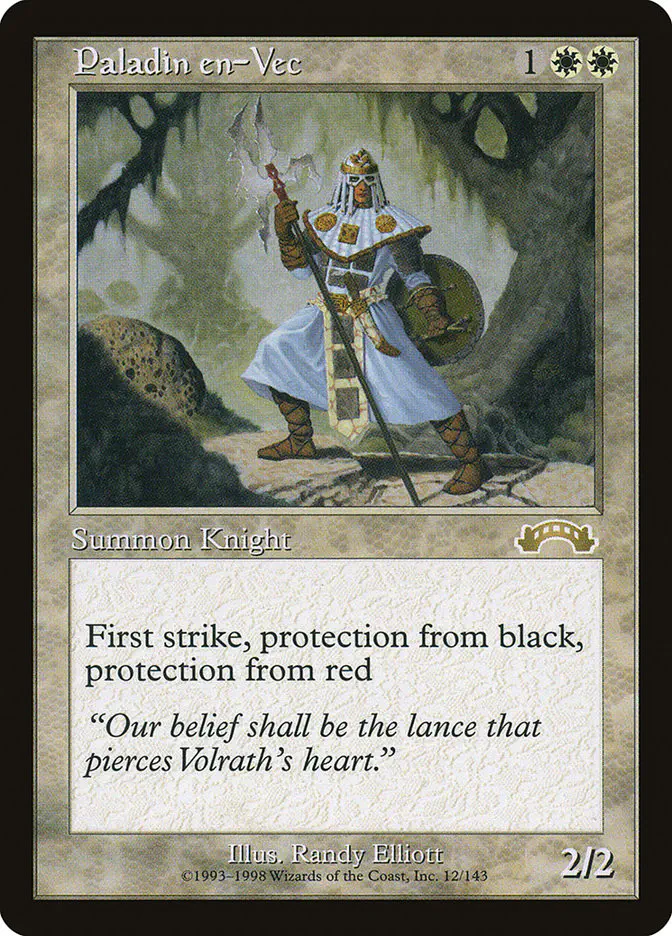
- Paladin en-Vec is a slower but more flexible version of Silver Knight, usable for increasing redundancy.
- Soltari Champion is slow but evasive, and in aggressive configurations, it functions as a sort of Anthem.
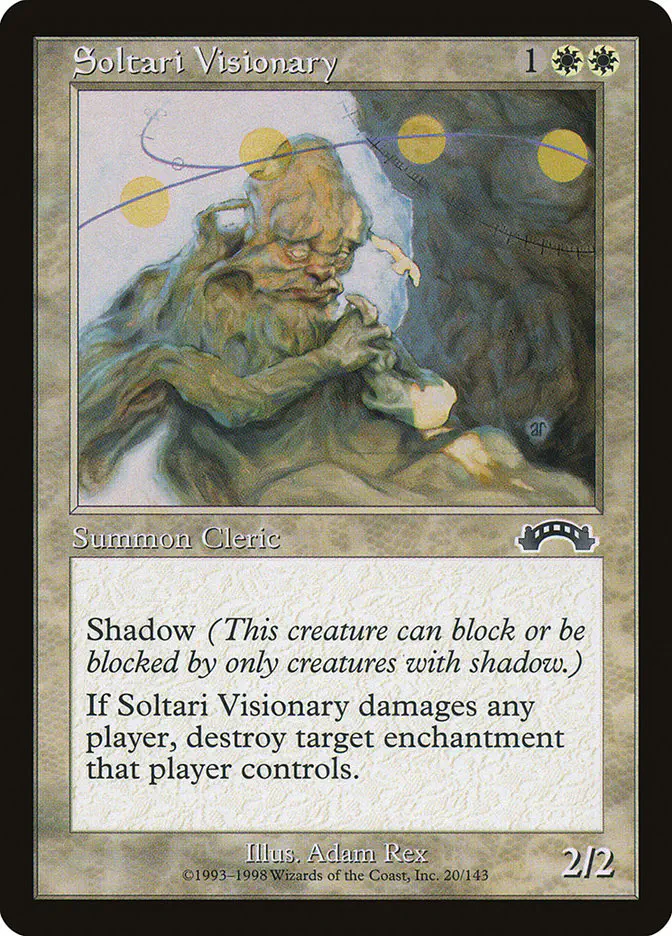
- Soltari Visionary is slow but evasive, and can keep opposing enchantments in check.
Non-Creature Spells
Removal
- Swords to Plowshares, or "STP," is the best creature removal of all time. In Premodern, very few decks truly lack targets.
- Disenchant or Seal of Cleansing [ET] are essential in a format saturated with artifacts and enchantments that require immediate answers. Disenchant is generally more efficient, while Seal of Cleansing synergizes with Enlightened Tutor and Parallax Wave.
- Radiant's Judgment is a specialized answer to large creatures, with cycling as insurance when not needed.
- Parallax Wave [ET] can temporarily remove opposing threats, clear blockers for damage, or protect your own creatures. It can also combine with an enchantment removal spell to permanently exile opposing creatures: by maintaining priority, you activate Wave targeting opponent's creatures, and in response, remove your own Wave.
- Cursed Scroll [ET] requires a lot of mana, but is an excellent creature control tool and offers reach to close out the game.
- Lightning Bolt efficiently eliminates small creatures and provides reach to finish the game.
- Earthquake requires a lot of mana, but can wipe out entire swarms of creatures and offer reach. The symmetry can be broken by pump effects or creatures with protection from red.
- Fire//Ice can eliminate small creatures and provides some reach to close out.
- Smother is a fairly versatile option, although it misses some important targets.
- Engineered Plague [ET] is useful against tribal decks, like Elves and Goblins, and against some creature-based combos such as Argothian Enchantress, Hermit Druid, and Phyrexian Devourer.
Pump Effects
Global "pump" effects are a traditional element of White Weenie. They produce damage with a sort of "haste," help win combat against opposing creatures, and mitigate the impact of some removals, such as burn spells or Engineered Plague. Leaner, hyper-aggressive configurations can play up to five of these effects; more balanced ones, especially if they include Enlightened Tutor, want at most two.
- Crusade [ET] is the most efficient and iconic option, but in some contexts, it is not allowed; in the MTGO Community Premodern Series, Honor of the Pure can be played instead.
- Divine Sacrament [ET] is less efficient than Crusade, but in a long game it can offer a double buff.
- Glorious Anthem [ET] doesn't backfire in the mirror, against opposing Exalted Angels, or against Decree of Justice. It also buffs your face-down creatures and Mishra's Factorys.
- Shared Triumph [ET] is a better Anthem if the list has a tribal theme, for example Human.
Auras are generally too situational and risky because they can lead to a severe tempo loss and card disadvantage against creature removal. Those worthy of consideration must reduce these risks or produce an immediate impact sufficient to justify them.
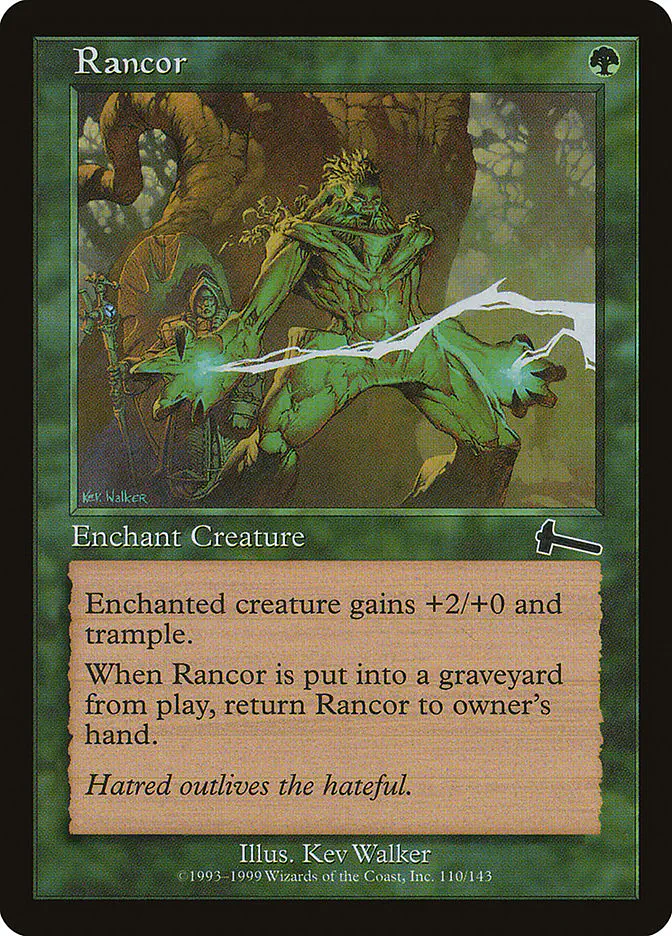
- Rancor [ET] costs only one mana, offers a significant power boost and a form of pseudo-evasion, returns to hand if the creature is subsequently removed, and does not fall off if Mom grants protection to the enchanted creature. For these reasons, it is probably the least risky Aura.
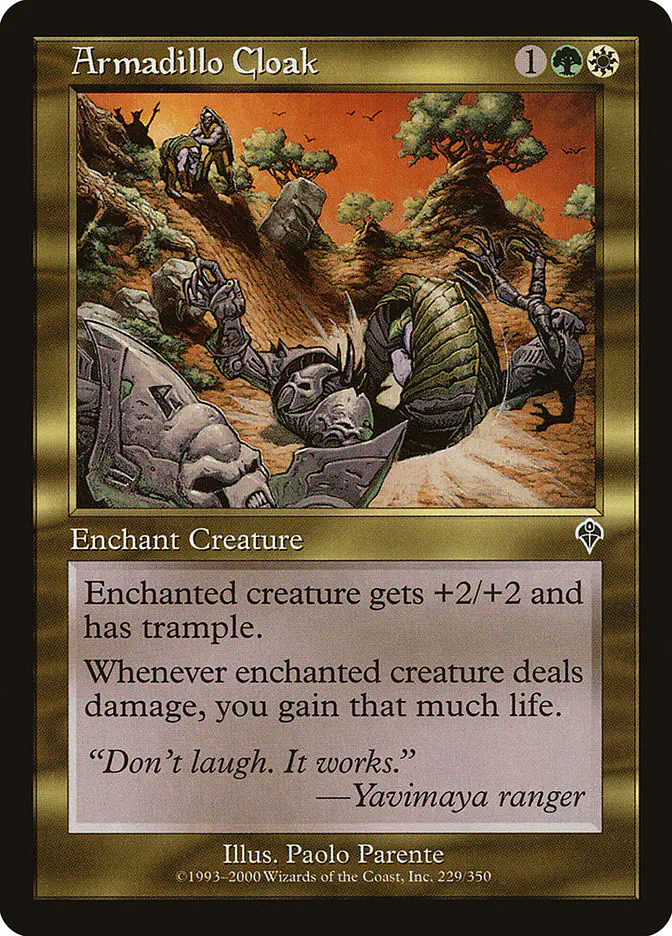
- Armadillo Cloak [ET] provides a significant power boost, pseudo-evasion, and enough lifegain to immediately turn a damage race.
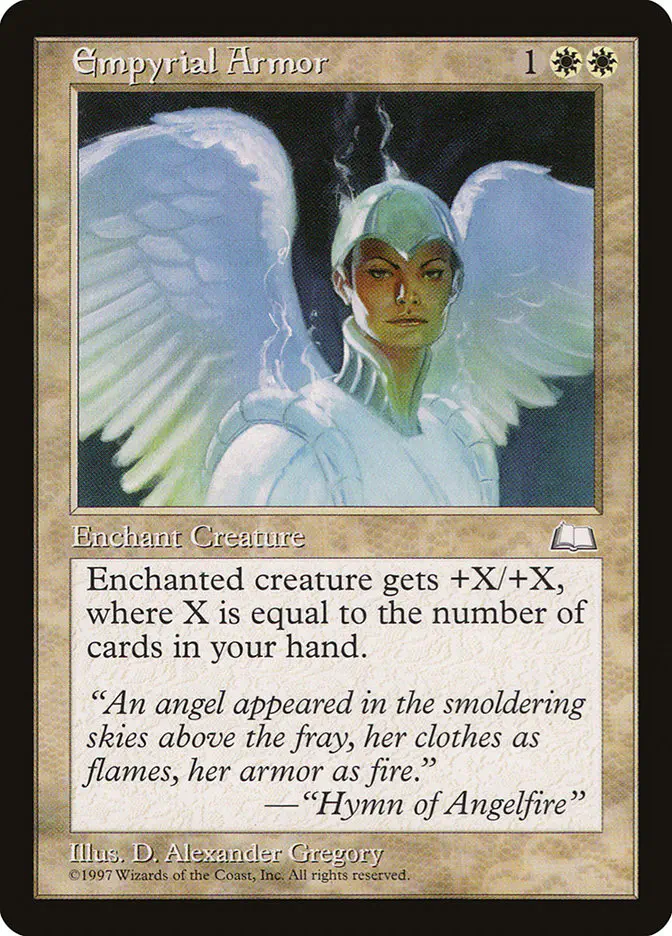
- Empyrial Armor [ET] can offer the biggest buff of all, but it is highly conditional, so it works best when used in combination with Cataclysm, because after the game reset it will leave us with a creature on the battlefield with increasing +X/+X.
Mana Denial
Mana denial is one of the fundamental tools White Weenie uses to gain the necessary time to close out the game after getting slightly ahead. These effects can be very powerful, but they clash with mana-intensive finishers like Exalted Angel, and are not equally effective in all metagames, for example, in an environment dominated by Gush decks. For this reason, they can be played in the maindeck or in the sideboard.
- Dust Bowl is slow, but can dominate long games against opponents who rely on non-basic lands.
- Wasteland is very useful for eliminating manlands and disrupting combos. It is often less effective against pure control, which has excess lands and also benefits from slowing down White Weenie's progression towards Armageddon or Cataclysm.
- Rishadan Port is more expensive than Wasteland, but also very flexible, especially when good knowledge of the opponent's deck allows for precisely preventing certain plays. It also allows switching between mana denial and developing one's own plan and vice versa. Finally, it can force the opponent to commit more resources to the field before Armageddon or Cataclysm.
- Armageddon is the classic finisher and often delivers victory to the player ahead on the battlefield. The deck's lower curve also allows it to recover more easily. Armageddon is at its best against control and some combos; in certain situations, it can also work against midrange.
- Cataclysm can be devastating against a very wide range of decks, including The Rock, MUD, Enchantress, UW Control, Elves, and Goblins. This versatility is offset by lower effectiveness against control and combo compared to Armageddon. Cataclysm can also wipe out White Weenie's own creatures; therefore, larger threats, such as Exalted Angel or Auras, are preferable to mere quantity of threats, such as Rebels or global enchantments, to break its symmetry.
- Winter Orb [ET] is less powerful and less resilient than Armageddon or Cataclysm, but costs less and can be found with Enlightened Tutor.
Tutor Package
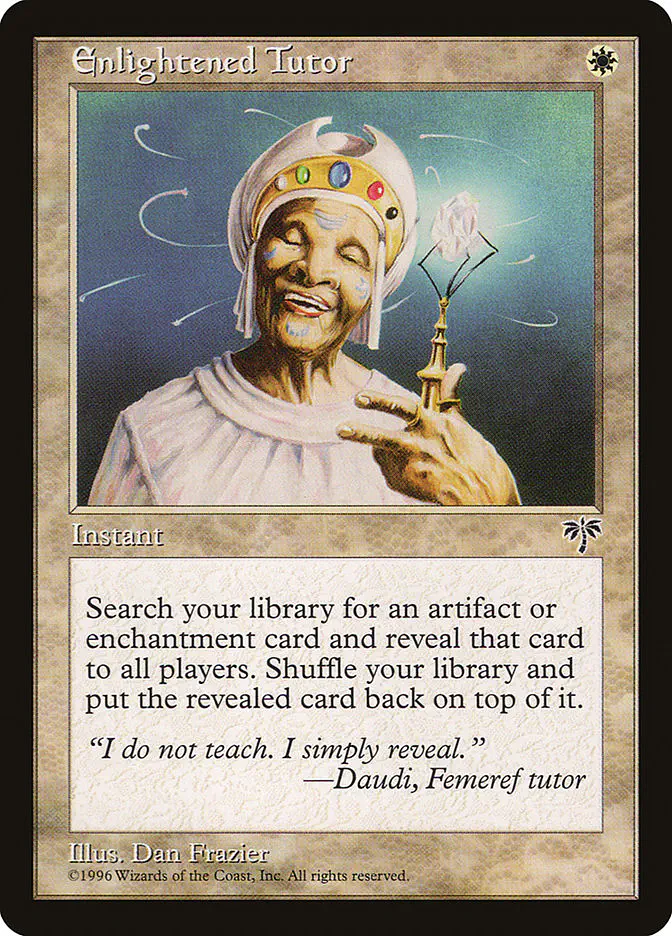
Enlightened Tutor
Instant
Search your library for an artifact or enchantment card, reveal it, then shuffle and put that card on top.
Enlightened Tutor has been mentioned many times, and for good reason. It allows for dedicating fewer slots to niche answers and increases hand flexibility. The downside is that Tutor costs one mana and a draw step and, typically, requires including more conditional cards in the deck. For more aggressive configurations, these costs can be excessive. Tutor also significantly worsens against opponents capable of neutralizing or removing the tutored card, thereby gaining card advantage and tempo. Playing up to three copies overall is reasonable, distributed in any combination between maindeck and sideboard. A good tutor package includes at least four distinct effects, preferably more. Among the best inclusions are:
- Seal of Cleansing (see "Removal");
- Parallax Wave (see "Removal");
- Cursed Scroll (see "Removal");
- Winter Orb (see "Mana denial");
- Crusade or other pump effects (see "Pump Effects");
- Phyrexian Furnace (see "Miscellaneous");
- Worship (see "Miscellaneous");
- Engineered Plague (see "Removal");
- Empyrial Armor (see "Pump Effects");
a sideboard that prioritizes artifacts and enchantments.
Miscellaneous
- Phyrexian Furnace [ET] offers graveyard interaction and has an integrated form of pseudo-cycling, making its inclusion in the list almost free.
- Deep Analysis , Fact or Fiction and Standstill allow the deck to compete better in long, grindy games. They are usually surpassed by the immediate value of another threat or a big mana denial spell, but in some metagames they can be justified.
- Reverent Mantra is an extremely flexible card: it protects creatures from targeted or damage-based removal, makes them unblockable, or makes them invulnerable when blocking. The fact that it affects all creatures can be a disadvantage against white decks, but it also creates interesting interactions, such as "protecting" an opposing Phyrexian Dreadnought from Vision Charm.
- Worship [ET] can steal games from decks lacking enchantment removal or enough creature removal, particularly Stiflenought, Burn, and Madness.
Lands and Mana
White Weenie's mana requirements are to reliably produce two white mana on turn two, support any splashes, and eventually cast four-mana spells. Referencing Frank Karsten's writings on land count and colored sources, the deck wants between 21 and 24 lands, between 18 and 21 white sources, and between 10 and 12 splash color sources. These numbers can be tweaked slightly, but they represent excellent benchmarks. There are four common approaches to the manabase.
White Weenie's mana requirements are to reliably produce two white mana on turn two, support any splashes, and eventually cast four-mana spells. Referencing Frank Karsten's writings on land count and colored sources, the deck wants between 21 and 24 lands, between 18 and 21 white sources, and between 10 and 12 splash color sources. These numbers can be tweaked slightly, but they represent excellent benchmarks. There are four common approaches to the manabase.
Mono-white configurations can simply play enough Plains. I recommend at least 17. A single Kjeldoran Outpost is common in these lists.
A traditional fetchland and painland-based setup can support a blue or green splash, but usually not both. An example for blue could be: 1 Island, 4 Flooded Strand, 4 Adarkar Wastes, 1 Skycloud Expanse, and 9 Plains. Playing a few extra Plains compensates for times when the secondary color source needs to be fetched and reduces reliance on painlands.
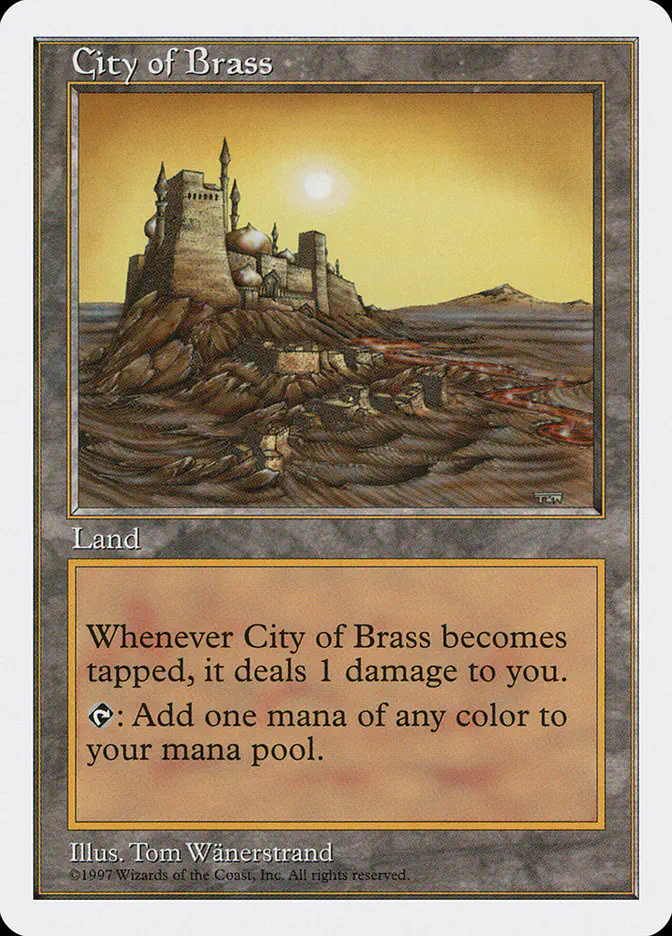
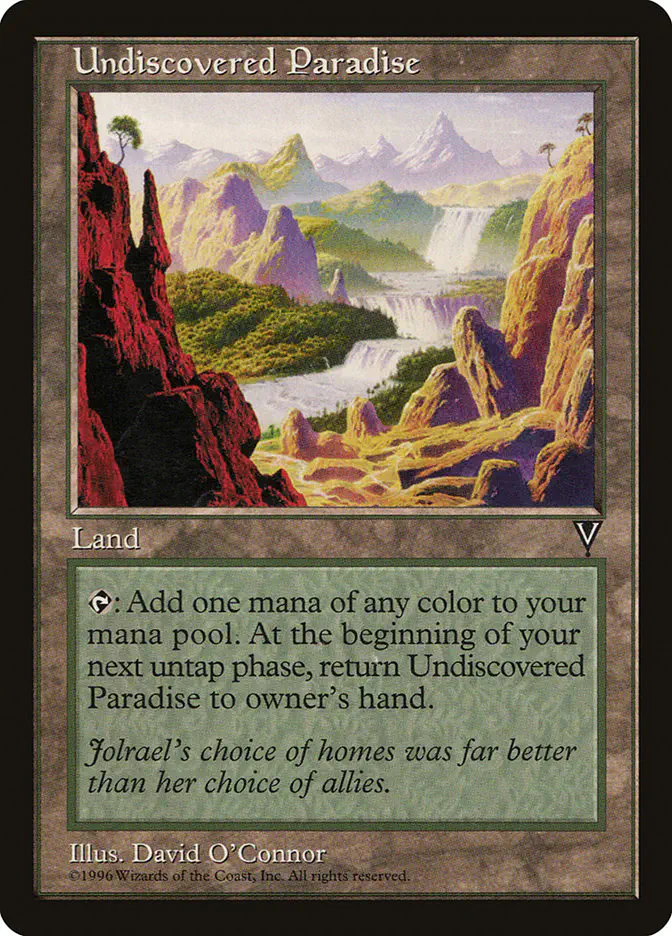
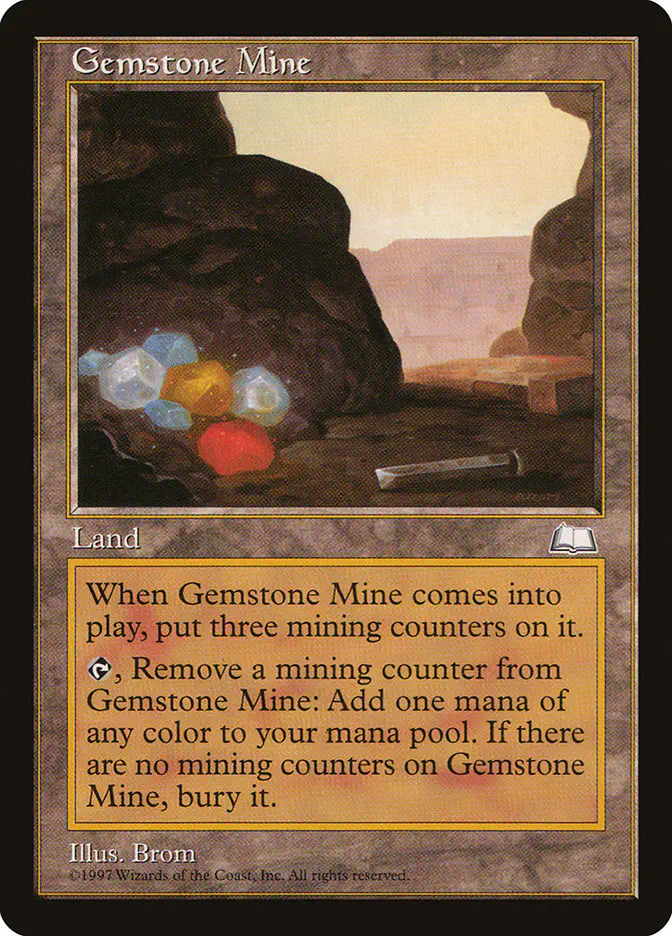
Rainbow lands can support up to five colors. An example could be: 3 City of Brass, 4 Gemstone Mine, 3 Undiscovered Paradise, and 10 Plains. This solution is flexible, but develops mana slowly and expensively, and limits support for mana-intensive cards like Cursed Scroll and Exalted Angel. Undiscovered Paradise also has natural synergy with Winter Orb and Cataclysm.
Alternatively, Dromar's Cavern, Rith's Grove, or Treva's Ruins can replace some copies of Paradise, reducing flexibility but improving mana development.
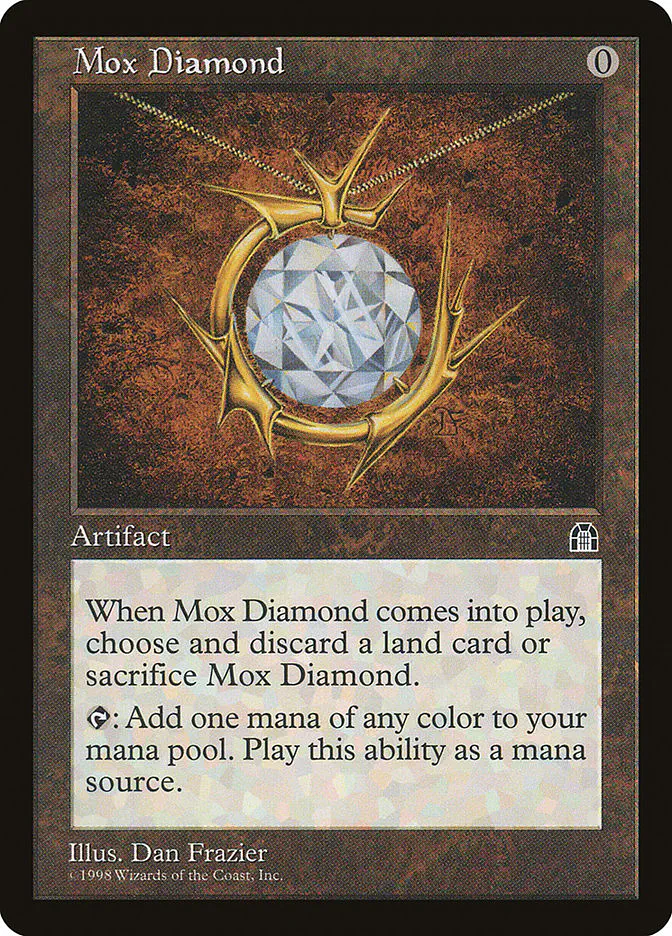
Mox Diamond can be added in addition to the necessary land count to make color access more consistent, accelerate powerful plays like turn-one Meddling Mage, and recover better from Armageddon or Cataclysm. In return, it can become a dead draw in a long game.
Utility lands generally produce colorless mana. They can support the top-end of the curve, but don't help cast early creatures. They should only be added after color requirements are met, and in mulligan decisions, they should be considered like spells. Among the best options are:
- Dust Bowl (see "Mana denial");
- Kjeldoran Outpost, a slow but inexhaustible source of additional creatures against control, often played as a single copy in mono-white configurations;
- Mishra's Factory, which can attack through Oath of Druids and Wrath of God and be played under cards like Standstill;
- Rishadan Port (see "Mana denial");
- Wasteland (see "Mana denial").
It is also possible to supplement mana with non-land cards. The most common options are Tithe, Eternal Dragon, and Weathered Wayfarer. However, it should be remembered that while these cards offer additional utility, they impose costs and conditions not present when simply playing more lands. Adding more Plains is often the best choice and reduces mulligan frequency.
Utility lands generally produce colorless mana. They can support the top-end of the curve, but don't help cast early creatures. They should only be added after color requirements are met, and in mulligan decisions, they should be considered like spells. Among the best options are:
Sideboard
The sideboard must be built according to the metagame and the deck's weaknesses. Fortunately, white has some of the best sideboard options in the format, and Enlightened Tutor allows for getting a lot of value even from one or two copies of a niche card. Many of the cards listed below are still reasonable maindeck choices; likewise, a card normally played in the maindeck can be moved to the sideboard.
Artifact and Enchantment Removal
In contemporary Premodern, it's almost impossible to play too much artifact and enchantment removal. I generally want at least five total enchantment removal effects in the 75 cards, although I'm willing to be a bit lighter on artifacts.
- Disenchant or Seal of Cleansing (see "Removal");
- Aura Blast, Clear, Demystify, Erase, Monk Realist, and especially Ray of Revelation are options to increase enchantment answers;
- Abolish offers mono-white configurations a very strong tool against decks that exploit mana bottlenecks, such as Stasis, Ponza-Oath, and Stiflenought;
- Aura of Silence [ET] is, in addition to removal, an effective lock piece against decks like Stiflenought and Enchantress;
- Devout Witness can overwhelm almost any artifact- or enchantment-dependent deck in long games.
Creature Removal
Having more creature removal is almost always useful. The problem is that, despite the many available options, almost all are conditional and/or require a splash.
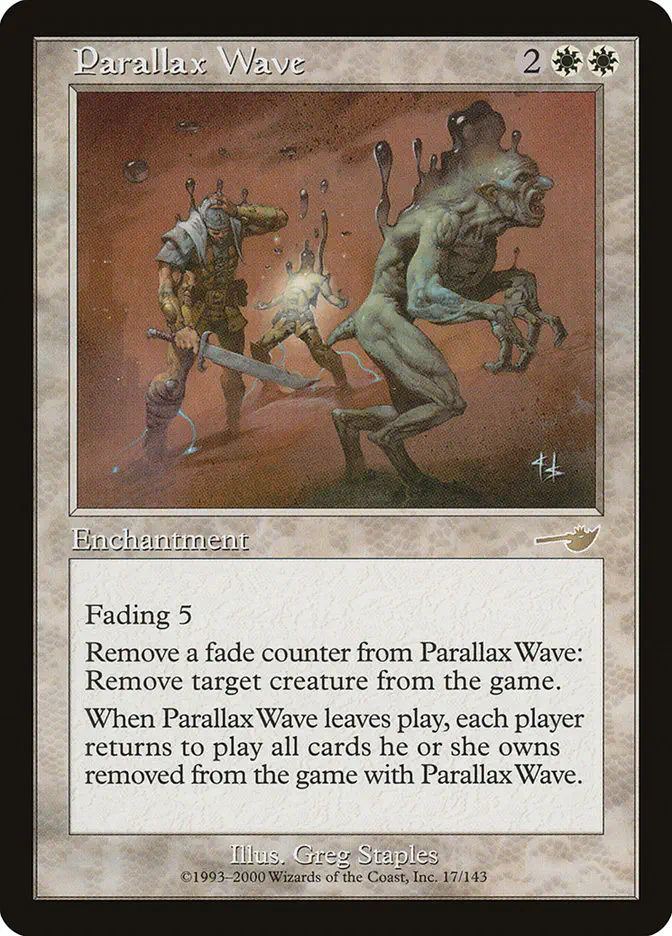
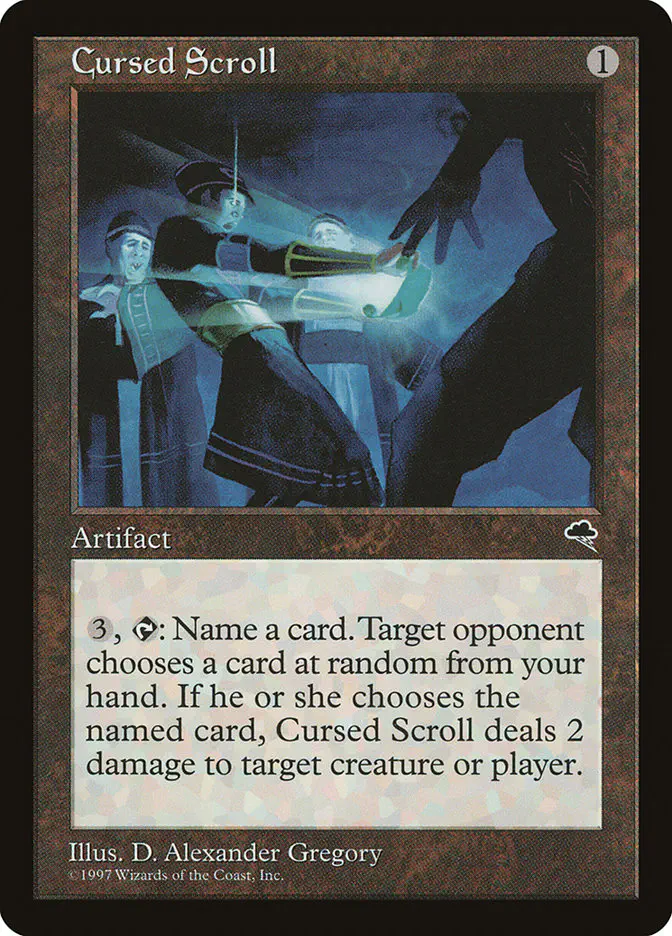
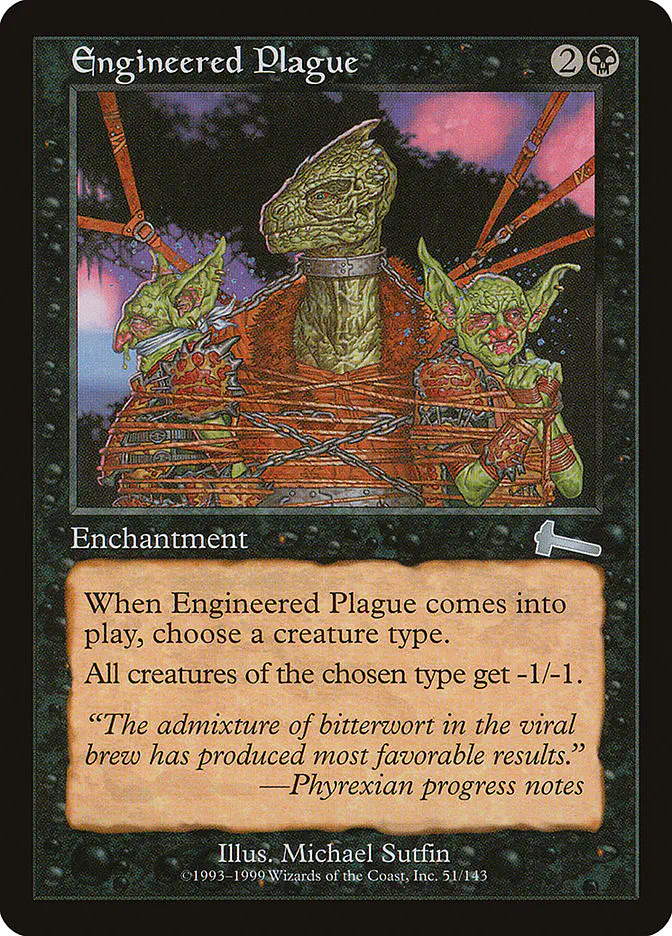
- Parallax Wave, Cursed Scroll, Lightning Bolt, Earthquake, Fire//Ice, Smother or Engineered Plague (see "Removal");
- Last Breath is an option against small utility creatures. Sometimes it's relevant to target your own creature in response to removal to gain life;
- Pyroclasm can wipe out creature swarms. Symmetry can be broken with pump effects or creatures with protection from red;
- Reprisal is an efficient answer to large creatures;
- the instant speed of Hibernation is valuable, and the card can also temporarily remove Survival of the Fittest, Sylvan Library, and Oath of Druids;
- Perish can annihilate green creature-based decks, like Elves and The Rock;
- Cataclysm (see "Mana denial") can allow for conditional recovery against decks with a superior board presence; the outcome generally depends on who controls the better creature;
- Wrath of God can recover games against decks with a superior board presence, such as Elves, Goblins, and The Rock.
Other Forms of Interaction
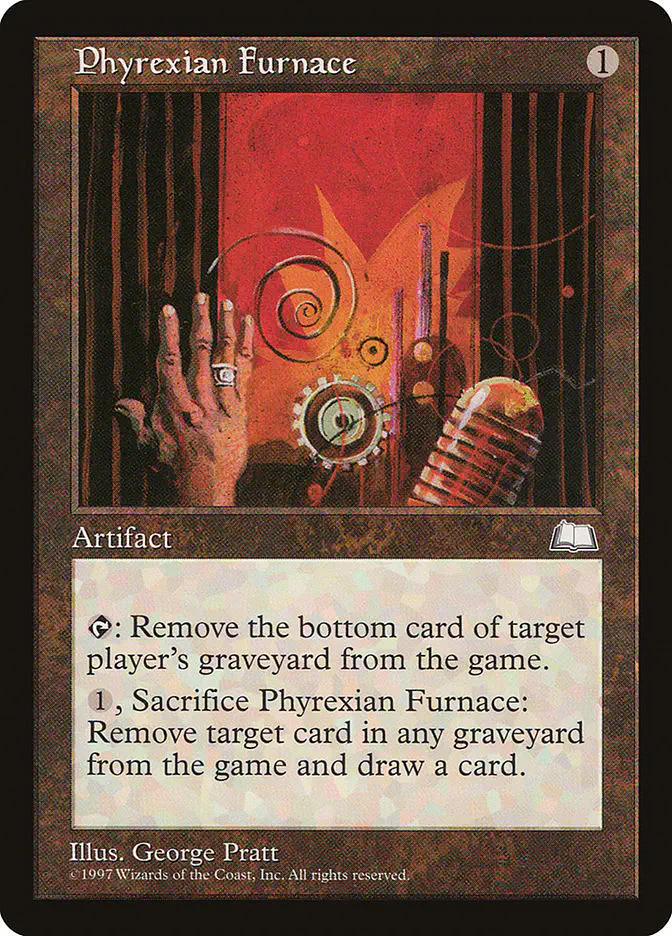
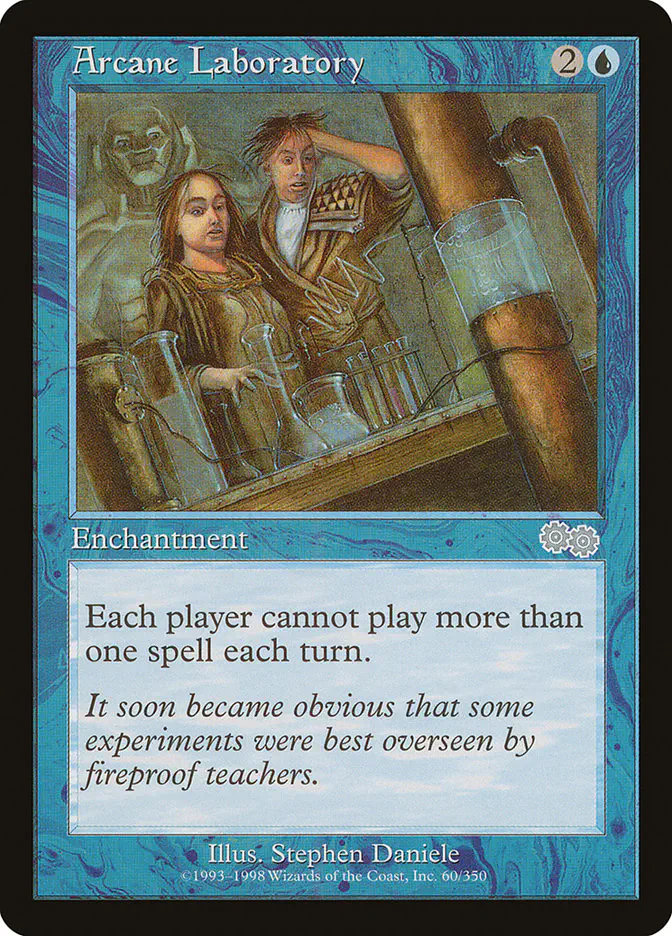
- Tormod's Crypt [ET] is the most powerful graveyard hate effect to use against combos.
- Abeyance and Orim's Chant can disrupt combos like Stiflenought, Frantic Storm, and Enchantress. They can also allow you to force a spell through counterspells.
- Annul is particularly useful against artifacts and enchantments that generate value even if removed immediately, such as Survival of the Fittest and Parallax Tide.
- Cabal Therapy and Duress can break combos like Stiflenought, Frantic Storm, and Enchantress. They also have general applications against control.
- Phyrexian Furnace [ET] (see "Miscellaneous");
- Pyroblast and Red Elemental Blast can stop blue combos like Stiflenought, Frantic Storm, and TinkUR. They are also useful against blue decks in general;
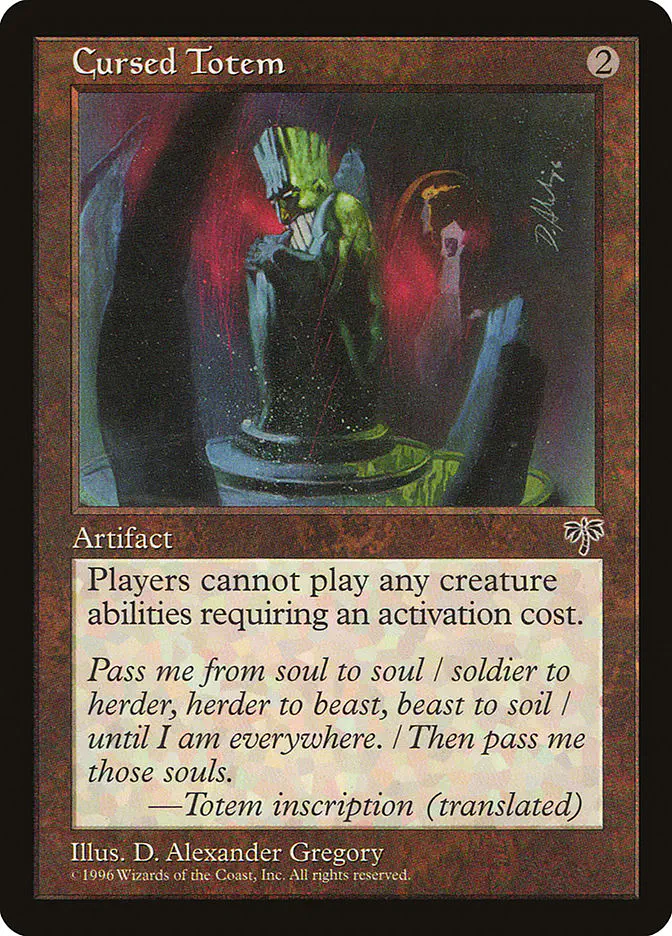
- Cursed Totem [ET] is one of the best combo lock pieces in the format. In those matchups, the tension it creates with your own creatures is generally worth it;
- Mana Leak and Memory Lapse are versatile, relatively easy to cast, and combine well with the mana denial plan. Counterspells generally clash with the tap-out nature of the deck, but in some matchups, neutralizing a single key spell can deliver victory;
- Tsabo's Web [ET] is a good way to disrupt manlands and opposing Rishadan Port or Dust Bowl, if you're not playing any yourself;
- Arcane Laboratory [ET] creates a hard lock against Phyrexian Dreadnought, Enchantress, and various combos;
- Engineered Plague [ET] (see "Removal").
Anti-Red
Burn and Goblins are both popular and represent concrete threats. Unfortunately, they require different responses, especially because Burn has reach and often doesn't play enchantment removal, while Goblins is combat-centric and frequently includes enchantment removal.
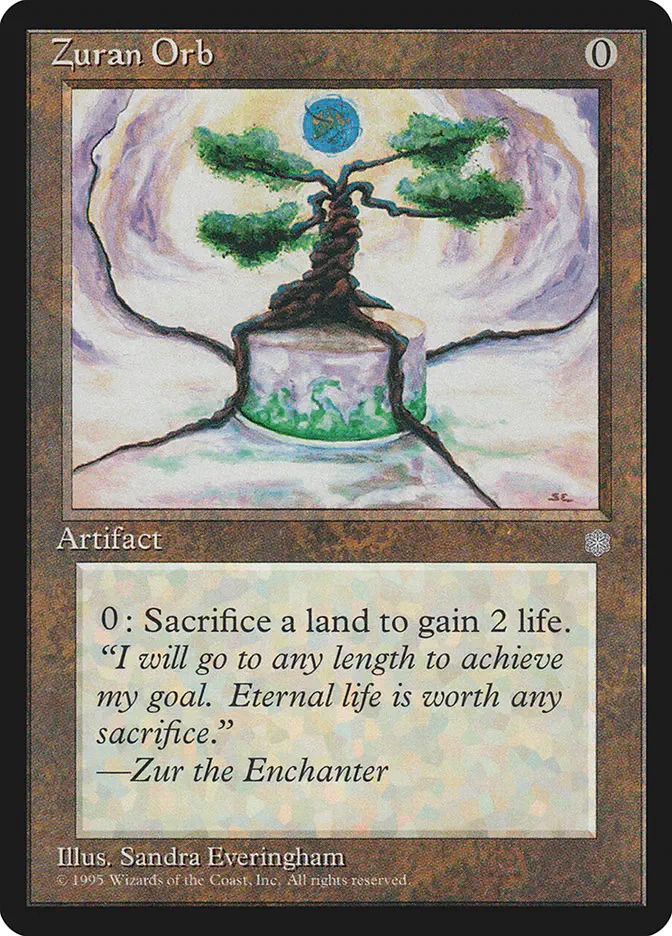
Zuran Orb [ET] is useless against Goblins, but can be very powerful against Burn. It allows you to develop threats with relative safety and offers a use for excess lands. In splashed configurations, additional protection from Price of Progress is also relevant.
Blue Elemental Blast
and Hydroblast
are efficient and flexible, but rarely decide the game on their own. Against Goblins, they primarily serve to destroy an early Goblin Lackey or neutralize Goblin Ringleader and Siege-Gang Commander. Against Burn, after eliminating Grim Lavamancer to protect your creatures, it's best to trade them for as much prevented damage as possible.
Absolute Law [ET] protects your creatures with minimal mana investment, but cannot block. For Burn, it's difficult to remove, although it can often be ignored; Goblins cannot ignore it, but more often manages to destroy it.
Chill can cripple Burn if it lands early, but loses effectiveness in later stages. Against Goblins, it's less effective and less reliable.
Circle of Protection: Red [ET] and Rune of Protection: Red [ET] handle defense, leaving creatures to attack. They are often excellent against Burn, which still has colorless damage sources; they also become weaker against those who have adopted Naturalize and/or Call of the Herd. They are less effective against Goblins, which can remove them or overwhelm their defensive capabilities.
Crimson Acolyte is an almost invulnerable blocker and protects other creatures. It is excellent against Goblins, who often can neither remove nor ignore it. Against Burn, it is usable but less impactful, as it can sometimes be removed and your creatures can be ignored.
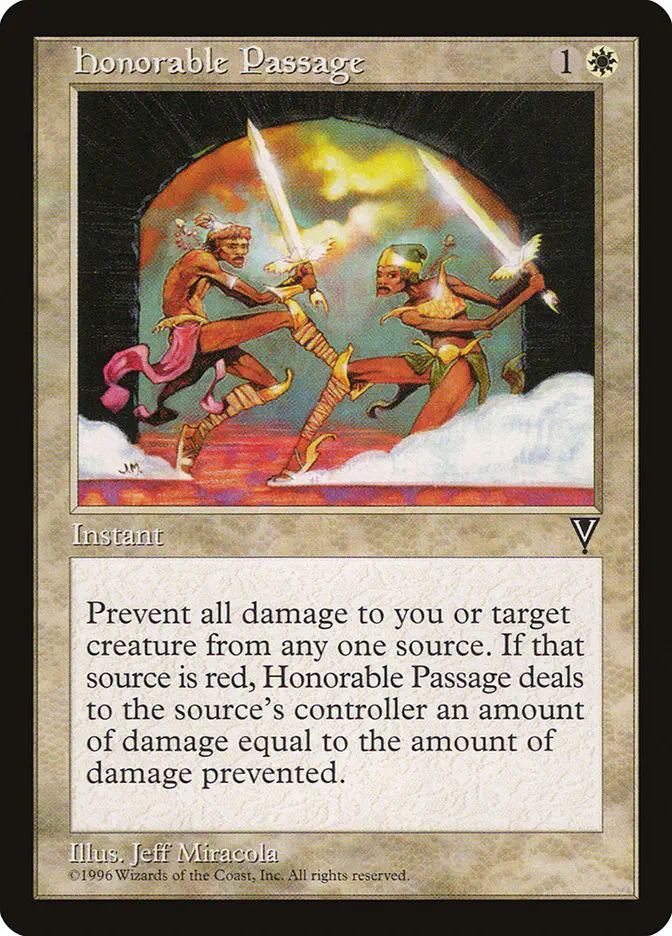
Honorable Passage and Samite Ministration can surprise the opponent and steal games, especially against Burn. While weaker against Goblins, the ability to stop a single large amount of damage also finds applications in other matchups, such as Stiflenought and Fling-based decks.
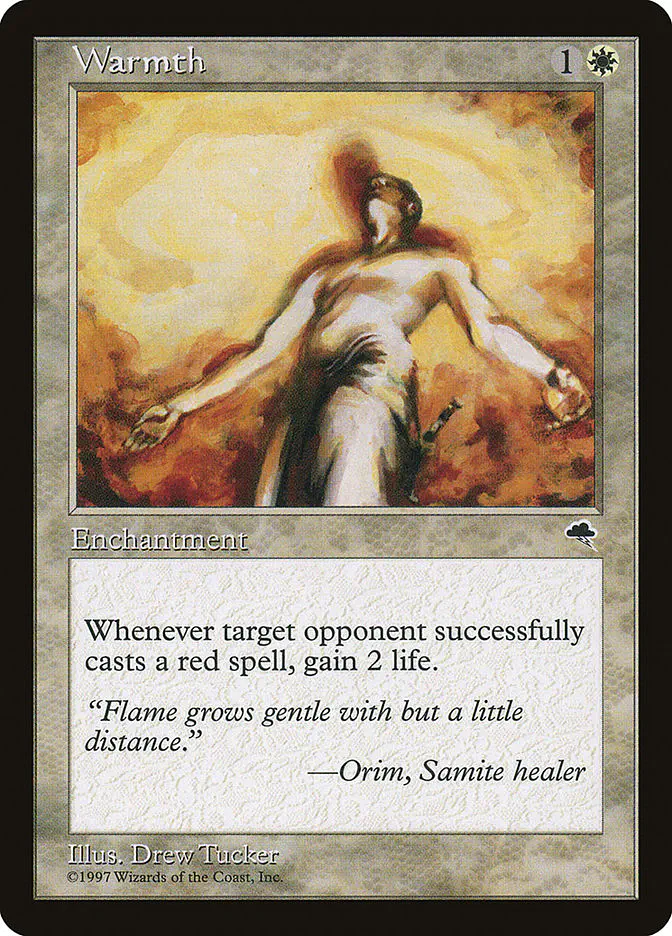
Warmth [ET] can be very effective against Burn if it lands early, but is less useful in later stages. Against Goblins, it is almost useless.
Armadillo Cloak
[ET] (see "Pump Effects") can combine with a removal-resistant creature to immediately gain a large advantage in the damage race. It's conditional, but potentially very strong against Burn and more than decent against Goblins.
Worship [ET] (see "Miscellaneous") can completely shut down the game, but often leads to an immediate loss if removed. Historically excellent against Burn, it is much riskier now because some pilots have adopted Naturalize. Against Goblins, it has always been a questionable choice.
Mana Denial
If these cards are not in the maindeck, they usually belong in the sideboard. Even when they are already present in the main list, it may be appropriate to add more copies.
Card Advantage
White Weenie can often do without card advantage, but in some matchups those extra resources allow the deck to prevail.
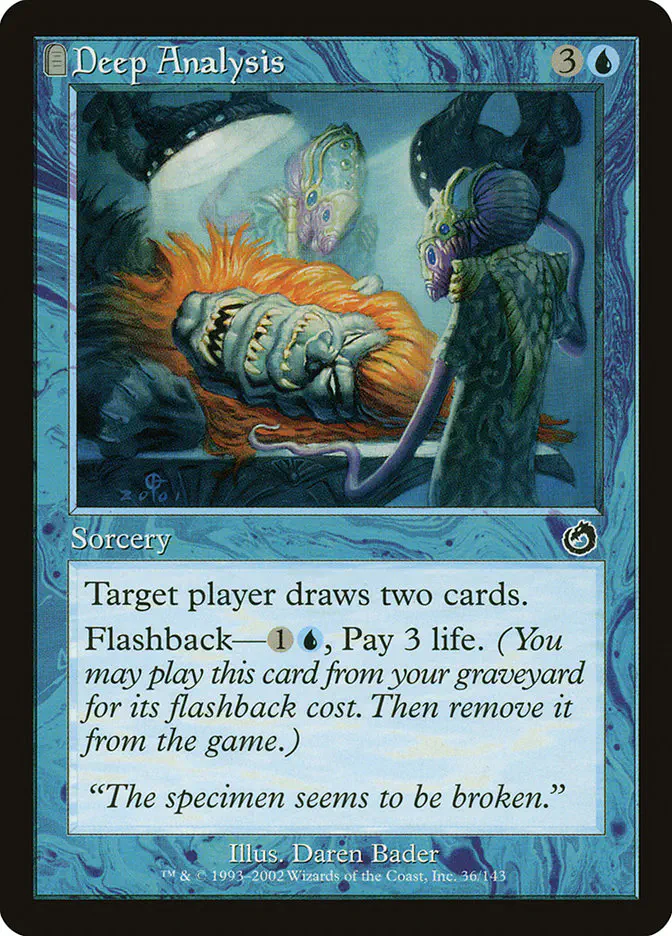
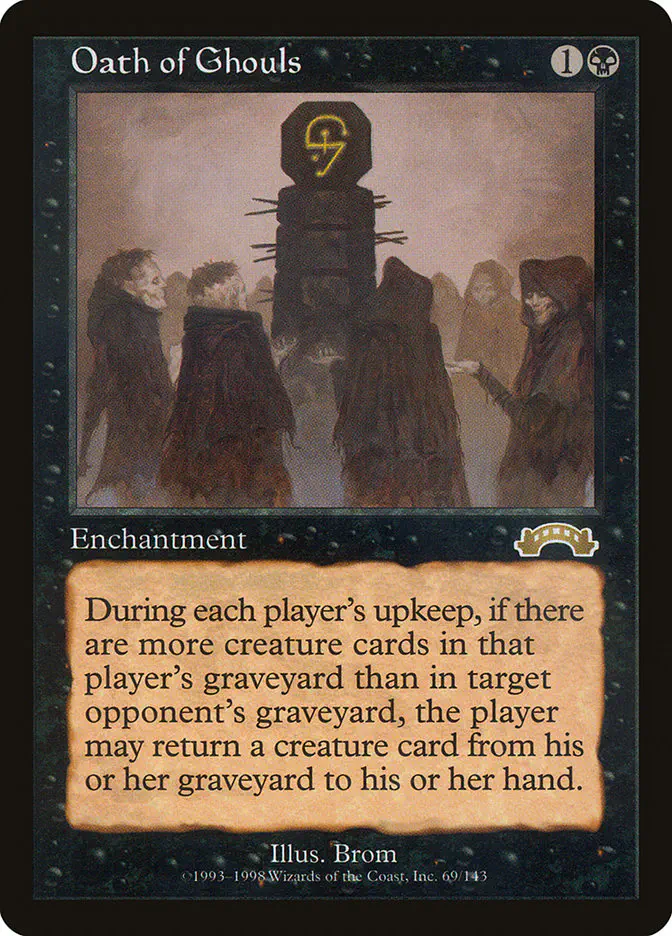
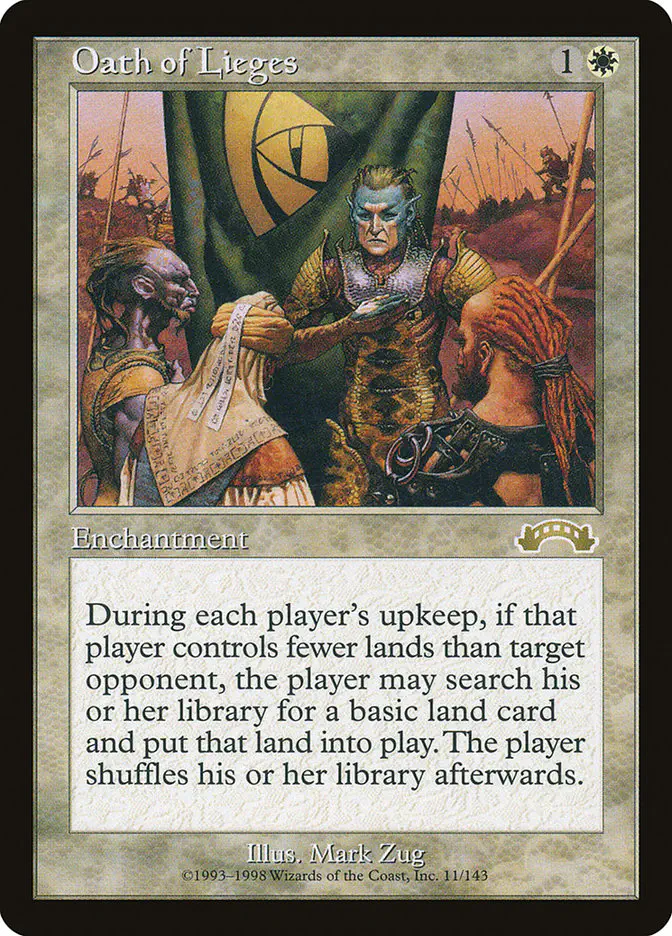
- Deep Analysis , Fact or Fiction , and Standstill (see "Miscellaneous");
- Oath of Ghouls [ET] and Oversold Cemetery [ET] can generate an endless stream of creatures in long games;
- Oath of Lieges [ET] can protect against mana denial strategies, improve late-game draws, and ensure that recovery after Armageddon or Cataclysm is at least equal to the opponent's.
Other Color Splashes
The following is a brief list of the most relevant cards offered by each color. The most important options are presented first rather than alphabetically.
Blue
- Meddling Mage
- Annul
- Arcane Laboratory
- Blue Elemental Blast and Hydroblast
- Chill
- Deep Analysis, Fact or Fiction, and Standstill
- Hibernation
- Mana Leak and Memory Lapse
Black
- Engineered Plague
- Cabal Therapy and Duress
- Oath of Ghouls and Oversold Cemetery
- Perish
- Smother
Red
- Lightning Bolt
- Earthquake and Pyroclasm
- Fire//Ice
- Pyroblast and Red Elemental Blast
Green
- Ray of Revelation
- Anurid Brushhopper
- Armadillo Cloak
- Call of the Herd
- Rancor
- Wax//Wane
How to Play the Deck
Strategy
White Weenie is typically an aggro-prison deck. While filled with cheap creatures, it is not capable of the explosive starts accessible to other colors. Instead, it relies on the superior quality of individual cards, synergies, and interaction to make a relatively slower offensive sufficiently threatening. Its role changes depending on the matchup and can even shift during the same game. Drawing on the language of the article "Finding the Three Gears of Modern Burn," its gears are:
- "Beatdown": the deck simply tries to deal damage as quickly as possible, slotting in interaction where it can;
- "Sword and Shield": an evasive creature chips away at the opponent's life total while other creatures and disruption cards defend and buy time;
- "Card Superiority": identify a card, or set of cards, that the opponent cannot beat and adapt the strategy to assemble those decisive resources.
Correctly choosing the gear requires both format knowledge to understand the matchup and tactical sensitivity to assess the moment. It is often useful to consider how the deck performs in the early, mid, and late stages of the game. Most matchups follow one of two arcs.
White Weenie is exposed to significant risk early on, but becomes much safer once the midgame is reached, generally because it has had time to stabilize its mana and deploy defensive creatures and removal. At that point, it must go on the offensive, because given enough time, the opponent could still overwhelm it.
This archetype is relatively strong in the early stages and can freely push damage. A dangerous midgame follows, usually due to an extremely powerful threat that the deck can only disrupt to a limited extent. Finally, White Weenie's late game becomes very strong, generally thanks to a card or combination of cards unbeatable by the opponent.
Knowing which arc describes the matchup and where in that arc the game is helps select the correct gear and plan for necessary role shifts.
Mulligan
Blindly, the priority is to be able to present a threat and establish board presence. You don't yet know what the key spells of the matchup are, so look for a hand capable of dealing at least four power on its own. Stable mana is more important than creatures, which the deck will likely draw anyway, or interaction, because you don't yet know what type is relevant. Perfect curving is ideal, but not essential.
After sideboarding, the situation changes. The number of creatures and pump effects usually decreases, and thus also the speed at which the game ends; at the same time, interaction improves, and it becomes clearer which cards matter and how much time is available. Speed often loses importance compared to answers. A hand with five lands, Ramosian Sergeant, and Disenchant would be unacceptable blindly, but it's a perfectly playable opening against mono-blue Stiflenought.
Winning Tactics
- Don't miss opportunities to deal free damage. Every point makes it easier to close out long, grindy games.
- When in doubt, prioritize interaction. Few decks can be beaten by speed alone; your ability to disrupt the opponent is your true strength.
- Prioritize evasion. The second gear, "Sword and Shield," is not fully available until you have an evasive threat.
- Pump effects are equivalent to haste damage: they can allow you to surprise lethal an turn earlier.
- Creatures with morph require attention.
- Opponents will always suspect Exalted Angel, so playing Whipcorder face down can be a good way to bait removal.
- You also shouldn't always turn a creature face up at the first opportunity, especially when it's likely to be removed immediately.
- Morph also helps bypass Meddling Mage, Engineered Plague, and similar effects: a face-down creature spell on the stack has no name or creature type. Finally, remember that turning a morph creature face up is a special action that happens directly: it's not an activated ability and cannot be responded to.
- Some creatures, like Deftblade Elite and Ramosian Sergeant, can dominate longer, board-centric games. If you play them, build your game plan around them when possible.
- "Protect the Queen" is a viable strategy for the deck. This generally involves Mom protecting a decisive Mage, or Mom or Mage protecting an Angel. It tends to be more effective against white decks than against black or red ones.
- One of the best ways to force a card through counterspells is to put the opponent under enough pressure to force them to spend mana on defense. If they have to cast Wrath of God, they are often exposed to Armageddon.
- Learn to maximize your lands. Entire essays have been written on "The Dynamics of Rishadan Port." Learn when to activate Port during upkeep to prevent plays in the first main phase, when to use it at other times to deny interaction, and which colors to target. Unless there's a good reason not to, activate Wasteland as soon as you've decided it's the correct play.
- If you can cast a blue spell by choosing between fetching Island with Flooded Strand or taking damage from Adarkar Wastes, it's usually better to tap Wastes, unless your life total is under pressure.
- Do not play Kjeldoran Outpost unless you intend to activate it immediately or use the mana in the same turn.
- Lair triggered abilities, such as Dromar's Cavern, can be exploited to your advantage. Lairs allow you to "recharge" Gemstone Mine. You can also add mana to your pool, play a Lair as your fourth land, and then cast Armageddon or Cataclysm, thus keeping a land. Finally, you can choose not to return a land to your hand if you want the Lair to go to the graveyard, for example, to reach threshold.
- During sideboarding, try to keep the creature count high. Only cut them for high-impact, reliable effects. Whatever the plan, pressure remains essential.
Specific Matchups
Burn
Burn versus White Weenie is a classic matchup. White Weenie's threats are inexorable, but slower; mitigating damage is therefore fundamental to gain time. This is mostly a second-gear game, "Sword and Shield," with the caveat that Burn's reach almost always prevents you from feeling entirely safe. On average, each opposing draw step is worth more than a direct damage even when the combat phase is stalled. There is a real tension between offense and defense, especially regarding Silver Knight and the danger posed by Ball Lightning. Mana denial can be an important defensive tool.
After sideboarding, you might have access to several Anti-Red cards, some almost unbeatable for the opponent. To make room, you can cut less efficient or impactful creatures, like Soltari Monk and Whipcorder, and spells like Cataclysm and Parallax Wave. You still need to keep enough answers to Sulfuric Vortex and Cursed Scroll. The red deck, meanwhile, will likely reduce the number of combat-dependent creatures, like Jackal Pup and Ball Lightning, to add direct damage and/or removal like Lava Dart, Pyroclasm, and Price of Progress. This tends to lead to slower games. Anarchy is rare, but it's important to remember it can be there.
Finally, towards the end of 2024, some Burn pilots succumbed to "The Fear," including Naturalize, Tranquil Domain, and even Call of the Herd in their sideboards. These cards significantly change the effectiveness of your sideboard options, but at the same time dilute the overall efficiency of their deck. As long as you can handle Elephant tokens and don't rely too much on artifacts and enchantments, this shouldn't significantly alter the outcome of the matchup.
Goblins
Goblins is consistent, powerful, flexible, and perennially popular. To beat it, you must first be ready to respond to an early Goblin Lackey attack, keeping in mind that the deck often manages to remove a 1-toughness blocker. Afterwards, you will likely enter a second-gear game, "Sword and Shield," in which you will leverage larger creatures, with first strike or protection from red, to dominate combat. You will then need to close before being overwhelmed by the advantage generated by Goblin Ringleader and/or Siege-Gang Commander. Mana denial will be present on both sides. For Goblins, it serves to slow you down while it develops its board; for you, it delays its heavier threats and grants the necessary time to win.
After sideboarding, you might have various Anti-Red cards available. Mass removal, such as Cataclysm, Wrath of God, Engineered Plague, Pyroclasm, or Earthquake, can be even more decisive. To make space, cut artifact and enchantment removal—one of the rare cases where they are useless—and then less efficient or less combat-worthy creatures. The Goblins player's additions will depend on their configuration. Green versions can increase enchantment removal; black versions can include Dralnu's Crusade, removal, or graveyard recursion. Mono-red versions are most likely to play multiple copies of Anarchy. Any variant can have Pyrokinesis, other Goblin Sharpshooters, or Gempalm Incinerator. In most cases, however, it will prefer to sideboard lightly, because every non-Goblin card weakens the synergies the deck depends on.
Stiflenought
The format's bogeyman, Stiflenought, fears nothing… perhaps with the exception of White Weenie. The deck, focused on creating a single huge artifact creature, must contend with at least Swords to Plowshares and Disenchant, or Seal of Cleansing, in addition to a combination of Meddling Mage, Whipcorder, Parallax Wave, and Worship; all backed by a quick offensive. The main risk is simply that the Dreadnought player has a lucky start and quickly presents a 12/12 with just slightly more protection than the White Weenie player has removal. It must be said that the deck has a lot of protection and, given enough time, can assemble quite a bit. The first gear, "Beatdown," is the correct plan. When the Dreadnought inevitably arrives, you must also consider the timing and sequence of removal to minimize the effectiveness of protection: playing around Daze when possible, forcing a Vision Charm during upkeep to prevent an attack, and so on.
There are four popular versions of the deck, each with different splashes and considerations.
- Mono-blue Stiflenought is extremely fast and consistent. Historically, its alternate plan was Brain Freeze, a strategy you could usually outrace. More recent innovations have added Mishra's Factory, which can slow your offense, and Parallax Tide to attack your mana, an effect from which you can often recover. The sideboard may include Misdirection or Cursed Totem, while removal is usually bounce spells.
- Blue-white Stiflenought, or Argennought, is generally considered the "best" version. It uses Meddling Mage to proactively defend the combo and adds Swords to Plowshares and other removal. In the sideboard, you'll likely find Cursed Totem, Disenchant, additional copies of Swords to Plowshares, and Last Breath.
- Blue-red Stiflenought is less common, but surprisingly challenging due to the presence of Grim Lavamancer, which can eliminate Mage and Whipcorder, and Fling, which allows for winning a turn earlier and reduces the effectiveness of your removal. The sideboard will likely contain a lot of removal, perhaps even Pyroclasm.
- Blue-black Stiflenought, or Psychanought, uses Psychatog as a redundant threat and a difficult-to-overcome blocker. It also has discard spells to clear the way for the combo. The sideboard will likely include more removal, including Engineered Plague.
You want to include relevant creature and artifact removal, plus interaction like discard and counterspells when available. The worst cards are expensive ones that don't answer a threat. Mana denial is weak even against such a lean Gush list, while Enlightened Tutor tends to be poor against counterspells and Vision Charm.
Remember that, no matter how favorable the matchup, the opponent has unbeatable hands. Some games will be lost to a turn two Phyrexian Dreadnought protected by Foil and Counterspell. Accept it, without dwelling on it too much.
The Rock
The Rock withstands the test of time. You usually want to deal as much damage as possible in the early stages, before it stabilizes the board with green blockers and Pernicious Deed. If it succeeds, its creatures often outsize yours, and the value generated by Recurring Nightmare and Genesis can quickly make you lose control of the game. Sometimes mana denial can delay this development, but the tactic can fail against Birds of Paradise, Wall of Roots, and Ravenous Baloth already on the field. In that case, the only hope is to find a way to push enough damage before being overwhelmed, or to have a card capable of overwhelming the opponent in turn; Exalted Angel is an excellent candidate. For this reason, the game can require the first gear, "Beatdown," or the third, "Card Superiority."
Mana denial and hard-to-deal-with evasive creatures, such as Soltari Monk and Exalted Angel, are excellent sideboard additions. Enchantment removal is not particularly effective against Recurring Nightmare, but can occasionally be useful against Pernicious Deed and becomes very useful against Engineered Plague. The tax imposed by Aura of Silence makes it particularly relevant. Parallax Wave can be used to counter a Deed or clear the path and continue attacking. Glorious Anthem and Divine Sacrament can neutralize Plague and cannot be swept away by Deed without simultaneously eliminating the Plagues in play. The weaker cards tend to be cheap enchantments and artifacts, as well as non-evasive creatures that are overwhelmed by Deed. In addition to Plague, the opponent may include other removal, cutting weaker or situational cards like Duress.
Elves
Elves has always been the nemesis of White Weenie in many formats. It is at least one turn faster than White Weenie's best starts, can kill through any number of blockers, generates so much mana that mana denial is almost irrelevant, and has card advantage engines capable of overwhelming White Weenie in a "fair" game. Cards like Masticore can demolish even the best positions the deck can build. It's a real nightmare. Without Cataclysm, Engineered Plague, or a heavy red splash in the maindeck, Game 1 is almost impossible to win. If you can keep Survival of the Fittest, Masticore, and Kamahl, Fist of Krosa off the field, there is a remote chance of prevailing with the first gear, "Beatdown," or the second, "Sword and Shield."
After sideboarding, White Weenie gains many excellent tools: more graveyard interaction to contain Squee, Goblin Nabob and Anger, Cursed Totem to deactivate all opposing creatures, and, perhaps, creature mass removal, especially Engineered Plague. The weaker cards are mana denial, creatures unable to either beat Elves in combat or overcome them with evasion, and generally anything slow. Elves will include removal for Totem, assuming you play it, and might add anti-creature cards like Goblin Sharpshooter or additional Masticores. If it expects black or red spells, it might also have Caller of the Claw.
Your sideboard cards can win the game if they stay on the field, but they offer no guarantees: Elves is the proactive deck in the matchup and can still win unimpeded. The best advice is not to warp your list to beat it, but rather to switch decks if Elves is too prevalent in your metagame. If you must play White Weenie in an environment full of Elves, a black or red splash is highly recommended.
Landstill and other UW Control
Landstill is the quintessential Premodern control deck, adequately prepared to face very different strategies. With Swords to Plowshares, Wrath of God, Humility, Mishra's Factory, and counterspells, plus Standstill and Fact or Fiction to keep its hand full, it seems specifically designed to beat "fair" creature decks. Yet White Weenie is favored in the matchup. The plan is the first gear, "Beatdown." The goal is to put some threats on the board and then use mana denial or Meddling Mage to prevent the opponent from resolving Wrath of God and Humility, or respond to their attempt to stabilize with Armageddon. Sometimes it's possible to keep them from their big stabilizing effect forever; alternatively, you can still close out after they resolve it, provided enough damage has been dealt in the early stages. Otherwise, they will try to turn the game around in one fell swoop with a big Decree of Justice or a Parallax Tide-based combo.
The opposing deck tends not to improve drastically after sideboarding, as it often dedicates excessive attention to red decks and combos. It's reasonable to expect another copy of Wrath of God or Humility and perhaps some supplementary removal. Your weaker cards are Tutors, situational options like Worship, and pump effects, with the possible exception of Rancor. The goal is to maximize the number of threats and mana denial. Although removal will have few targets, it remains useful against Mishra's Factory and Humility. However, keep in mind the possibility of Teferi's Response.
Hermit-FEB (Hermit Druid–Full English Breakfast)
Hermit-FEB is one of the fastest and most consistent combos and one of the hardest to disrupt. It's also the most complex deck I've personally tried to pilot. It contains two "one-card combos" in Hermit Druid and Survival of the Fittest. It can win as early as turn two, although turn three is more likely. It's also capable of playing grindy games thanks to a utility toolbox and using its interaction to overcome opposing answers. Your plan is the second gear, "Sword and Shield," but in this case, the shield consists less of blockers and more of interaction, which must be the absolute priority. There's also a remote possibility of assembling the third gear, "Inevitability," at least in Game 1.
The first priority is to prevent Hermit Druid from activating. If you can't, you must prevent Volrath's Shapeshifter from staying on the battlefield, whether it's cast, reanimated with Unearth, or already in play. Otherwise, the opponent will likely turn Shapeshifter into Psychatog, pump it by exiling most of their graveyard, and then turn it into Akroma, Angel of Wrath to kill you. All of this can happen as early as turn two. Immediately removing Druid is a good plan; waiting can cause you to lose to Cabal Therapy's flashback. The Druid line requires both the graveyard and combat, so an active Phyrexian Furnace or a Whipcorder with available mana can be an effective defense, as can Parallax Wave or Worship. Mage can disrupt the line if the opponent has yet to cast Volrath's Shapeshifter, Krosan Reclamation, or Unearth, and if you are able to block Shapeshifter; choosing the wrong name, however, can cost you the game. Wasteland and Dust Bowl can also interfere with the combo by changing the order of cards in the graveyard; however, the opponent can circumvent this with additional mana and Coffin Purge or Krosan Reclamation.
The second priority is to prevent Survival of the Fittest and Volrath's Shapeshifter from being on the field simultaneously. If you fail to do so, the opponent will generally transform Shapeshifter into Phyrexian Devourer, make it huge, and then transform it into Triskelion to kill you. This sequence can occur as early as turn three, and once it begins, there's almost no meaningful way to interact with it. Since Survival of the Fittest can find Shapeshifter or a large number of utility creatures, it is the most important permanent to keep off the field: it must be a priority for Mage and justifies any amount of Disenchant-like effects.
In addition to relevant enchantment and creature removal and graveyard hate, permanents like Cursed Totem and, to a lesser extent, Engineered Plague are effective tools against Hermit-FEB. However, they are not unbeatable: with enough mana, it's possible to circumvent Engineered Plague, and Naturalize or Uktabi Orangutan are likely to be present. The opponent will almost certainly also have creature removal and discard spells. For this reason, you need to close quickly: if you give them too much time, they will find a way out. Cut less efficient threats and interactions, especially Exalted Angel.
A final possible line of attack stems from the fact that Hermit decks of all kinds often have rather fragile manabases. If Birds of Paradise and Wall of Roots are not on the field, it is possible to lock out Hermit-FEB with a combination of Wasteland, Rishadan Port, Dust Bowl, and Armageddon.
Replenish Combo
Replenish Combo is a difficult matchup for White Weenie. Its goal is to assemble Parallax Wave and Opalescence to exile all opposing creatures and enchantments, then add Parallax Tide to lock down lands as well. It can build the lock piece by piece or all at once, filling the graveyard with Attunement, Frantic Search, Intuition, and/or Fact or Fiction and then resolving Replenish. Once the lock is established, interacting becomes difficult; see "How to break the standing Wave." Although you have some tools to prevent the combo, solid opposing removal and/or counterspells can answer most individual permanents, while Ancient Tomb, City of Traitors, and Frantic Search allow the deck to bypass mana denial, especially Rishadan Port. The plan is the first gear, "Beatdown," supported by all available interaction. Unfortunately, the opponent usually gets to their goal before you do. If you can reach Armageddon, however, you are often in a good position.
After sideboarding, you generally improve more than your opponent. You can bring in mana denial and graveyard hate, as well as other enchantment removal, which are useful even if rarely decisive. Counterspells and discard are great when available. Cursed Totem is another option capable of shutting down the combo, but it often needs to come down early, is vulnerable to removal, and still leaves you with the problem of dealing with very large creatures. To make room, cut less mana-efficient creatures, like Exalted Angel. You'd also want to eliminate creature removal, but there's a problem: the opponent can bring in Exalted Angel. This is less common now, but it remains a threat that may need an answer. The ideal is to do so with Whipcorder, Lightning Bolt, or another flexible card; otherwise, you might have to keep some otherwise useless copies of STP. In general, however, the opponent will likely increase the number of removals and counterspells. They might also play Tsabo's Web to hinder some of your mana denial.
Ponza-Oath
Ponza-Oath is a surprisingly linear matchup for White Weenie, although it depends heavily on the respective configurations. Lists built with enough basic Plains and Wasteland can absorb a surprising amount of Thermokarst. The GW version that only has STP can often be overwhelmed, while the GR version with Pyroclasm may have no answer to Soltari Priest and struggles against pump effects. An Oath of Druids that produces a large Terravore can be scary, but the deck has enchantment removal and True Believer to defend against Oath of Druids. Even a single normally cast Terravore is often a threat that White Weenie can handle with its own tools. In essence, many White Weenie configurations are favored and can aim for a long game in third gear, "Card Superiority." The problem often arises in the midgame, when mana denial tends to imbalance the White Weenie player, who can lose to Mishra's Factory and Treetop Village before regaining the initiative. Naturally, lists with less stable mana, less red protection, less evasion, and less enchantment removal will tend to perform worse.
In post-side games, White Weenie can often identify the less impactful creatures to remove. Cards like Savannah Lions can be terrible against Oath of Druids, so it's wise to carefully select which threats to keep. Splash cards and expensive ones can also become difficult to cast and often deserve to be cut. In return, the deck can increase its enchantment, artifact, and large creature removal. Phyrexian Furnace, Tsabo's Web, and Oath of Lieges can completely invalidate the opponent's strategy if not dealt with quickly. Furthermore, while it's hard to reach a four-mana sorcery, Cataclysm is a very powerful effect: it simultaneously eliminates multiple Mox Diamonds, Sphere of Resistances, Cursed Totems, Sylvan Librarys, Oath of Druidss, and manlands. I do not recommend Armageddon, because the opponent keeps most of their board, including Mox Diamonds, and plays enough lands to recover quickly. Meanwhile, the opposing deck will likely rely less on Oath of Druids, adding cards like Call of the Herd and other creature removal. They might also include more artifact and enchantment answers if they believe they will be useful. To make room, they often reduce the mana denial plan, so after sideboarding, you can expect a bit less pressure on your mana.
__
Credits: Translation and update of White Weenie Primer v2 by Darkview