

The Golden Years of Pauper Leagues: The Heart of the Italian Community
In the first chapter of this journey, we described Pauper as a meeting point between past, present, and future: a format capable of bringing together cards and players from different generations at the same table. This time, the story shifts to the places where that magic comes to life every week: the Pauper Leagues.
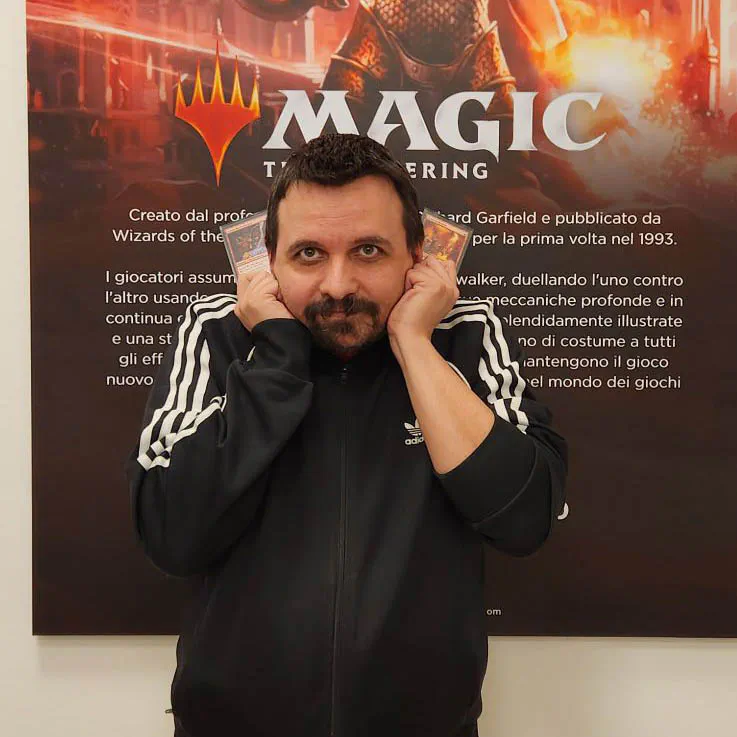
I am Flavio Ausilio, and Pauper has been part of my Magic journey since 2022. Since then, I have learned that a League is not just a succession of tournaments, a leaderboard to climb, or a Top 8 to secure. It is, first and foremost, a community built over time by players, organizers, and store owners who choose to show up consistently.
Behind every prepared table, every round announced, and every completed season lies a lot of work that often remains invisible. There are people who dedicate time and energy to organizing, stores that open their doors, and players who turn any ordinary weekday into an appointment to look forward to.
It is to them that this second chapter is dedicated.
The Value of a League
Italian Pauper Leagues are one of those places where competition and sharing coexist in the most natural way. We play to win, of course, but the final result does not exhaust the value of the experience.
A League lives in the matches played, the standings, and the season finals, but also in everything that happens around the table: a list discussed before the tournament starts, a card lent at the last minute, advice given after a loss, or a play analyzed together long after the round has ended.
It is this continuity that transforms a series of separate events into a shared journey. Week after week, faces become familiar, rivalries gain a history, and each new stage connects to the previous ones. Thursday night tournaments cease to be just an evening of Magic and become part of the life of the community that fuels them.
Therefore, the true value of a League is not measured only by who finishes the season in first place. It is also measured by its capacity to make people return, to welcome new players, and to create an environment where everyone can find their place.
The Invisible Work
Every story needs a place to be told. For Pauper Leagues, that place is almost always a local game store, but the store alone is not enough: it takes people willing to take care of the community.
Owners, organizers, and League managers are the silent engine of this movement. They prepare the calendar, collect registrations, answer questions, manage standings and rounds, welcome those entering for the first time, and try to keep interest alive throughout the season.
Their commitment begins long before the first pairing and does not end with the prize distribution. It continues in the communication between stages, in finding solutions when something goes wrong, and in the ability to keep a group of people with different expectations and levels of experience together.
It is a job that rarely gets into the spotlight, but is felt in the quality of every event. A well-organized League does not just offer the opportunity to play: it builds an environment where competition remains important without suffocating the pleasure of being together.
Before the Match
A League night does not begin when the players sit at the table. It starts in the preceding days, looking at an incomplete decklist, pondering maindeck choices, and making final tweaks to the sideboard.
Every player arrives bringing their own idea of Magic. Some choose the most solid deck of the moment, some remain loyal to their favorite archetype, and some use each stage as a laboratory to experiment. Even deckbuilding becomes part of the narrative: not just a tool to get the best result, but a way to express one's style and interpretation of the format.
Pauper offers many possibilities precisely because it does not reduce the game to a simple comparison of decklists. Knowledge of the metagame, experience, the ability to read the opponent, and resource management still play a decisive role. The deck matters, but the journey that led to choosing those sixty cards matters too.
When the tournament begins, all these decisions finally come into play. Some will prove to be correct, others will be questioned during the ride home. The following week, it will all start over from there.
The Players' Stage
Every League has its own protagonists, and no two communities are exactly alike. There are players focused primarily on competition, deckbuilding enthusiasts, veterans who know every nuance of the format, and people who are still taking their first steps.
These differences are not a limitation, but rather one of the main assets of the Leagues. At the table, very different experiences, ages, and ways of enjoying Magic meet. A match can become a tight contest, an unexpected lesson, or the beginning of a rivalry destined to last the whole season.
Every player brings something personal: their choices, their beliefs, the desire to improve, and, inevitably, their mistakes. Competition tests not only deck knowledge, but the ability to adapt, accept a defeat, and return the following week with new ideas.
For a few hours, the table truly becomes a stage. Not because every match has to be memorable, but because each one contributes to building a larger story: that of the League and the people who are part of it.
Much More Than a Standing
The final Top 8 represents the competitive goal of a season. It is the moment where consistency, preparation, and results find their climax, and for those who manage to qualify, it is a well-deserved satisfaction.
However, it would be reductive to think that the entire journey exists only for the sake of that final tournament. The standings show who got the most points, but they cannot contain everything that happened during the previous months.
They do not fully show those who participated in every stage without reaching the finals, those who changed decks multiple times searching for the right one, or those who kept showing up after a long streak of bad results. They do not measure the value of those who taught the rules to a new player, lent a complete decklist, or spent time helping an opponent understand a misplay.
These are simple gestures, often forgotten by the next day, but they are exactly what transforms a competition into a community. A healthy League rewards the best players without forgetting all the others, because every participant helps give meaning to the season.
A Sense of Belonging
As the weeks go by, opponents become familiar faces. You learn their favorite decks, the way they approach a game, and even the habits that precede every tournament. Rivalries remain at the table and, once the match slip is signed, make room for a joke, a discussion, or preparation for the next stage.
It is in this transition that the sense of belonging is born. The League stops being just an event to attend and becomes a place to return to. The result of the evening remains important, but it is no longer the only reason you walk through the store's door.
For many players, League day is the time to meet up with their group. You arrive to play Magic, but you return because, in the meantime, you have built relationships that exist beyond the single game.
This belonging does not happen automatically. It must be cultivated through respect, availability towards less experienced players, and the ability to experience competition without letting it create distance. When this balance works, the League becomes one of the most authentic ways to experience organized play.
A Gateway to Competitive Magic
The strength of Pauper lies not only in its affordability or the depth of the format. It also lies in its ability to welcome people from very different backgrounds.
Leagues are often the place where a player returns to Magic after years away, or tackles a structured tournament for the first time. The weekly context allows for gradual learning: you get to know the rules, discover the metagame, improve your decklist, and gain familiarity with all those dynamics that casual games cannot teach.
The experience of veterans thus intertwines with the enthusiasm of beginners. When the community works, the difference in skill does not become a barrier, but an opportunity for growth. Those who ask for advice today might be the ones welcoming the next newcomer tomorrow.
In recent years, Italian Pauper has proven it can represent much more than just an alternative to other formats. For many players, it has become their first real entry point into competitive 60-card Magic, the starting point from which playgroups, teams, and friendships were born, destined to meet again at major national events.
Therefore, Leagues do not just organize tournaments. They train players, nurture local communities, and build the fabric that allows the movement to grow.
The Golden Years Are Now
When we talk about "golden years," we often think of a period that has already ended, to be remembered with nostalgia. In the case of the Italian Pauper Leagues, however, the golden years might be the very ones we are living right now.
Every week, new players discover the format, local communities continue to organize seasons and events, and the experiences born in individual stores merge into an increasingly recognizable national movement. None of this happens by chance: it is the result of the daily work of people who believe in the value of shared play.
The credit goes to the stores that continue to offer spaces and meeting opportunities, to the League managers who invest time and energy in organizing, and to the players who fill the tables regardless of the record with which they will finish the evening.
A League is not just made of standings. It is made of people who choose to build something together, week after week.
The golden years of Pauper Leagues are therefore not a memory to celebrate, but an ongoing story. Every new season adds a chapter, every new player brings a different point of view, and every match helps keep the movement alive.
The next protagonist could be you.
To find the nearest Pauper League and start living this experience, visit the Find a League section of Lega Pauper Italia:
https://www.legapauperitalia.it/leagues
Until next time, Flavio