

When 1994 Magic meets 2026 Magic
Pauper, the place where thirty years of Magic share the same table.
A player with thirty years of Magic on their shoulders.A player who discovered the game only recently.Two different decks.Two generations.One game. A card from 1994 can meet a card from 2026, just as a player of yesterday can share the table with one of tomorrow. Because time changes cards, formats change, people change. But there is something that remains.
A Common constant. The desire to play. And a Common Card that becomes the symbol of something much bigger. Because maybe the true Common Constant is this:
Magic changes constantly, but the reason we sit down to play remains the same.
A meeting point between past, present, and future
Pauper was born from the grassroots, from the idea that Magic could be experienced through its common cards, putting the gameplay before the financial value of the cards. Having grown within communities and then officially recognized by Wizards in 2019, the format has built its identity on the ability to unite different eras: cards born at the dawn of Magic can still share the table with those of the present.
In Italy, this philosophy found a home in a passionate community, capable of transforming a format into a meeting place made of players, stores, Leagues, and events.
A community is not born merely when many people share a passion, but when that passion becomes a meeting point. It is made of players who know each other, of hands shaken before a match, of advice given between rounds, and of new faces finding their place at the table.
Because in the end, a format lives in its cards, but grows thanks to the people who choose to share it. There, this is Pauper: not just a format, but a meeting point between past, present, and future.
Why play Pauper?
At this point you might ask yourself: why play Pauper? The answer is perhaps simpler than it seems.
Because Pauper allows you to experience Magic in one of its purest forms: a format where history meets the present, where a common card can still have a story to tell, and where the value of a match does not depend on the price of the cards, but on the people sitting on the other side of the table.
Pauper offers something rare in the landscape of Magic, encapsulated in four main points.
Accessibility
Pauper allows many players to approach Magic without the financial value of the cards becoming the first obstacle. It is a format where what matters most of all is the desire to play, experiment, and share a game.
Depth
Behind the concept of "common" lies a format rich in strategies, interactions, and possibilities. Pauper proves that the complexity of Magic does not depend on the rarity of the cards, but on the choices of those who use them.
Continuity
Few formats manage to tell the history of Magic so well: cards born decades ago can still find a place alongside the new generations. The past is not replaced, but continues to converse with the present.
Community
The true value of Pauper comes from the people who live it every day. Stores, Leagues, tournaments, and playgroups transform a format into a place to meet, learn, and return to week after week. Because in the end, Pauper is not just a way to play Magic:
it is a way to share Magic.
Pauper is much more than a format
Behind the success of Pauper there are not just the cards, but the people and the places that bring it to life every day. The stores, the Pauper Leagues, Paupergeddon, and the many events dedicated to the format have transformed a shared passion into a true community, capable of welcoming new players and uniting different generations.
A network of connections that demonstrates how a format can grow not only through the game, but through the people who choose to be part of it.
And perhaps the best way to truly understand Pauper is simply to approach one of these places: even just stopping by a store, watching a match, listening to the players' stories, and breathing in that atmosphere that can hardly be described in words alone.
Because often the desire to play is born just like that: from the first table observed, from the first match seen, from the curiosity to discover what happens on the other side of the cards.
The heart of Pauper
When Thursday night arrives and a store opens its doors for a League, the reason so many people sit at that table is not just the final result of the match. It is the atmosphere created before, during, and after the game.
It is the pleasure of meeting familiar faces, of sharing a joke between rounds, of asking for advice or recounting a play that just happened. In that moment, those who have lived Magic for years and those who have just started their journey in the format share the same space, the same rules, and the same passion.
The experience varies from person to person, but it does not create distance: it becomes an opportunity to learn, teach, and grow together. Because competition is the reason we sit at the table, but community is the reason we return. And this is perhaps the true strength of a Pauper League: not just creating better players, but creating people who want to meet up again.
That is why stores, Leagues, and players—from veterans who have spanned years of Magic to those who have just started their journey—share a common goal: to welcome, engage, and help others discover the beauty of this format.
Because a growing community does not just increase its numbers, but also improves the level of play, the quality of experiences and, above all, the human value of the people who belong to it.
The past passing the torch
Pauper is one of the few formats that still manages to bring around the same table those who started playing thirty years ago and those who opened their first Starter Kit last week. Both can compete, learn something and, above all, want to return the following Thursday.
In Pauper, the experience of those who have lived through many eras of Magic does not become a distance, but an opportunity for sharing. Every match can turn into a moment to discover a new card, listen to advice, or see the game from a different perspective.
And this is, probably, its greatest strength:
a format where the past does not look at the future with nostalgia, but passes it the torch.
The game beyond rarity
Often, Pauper is associated with its most immediate aspect: accessibility.
But the cost of the cards is only the entry point, not the real reason so many players choose to stay.
Its strength comes from decisions.
In a format where it is not the most expensive cards that determine the result, every choice in deckbuilding and every decision during a game carries greater weight. Knowledge, experience, and the ability to adapt become the most important tools.
Behind a common rarity lies a deep strategic world: different archetypes, completely opposite playstyles, and continuous opportunities for evolution make Pauper a format capable of surprising even those who have been playing it for years.
But the true distinguishing element remains the community.
Pauper is a format that lives in the people who play it, in the stores that host it, and in the weekly meetups that transform a match into an appointment to look forward to. And that is precisely why it can become a valuable resource for a store: because it does not just offer a tournament, but creates a place where players can return, get to know each other, and build something together.
If you have never tried Pauper, maybe it is worth giving it a game.
Not because it is the cheapest format, but because it could be the table where you discover a new way to experience Magic.
The things that remain
Thank you for staying until the end, because talking about Pauper means talking about much more than just a format.
It means talking about people, memories, encounters, and that magic born when different generations sit at the same table for a game, with the history of Magic spanning from 1994 to 2026.
The hope is to see you there soon, in a League in your city, perhaps during a game where you can play your 1994 Counterspell, ready to stop a 2024 Writhing Chrysalis.
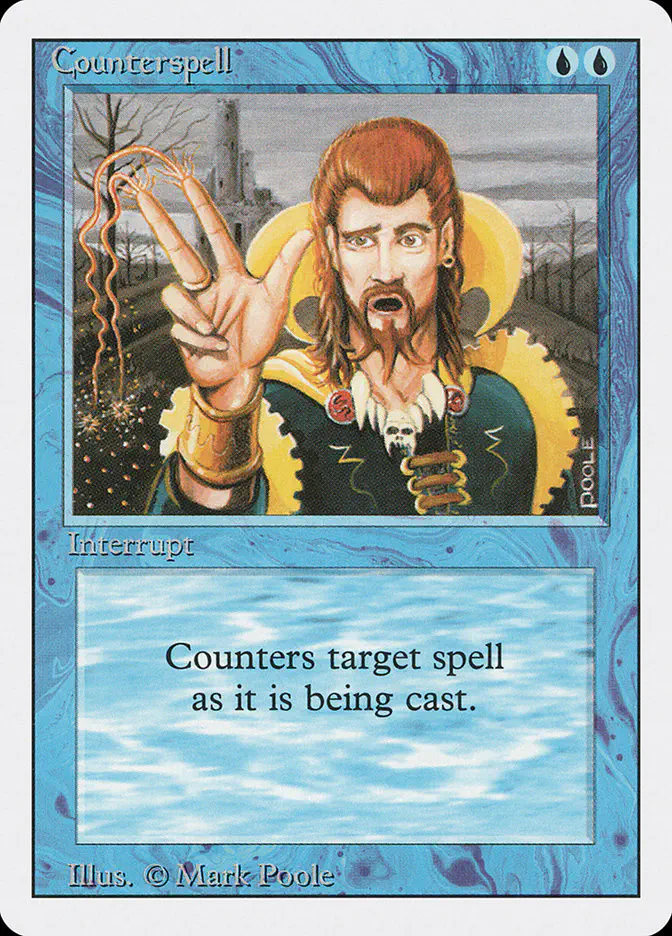
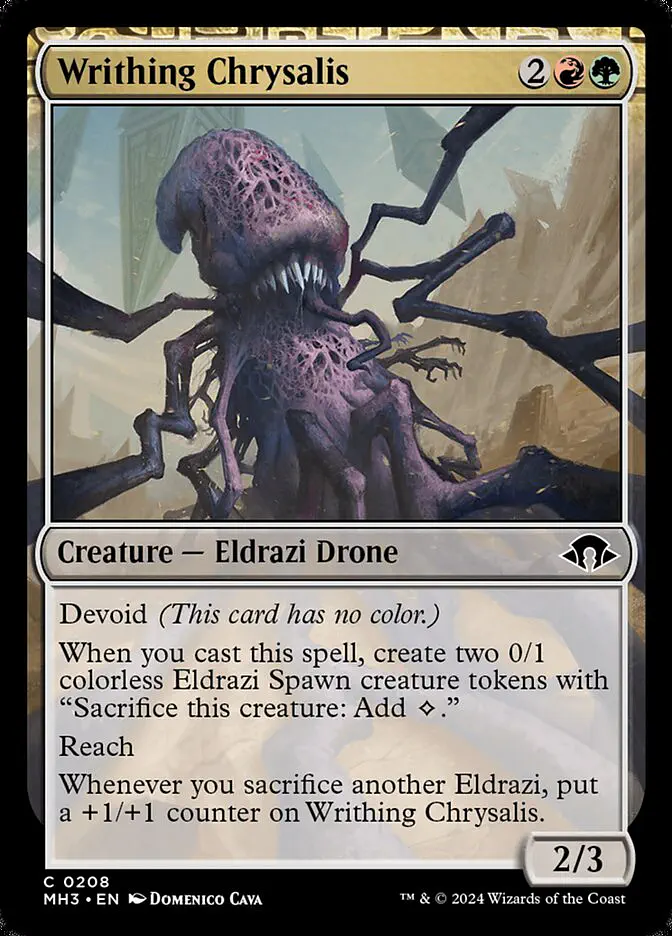
Two cards so far apart in time, yet capable of sharing the same moment.
Because in the end, this is the most beautiful thing we have in Common:
Magic changes constantly, but the pleasure of playing together remains the same.
Perhaps this is precisely the rarest magic of Pauper: not a hard-to-find card, not an impossible play, but the opportunity to still find someone on the other side of the table. A person with a story different from ours, a different experience, maybe a different generation, but with the same desire to play. Because in a world where everything changes quickly, finding a place to sit, talk, and share a game is anything but common.
And this is perhaps the true value of Pauper: to remind us that the cards are the medium, but the people are the story that remains.After so many years spent in this game, I have learned that Magic is not measured only in the cards we played, the tournaments won, or the decks built.It is measured in the moments it has given us and the people it has allowed us to meet.
After seeing Magic change so many times, from the early years to the new generations, one thing has remained constant: the desire of people to gather and play. That is why Pauper represents so well what Magic has always been:
a story that continues every time someone sits at the table.
In the end, perhaps, the true miracle of Pauper is precisely this: taking something that many consider "common" and reminding us how special it can be. Because in life, just as in Magic, it is often the simplest things that are capable of leaving us with the greatest memories.For this reason, personally, I consider Pauper the most beautiful Magic format ever: because it is born from the community, lives in the community, and continues to grow thanks to the community.
Because in the end, once again, these are precisely the things we have in Common.
Until next time, Flavio.
__
Editorial Note: Flavio is a long-time reader of ours and has already written for the pages of Metagame in the past. We are a Community that gives space and voice to players, which is why as the Editorial Team we were pleased to give him this space and we thank him for his contribution.