

The Top 4 Things You Need to Know About Standard This Week.

The week of April 6-12 was one of consolidation. The format has just come out of the competitive season in Europe and is awaiting the prerelease of Secrets of Strixhaven next week. We're looking for recent innovations and looking to the future. This issue closes with the usual bi-weekly update on format prices.
1) Functional additions in established decks
Michelangelo’s Technique, included in at least 2x in 

 Airbanding, gives the deck a Collected Company-like effect that greatly helps find key pieces like Appa, Steadfast Guardian and Doc Aurlock, Grizzled Genius, putting them directly onto the battlefield. Cruelclaw’s Heist is also starting to reappear in the sideboards of black-based combo decks and is by no means unwelcome. It opens up various strategic possibilities if played with the gift effect, such as stealing a counter to doubly protect the combo or a Stormchaser Talent for recursion from your graveyard onto the discarded card used to steal it. Experimental brews are also appearing that splash black into
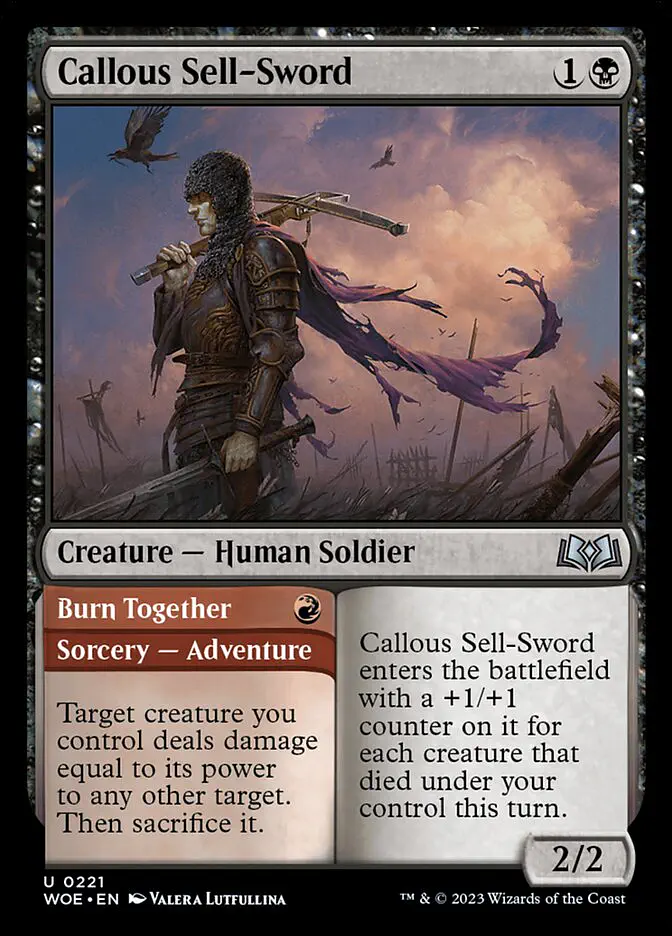
  Prowess to play Callous Sell-Sword, providing an alternative combo finisher to the deck. I must say it's not a bad idea, considering that the black is sourced from Starting Town and rarely from Multiversal Passage, which means the deck loses little consistency while gaining a lot of opening.
2) WUR Artifact is starting to look like a deck
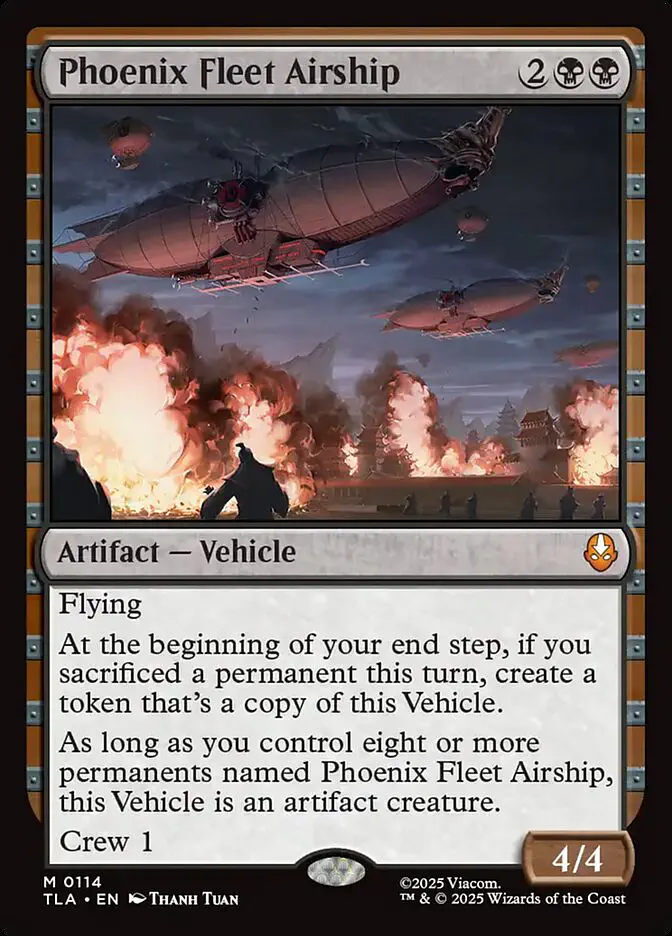
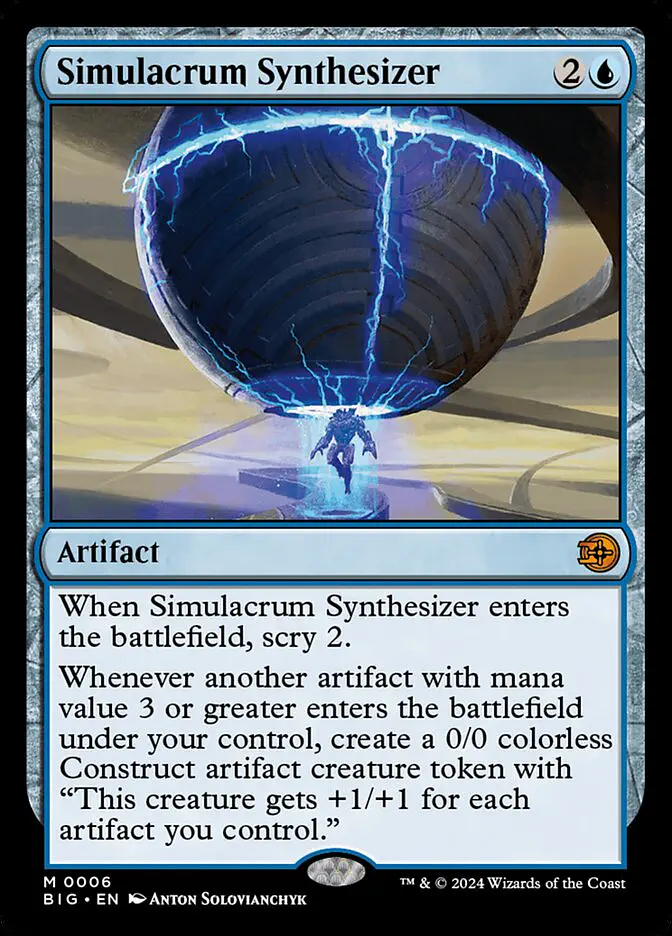
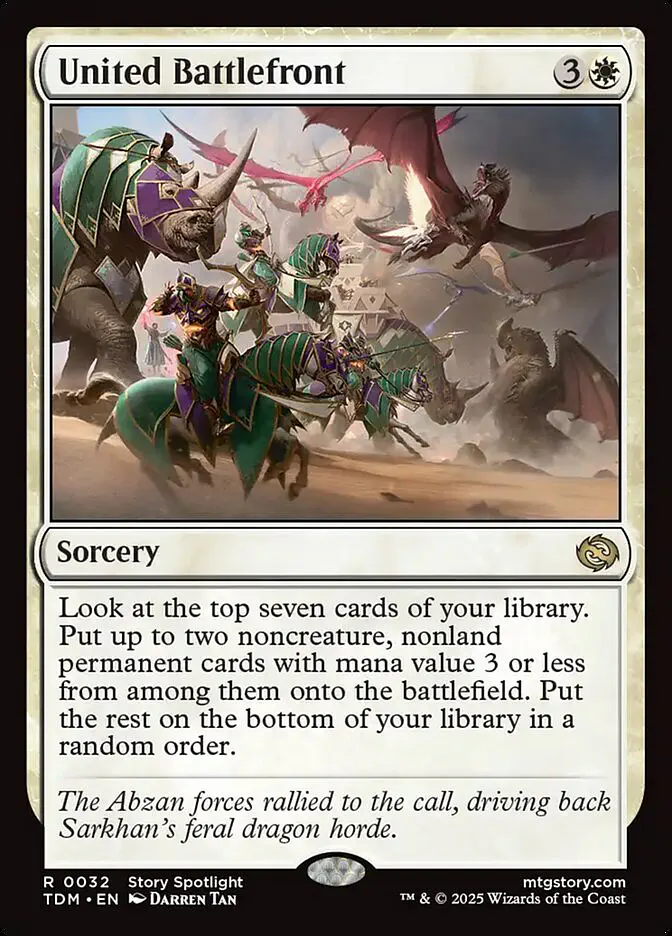
The Artifact archetype finally seems to be taking shape, especially with a splash of black for Phoenix Fleet Airship. The reliance on Simulacrum Synthesizer, which is the deck's weakness rather than its strength, unfortunately remains. However, United Battlefront also gives this deck another Collected Company-like effect that's very appropriate for the average mana value of its curve. There's still a lot to do, as the maindeck seems very geared towards fighting cube decks, but it doesn't have the same bite against -based decks, including Lessons. It has its resources against these too, but they're not as penetrating for the game's tempo. It must be said that, nonetheless, the idea is maturing, and cards like Braided Net and Repurposing Bay are very fascinating. Torpor Orb in the sideboard is also pleasant, which takes on a completely different meaning in this deck compared to classic tax sideboarding. We'll see if this archetype finally has a future in the format.
3) SOS Mechanics entering Standard
Those who follow this column know that it is the author's opinion that talking about new cards entering the format prematurely is both uninteresting and trendy. One should always wait at least until prerelease day to seriously discuss what enters in place of what. Without present practice, it's just theorizing about the future which, by definition, is either true because it's trivial or uncertain and useless. Therefore, in this issue too, I will wait until next week to start saying anything about the new resources printed. It is, however, very useful to see which mechanics the edition brings with it to understand which playlines can enter Standard and how existing decks can respond.
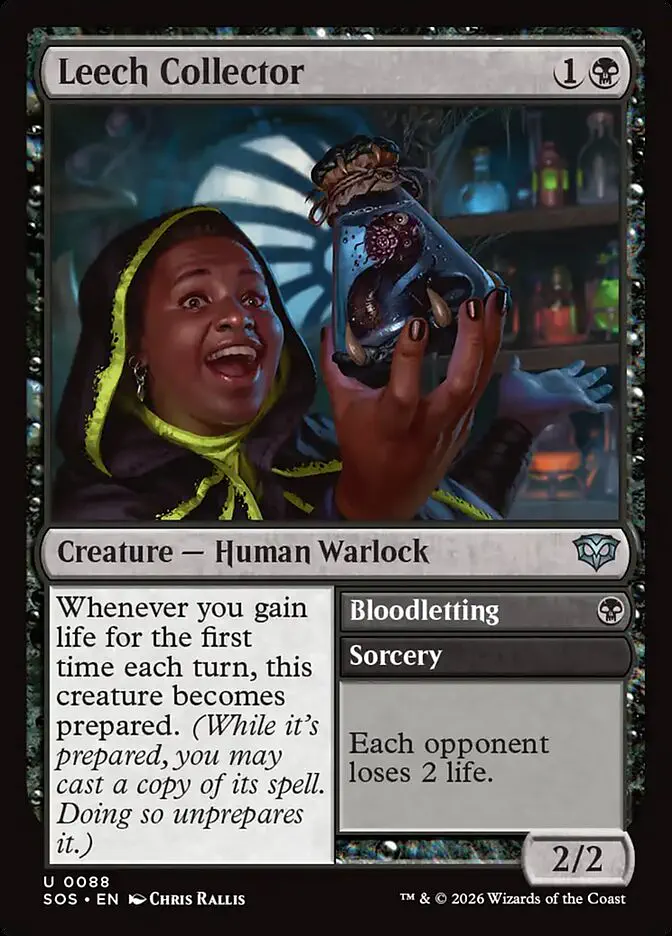
The main ability is Prepare. A card with Prepare is a creature that also has a powerful spell. You can use them to add strategic variety to your decks. Prepare cards have a text frame divided into two parts, similar to the Adventure and Omen mechanics. The part dedicated to the Prepare ability is always in the right-hand box. Regardless of where a Prepare card is, it has the characteristics of the creature. So you can tutor this creature from your library with any card that allows it, just as you can reanimate it or return it from your graveyard to your hand with a card like Archenemy’s Charm. However, you cannot directly tutor the spell included in the Prepare text box; for example, you will not be able to use Mystical Teachings to put Emeritus of Ideation into your hand. To use the Prepare spell, the creature carrying it must already be "Prepared." When a creature is prepared, a copy of the spell appears in exile. Casting the copy of the prepared spell is the same as casting any other spell, and once done, the creature becomes "Unprepared." Leech Collector is an interesting example: it generates a copy of the spell Bloodletting (a one-black-mana sorcery) each time you gain life for the first time in a turn, but it cannot generate another until the first is still in exile.
Leech Collector // Bloodletting
Creature — Human Warlock
Leech Collector // Bloodletting
Creature — Human Warlock


Whenever you gain life for the first time each turn, this creature becomes prepared. (While it's prepared, you may cast a copy of its spell. Doing so unprepares it.)
Sorcery
Each opponent loses 2 life.
After Prepare, it's time for Paradigm. This is a keyword present on some SOS Lesson cards that grants infinite resilience. The first time a spell with Paradigm resolves, it exiles itself. From then on, you can cast a copy of that spell without paying its mana cost at the beginning of each of your first main phases. If you cast Decorum Dissertation and it resolves, the next turn you can cast a copy of it from exile; if this copy is countered, the following turn you can still cast another.
The third mechanic I wanted to talk about is Converge. Converge is an ability word already introduced in Battle for Zendikar. It allows a spell that has it to be powered up if, when cast, its cost is paid with a greater number of mana colors. The number of mana colors spent to cast a spell is always between zero and five. Be sure to include all mana spent to cast it, including any additional or alternative costs you paid, but do not include mana that was not spent for the pure casting of the spell. If you cast a spell without paying its mana cost (and there are no additional costs), the number of mana colors spent to cast it is zero. Likewise, if a spell with Converge is copied while on the stack, the copy is created directly on the stack, and therefore the colored mana used to cast it is 0.
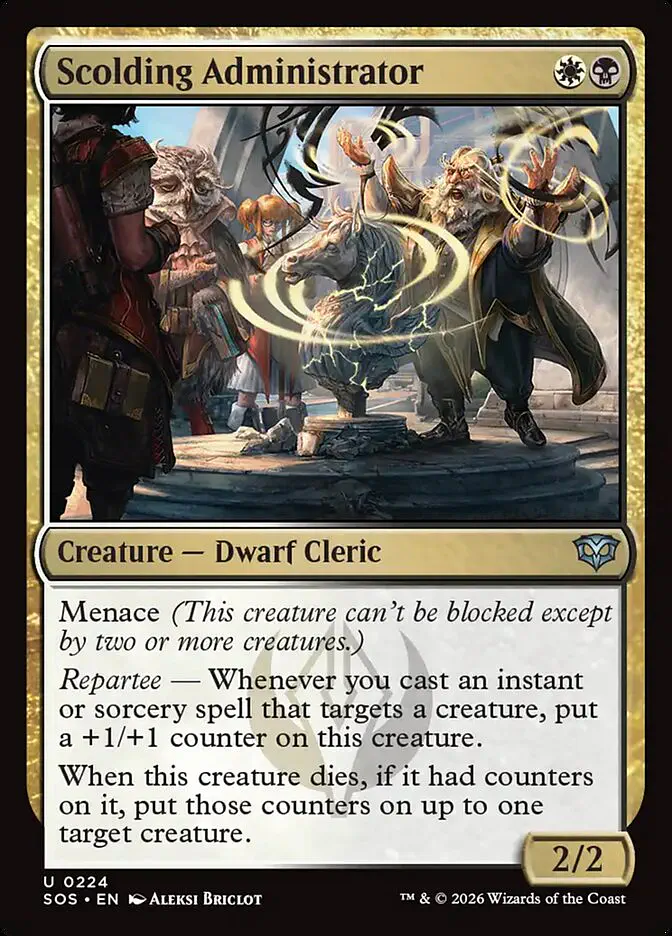
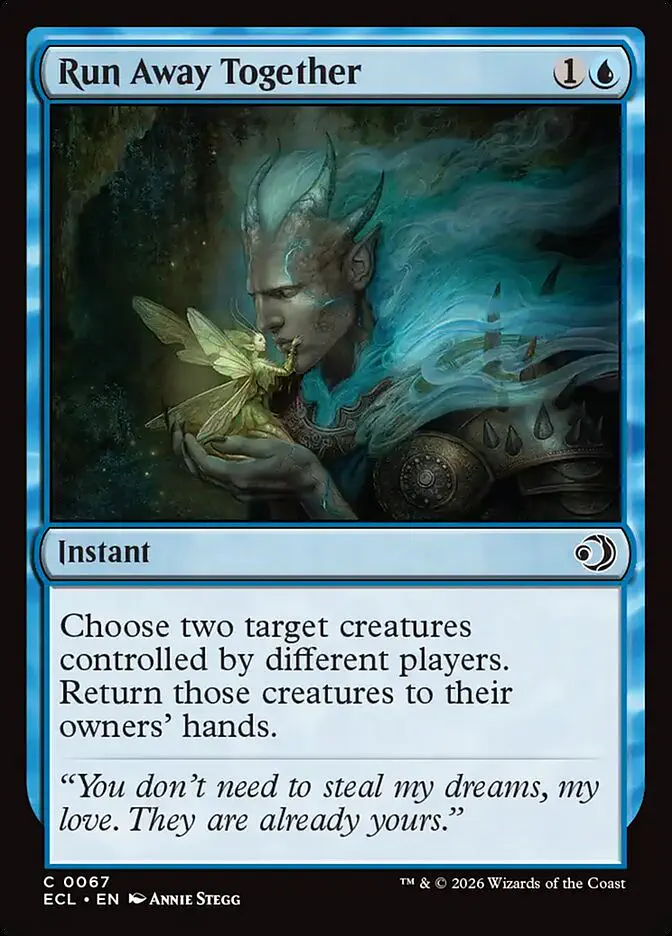
In addition to the above, SOS brings with it abilities dedicated to some traditional two-color guilds. On cards, you'll find the Repartee ability. Repartee refers to triggered abilities whose trigger condition is casting an instant or sorcery that targets a creature. Each Repartee ability has a different effect and activates only once if you cast a spell that targets multiple creatures. For example, the creature with Repartee Scolding Administrator will only receive one +1/+1 counter if you play a card like Run Away Together in your new Bounce brew.
On cards, you'll find the Opus ability. Opus is a triggered ability that activates when an instant or sorcery is cast. Each Opus ability has a basic effect and an additional effect if five or more mana were spent to cast the spell that triggered Opus. Opus accounts for all mana used to cast the spell. So, our Burst Lightning included in Prowess, if cast for one red mana, will trigger the Opus ability in its basic version. However, if it were cast for a mana value of 5 by utilizing its Kicker cost, then Opus would also materialize its additional effect. This reasoning does not apply to all mana used outside of the spell's casting process. Let's take a concrete example: the mana spent to activate Mistrise Village's ability, which makes our Three Steps Ahead uncounterable, cast for a mana value of 4 in Lessons to copy our Monument, will not allow Opus to grant us its additional effect, even if casting that spell for a mana value of 4 concretely required us to tap six lands and tap for five mana.
cards introduce us to Infusion, a series of abilities that take into account whether life was gained at a certain moment. Not how much life was gained, but only the circumstance of a gain occurring. Infusion is a word that describes a wide variety of abilities. It can be used as a condition for the effectiveness of a triggered ability (e.g., Lumaret’s Favor or Old-Growth Educator), to give a spell an additional or alternative effect (e.g., Withering Curse or Foolish Fate), or to determine if a bonus applies (e.g., Ulna Alley Shopkeep).
Dear old reminds us of Flashback. Everyone, probably, already knows this historical MTG ability. It's found on instants and sorceries and allows you to cast them from the graveyard. If a spell is cast with flashback, when it leaves the stack for any reason, it is exiled and not put back into the graveyard. I'll give you some key MTG rules concepts to help you play this ability best. (rule 702.34) Flashback represents two static abilities: one that functions when the card is in a player's graveyard and another that functions when the card is on the stack. "Flashback [cost]" means "You may cast this card from your graveyard by paying its Flashback cost rather than its mana cost, then exile it when it leaves the stack." Casting a spell for its Flashback cost follows the rules for paying alternative costs (Rules 601.2b and 601.2f–h). Remember that Flashback does not change when you can cast a spell (e.g., if it's a sorcery, you cannot cast it as an instant with Flashback). Furthermore, the mana value is always calculated using only the mana cost. So if you pay the eight mana cost to cast the flashback of Molten Note, its mana value will still be two, because the X contained in the mana cost will be 0. But Molten Note paid for 8 with its Flashback cost will still deal eight damage. Keep this important aspect in mind during both deckbuilding and gameplay.
Finally, cards bear the mark of the Increment ability. Here we return to simplicity. Increment is a triggered ability found on creatures. Whenever you cast a spell, if more mana was spent to cast it than the power or toughness of the creature with Increment, that creature gains a +1/+1 counter. Like Opus, Increment will consider all mana you spent to cast a spell. If that spell had additional costs, that mana counts. However, mana you might have spent outside of casting the spell will not count. It's important to note that you must compare the amount of mana spent with the creature's stats at two moments. First, you check immediately after casting a spell to see if "Increment" should trigger. If the ability triggers, you must perform the comparison again when Increment resolves to see if the amount of mana is still greater than the creature's power or toughness. If the check fails this time because the creature's stats have increased, the ability will do nothing. Example: if Cuboid Colony is on your board and it's a 1/1, and you cast Archdruid’s Charm, Increment triggers. However, if your opponent responds by casting Giant Growth on your Cuboid Colony before Increment resolves, at the time of resolution your creature will be a 4/4. Since Archdruid’s Charm costs only three mana, you will not put any +1/+1 counters on Cuboid Colony.
That's all for the new features of the edition we'll see in Standard. As an added bonus, SOS gives us a new artifact subtype: Book. Get ready to update your brews to play.
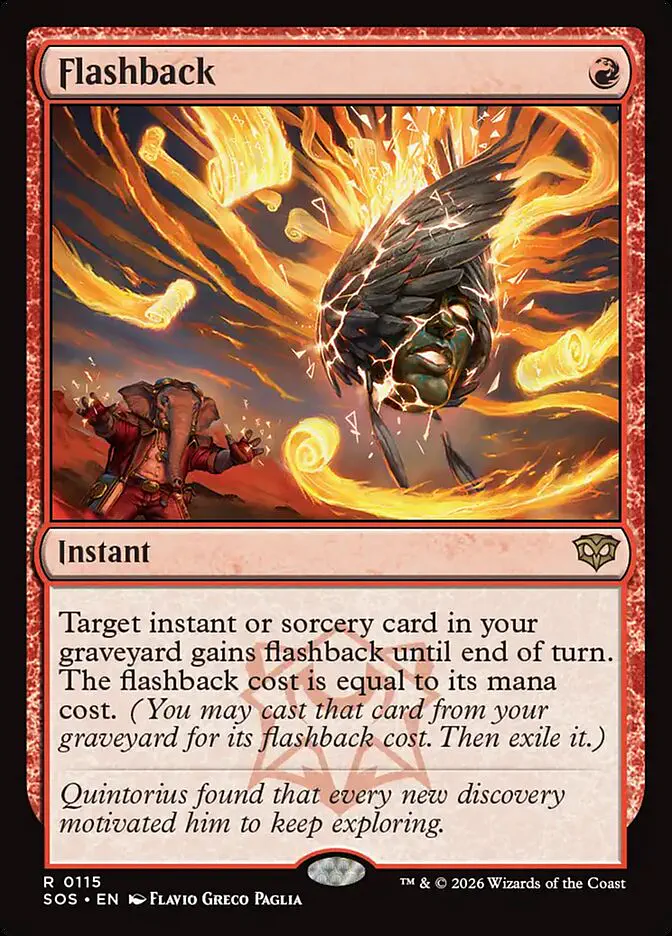
Flashback
Instant
Target instant or sorcery card in your graveyard gains flashback until end of turn. The flashback cost is equal to its mana cost. (You may cast that card from your graveyard for its flashback cost. Then exile it.)
4) FORMAT PRICES
Update to the Standard MOLE Index on format prices. The field distribution compared across multiple databases yielded an analysis sample of 10 decks: Excruciator, Mono Green Landfall, Lessons, Midrange, Prowess, Spellementals, 4c Elementals, Mono White, Rhythm and Mono Red.
The observed horizon indicates stability among archetypes, with a downward push due to the increase in red-based aggro strategies and combo decks like Excruciator. The arithmetic mean drops to €357.80, the median remains unchanged at €363.40, and the geometric mean contracts to €449.80. The lower outlier is Mono Red, while the upper outlier is occupied by Bant Rhythm. The cost of Standard remains generally stable with a bearish trend. Compared to other European formats (Vintage €24,826, Legacy €3,950, Modern €688, Pioneer €415, Pauper €132), Standard confirms itself as the third most affordable and, limiting the scope to competitive formats only, shows almost no difference compared to Pioneer.
“See You Space Cowboy”
Francesco